Vocabulary undergoes natural selection just like species. Plus a new database on the languages of the Americas.
Here’s what happened this week in language and linguistics.

I’ll start this week’s digest with a shoutout to Lingthusiasm for providing me with the perfect sticker for any new laptop:

You can check out all of Lingthusiasm’s fun merch here:


Welcome to this week’s edition of Discovery Dispatch, a weekly roundup of the latest language-related news, research in linguistics, interesting reads from the week, and newest books and other media dealing with language and linguistics.
🆕 New from Linguistic Discovery
This week’s content from Linguistic Discovery.
Song of Achilles
In this week’s newsletter I took a brief detour from linguistics to talk about a very cool connection in a book I just finished reading, Song of Achilles. But don’t worry, I slip a little bit of linguistics in too!
 Daniel W. Hieber, Ph.D.
Homeric Stock Epithets
Continuing on the Homeric theme this week, I also made a quick video reply to someone on TikTok who pointed out that Zeus is always referred to as “Zeus son of Chronos”. There’s a reason for this! It has to do with the meter of the poem, dactylic hexameter. Homer and other poets would use certain stock descriptions or epithets to describe various people because they fit the meter of the poem. Since these epic poems originally had to be memorized before writing came along, this not only acted as an aid to memorization, but saved the poet from having to create new descriptions every time they referenced a character.
Early Latin → Germanic borrowings
To promote my article about the etymology of one, I wrote a short thread about early borrowings from Latin → Germanic. Here’s the full text of that thread:
English was borrowing words from Latin before English even existed!
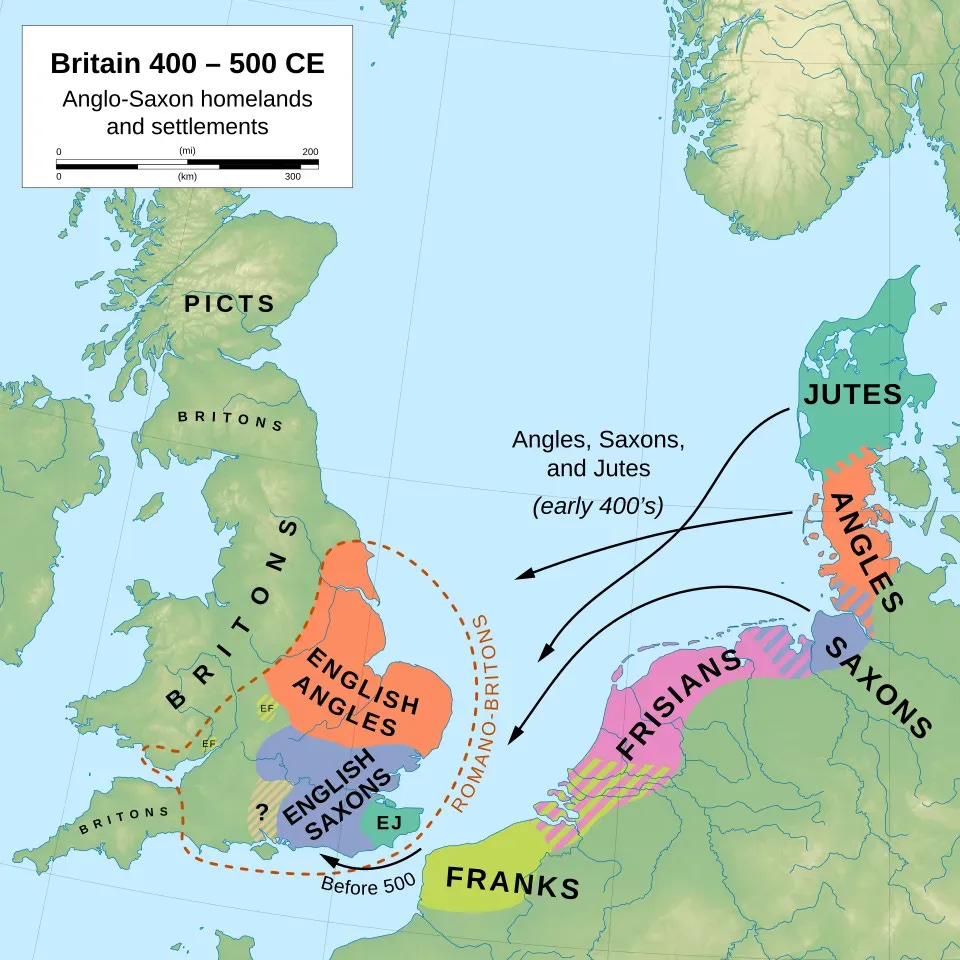
Before Old English formed (c. 500 CE), the Germanic peoples in northern Europe were trading with, fighting against, and sometimes even fighting for, the Romans. As you might expect, they borrowed many words for trade goods and units of measure.
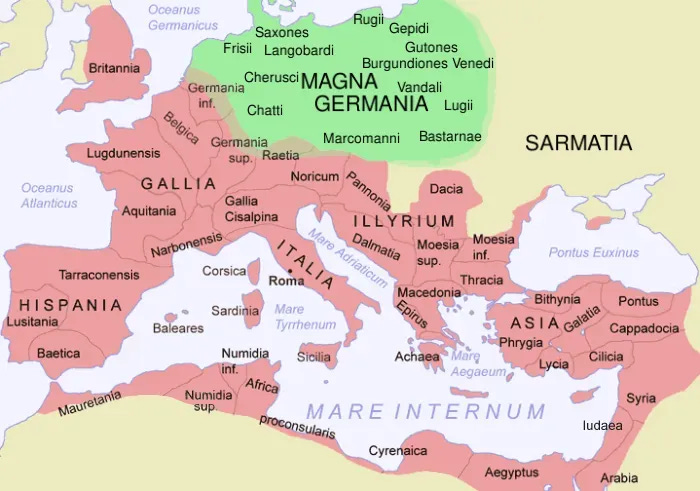
The very earliest words were borrowed when the Germanic language family was still fairly young, in the centuries after 500 BCE:
- Latin catillus ‘little food vessel’ → English kettle
- Latin pondō ‘by weight’ → English pound
- Latin caupō ‘petty trader’ → English cheap
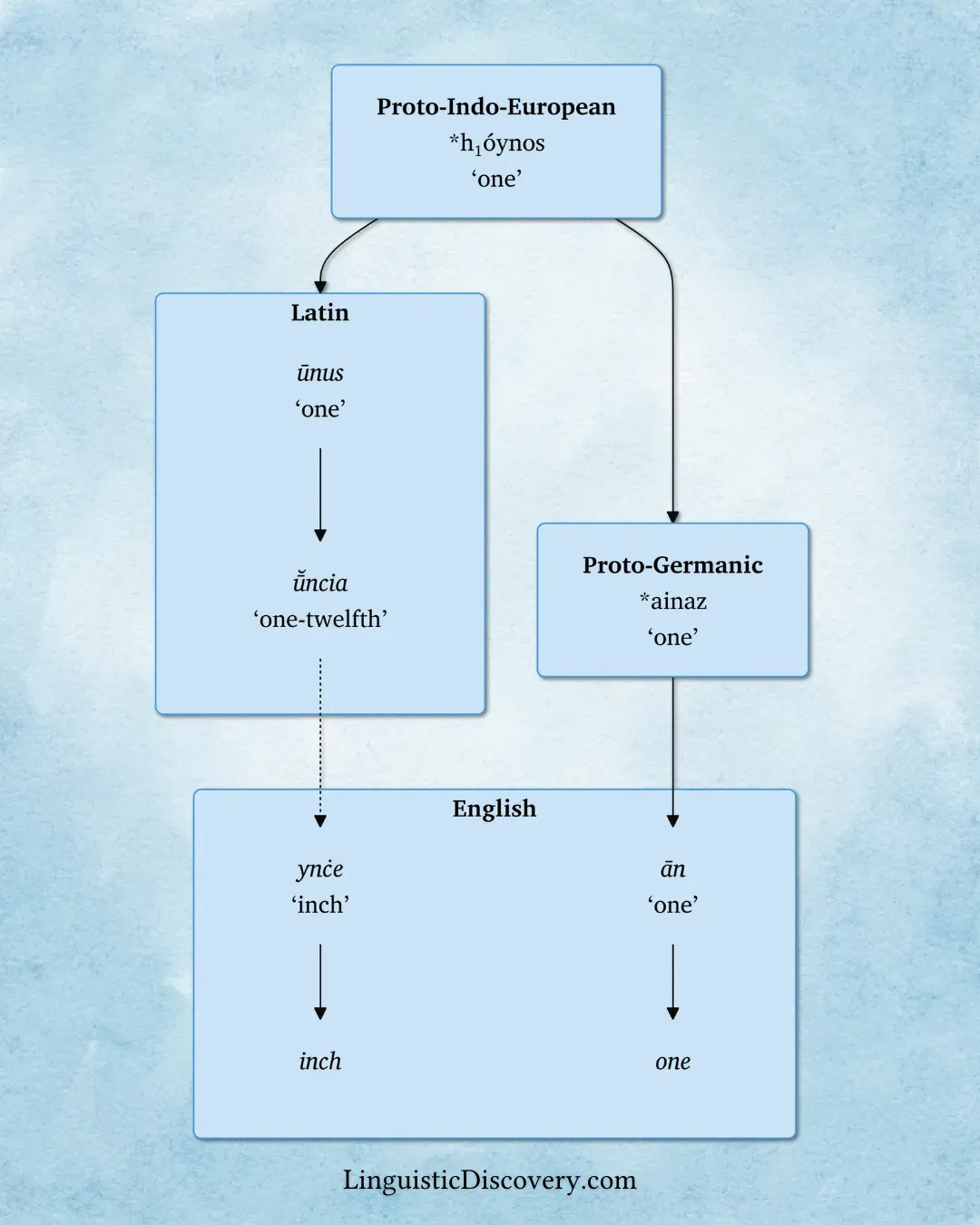
Many words were borrowed later, after the Germanic languages had diverged into West, East, and North Germanic branches. One of those words was Latin ū̆ncia ‘one-twelfth’. (Romans divided many goods into units of 12, such as the pound and foot.) ū̆ncia itself comes from ūnus ‘one’, and originally meant ‘one part’ (but came to mean ‘one-twelfth part’ because of their units of measure).
When the Anglo-Saxons brought various West Germanic dialects to England starting c. 500 CE and formed the beginnings of Old English, one of the words they brought with them was ynċe ‘inch’, from Latin ū̆ncia—and that’s the origin of the Modern English word inch!
And because Latin ūnus ‘one’ and English one are ultimately related, this means that inch and one are related too!
This is just one of the myriad of words related to one in English. If you want to learn about its other surprising connections, check out this issue of the Linguistic Discovery newsletter:
 Daniel W. Hieber, Ph.D.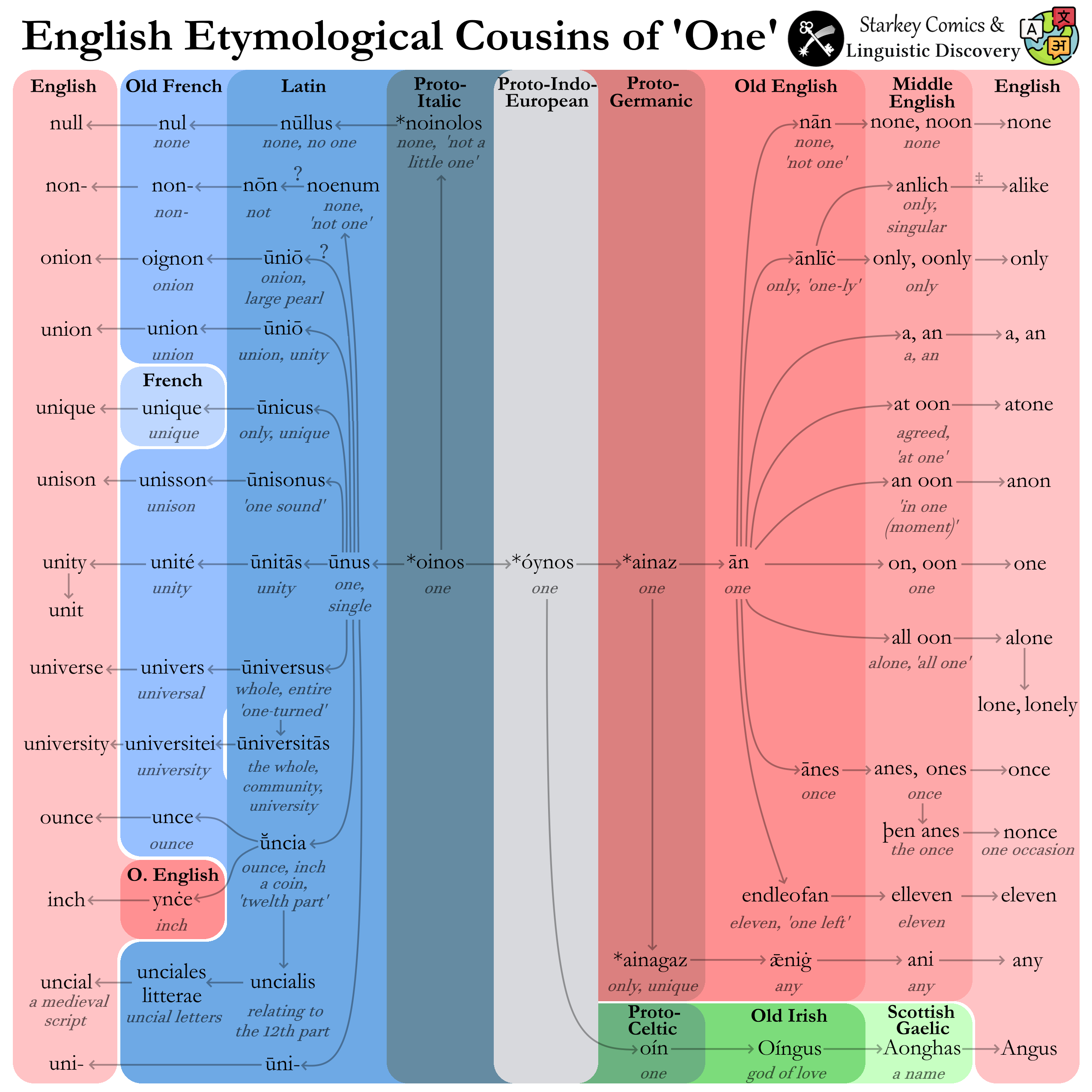
🗞️ Current Linguistics
Recently published research in linguistics.
Cognitive selection in language change

This really neat paper was published back in December 2023, but I’m only just now unearthing it from my backlog (a trend you may see happen a bit more frequently now that I’m caught up on current linguistics news). Anyway, the study asked participants to partake in what amounts to a giant game of telephone, where each person retold a story to the next person in line.
The authors then examined what types of words made it through the telephone gamut, and found that 3 types in particular survived the numerous transmission cycles:
- words acquired at an early age (hand, uncle, today)
- concrete words (as opposed to abstract ones; e.g. dog persists longer than animal, and animal in turn persists longer than organism).
- emotionally exciting words, whether negative or positive
By analogy to natural selection in biology, the authors utilize the term cognitive selection to describe these preferences for certain word types—that is, the mind’s tendency to preferentially attend to certain kinds of information.
While the study doesn’t note this explicitly, the second group (concrete words) also aligns with the empirical evidence from research on cognitive prototypes: mid-level or basic level categories are more cognitively and linguistically salient than higher-level or lower-level categories (Rosch et al. 1976; Taylor 2003: 50). When asked what it is you’re sitting on, for example, you’re much more likely to reply with “chair” (basic level) than “furniture” (high-level) or “chaise lounge”. These basic level effects are realized in numerous other subtle ways in language as well. (If you’d like to learn more about prototypes and their linguistic effects, an excellent summary is the book Linguistic categorization [Taylor 2003]).
This study also sparked some debate about whether languages are becoming perpetually simpler, but I think that idea is demonstrably false. If it were true that languages tended towards simplicity, most grammatical complexity would have been selected out of language long ago. The consensus in linguistics for some time now has been that language change is driven in part by a constant tension between efficiency and expressivity (complexity) (Hawkins 2004; Gibson et al. 2019). So this study simply elucidates the efficiency side of that equation a bit more.
 Anvita Patwardhan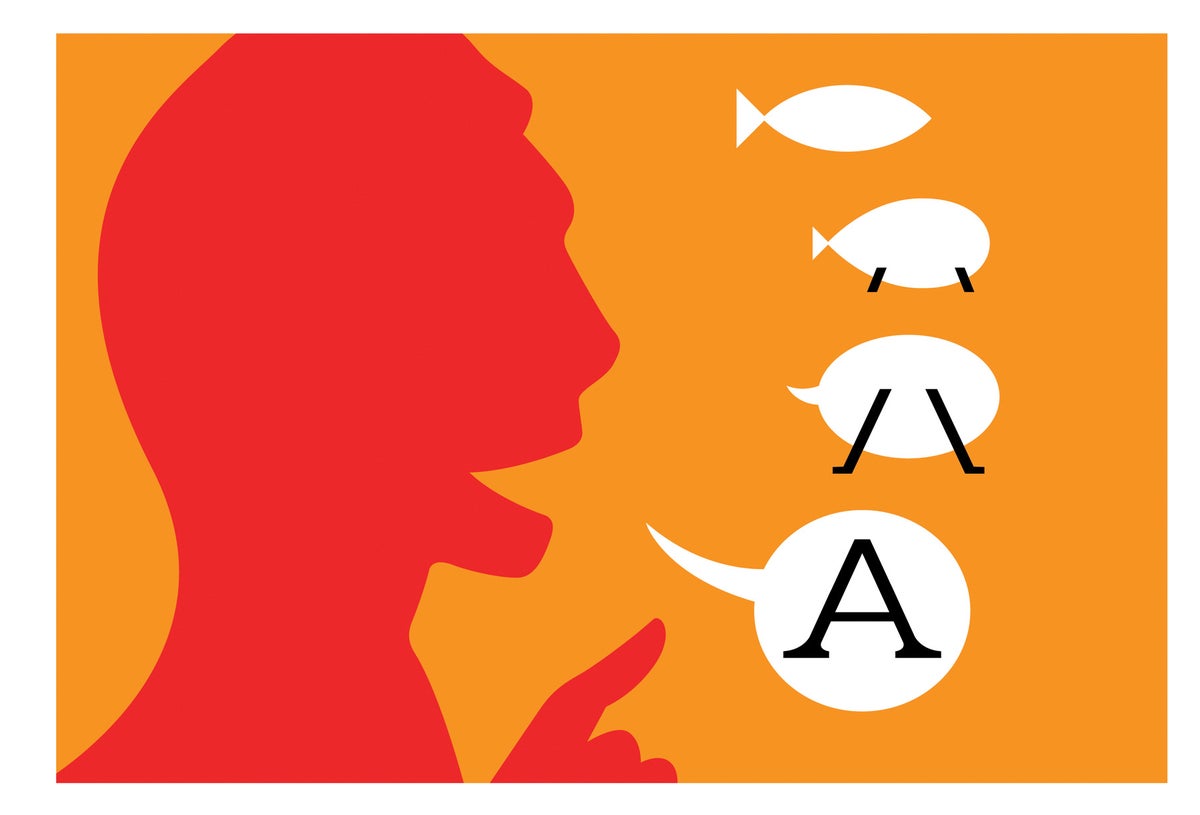
- Original Research: Li et al. 2023. How cognitive selection affects language change. Proceedings of the National Academy of Sciences 121(1). DOI: https://doi.org/10.1073/pnas.2220898120
Great apes visually track subjects and objects like humans
When watching a cat chase a mouse, humans will alternate looking at cat and mouse, using the information to connect the two into what’s called an agent-patient relationship — with the cat as the agent and the mouse as the patient. This cognitive mechanism is thought to be one of the bases for the evolution of human language, forming both how people think about events and structure speech.
This study finds that great apes track agents and patients in the same way as humans:
 Denyse O’Leary
 Vanessa A. D. Wilson ,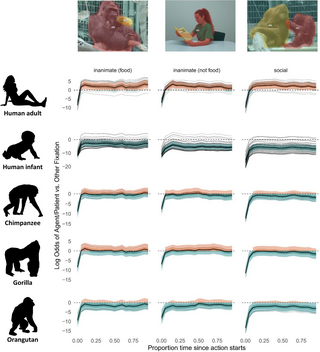
🗃️ Resources
Maps, databases, lists, etc. on language and linguistics.
Areal Typology of Languages of the Americas (ATLAs)
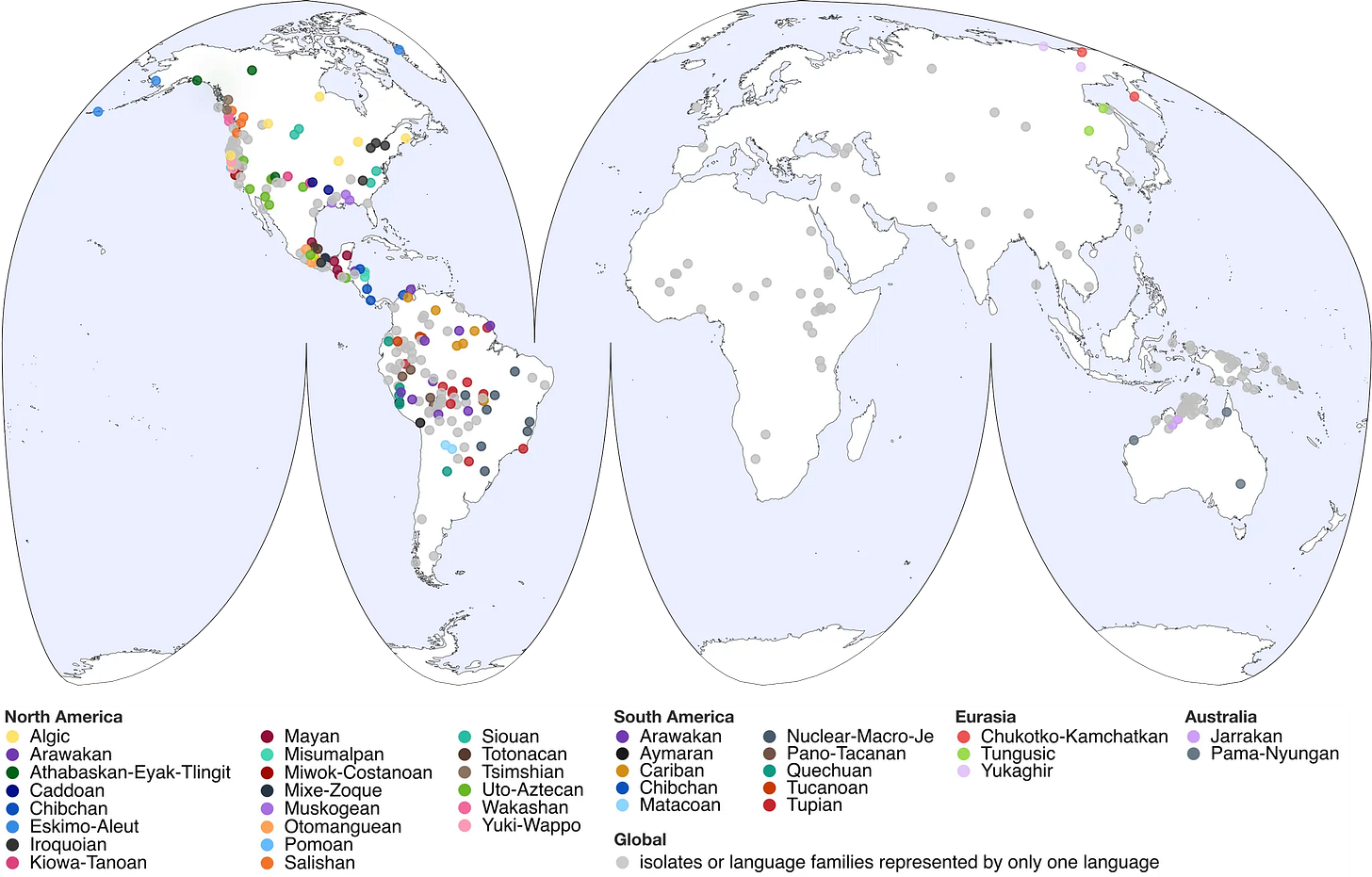
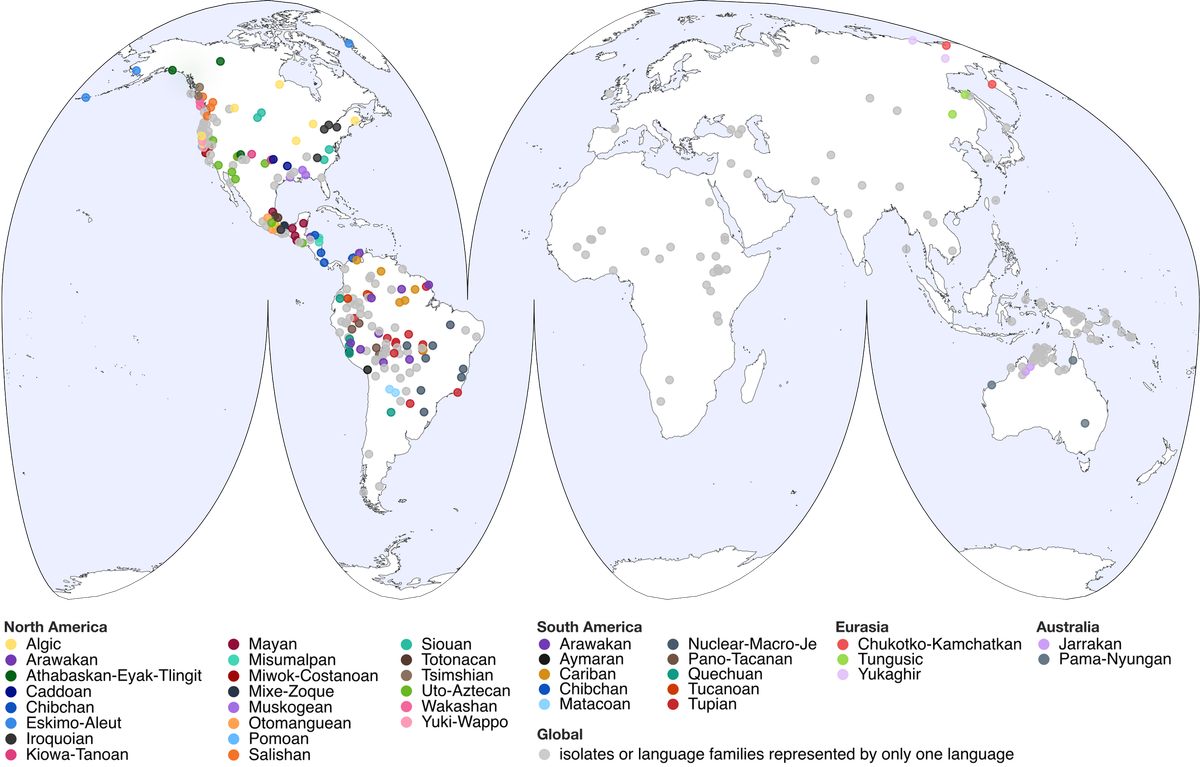
A brand new database of typological features in the languages of the Americas is now available! As described by the authors:
The aim of ATLAs is to capture areally relevant typological variation across North and South America, together with a baseline sample from the rest of the world. Our sample includes 325 languages worldwide, of which 220 are in the Americas. For each typological domain present in the database, we have attempted to encode as fine-grained features as possible, prioritizing typological depth within a given domain over the inclusion of more domains.
The database is available as a website at http://atlas.evolvinglanguage.ch, which presents 265 typological variables at the level of languages as a whole. The data is also available on GitHub, and Zenodo. The GitHub repository includes three additional database modules not visible on the website, which exhaustively encode at the construction level the phenomena of (1) nominal possession, (2) morphological alignment, and (3) singular-plural verb stem alternation. Several language-level aggregations of these more detailed constructional databases are presented on the website.


 davidainman
 David Inman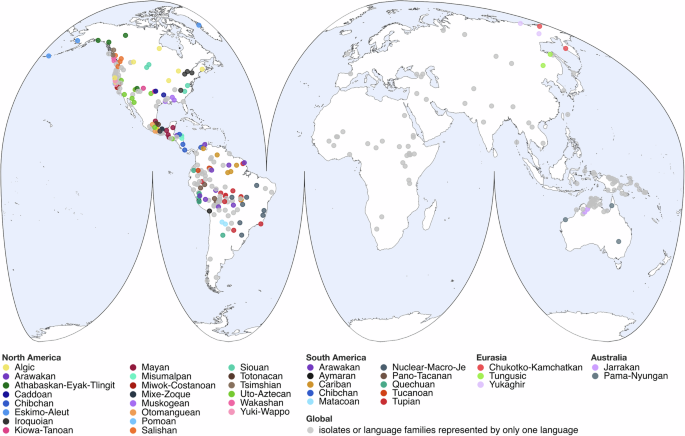
That’s all for this week! I hope you enjoyed this week’s digest, and that you have a wonderful weekend!
~ Danny
📑 References
- Gibson, Edward, Richard Futrell, Steven P. Piantadosi, Isabelle Dautriche, Kyle Mahowald, Leon Bergen & Roger Levy. 2019. How efficiency shapes human language. Trends in Cognitive Sciences 23(5). 389–407. https://doi.org/10.1016/j.tics.2019.02.003.
- Hawkins, John A. 2004. Efficiency and complexity in grammars. Oxford University Press.
- Rosch, Eleanor, Carolyn B Mervis, Wayne D Gray, David M Johnson & Penny Boyes-Braem. 1976. Basic objects in natural categories. Cognitive Psychology 8(3). 382–439. https://doi.org/10.1016/0010-0285(76)90013-X.
- Taylor, John R. 2003. Linguistic categorization (Oxford Textbooks in Linguistics). 3rd edn. Oxford University Press.
If you'd like to support Linguistic Discovery, purchasing through these links is a great way to do so! I greatly appreciate your support!
Check out my entire Amazon storefront here.