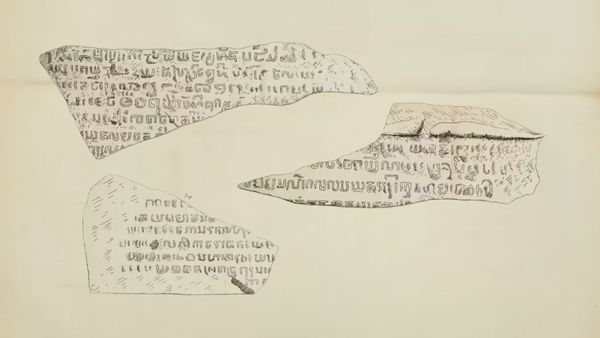
Did technology drive the evolution of language? Or was it music?
Here’s what happened this week in language and linguistics.

Welcome to this week’s edition of Discovery Dispatch, a weekly roundup of the latest language-related news, research in linguistics, interesting reads from the week, and newest books and other media dealing with language and linguistics.
🗞️ Current Linguistics
Recently published research in linguistics.
Brain activity mirrored between conversational participants

 Cell Press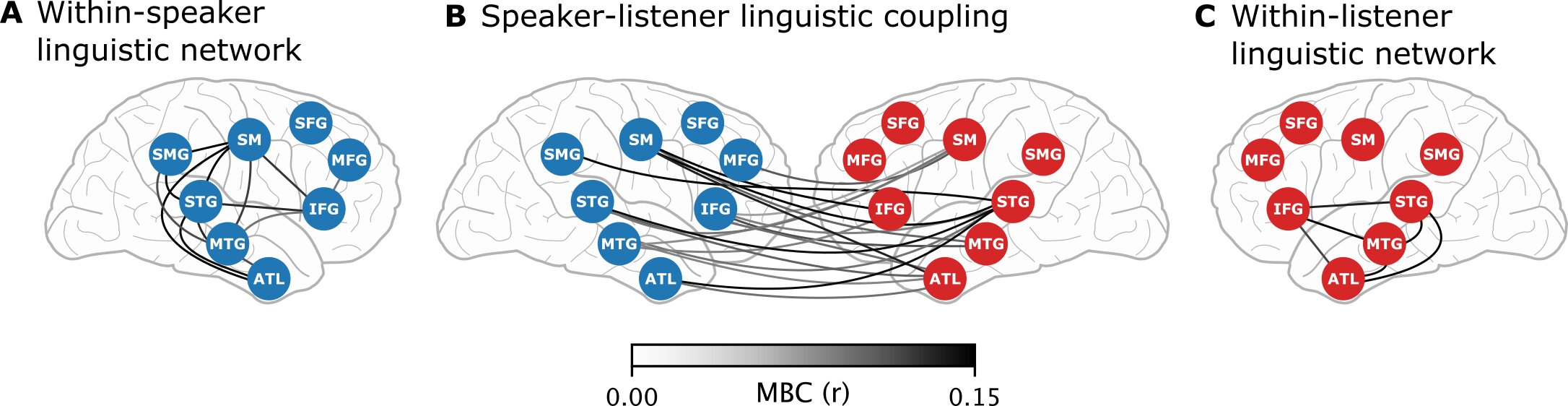
- Zada et al. 2024. A shared model-based linguistic space for transmitting our thoughts from brain to brain in natural conversations. Neuron 112(18): 3211—3222.e5. DOI: https://doi.org/10.1016/j.neuron.2024.06.025
Language and rhythm may have evolved together
People with rhythmic skills have a greater awareness of certain linguistic features and had better language than mathematics skills in school, according to a 2024 study. The study also found significant genetic overlap between rhythm and language traits in the white matter structures in the brain. The researchers concluded that there may be a shared neuronal architecture for rhythm and language.
 Tom Hale
 Gökberk Alagöz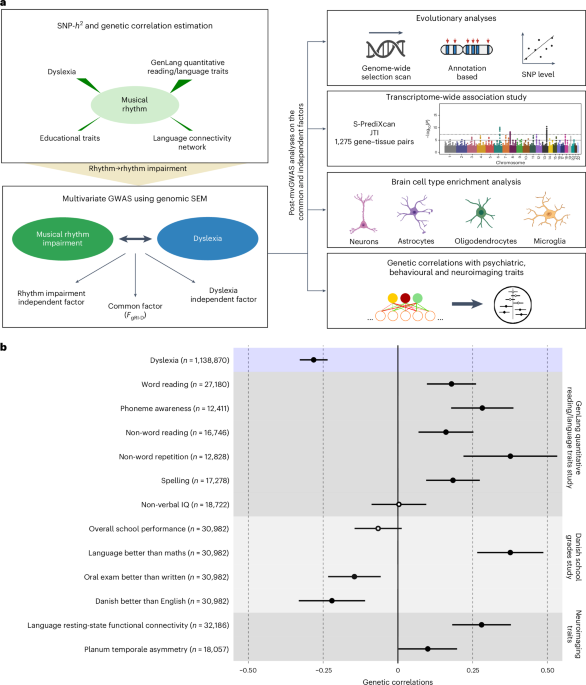
Brain implant allows man who lost his speech to produce natural-sounding sentences
Casey Harrell, age 47, lost his voice to ALS 5 years ago. Now, a brain implant paired with a machine learning algorithm is allowing Harrell to communicate via a computerized voice at the same rate as natural speech. This is far faster than other brain-computer interfaces have accomplished in the past.
 Maitreyee Wairagkar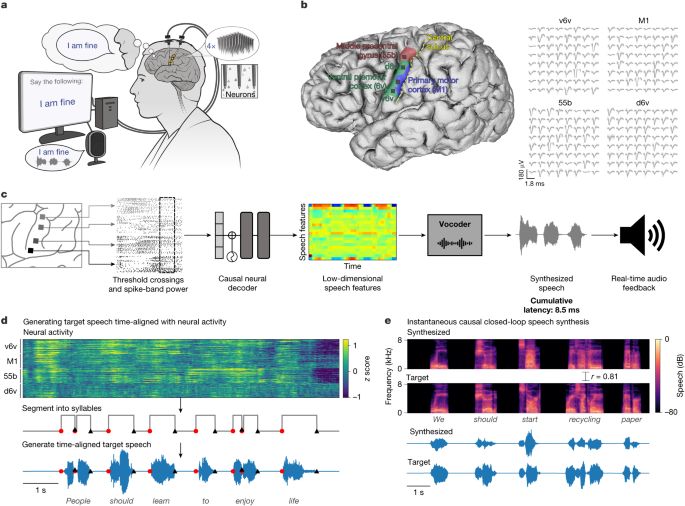
Mapping migration patterns in ancient Papua New Guinea

A really neat paper was just released which conducts DNA analysis on 42 individuals from ancient Papua New Guinea, and combines that information with dietary and ecological evidence to paint a picture of human migration patterns c. 2100 YA. The analysis shows that native Papuans and later Austronesian arrivals coexisted without intermarrying for several hundred years—a very unusual pattern in human migrations. In general, there’s little research on the genetic history of ancient populations of the Pacific region, so it’s great to see a study like this elucidating some of the history of the region.
 Max Planck Society
 Kathrin Nägele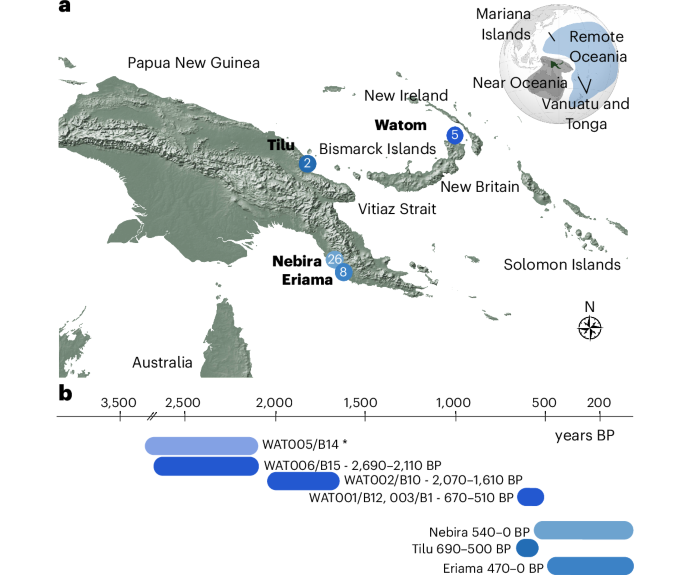
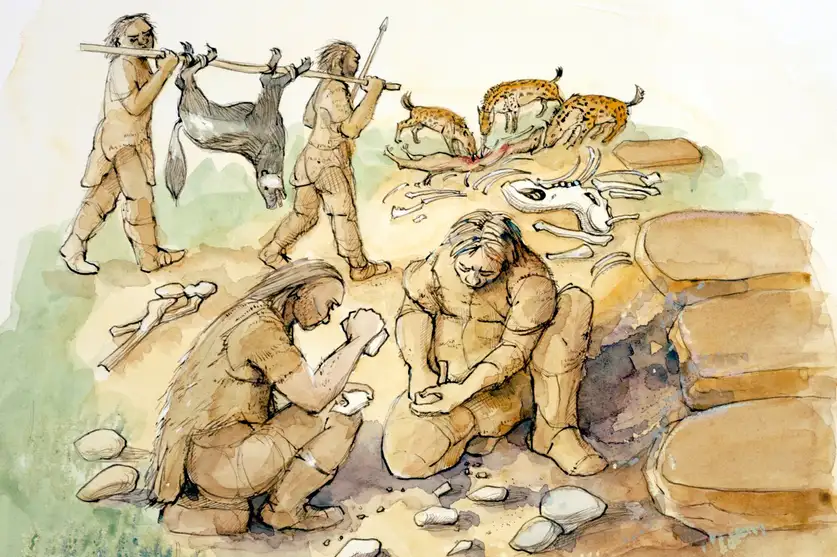
Did technology drive the evolution of language?

One of the features that makes Homo sapiens remarkable is the extent to which our knowledge is culturally transmitted. Other species certainly engage in cultural learning, but not nearly to the degree that humans do. But when did this robust cultural transmission develop? A new study looks at 103 cultural traits in the archaeological record that would have required some degree of cultural transmission and plots those trends over time. Here’s an excerpt from the news article in New Scientist:
The new work suggests there were two major shifts in cultural transmission. First, around 600,000 years ago, ancient humans were overtly teaching each other, although not necessarily using spoken instructions: gestures may have been enough. That is well before the origin of our species, Homo sapiens, and coincides with the emergence of hafting.
Then, between 200,000 and 100,000 years ago, humans developed modern language. This was necessary because they were performing behaviours like burials. “This involves many different steps, and also you have to explain why you do that,” says d’Errico.
“The link between cultural transmission and cultural complexity is robust,” says Ceri Shipton at University College London. He adds that, while there is much uncertainty about when humans developed language, the new estimate is “a reasonable timeframe”.
 #author.fullName}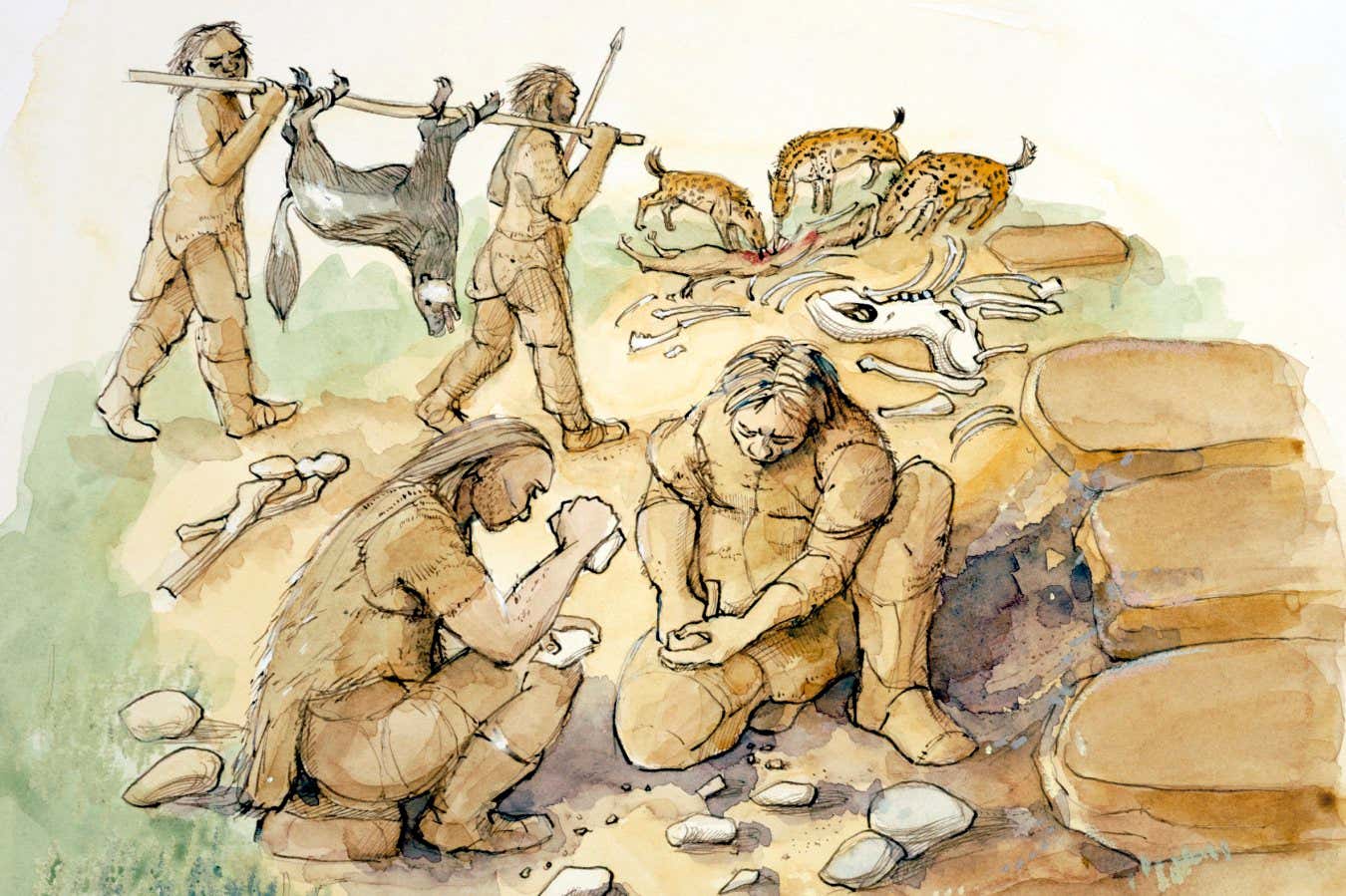
- As our ancestors developed more advanced tools and cultural practices, they also developed new ways of explaining concepts to others – culminating in the emergence of complex language
 Ivan Colagè ,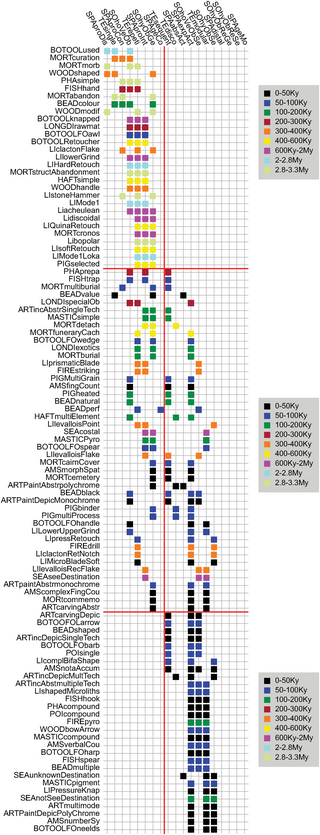
Who wrote the Bible?

Scholars use machine learning to identify different writing styles throughout the Bible, lending additional support to existing theories about biblical authorship:
 Aamir Khollam
- Using a custom AI tool, researchers have traced biblical authorship, revealing secret writing patterns and confirming long-held scholarly theories.
📃 This Week’s Reads
Interesting articles I’ve come across this week.
 Denyse O’Leary
 Michael Ferber
 Jennifer Gunner
 Emilie Zuniga, Ph.D.
Ryan Rhodes of the Language of Mind social media channels recently published a video about Kanzi, the bonobo who could communicate using symbols. He breaks down exactly what Kanzi’s linguistic abilities were, and what this tells us about the human language faculty:
Morris Swadesh

If you’ve taken a linguistics class or read a pop linguistics book about historical linguistics, chances are you’ve encountered the name of Morris Swadesh (1909–1967). Swadesh is best known for the eponymous Swadesh List—a set of 100 words thought to be most resistant to change over time. Swadesh used this list as the basis for his theory of glottochronology. Now completely debunked, the idea was that linguists could use that set of core vocabulary to measure how long ago languages diverged, by determining how similar their Swadesh lists were. We know now that vocabulary replacement rates vary drastically depending on the historical and social context, and that there’s no coherent way to define “rate of linguistic change” otherwise.
Nonetheless, Swadesh is a hugely important figure in linguistics. Even though we can’t use core vocabulary to estimate rates of language change, core vocabulary does nonetheless have a role to play in the reconstruction of historical languages, and research into etymologies. There are indeed some words across languages that appear to be more resistant to change, and thus are better heuristics for determining whether certain languages are related. And it was Swadesh who first synthesized the distinction between phonetics and phonology in his famous paper, “The Phonemic Principle”. He conducted fieldwork on a large number of indigenous languages, and his corpus constitutes the primary documentation we have for several of them.
I’m in the interesting position of being more intimately familiar with Swadesh’s life and works than most, because he was also the linguist that created the largest documentary corpus of Chitimacha, the language I work on in Louisiana. I’ve spent countless hours poring over his field notebooks, manuscripts, publications, and even his personal correspondence. It’s a neat thing to get such an intimate look into how another scholar’s mind worked, the way he thought about things, and the way he organized things. After 15 years of working with his materials, he feels like an old friend.
So for that reason, I thought it’d be interesting to share his scholarly obituary, published in 1970 by Dell Hymes. It’s a rather extensive look at his life and scholarly outputs.
- Hymes, Dell. 1970. Obituary: Morris Swadesh. Word 26(1): 119–138. DOI: https://doi.org/10.1080/00437956.1970.11435588
You can also read the Wikipedia page about him here:
 Contributors to Wikimedia projects
📚 Books & Media
New (and old) books and media touching on language and linguistics.
Colin Gorrie of the Dead Language Society newsletter (which I highly recommend) recently interviewed Laura Spinney about her new book, Proto: How one ancient language went global. You can watch the interview and read the transcript here:
 Colin Gorrie

🗃️ Resources
Maps, databases, lists, etc. on language and linguistics.
Google Ngram Viewer

On the off chance you’re not already familiar with it, I thought I’d point out the existence of Google’s Ngram Viewer. This tool allows you to see the frequency of words over time in the Google Books Corpus. It’s a pretty incredible tool for quickly seeing how linguistic usage has changed over time:

You can view the original research paper they published when they released it showing some of its applications here:
- Michel et al. 2010. Quantitative analysis of culture using millions of digitized books. Science 331(6014): 176–182. DOI: https://doi.org/10.1126/science.1199644
That’s all for this week! I hope your summer is off to a great start (or winter if you’re in the southern hemisphere) and that you have a great week!
~ Danny
If you'd like to support Linguistic Discovery, purchasing through these links is a great way to do so! I greatly appreciate your support!
Check out my entire Amazon storefront here.