Multilinguals may be more likely to take a vaccine if they read about it in English: Words shape how we process feelings and make decisions
Plus, can AI decode dead languages? And how do linguists reconstruct dead languages without AI? Here’s what happened this week in language and linguistics.


Welcome to this week’s edition of Discovery Dispatch, a weekly roundup of the latest language-related news, research in linguistics, interesting reads from the week, and newest books and other media dealing with language and linguistics.

🆕 New from Linguistic Discovery
This week’s content from Linguistic Discovery.
❄️ Inuit words for snow

One of the most infamous language tropes is the idea that Inuit languages have dozens or even hundreds of words for snow. Now, a new study uses data from 616 languages to claim that Inuit languages really do have disproportionately more words for snow than other languages.
But does this really matter?
In the latest issue of the newsletter, I explain the history of the “Inuit words for snow” myth, what this new study says about it, and whether language really does influence how we think in any meaningful way.
 Daniel W. Hieber, Ph.D.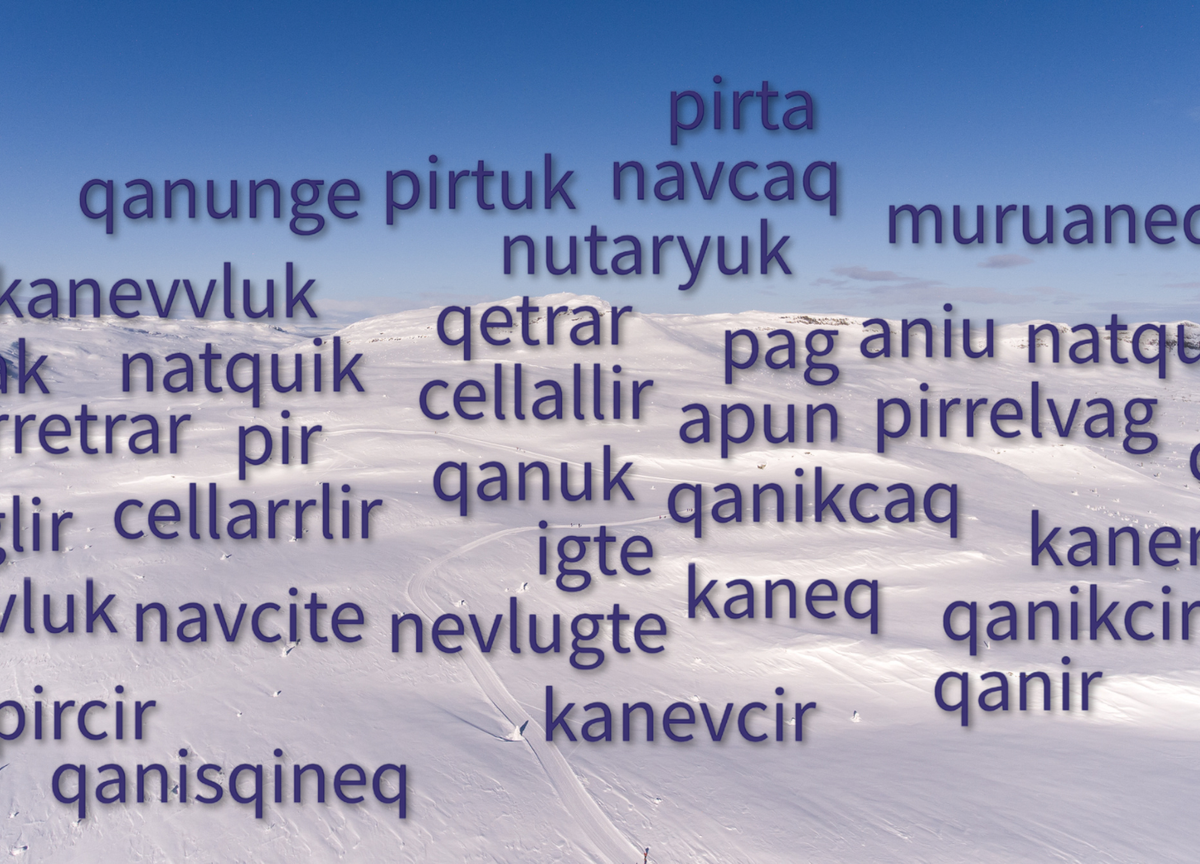
Note that this post is being made available early for paying subscribers. It will become publicly available in 6 months, at which point I’ll notify free subscribers. If you’d like to read it now, become a supporter!
📰 In the News
Language and linguistics in the news.
An inmate in the Arizona State Prison system decided to reconnect with his Welsh heritage by studying the Welsh language. Now he leads a group of inmates who are independently studying endangered, ancient, and vulnerable languages—Welsh, Brittonic, Assyrian, Old Norse, Taíno, Nahuatl, Guosa, and Interslavic.
- “I’ve never been so excited”: Inmate-led program preserves endangered languages behind bars (Tuscon Sentinel)
Black Country is an area of the West Midlands in England. The dialect there is often claimed to preserve Early Modern English or even Middle English. But is it in danger of disappearing?


🗞️ Current Linguistics
Recently published research in linguistics.
Word meanings aren’t completely arbitrary
An increasing number of studies over the years have found that language is not entirely arbitrary. Some sounds correspond to certain semantic domains with greater-than-chance frequency. Here’s an article about a 2018 study showing that this is the case for intensifiers as well: the more difficult the intensifier is to pronounce, the stronger its semantic effect is.
 Art Markman Ph.D.
- Bennett & Goodman. 2018. Extremely costly intensifiers are stronger than quite costly ones. Cognition 178: 147–161. DOI: https://doi.org/10.1016/j.cognition.2018.05.011.
Dogs use two-word button combinations to communicate
In recent years, many dog and cat owners have started using soundboards with their pets—a set of customizable buttons which, when pressed, speak different words, in theory allowing these pets to communicate with their owners. A 2024 study finds that dogs trained to use these soundboards are in fact using their soundboards to create novel two-word combinations that go beyond random behavior or simple imitation of their owners.
 Inga Kiderra
 Amalia P. M. Bastos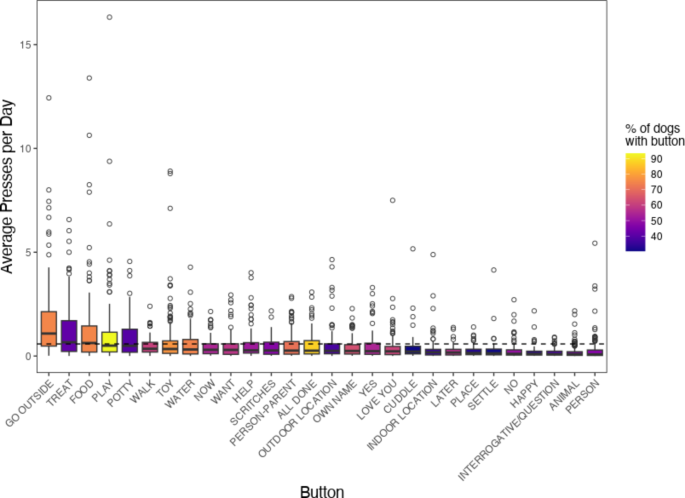
Multilinguals may be more likely to take a vaccine if they read about it in English
A fascinating 2024 study shows that people may be more likely to take a vaccine if they read about it in English as opposed to other languages. The authors speculate that this could be due to the foreign language effect—where people tend to approach hypothetical problems in a more rational and less intuitive fashion when those problems are presented in a language that is not their native one.
 Monika Schmid
Words shape how our brains process feelings and guide decisions
On a related note to the above study, research from early 2025 finds that the same neurological systems which evolved to help us react to good or bad emotions may also help in the processing of emotion words.
 Rodielon Putol
- Batten et al. 2025. Emotional words evoke region- and valence-specific patterns of concurrent neuromodulator release in human thalamus and cortex. Cell Reports 44(1). DOI: https://doi.org/10.1016/j.celrep.2024.115162.
📃 This Week’s Reads
Interesting articles I’ve come across this week.

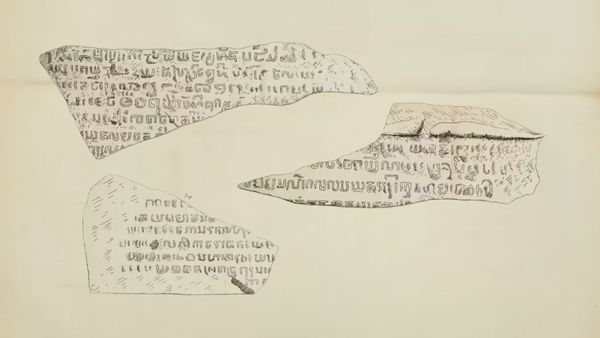
Can AI decode undeciphered languages? It really depends on the size of the corpus, and whether there are bilingual texts or other context to provide the meanings of words. Absent that, no matter how advanced AI gets, it can never decipher ancient scripts. (Plus, if we had bilingual texts or sufficient context, we’d probably have deciphered them already.)
 News
News
That article references another fascinating article from Aeon, which talks about the work of cryptology and the history of deciphering some of the most famous ancient scripts.


Speaking of dead languages, Colin Gorrie of the Dead Language Society newsletter has a great piece explaining how linguists are able to reconstruct ancient languages:
 Colin Gorrie
If you’ve ever struggled to understand the difference between idioma and lengua in Spanish, the Rosetta Stone blog has you covered:
 Jamie Edwards
The linguistics of alliteration, from Michael Ferber in the Speaking of Words column:
 Michael Ferber
Translanguaging is the use of linguistic resources from more than one language in a single discourse setting, in a way that crosses linguistic, political, or social boundaries. The term is meant to encompass a variety of phenomena, including code-switching and crossing. This article is an interview with one of the main progenitors of the concept, Ofelia García:
 Francois Grosjean Ph.D.
Why don’t we all speak the same language? There are 7,000 languages spoken on Earth. What are the costs — and benefits — of our modern-day Tower of Babel?
 Stephen J. Dubner
Back in 2023 the New York Times had a fun online article allowing you to participate in a classic kiki/bouba experiment, and described some of the research around it:
Generative AI tools are trained on the languages of the internet, i.e. primarily English, Spanish, and Mandarin. This leaves pretty big gaps in how AI is being trained:
 See More
📚 Books & Media
New (and old) books and media touching on language and linguistics.
I was reminded this week of a much older book by famous novelist Umberto Eco (author of The Name of the Rose) about the idea of a “perfect language” and how it has captivated European intellectuals for millennia. The book is called The search for a perfect language, and it’s one of his scholarly works:

That book also reminded me of another excellent book on a similar topic, In the land of invented languages: Adventures in linguistic creativity, madness, and genius, by Arika Okrent. Okrent also examines what exactly the philosophy, motivation, and mindset is of conlangers (people who create languages):

On that same topic, here are some older articles from Psychology Today about what conlangs can teach us about natural languages:
 David Adger Ph.D.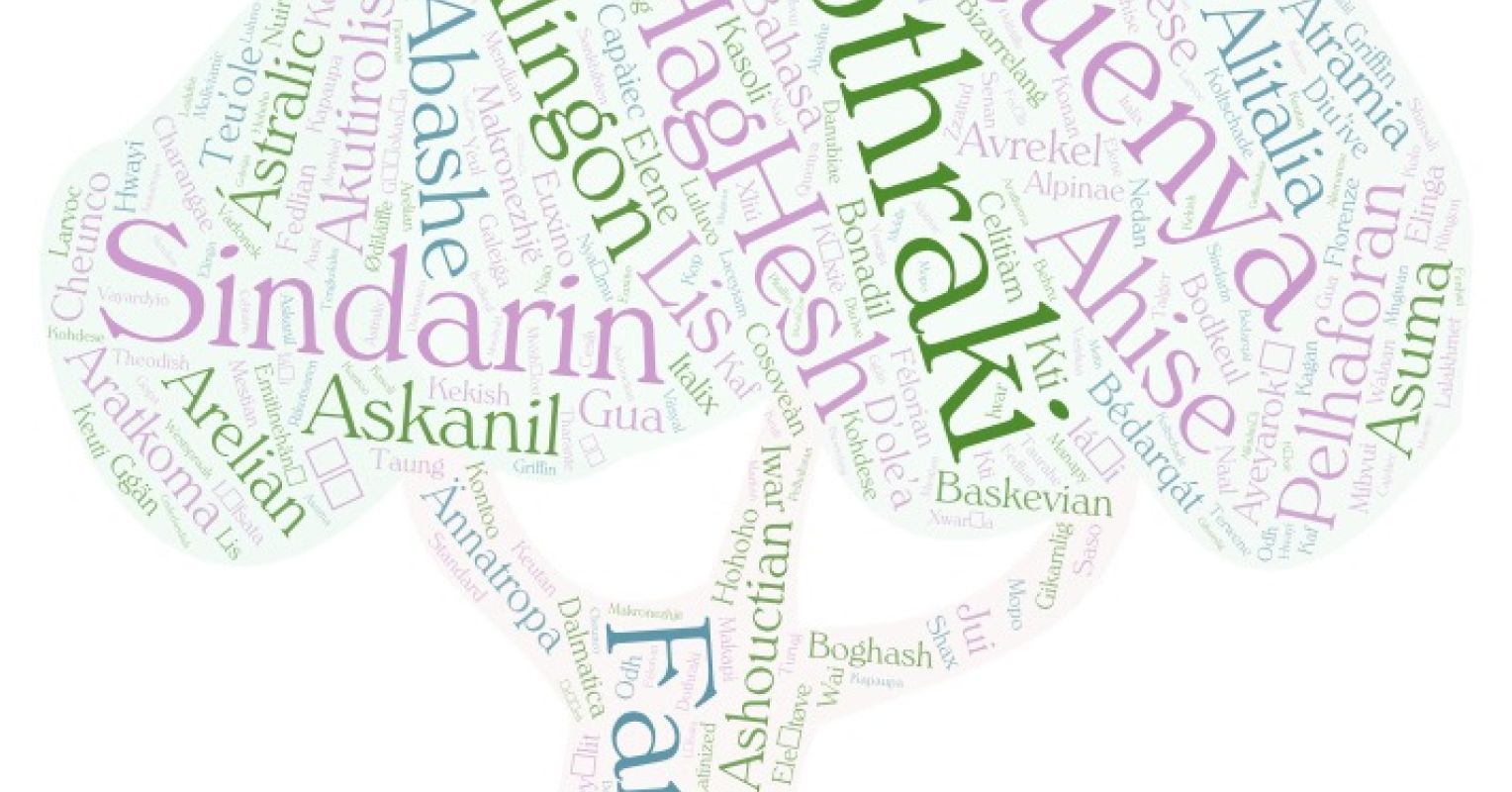
 David Adger Ph.D.
🗃️ Resources
Maps, databases, lists, etc. on language and linguistics.
🔤 Wiktionary

Did you know that Wiktionary has transcriptions in the International Phonetic Alphabet, often for multiple dialects and even with audio recordings, for most of its words? Such an incredibly useful resource:


🎙️ Linguistics Podcasts
This is your reminder that the Linguistic Discovery website has a list of over 60 linguistics podcasts to explore!
- Linguistics Podcasts (Linguistic Discovery)
Thanks for reading this issue of the Linguistic Discovery digest! I hope you found something fun to read and learned something new. Have a great week!
~ Danny
🚫 Errata
Corrections and clarifications.
In my article on loanwords in Hawaiian, I erroneously stated that Australian English pronounces /t/s as glottal stops [ʔ] between vowels, as in the phrase “a bottle of water”. This is incorrect. This dialect feature is most famously associated with Cockney English, not Australian English.
 Daniel W. Hieber, Ph.D.
If you’d like to support Linguistic Discovery, purchasing through these links is a great way to do so! I greatly appreciate your support!
Check out my entire Amazon storefront here.