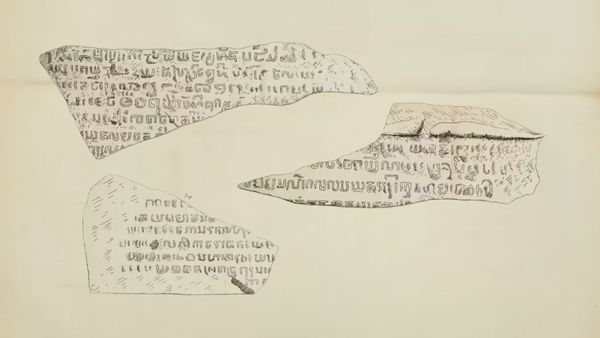
The last native speaker of Caddo dies at age 95
Also this week: The long-lost Chinese typewriter that changed modern computing, plus why AI doesn’t work in bars. Here’s what happened this week in language and linguistics.


Welcome back to Discovery Dispatch, a weekly roundup of the latest language-related news, research in linguistics, interesting reads from the week, and newest books and other media dealing with language and linguistics!
This weekly digest has been on an unintentional hiatus the past two weeks because I overoptimistically thought I could publish both this digest and two articles each week! Turns out that’s not so sustainable. Lesson learned! I’ll stick to the digest plus one other original article per week for the time being.
🆕 New from Linguistic Discovery
This week’s content from Linguistic Discovery.
The Iron Dreamers
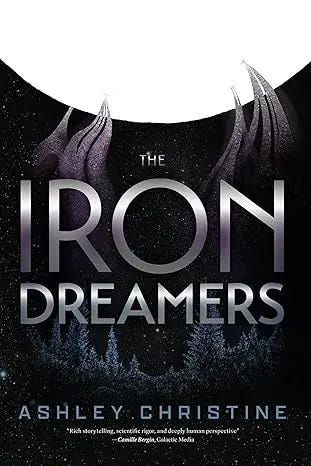
Fellow science communicator and internet friend Ashley Christine (@ModernDayEratosthenes: TikTok | Instagram | YouTube | Website) has just published her debut sci-fi novel, The Iron Dreamers, and it presents a fascinating linguistic thought experiment! The novel is set in a dystopian future, so Ashley had to think through what language would be like in that future world.
Over the last two weeks I’ve posted a 4-part series on the linguistics of The Iron Dreamers, covering everything from why languages change, whether you can change your grammar as an adult, whether some languages are more complex than others, and how new languages are formed. We then use that knowledge to think about language in The Iron Dreamers.
Here’s the entire series!
- Part 1: Why do languages change?
- Part 2: Are we stuck with the same grammar for life?
- Part 3: Are some languages more complex than others?
- Part 4: How are new languages created?
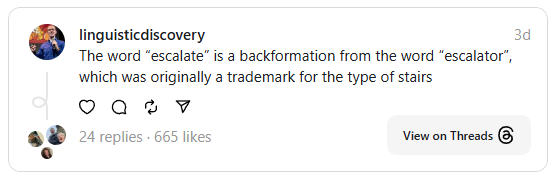
escalate
Fun fact: The word escalate is a backformation from the word escalator, which was originally a trademark for the type of moving stairs.


Indigenous classification systems
Here’s a short thread on indigenous systems of classifying plants and species:
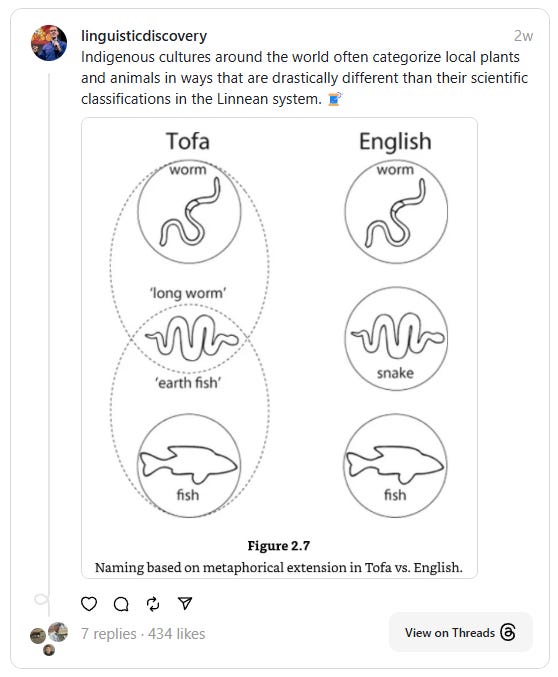

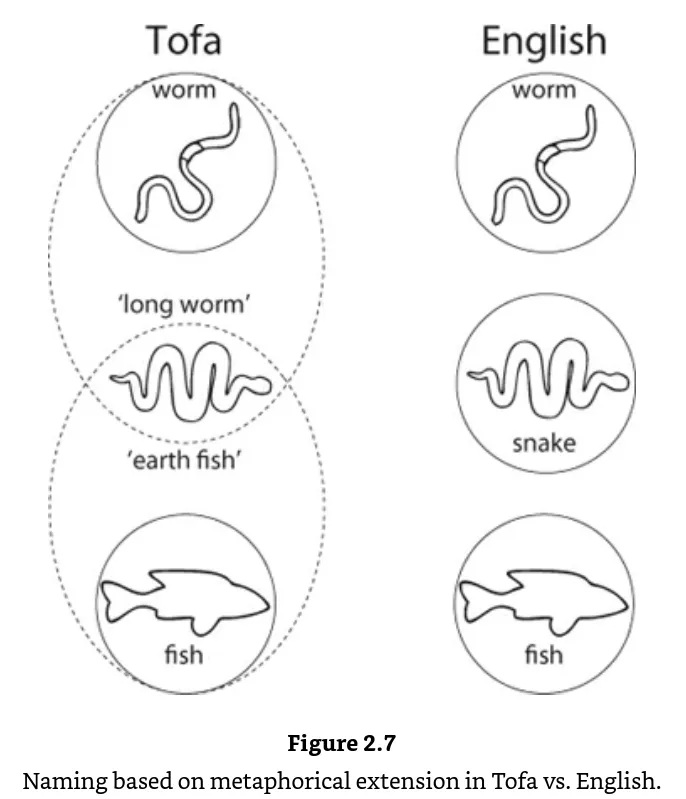
The graphics in that thread are taken from one of my favorite pop linguistics books, all about indigenous knowledge systems:

📰 In the News
Language and linguistics in the news.
The long-lost Chinese typewriter that changed modern computing

Scholars in the U.S., Taiwan and China are buzzing about the discovery of an old typewriter, because the long-lost machine is part of the origin story of modern Chinese computing[.]
China's entry into modern computing was critical in allowing the country to become the technological powerhouse it is today. But before this, some of the brightest Chinese minds of the 20th century had to figure out a way to harness the complex pictographs that make up written Chinese into a typewriter, and later, a computer.
Last native speaker of Caddo dies

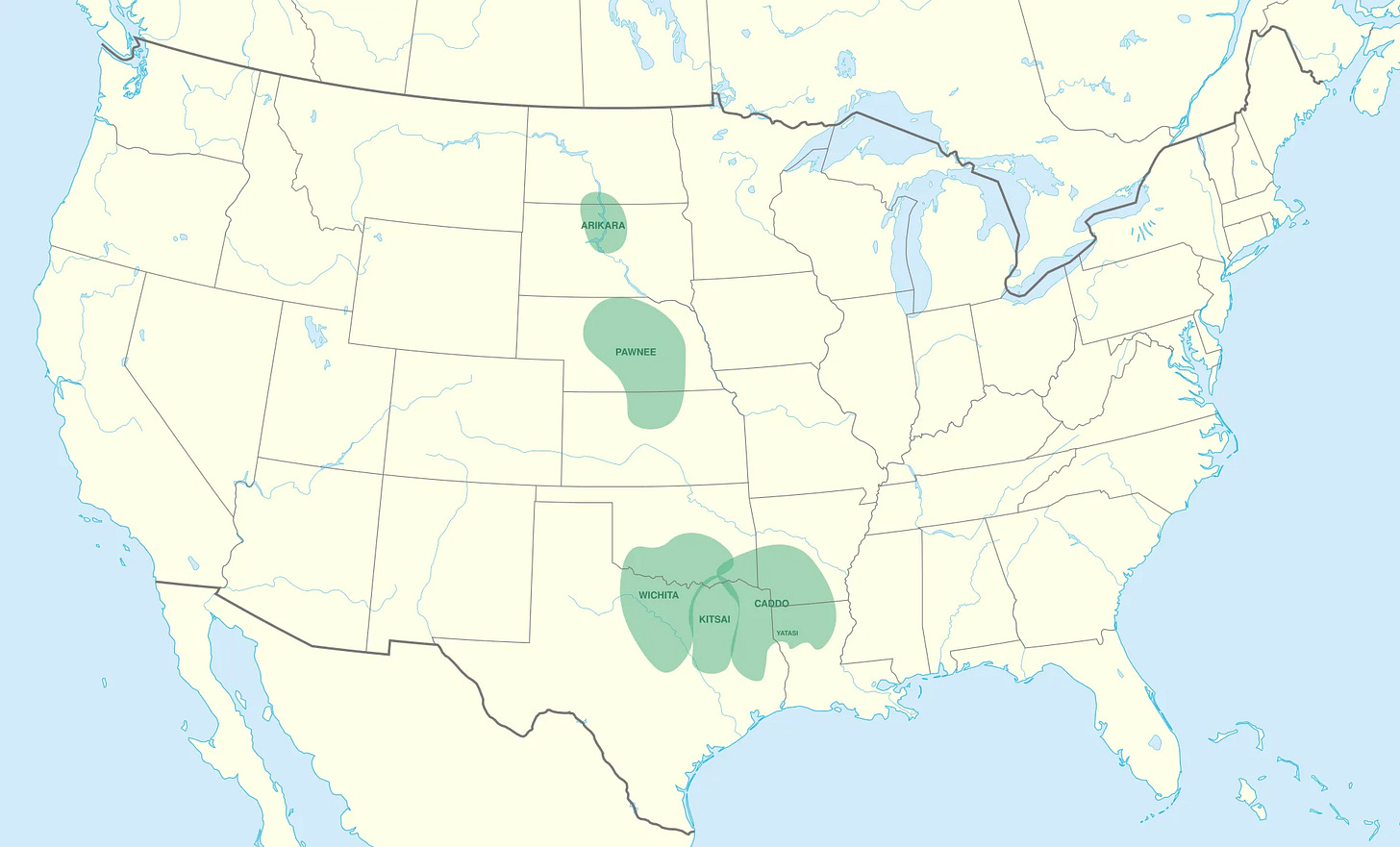
Edmond Johnson, the last fluent speaker of the Caddo language, has passed away at age 95. The Caddo Nation still has some speakers as well as written materials in and about the language going back almost 200 years, but Johnson’s passing is nonetheless a devastating cultural and linguistic loss to the community.
 People Editorial Guidelines
National Linguistics Day

For those of you that live in the UK, Linguistics HQ is promoting a National Linguistics Day on November 26th! Linguistics HQ’s website includes free educational resources about linguistics for teachers as well.
- National Linguistics Day (Linguistics HQ)
🗞️ Current Linguistics
Recently published research in linguistics.
Semantic predictions and the waves of speech: How acoustic information is used to aid predictions (Psychology Today)
How does the brain use the information provided by the acoustic “envelope” or “wave” of ongoing speech to predict what's coming next? Going beyond this, is it possible that the brain can recruit semantic information to facilitate this component of speech perception? A recent study led by Nicola Molinaro at the Basque Center on Cognition, Brain and Language explored these interesting questions.
Can AI models show us how people learn? Impossible languages point the way (Quanta Magazine)
Certain grammatical rules never appear in any known language. By constructing artificial languages that have these rules, linguists can use neural networks to explore how people learn.
AI outperforms humans in understanding speech—with one notable exception (Science Blog)
In a study published in new study published in JASA Express Letters, researchers have discovered that OpenAI’s latest speech recognition system can now outperform human listeners in most challenging conditions – with one telling exception: the noise of a crowded pub still proves too complex for AI to match human performance.
Mothers’ language choices have double the impact in bilingual families (The Suburban)
New research shows that mothers have twice the impact on language exposure, challenging traditional parenting advice. Parents hoping to raise bilingual children have long been given the advice to follow a strict one-parent-one-language approach. However, a recent Concordia University study reveals that bilingual Montreal families are charting their own path — with mothers having an extensive impact on children’s language exposure.
Polysynthesis is more likely to evolve in small, isolated populations (PNAS)
This research article doesn’t have an accompanying explainer, but I’m including it in this week’s digest because it’s directly relevant to Part 3 of my series on the linguistics of Iron Dreamers! Polysynthesis is tricky to define, but describes languages which are highly synthetic (with lots of morphemes / meaningful parts per word) that can express entire events and their participants in a single clause. Here’s a classic example from Central Alaskan Yup’ik:
-
Central Alaskan Yup’ik (Inuit–Yupik–Unangan; Alaska)
- tuntussuqatarniksaitengqiggtuqtuntu‑ssur‑qatar‑ni‑ksaite‑ngqiggte‑uqreindeer‑hunt‑fut‑say‑neg‑again‑3sg:ind
‘He had not yet said again that he was going to hunt reindeer.’
Payne (1997: 28)
| FUT | future |
| NEG | negation |
| 3 | third person |
| SG | singular |
| IND | indicative mood |
What this study finds is that these types of languages are more likely to emerge in small, isolated populations. I discuss prior evidence we had for this correlation in Part 3 of the Iron Dreamers series, and explain why this might be. So it’s great to see additional evidence for this correlation.
 Daniel W. Hieber, Ph.D.
I should note that not all linguists find the idea of polysynthesis to be a coherent one, however. Linguist Martin Haspelmath has critiqued the notion in a review article:
- Haspelmath, Martin. 2018. The last word on polysynthesis: A review article. Linguistic Typology 22(2). 307–326. https://doi.org/10.1515/lingty-2018-0011.
📃 This Week’s Reads
Interesting articles I’ve come across this week.
 Francois Grosjean Ph.D.
 By
By
 Mark Turin
 Kaamil Ahmed
 Lisa Lim
 Patrick Lum
 Georgy Kantor
 Ryan F. Lei


📚 Books & Media
New (and old) books and media touching on language and linguistics.
The hot new release last week was fellow linguistics communicator Adam Aleksic’s (@EtymologyNerd) debut book Algospeak: How social media is transforming the future of language:
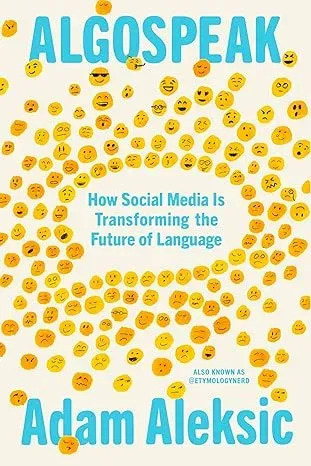
The book debuted at #2 on the New York Times bestseller list, and Adam has been on the talk show and podcast circuit promoting it over the last two weeks. Here are some initial reviews and interviews:
- The Harvard-educated linguist breaking down ‘skibidi’ and ‘rizz’ (NYT)
- ‘Algospeak’ says we’re living through a linguistic revolution (Washington Post)
- Slay the new slang: check out a guide to social media’s baffling lingo (New Scientist)
- How the TikTok algorithm created new words like ‘unalive’ (LA Times)
🗃️ Resources
Maps, databases, lists, etc. on language and linguistics.
Grammar Watch

The Association for Linguistic Typology maintains Grammar Watch, a database of reference grammars of the world’s languages:
 Grammar Watch
👋🏼 Til next week!
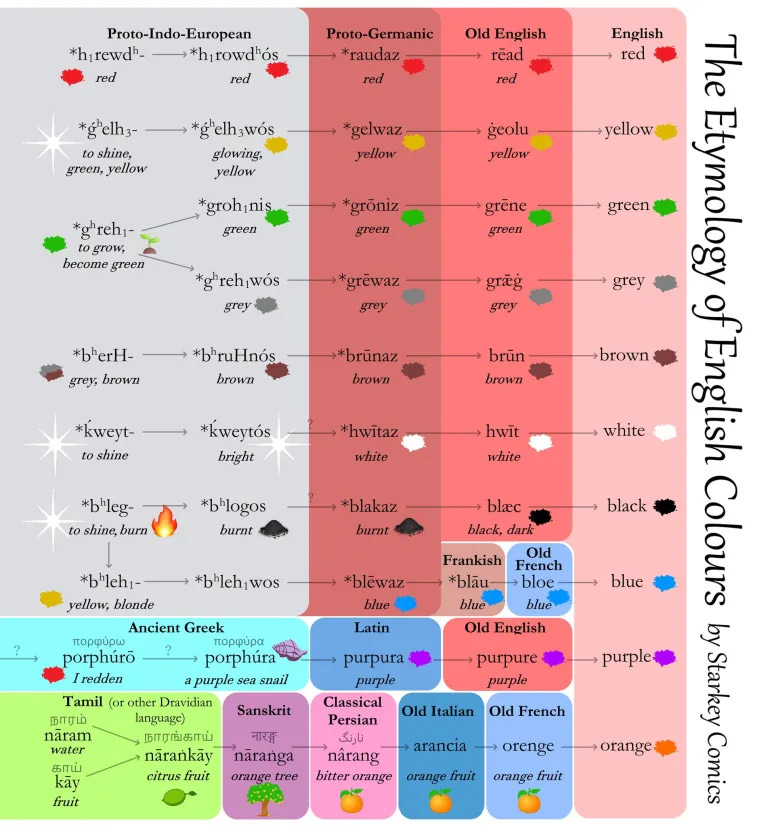
I’ll end this week’s digest with a great infographic from the ever-fantastic Ryan Starkey (Starkey Comics). Be sure to read all the details in the accompanying blog post:
 Ryan Starkey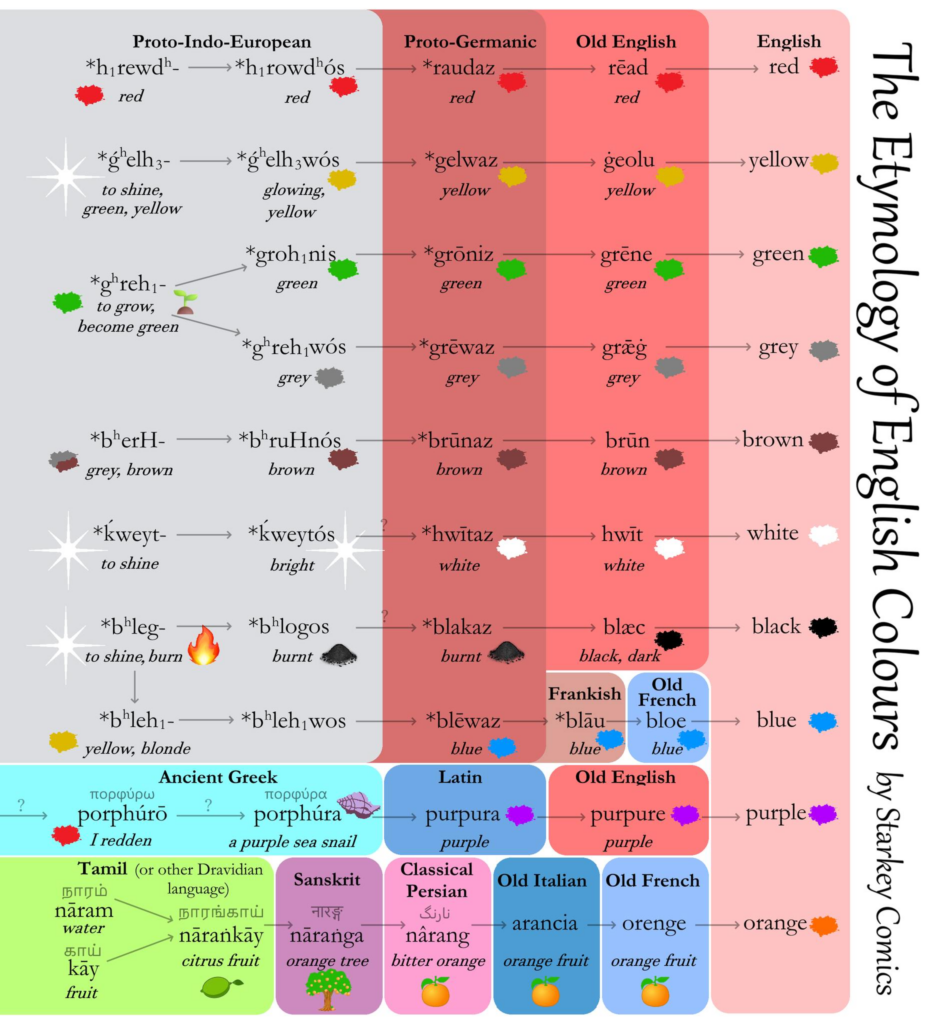
📑 References
Payne, Thomas. 1997. Describing morphosyntax: A guide for field linguists. Cambridge University Press.
If you’d like to support Linguistic Discovery, purchasing through these links is a great way to do so! I greatly appreciate your support!
Check out my entire Amazon storefront here.