A mysterious pre-Islamic script from Oman has been deciphered, while AI helps historians complete damaged Latin texts
Also this week: Does your native language affect how you feel pain? And did language evolve because of tools or baby talk? Here’s what happened this week in language and linguistics.

Welcome to this week’s edition of Discovery Dispatch, a weekly roundup of the latest language-related news, research in linguistics, interesting reads from the week, and newest books and other media dealing with language and linguistics!
🆕 New from Linguistic Discovery
This week’s content from Linguistic Discovery.
What to do when someone corrects your pronunciation
A year or so ago, internet friend and fellow science communicator Ashley Christine (whose book you just learned all about in in the past several weeks) asked me what to do when someone tries to correct your pronunciation in a video. This got me to thinking, and I put together an 8-minute video with advice on the topic, including some strategies about how to educate people about linguistics!
Linguistics in Connections 8/2

In the NYT Connections puzzle for 8/2, one of the categories involved a fun concept from linguistics: contranyms, i.e. words that mean their own opposite. Some examples include:
- dust: remove dust / add dust
- fast: without moving, fixed in place / moving quickly
You can play that day’s puzzle here:


📰 In the News
Language and linguistics in the news.
New AI models help historians complete damaged Latin texts
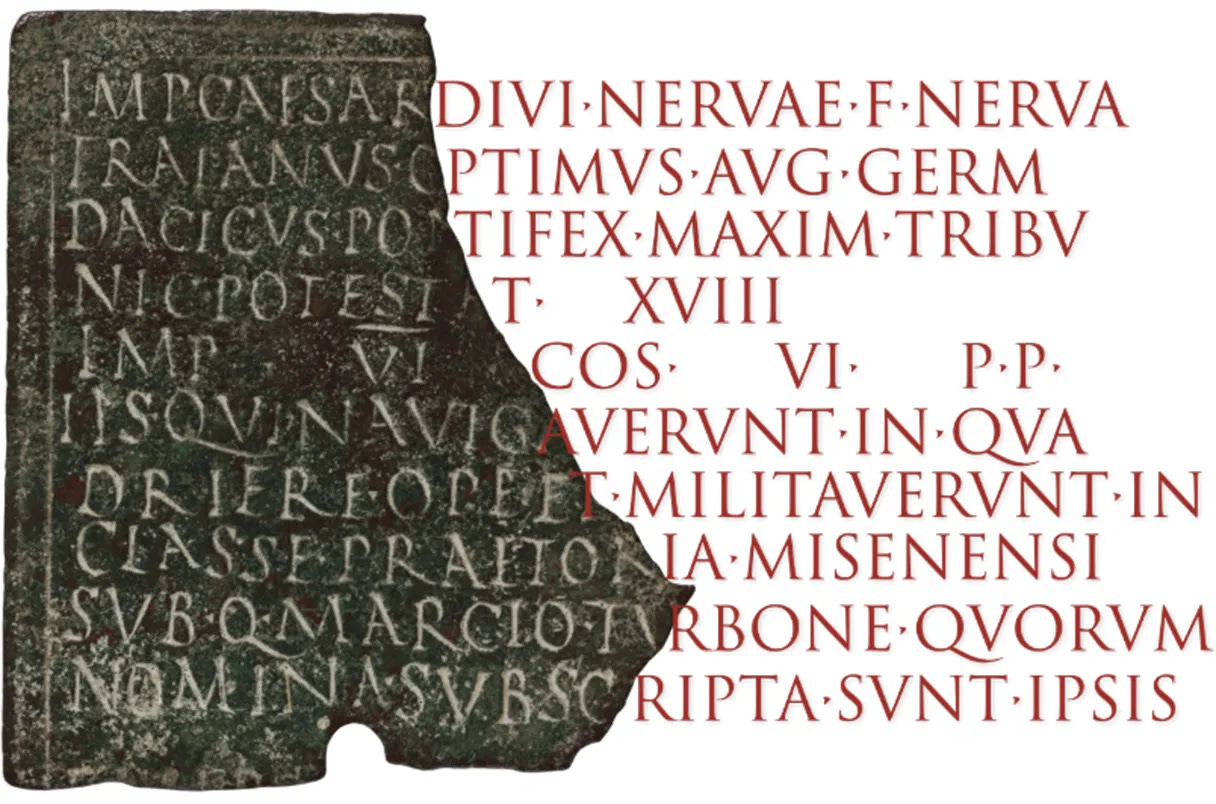
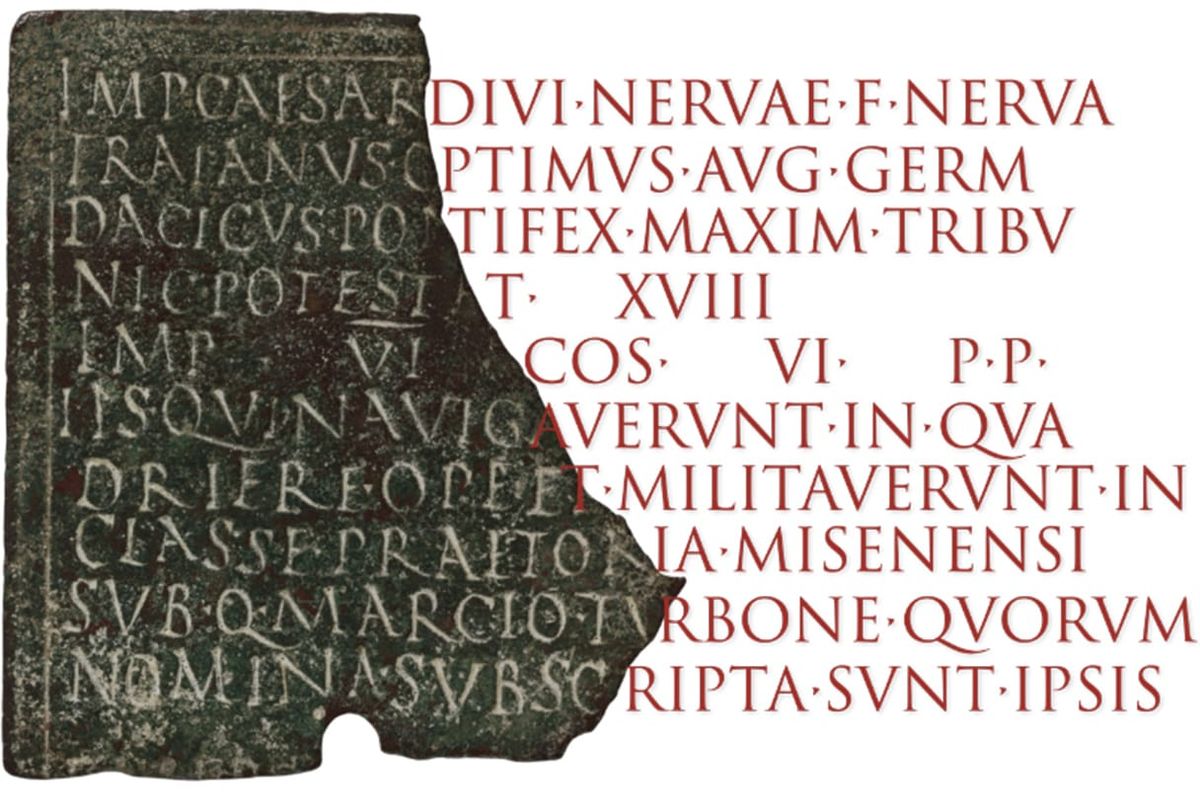
Many inscriptions have been separated from their original sources or have been rendered broken and illegible through wear and tear—making it incredibly difficult to parse the 1500 new Roman inscriptions that are found annually. Now, filling in the gaps of history has just gotten easier thanks to Aeneas, a large language model (LLM) unveiled yesterday in Nature that’s designed to interpret and contextualize Roman inscriptions.
- New AI model helps historians complete damaged Latin texts (Science)
- Assael et al. 2025. Contextualizing ancient texts with generative neural networks. Nature. DOI: https://doi.org/10.1038/s41586-025-09292-5.
Mysterious pre-Islamic script from Oman deciphered
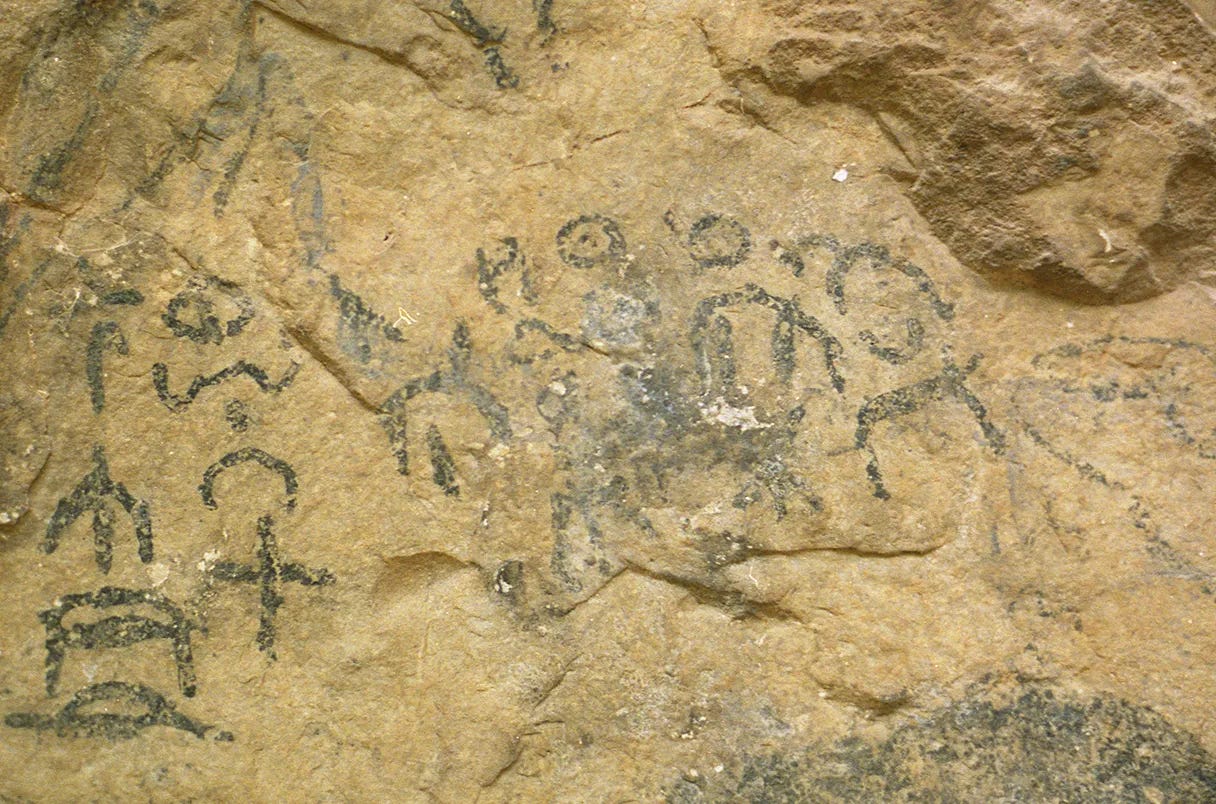
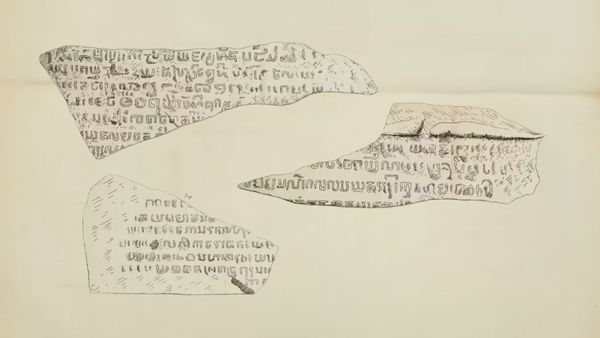
Rock faces within the caves and dried riverbeds of Oman’s Dhofar governorate bear nearly 2400-year-old writings that snake across the surface in a mysterious script. For more than a century, these inscriptions—known as the Dhofari script—had defied decipherment. Now, in a study in press at the journal Jaarbericht Ex Oriente Lux, a linguist says he has deciphered the main subtype of the Dhofari script, and has found evidence that its alphabet didn’t originate in southern Arabia.
- Mysterious pre-Islamic script from Oman finally deciphered (Science)
- Al-Jallad. 2025. The decipherment of the Dhofari script: Three halḥam abecedaries and the first glimpses into the corpus. Jaarbericht Ex Oriente Lux 49. DOI: https://doi.org/10.5281/zenodo.15853465.
🗞️ Current Linguistics
Recently published research in linguistics.
Does your native language affect how you feel pain?
One of the oldest questions in the history of psychology is about how language influences the mind. Does the language we use impact how we see the world? A new study, shows that even the most basic, least abstract mental phenomenon is affected by language: pain.
 Bence Nanay Ph.D.
- Gianola, Llabre, & Losin. 2024. Does pain hurt more in Spanish? The neurobiology of pain among Spanish–English bilingual adults. Social Cognitive & Affective Neuroscience 19(1): nsad074. DOI: https://doi.org/10.1093/scan/nsad074.
LLMs can now conduct linguistic analysis
In a new study, Gašper Beguš and colleagues examined the ability of large language models (LLMs) to conduct linguistic analysis, such as drawing syntactic trees and positing phonological rules. They find that the newest models vastly outperform older ones.
- Chatbots don’t just do language, they do metalinguistics (IEEE Spectrum)
- Begus, Dabkowsky, & Rhodes. 2025. Large linguistic models: Investigating LLMs’ metalinguistic abilities. IEEE Transactions on Artificial Intelligence. DOI: https://doi.org/10.1109/TAI.2025.3575745.
Did language evolve because of tools?
This is recent reporting from New Scientist on an old 2014 study:
Researchers tasked 24 volunteers with learning to make hand axes from an expert who either talked them through the process or merely made the tools in the volunteers’ presence while occasionally pointing to direct their attention. Surprisingly, both methods were effective, suggesting verbal language isn’t necessary for complex tool-making.
 #author.fullName}
- Putt, Woods, & Franciscus. 2014. The role of verbal interaction during experimental bifacial stone tool manufacture. Lithic Technology 39(2): 96–112. DOI: https://doi.org/10.1179/0197726114Z.00000000036.
Or did language evolve because of baby talk?
The way that human adults talk to young children is unique among primates, a new study found. That might be one secret to our species’ grasp of language.
The researchers discovered a stark difference between humans and apes: Young apes hardly ever heard infant-directed communication from the adult apes around them. Even among chimpanzees, which chatter to one another on a regular basis, the adults might call just once to an infant over the course of an entire day. On other days, the young chimps received no communication at all, not even from their mothers.
Human children have a profoundly different experience with language, the researchers found. In every culture, children were spoken to by adults many times a day — every few minutes, in some cases. The rate that children heard infant-directed communication was 69 times as high as what Dr. Fryns observed among chimpanzees, and 399 times as high as what Dr. Wegdell observed among bonobos.
- Wegdell et al. 2025. The evolution of infant-directed communication: Comparing vocal input across all great apes. Science Advances 11(26). DOI: https://doi.org/10.1126/sciadv.adt7718.
AI isn’t good at detecting bullying because Gen Alpha’s slang is still so new
Generation Alpha’s internet lingo is mutating faster than teachers, parents and AI models can keep up – potentially exposing youngsters to bullying and grooming that trusted adults and AI-based safety systems simply can’t see.
 #author.fullName}
- Mehta & Giunchiglia. 2025. Understanding Gen Alpha’s digital language: Evaluation of LLM safety systems for content moderation. FAccT ‘25: Proceedings of the 2025 ACM Conference on Fairness, Accountability, and Transparency, pp. 2863–2873. DOI: https://doi.org/10.1145/3715275.3732184.
📃 This Week’s Reads
Interesting articles I’ve come across this week.
 Valerie Fridland Ph.D.


- The author of this article is Ross Perlin, author of Language city: The fight to preserve endangered mother tongues in New York
 Olivia Thayer, M.A.
 Colin Gorrie
 India McTaggart
- (A full stop in British English is a period in American English.)
 The Economist
- (The answer may not be a straightforward “yes”.)
 Jennifer Gunner


 Valerie M. Fridland
- The author of this article is Valerie M. Fridland, author of Like, literally, dude: Arguing for the good in bad English
🗃️ Resources
Maps, databases, lists, etc. on language and linguistics.
Typological Atlas of the Languages of Daghestan

The languages of Daghestan have a long descriptive tradition. Available grammars contain a wealth of data which, however, have not been analyzed from an areal point of view. The goal of this project is to develop a tool for the visualization of information about linguistic structures characteristic of Daghestan.
TALD is a tool for the visualization of information about linguistic structures typical of Daghestan. The scope of the project currently covers all East Caucasian languages and several other languages spoken in Daghestan, Chechnya, Ingushetia and adjacent territories.
The Atlas consists of:
- Chapters describing linguistic phenomena typical of the area (some of the chapters are linked to a major topic, i.e., a more descriptive chapter to which several features are related)
- Datasets with information on particular features
- Map visualizations of how these features are distributed
- A bibliography of literature on languages of the area
In its current version the Atlas consists of 62 datasets and 5 major topics with information on linguistic features mostly in the areas of phonology, morphology, the lexicon and discourse. New topics covering the areas that have not been dealt with so far will be added in later versions.


👋🏼 Til next week!
If you’d like to support Linguistic Discovery, purchasing through these links is a great way to do so! I greatly appreciate your support!
Check out my entire Amazon storefront here.