Researchers uncover the origins of the Uralic language family
Also this week: Today is National Navajo Code Talkers Day! And the K-pop band is making Korean Sign Language famous

Welcome to this week’s edition of Discovery Dispatch, a weekly roundup of the latest language-related news, research in linguistics, interesting reads from the week, and newest books and other media dealing with language and linguistics!
📢 Updates
Announcements and what’s new with me and Linguistic Discovery.
7000 Languages’ Revitalization Fellowship
If you are interested in working to revitalize your community’s endangered language, you might be interested in this fellowship opportunity from 7000 Languages, a nonprofit organization “with the mission to empower communities around the world to teach, learn, and sustain their endangered languages”. The deadline for applications is August 24.


More information about the fellowship can be found here.
🆕 New from Linguistic Discovery
This week’s content from Linguistic Discovery.
Revitalizing a language from old manuscripts
Is it possible to revitalize a dormant language that’s no longer spoken?
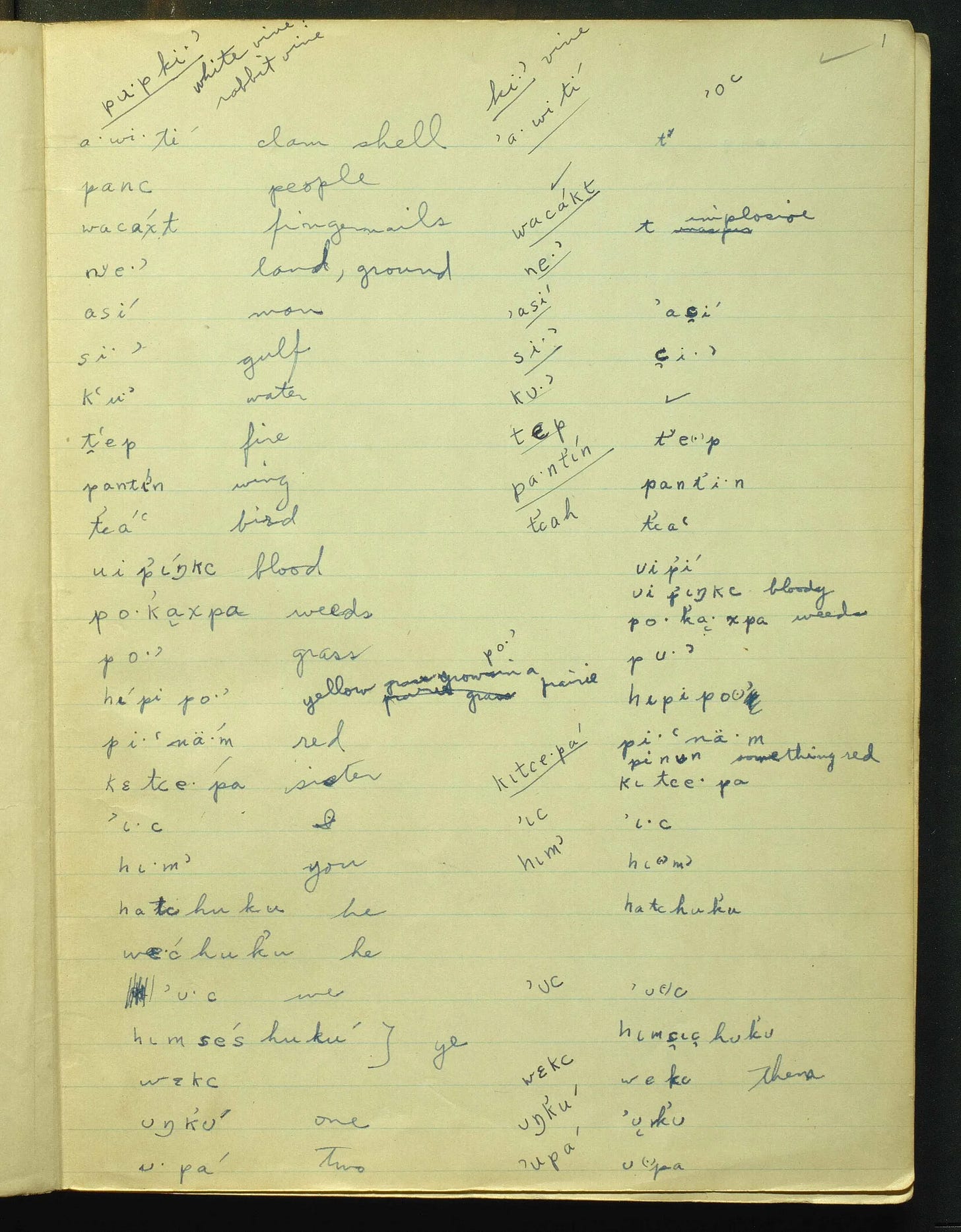
Yes! You just have to have the right materials—a dictionary, grammatical description, and collection of texts/stories. Together these materials are known as the Boasian Trilogy (after Franz Boas, who stated this documentary practice).
In this special video issue for paid subscribers, I take you on a tour of the Boasian Trilogy for Chitimacha, a once-dormant language I’m helping to revitalize. I talk a bit about their historical context, how linguists go about documenting a language, and what kinds of modern research these manuscripts have enabled.
 Daniel W. Hieber, Ph.D.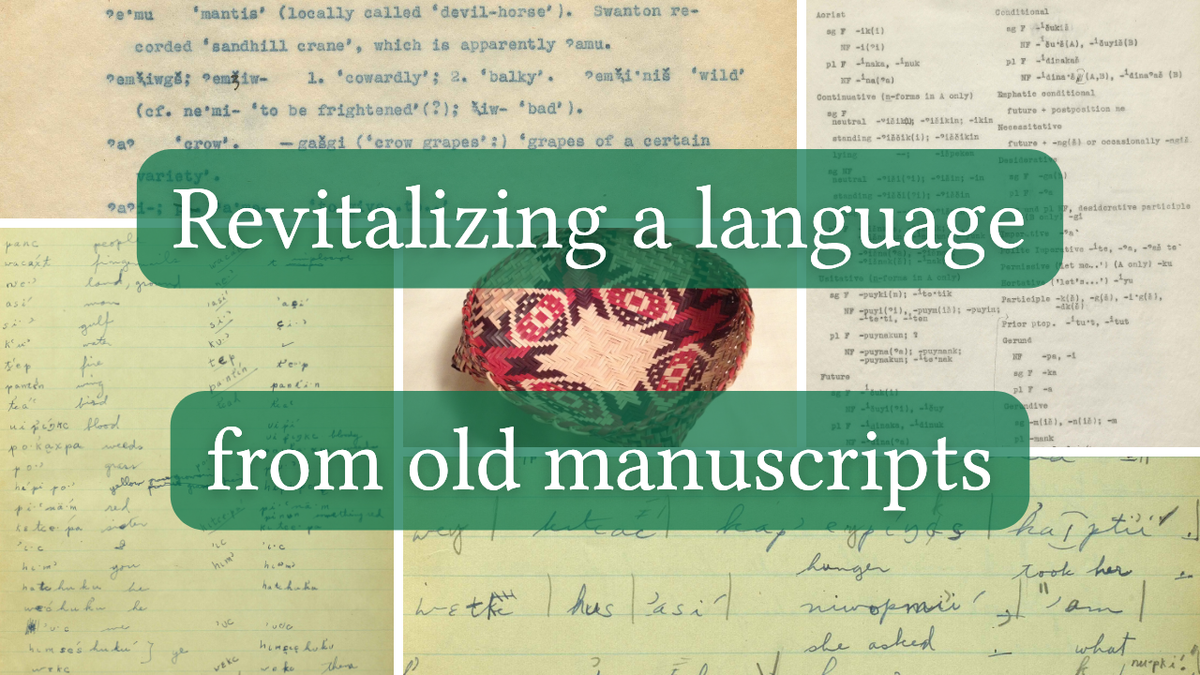
📰 In the News
Language and linguistics in the news.
National Navajo Code Talkers Day
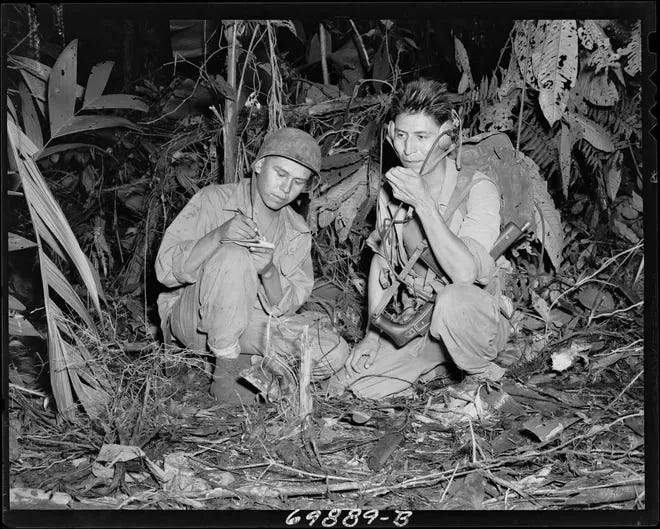
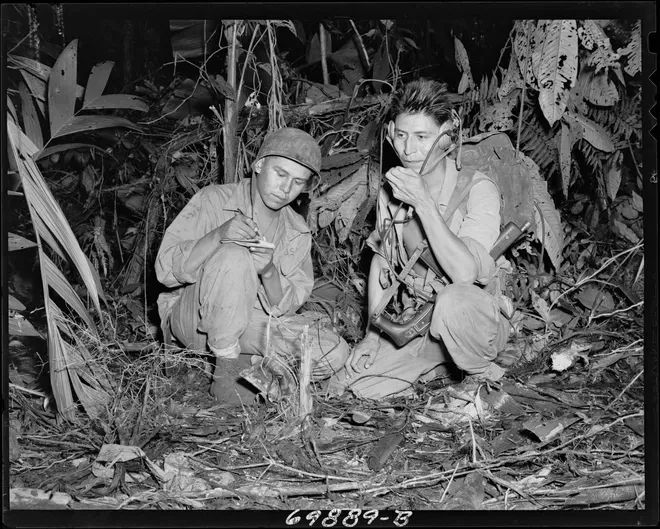
Today is National Navajo Code Talkers Day!
During WWII the U.S. military recruited speakers of Navajo to create a code based on their incredibly complex language. The Japanese were never able to break the code, and it use contributed significantly to U.S. success in the Pacific theater.
Major Howard Connor, 5th Marine Division signal officer during the war, stated:
Were it not for the Navajos, the Marines would never have taken Iwo Jima.
The Navajo were the most famous of several Native American groups whose languages were used as codes during the war. Other languages included Cherokee, Choctaw, Comanche, Cree, Fox, Mohawk, Seminole/Creek, and Cree.
Despite their patriotism and heroic contributions to the war, in March the Department of Defense and U.S. Army scrubbed their websites of any mention of the code talkers as part of Trump’s anti-DEI initiatives.
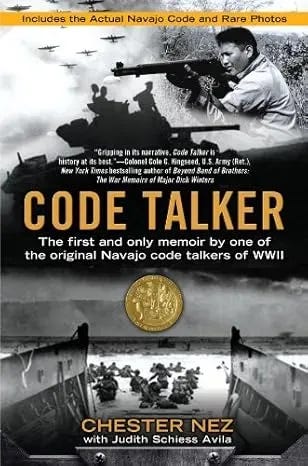
So if you’re looking for a place to learn more about the code talkers, I highly recommend Code Talker, the only memoir of one of the original Navajo code talkers. I’ve read every book on the code talkers and this is by far my favorite:
Baidu seeks to decipher animal communication
China’s largest search engine, Baidu, is looking to patent an AI system that would decipher animals sounds
The K-pop band making Korean Sign Language famous

Big Ocean, a K-pop boy band whose members are deaf or hard of hearing, incorporate Korean Sign Language (KSL) into their videos and performances, and fans are loving it
Archaeologists find oldest rune stone in Norway
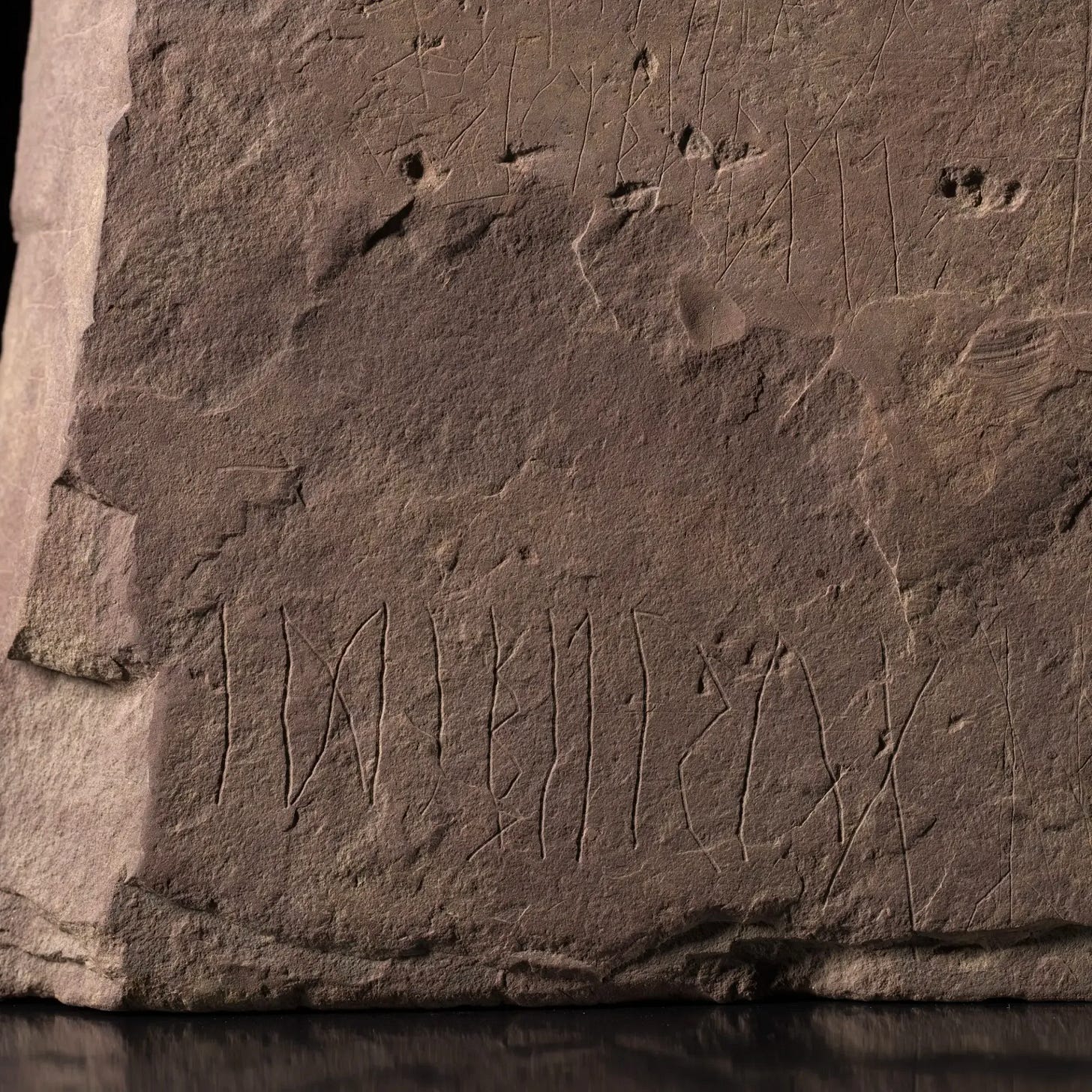
This is an older bit of news from January 2023, but researchers have found and dated a runestone in Norway to sometime between 0–250 CE, potentially making it the earliest instance of writing in Scandinavia. Known as the Svingerud Stone, it has several types of inscriptions in different areas, including the beginning of the runic alphabet or futhark, ᚠ (f), ᚢ (u) and ᚦ (th).
 Bård Amundsen
- World’s oldest rune stone found in Norway, archaeologists believe (Science Norway)
The research into this runestone was published later in 2023:
 Kristel Zilmer|Krister S.K. Vasshus
🗞️ Current Linguistics
Recently published research in linguistics.
The origins of the Uralic language family
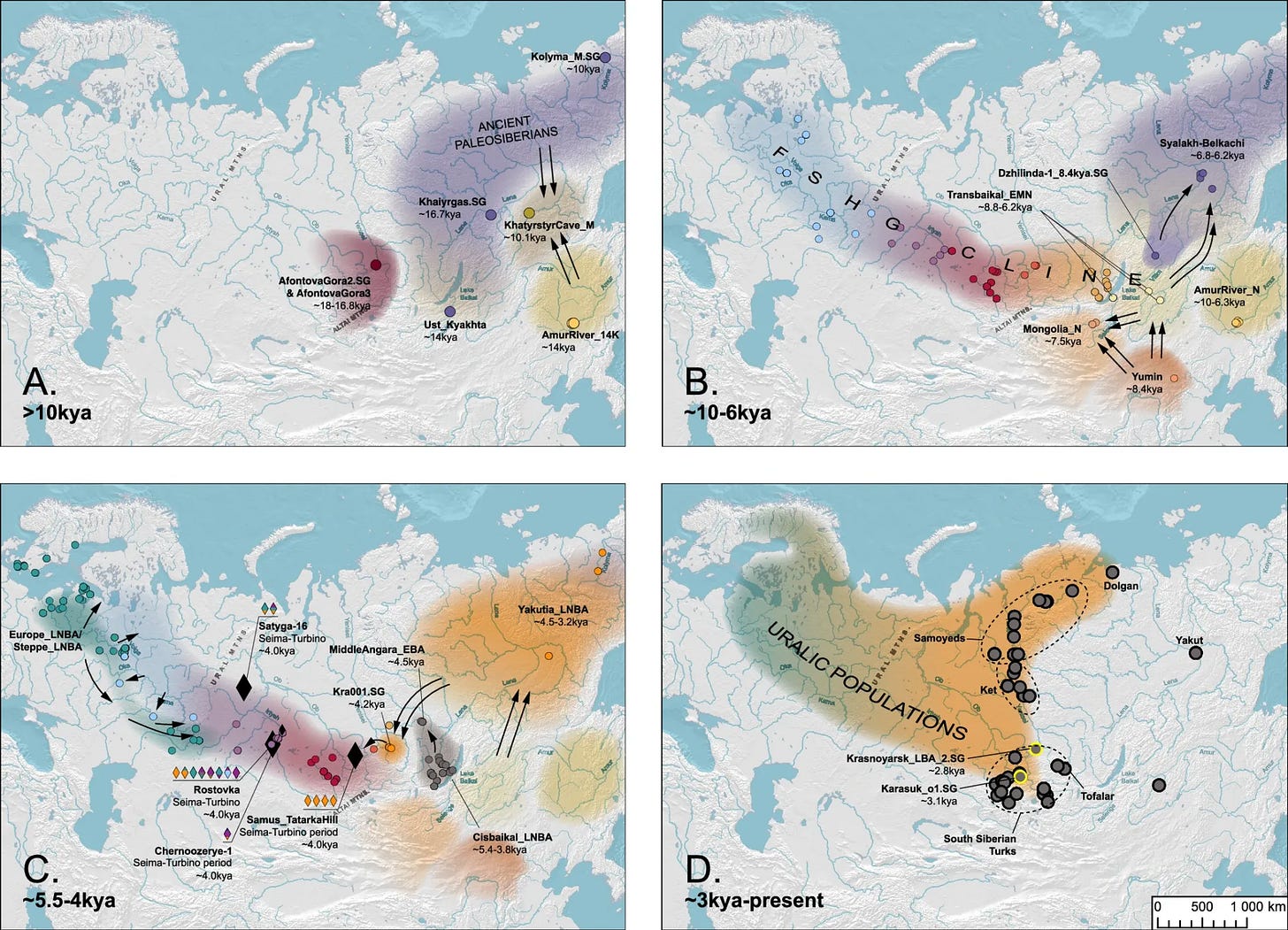
A recent study finds genetic evidence that the the Uralic language family—which includes Hungarian, Finnish, Estonian, and others—had its origins in people living in northeastern Siberia about 4,500 years ago (c. 2500 BCE).
 Christy DeSmith
 Tian Chen Zeng
Blind people gesture (and why that’s kind of a big deal)
Lauren Gawne over at the Superlinguo blog reports on new research that shows that both blind and sighted people who speak the same language use similar gestures to represent events. Since these gestures can’t have been acquired visually in the case of blind people, this suggests that gesture and speech must be somehow linked in the brain.
- Özçalışkan, Lucero, & Goldin‐Meadow. 2024. Is vision necessary for the timely acquisition of language‐specific patterns in co‐speech gesture and their lack in silent gesture?. Developmental Science 27(5): e13507. DOI: https://doi.org/10.1111/desc.13507.
Each AI chatbot has its own distinctive writing style—just as humans do
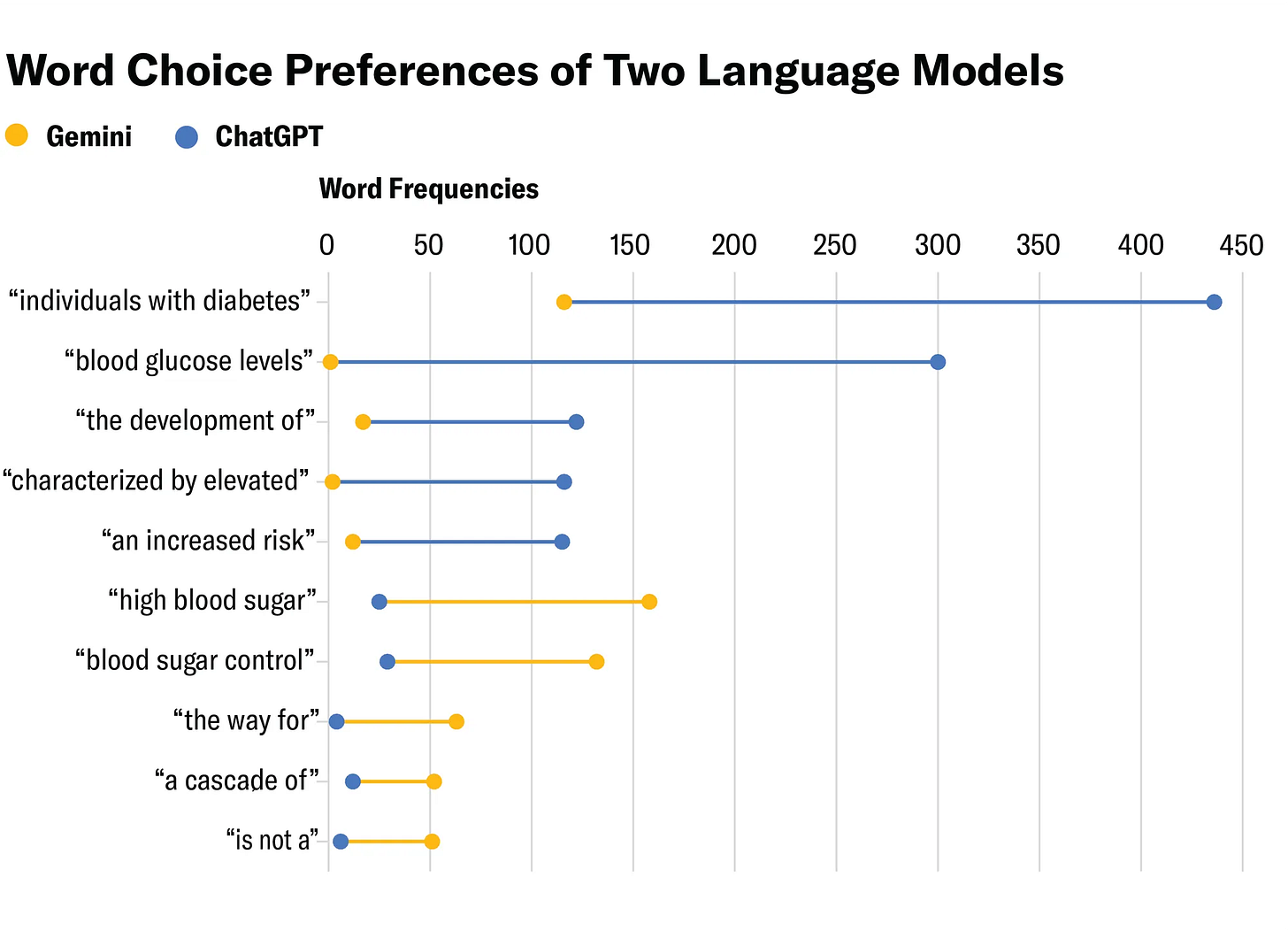
Each person’s individual way of speaking is called an idiolect, and linguists can actually measure differences between individual idiolects, such as frequency of word use or use of grammatical constructions. Linguist Karolina Rudnicka realized she could similarly create a linguistic profile for the different Large Language Models on the market.
 Karolina Rudnicka
- Ridnicka. preprint. The language of AI tools as idiolects—thus comparable to other idiolects. DOI: https://doi.org/10.31219/osf.io/7qwzu_v1.
LLMs do metalinguistic analysis
Continuing on the topic of LLMs, here’s some additional reporting on a study I mentioned last week which showed that recent versions of LLMs are now capable of doing metalinguistic analysis:
 Jason Pohl


Elephants use gestures intentionally—just like humans
For the first time, researchers have collected evidence that African elephants intentionally and creatively use gestures to signal what they want — a method of communication associated with human language.
The team found that elephants can recognize when someone is paying attention or not, persist with gesturing when their desire is only partially filled, and make their gesturing more elaborate when their first attempts are unsuccessful.
These are the main criteria for a behavior called “goal-directed intentionality,” and, outside of human communication, it has only been widely documented in primates, with some individual exceptions in non-primate species, according to the study.
- Elephants use gestures intentionally—just like humans, new evidence shows (Idaho Statesman)
- Eleuteri et al. 2025. Investigating intentionality in elephant gestural communication. Royal Society Open Science 12(7). DOI: https://doi.org/10.1098/rsos.242203.
📃 This Week’s Reads
Interesting articles I’ve come across this week.
 Marcel Danesi Ph.D.
 Charles Hymas
 Cindy Blanco, Ph.D.
 Colin Gorrie
 Jacyb Porter
 Michael Ferber
 Stephanie N. Del Tufo


 Ghazala Wahab
 Roger J. Kreuz
📚 Books & Media
New (and old) books and media touching on language and linguistics.
Books for Linguistics Students
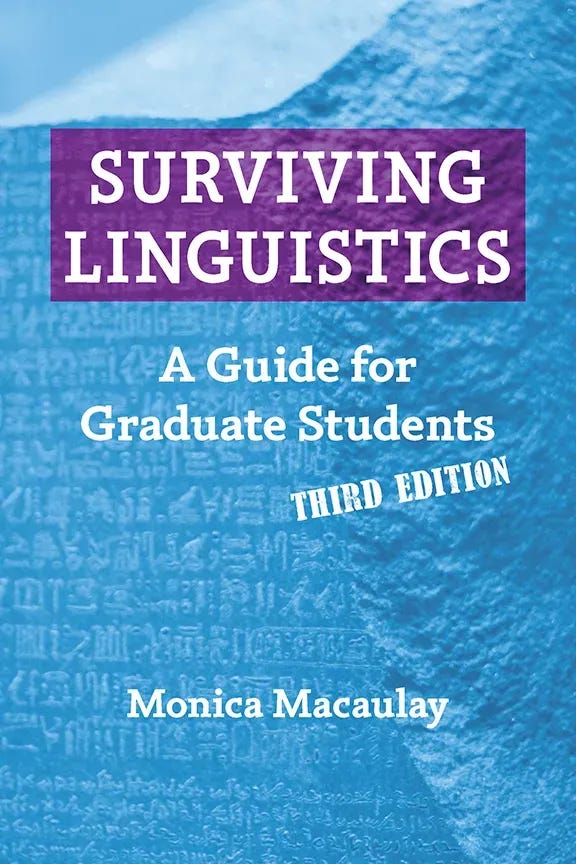
Do you study (or want to study) linguistics? Here are a few books written specifically for linguistics students:

🗃️ Resources
Maps, databases, lists, etc. on language and linguistics.
Online Database of Interlinear Texts (ODIN)
The Online Database of Interlinear Texts (ODIN) is a collection of glossed interlinear texts extracted from documents on the web. v2.1 contains 158,007 instances of interlinear examples from 1,496 languages.


 Contributors to Wikimedia projects
👋🏼 Til next week!
I’ll leave you this week with a joke I got from @the.language.nerds on Instagram:
A priest, a pastor, and a rabbit entered a clinic to donate blood. The nurse asked the rabbit: “What’s your blood type?”
“I’m probably a type O,” said the rabbit.
If you’d like to support Linguistic Discovery, purchasing through these links is a great way to do so! I greatly appreciate your support!
Check out my entire Amazon storefront here.