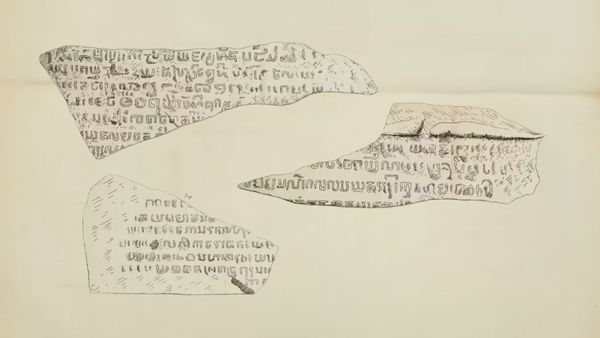
Analysis of a century’s worth of political speeches challenges our understanding of how language changes
Also this week: Bilingualism is reworking this language’s rainbow + How speaking in a second language directly affects your moral judgement

Welcome to this week’s edition of Discovery Dispatch, a weekly roundup of the latest language-related news, research in linguistics, interesting reads from the week, and newest books and other media dealing with language and linguistics!
📢 Updates & Announcements
Announcements and what’s new with me and Linguistic Discovery.
Surviving linguistics launch event
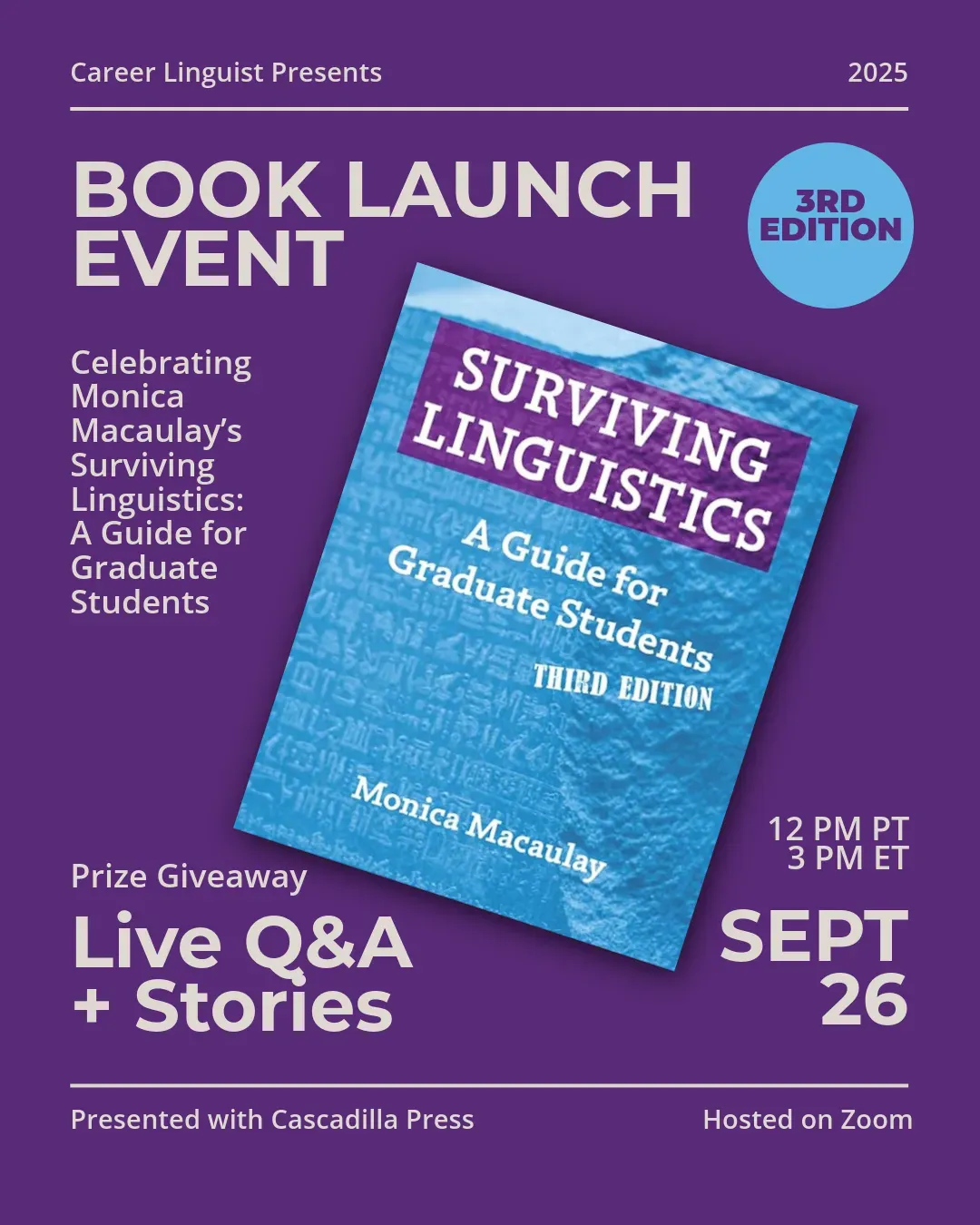
Are you or someone you know considering grad school in linguistics, or already in a program?
If so, you might want to attend the virtual launch event for the newest edition of Surviving linguistics: A guide for graduate students, by linguist and professor Monica Macaulay (U Wisconsin-Madison). The event is tomorrow, September 26th @ 12pm PT | 3pm ET.
You’ll have a chance to hear from author, linguistics professor Monica Macaulay, about grad school, ask questions, and hear people share their own grad school stories and experiences.
This trusted and much-loved guide has been helping linguistics students for years—myself included! It’s packed with practical advice, exercises, and a focus on both academic and industry career paths. Topics include speaking at conferences, publishing journal articles, writing grant applications, finishing a thesis/dissertation, how to make connections within the field, and much more. I highly recommend giving this a read as early as possible into your graduate program.
- Date: September 26 @ 12pm PT | 3pm ET
- Registration Link: https://us02web.zoom.us/meeting/register/zU8Yr-ORTzSrYfiP8dN41g
- Book Link: https://amzn.to/4gAjEyC
🆕 New from Linguistic Discovery
This week’s content from Linguistic Discovery.
Pecan is a rising Fall flavor—however you pronounce it
I recently consulted on a brief article in AXIOS about the pronunciation of pecan and its etymology:
Profoundly Pointless
Recently I shared the first in a series of podcast interviews I’ve done over the past several years, and today I’m sharing the second interview, this time with John Shull of the Profoundly Pointless podcast. We talk linguistics, the first languages, the great vowel shift, race and language and the only real curse word left.
🗞️ Current Linguistics
Recently published research in linguistics.
Bilingualism is reworking this language’s rainbow
I reported on this a few weeks back, but a writer at Scientific American replied to another post about this on social media telling me that she actually had a chance to interview the researchers about the study. She said, “[I] remember the interview with one of the researchers as one of the most interesting ones I’ve had.” So I thought I’d pass along this article too!
In short, the Tsimane language only has basic color terms for blackish, whitish, and reddish (which is exactly what you’d expect in a language with only three color terms). However, Spanish-Tsimane bilinguals are starting to change that.
 Elise Cutts
Semantic change doesn’t require new speakers
Until recently, it was largely assumed within linguistics that the primary driver of language change is new generations of speakers: as children learn their first language, the meanings and grammatical structures they settle on are inevitably slightly different from that of their parents. In recent decades, a growing number of studies have challenged this assumption by showing that language changes happen over the course of an individual’s lifespan as well—most especially pronunciation changes, but also changes in grammar. (I summarize some of this research on linguistic lifespan changes in my article, “Are we stuck with the same grammar for life?”)
 Daniel W. Hieber, Ph.D.
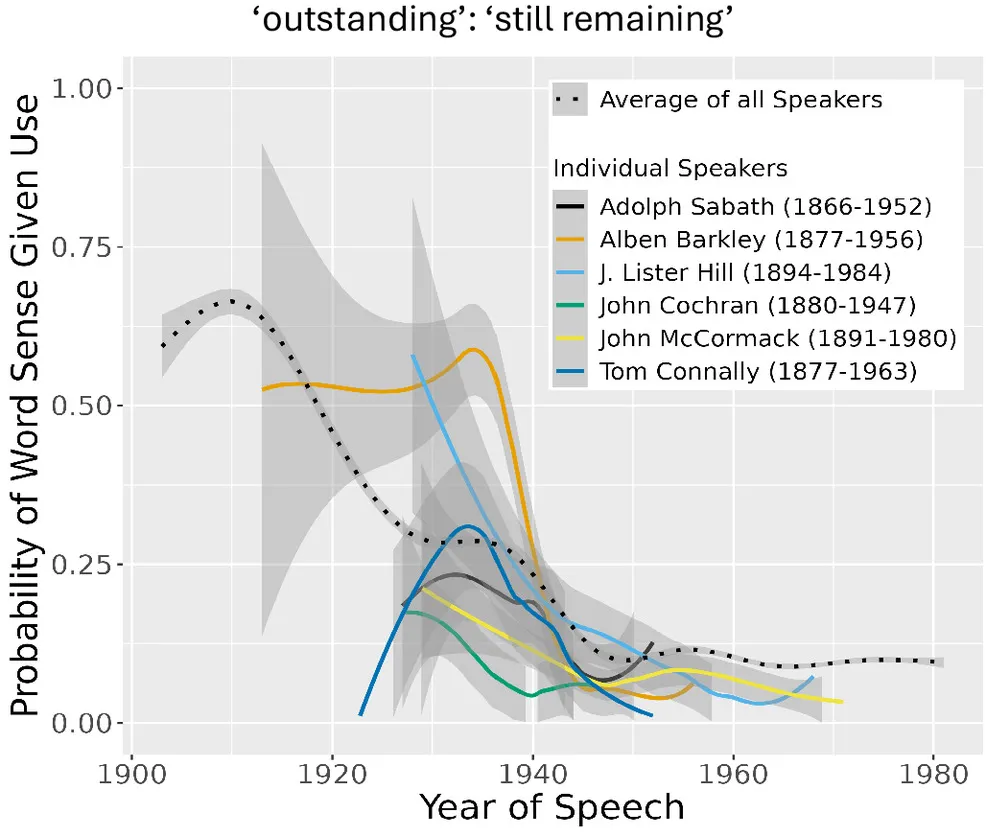
Now, a recent study shows that the meanings of words in a person’s lexicon can also change over the course of their lifetimes. It’s not just kids that use existing words in new ways. In fact, sometimes older speakers are even on the leading edge of semantic changes in society. The study analyzed over 7.9 million U.S. congressional speeches from 1873 to 2010, focusing on 100 words that were thought to have undergone significant shifts in their meaning during that time period. They found that individual representatives did indeed change the way they used these words over the course of their careers giving speeches. Here’s a neat graph showing how some specific representatives decreased their use of outstanding to mean ‘still remaining’ (as opposed to ‘standing out’) over their careers.
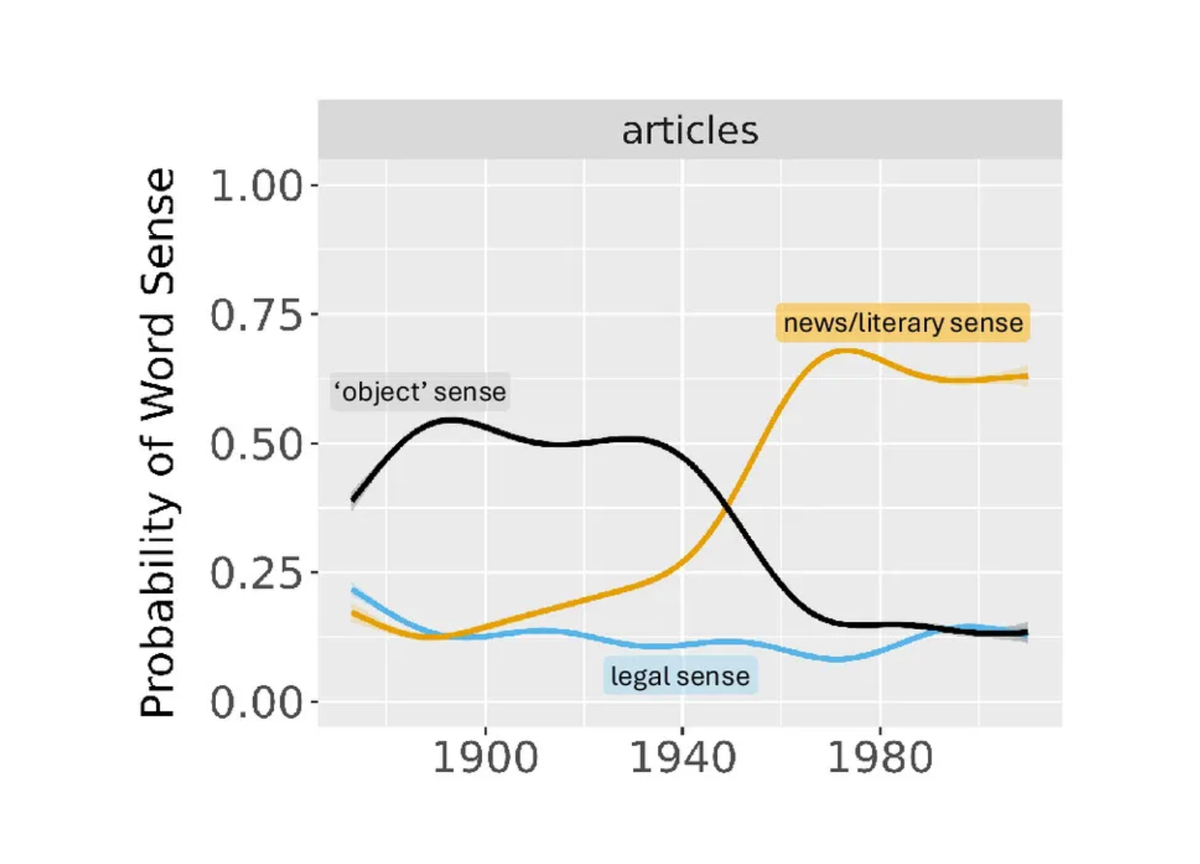
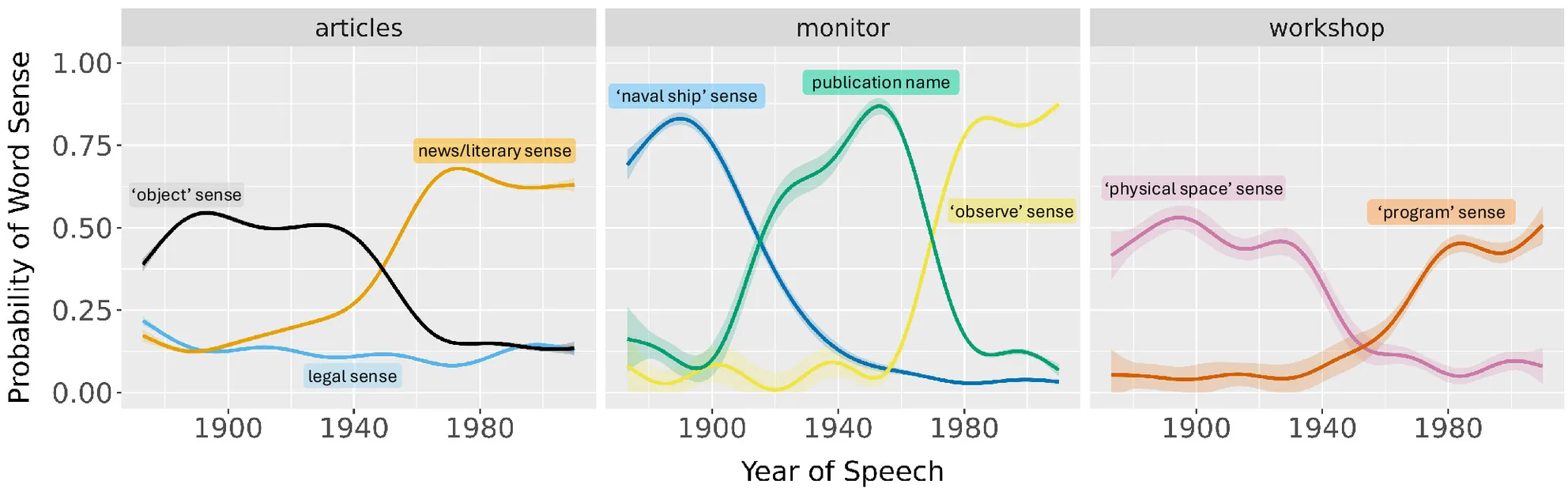
And the following graph shows some semantic changes in the aggregate. For example, article originally meant ‘an object’ (e.g. an article of clothing), but shifted to mean ‘a news/literary item’ (e.g. a news article), and you can see that semantic shift happen over the period of years examined in the corpus.
 Aurélie Boucher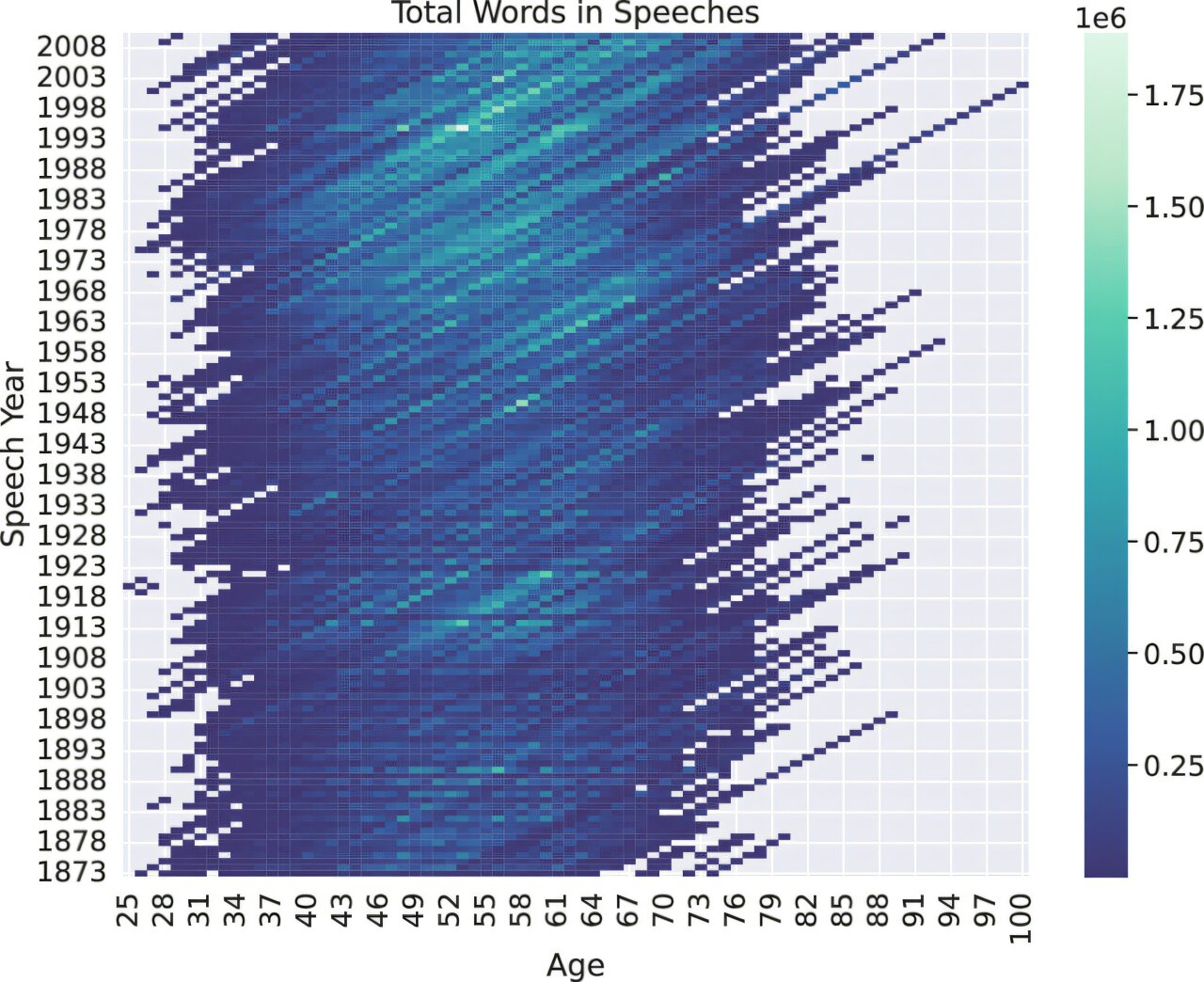
- Research: Kamath et al. 2025. Semantic change in adults is not primarily a generational phenomenon. Proceedings of the National Academy of Sciences 122(31): e2426815122. DOI: https://doi.org/10.1073/pnas.2426815122.
📃 This Week’s Reads
Interesting articles I’ve come across this week.
 Andreas Kyriakou
 Stefanie Schantl, M.A.
- The remarkable brain of a carpet cleaner who speaks 24 languages (The Washington Post)
📚 Books & Media
New (and old) books and media touching on language and linguistics.
Purrieties of language: How we talk about cats online
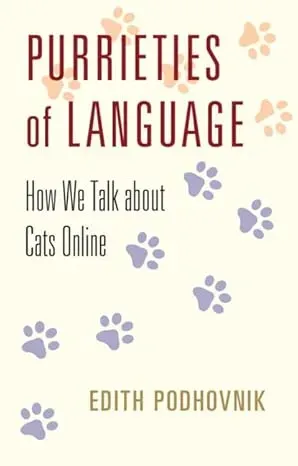
Check out this recent book that uses the study of online cat discourse to teach sociolinguistics!
After conquering the Internet, cats are now taking on linguistics! Since the advent of social media, cats have become a topic central to online communication, and the multitude of cat-related accounts now online has made this a world-wide phenomenon. Through cat-inspired varieties of language, we have developed a genre of cat-inspired vocabulary. And on our special social media accounts for our cats, we take on their identities, as we post, write, talk, and chat - as our feline friends. This innovative book provides linguistic analyses of the cyber ‘Cativerse’, exploring online language variation, and explaining key linguistic concepts – all through the lens of cat-related communication. Each chapter explores a different sociolinguistic phenomena, drawing on fun and engaging examples including memes, hashtags, captions and ‘LOLcats’, from platforms such as Instagram, Facebook, YouTube and Twitter. Innovative yet accessible, it is catnip for all ‘hoomans’ interested in how language is used online.
Purchase a copy here:
If this sounds up your alley, you might also be interested in the author’s newsletter, Purrspectives in language.
 Edith Podhovnik, PhD
🗃️ Resources
Maps, databases, lists, etc. on language and linguistics.
101 places to get enthusiastic about linguistics
In honor of their 100th episodiversary earlier this year, the Lingthusiasm podcast put together an excellent list of 101 places to get enthusiastic about linguistics:
- 101 places to get enthusiastic about linguistics (Lingthusiasm)
👋🏼 Til next week!
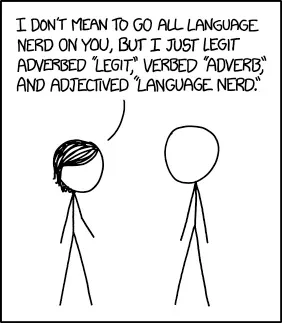
This was literally what my Ph.D. dissertation was about 🤓
🚫 Errata
Corrections, clarifications, and omissions.
In my most recent article, “Your cryptogram is lying to you—/t/ isn’t the most frequent consonant in English”, I occasionally forgot to clarify that I was focused on the most frequent consonants in English, rather than the most frequent letters/sounds in general. The most frequent letter in English is ⟨e⟩, and the most frequent sound in English is /ə/. The letter ⟨t⟩ and the sound /n/ are merely the most frequent consonants in English.
 Daniel W. Hieber, Ph.D.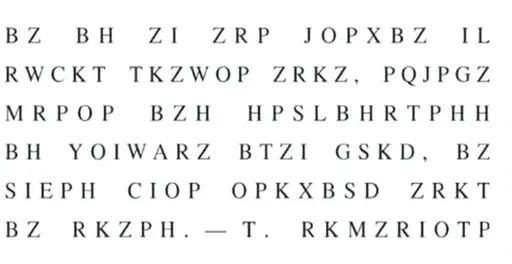
If you’d like to support Linguistic Discovery, purchasing through these links is a great way to do so! I greatly appreciate your support!
Check out my entire Amazon storefront here.