Mom’s voice boosts language-center development in preemies’ brains
Also this week: Smart dogs have a humanlike knack for naming new objects + Birds all over the world use the same sound to warn of threats + The Language-Lover’s Lexipedia


Welcome to this week’s edition of Discovery Dispatch, a weekly roundup of the latest language-related news, research in linguistics, interesting reads from the week, and newest books and other media dealing with language and linguistics!
📢 Updates & Announcements
Announcements and what’s new with me and Linguistic Discovery.
Words Unravelled @ 100,000 🎉
Congratulations to Jess Zafarris and Rob Words of the Words Unravelled podcast for reaching 100,000 YouTube subscribers!
Be sure to check out their celebration episode of their 100 favorite etymology facts:
🆕 New from Linguistic Discovery
This week’s content from Linguistic Discovery.
🐹 ham(p)ster
I went to spell hamster this week and it’s been so long since I had to write the word that I completely forgot it doesn’t have a ⟨p⟩ in it! And then of course that got me to thinking about epenthetic consonants. Here’s a brief thread I wrote on it:
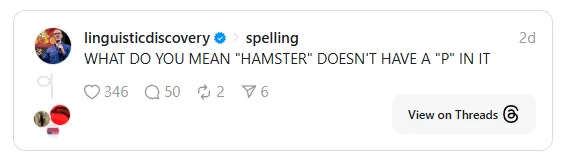
hampster is an example of what linguists call epenthesis, when a sound is inserted into a word. When you do it with consonants specifically it’s called excrescence (horrible name, I know).
Another example is pronouncing something as sumpthing.
Sometimes the epenthetic sound becomes permanent and the pronunciation of the word changes:
tremble comes from Latin tremulāre, but notice how English has a ⟨b⟩ and the Latin doesn’t. That ⟨b⟩ was added in Old French.
Another example someone gave me in the comments which I had never realized is the surname Thompson, which etymologically is ‘Thomas’ son’, but with an intrusive /p/.


🗞️ Current Linguistics
Recently published research in linguistics.
Smart dogs have a humanlike knack for naming new objects
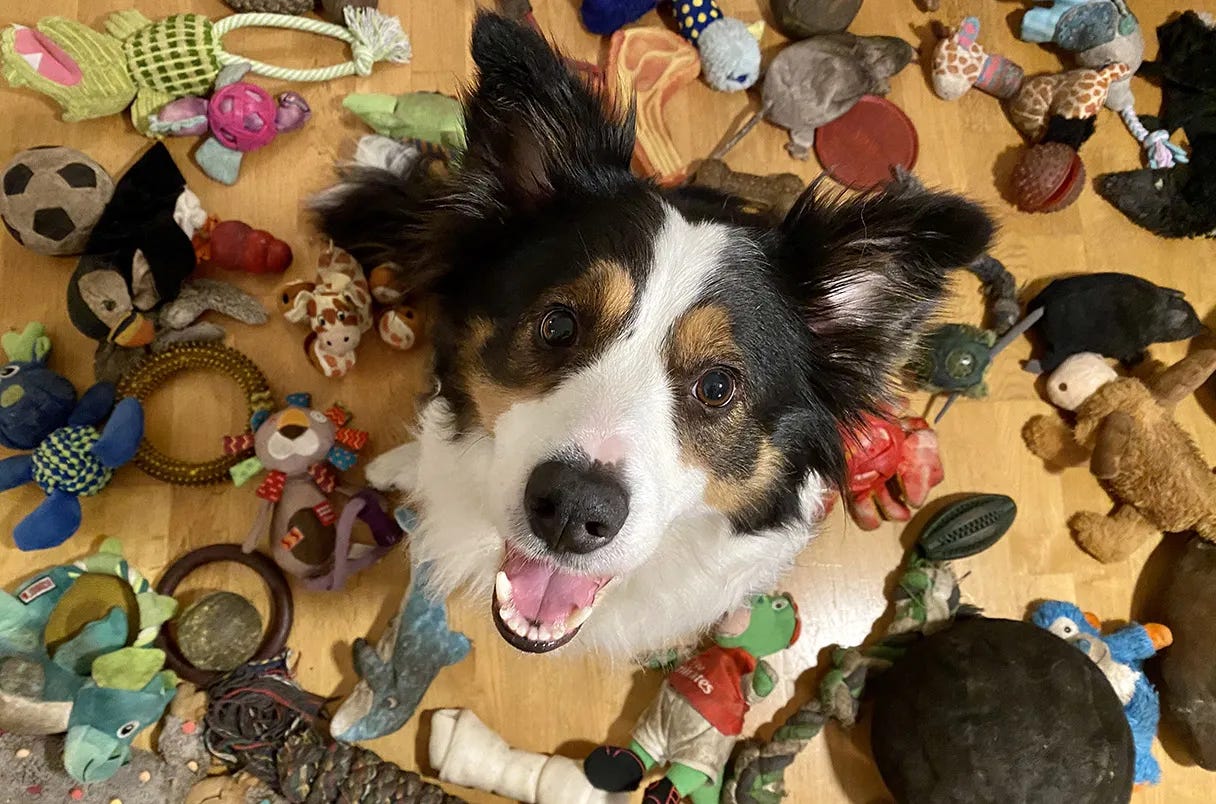
A new study finds that certain dogs are “gifted word learners”, and can apply the name of a category of toy to a new toy that shares the same purpose, even though the dog has never heard the name used for the new toy before.
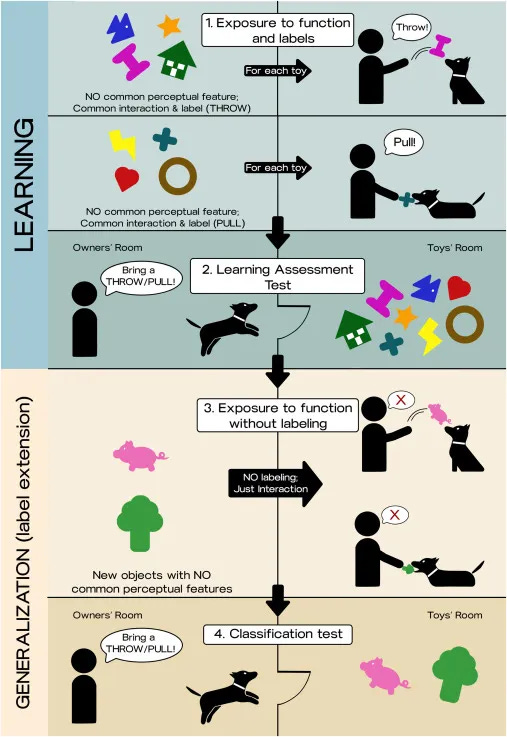
- Smart dogs have a humanlike knack for naming new objects (Science)
- Fugazza, Sommese, & Miklósi. 2025. Dogs extend verbal labels for functional classification of objects. Current Biology 35: 1–7. DOI: https://doi.org/10.17632/jrktkb8s99.1.
Mom’s voice boosts language-center development in preemies’ brains

Premature babies who heard recordings of their mothers reading to them had more mature white matter in a key language area of the brain, a Stanford Medicine-led study found.
During the study, hospitalized premature babies regularly heard recordings of their mothers reading to them. At the end of the study, MRI brain scans showed that a key language pathway was more mature than that of preemies in a control group who did not hear the recordings. It is the first randomized controlled trial of such an intervention in early development.
 Erin Digitale
 Katherine E. Travis
Birds all over the world use the same sound to warn of threats
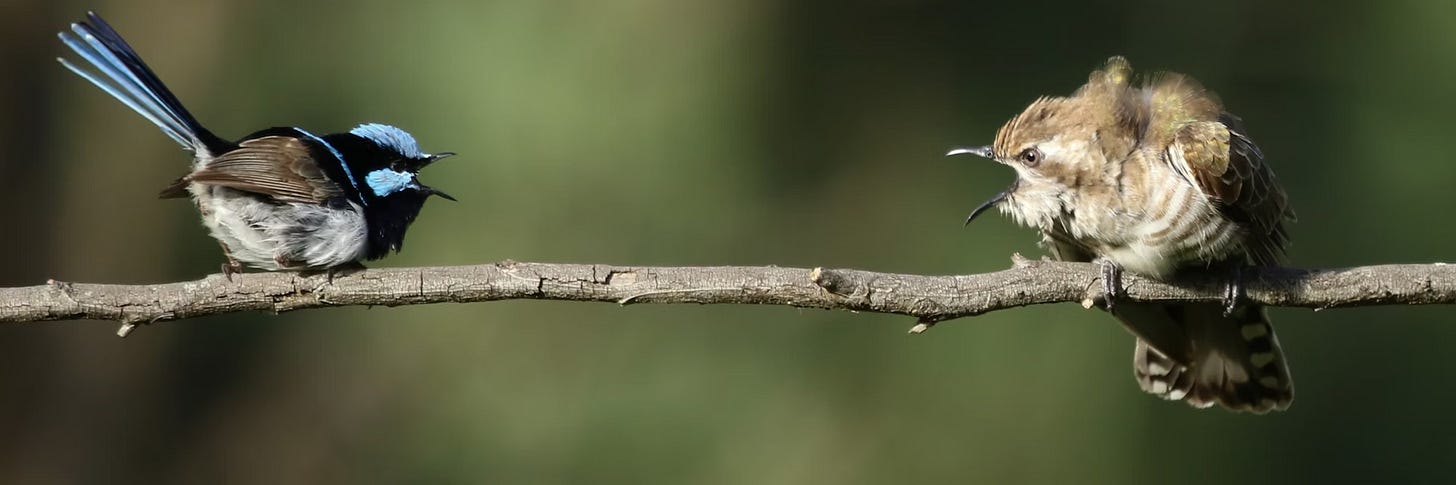
At some point in the evolution of human language, our species transitioned from instinctual vocalizations to ones that had to be learned and passed down through culture rather than genetics.
A new study finds a bird call that appears to be a mix of instinct and learning: over 20 species of birds from around the world, separated by 50 million years of evolution, using the same call when they see a brood parasite (birds that trick other species into raising their young).
But while birds that have never seen a brood parasite know how to respond to this call, they don’t know how to produce it. They only do it after watching others produce it when a brood parasite is nearby.
So while the response to the call is instinctive, producing the call itself is learned behavior—representing a midpoint between instinctive and learned vocalizations.
 James Kennerley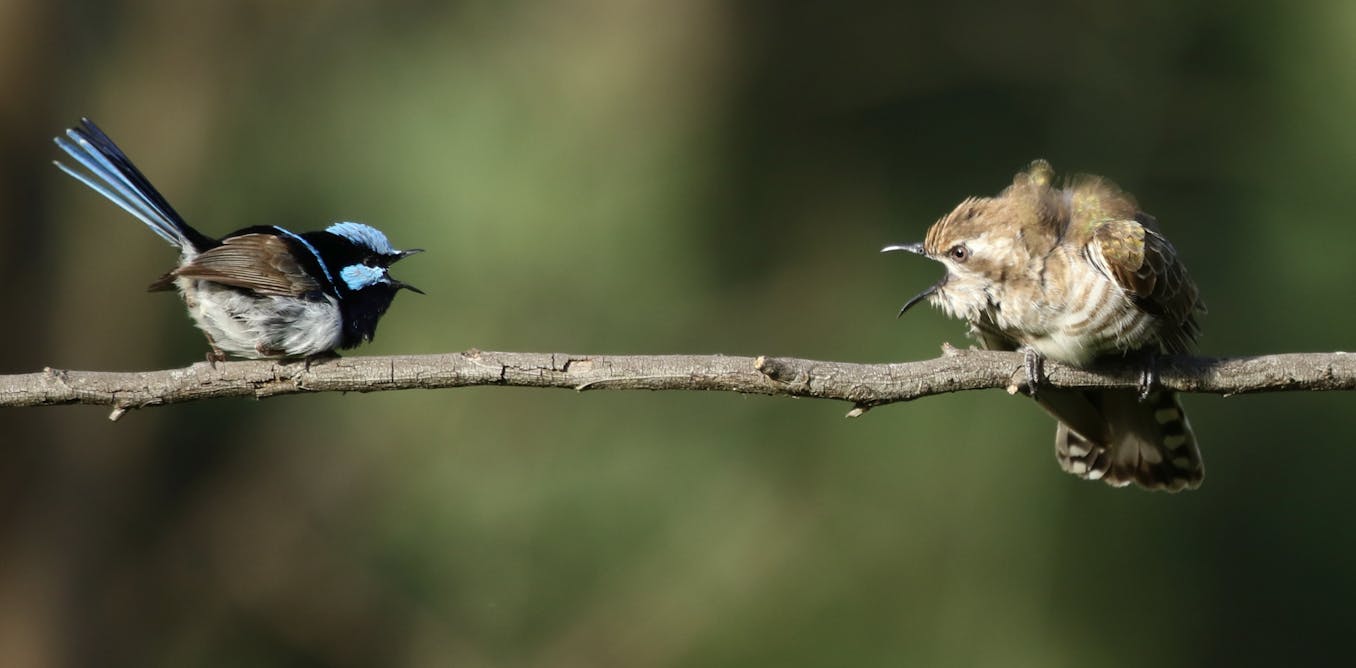
- Birds make an alarm call that spans species and continents—and may offer insight into the evolution of human language (Smithsonian Magazine)
 William E. Feeney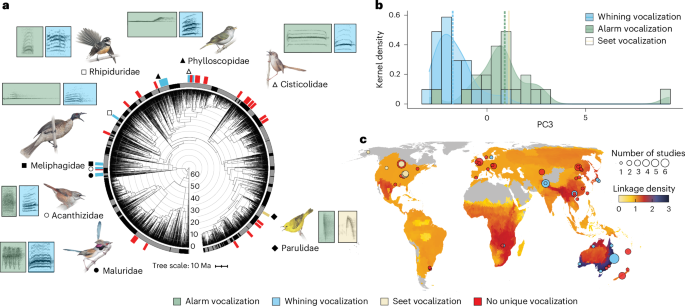
📃 This Week’s Reads
Interesting articles I’ve come across this week.
 Mark W. Post
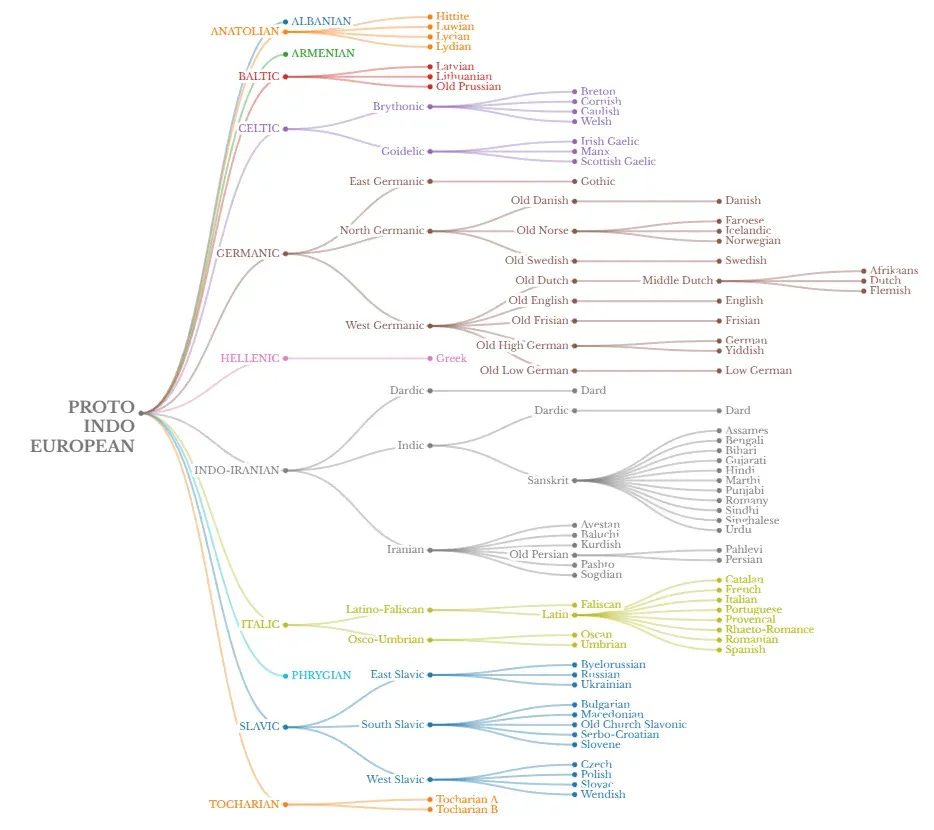
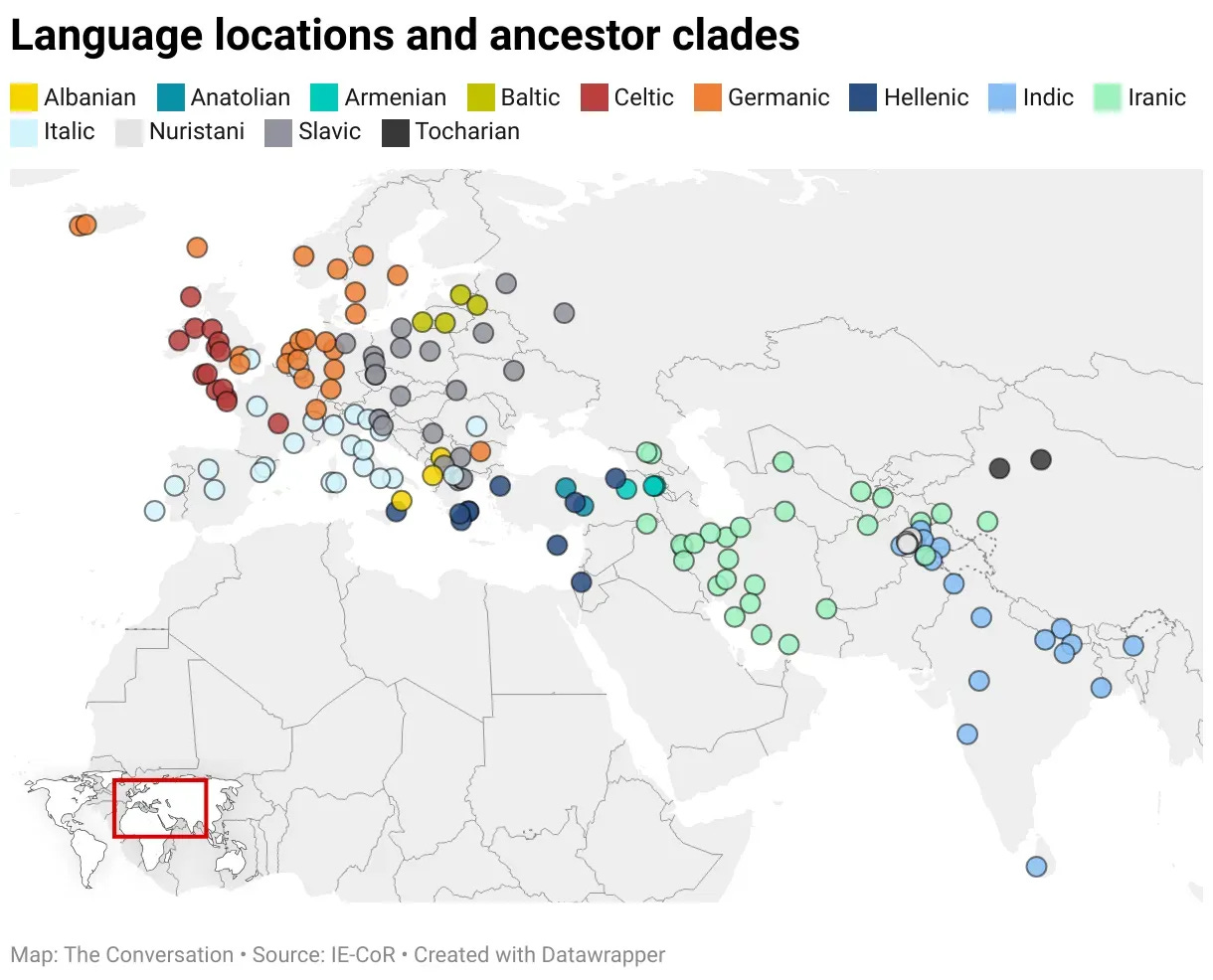
- I’d also like to point out that this article includes a really cool visualization (using a JavaScript library called D3) of the branches of the Indo-European language family, which allows you to hover over individual branches to inspect them more clearly. (Having a background in JavaScript myself, I may have to start using D3 for family tree visualizations like this. I had never thought of this use case.)
 Jennifer Gunner
 Colin Gorrie
- An especially neat article because Colin Gorrie walks you through the data step-by-step to figure out what the actually rules for rhyming are. It’s more complex than you’d expect!
 Helen Pilcher
 Michael Ferber
📚 Books & Media
New (and old) books and media touching on language and linguistics.
The Language-Lover’s Lexipedia: An A–Z of Linguistic Curiosities
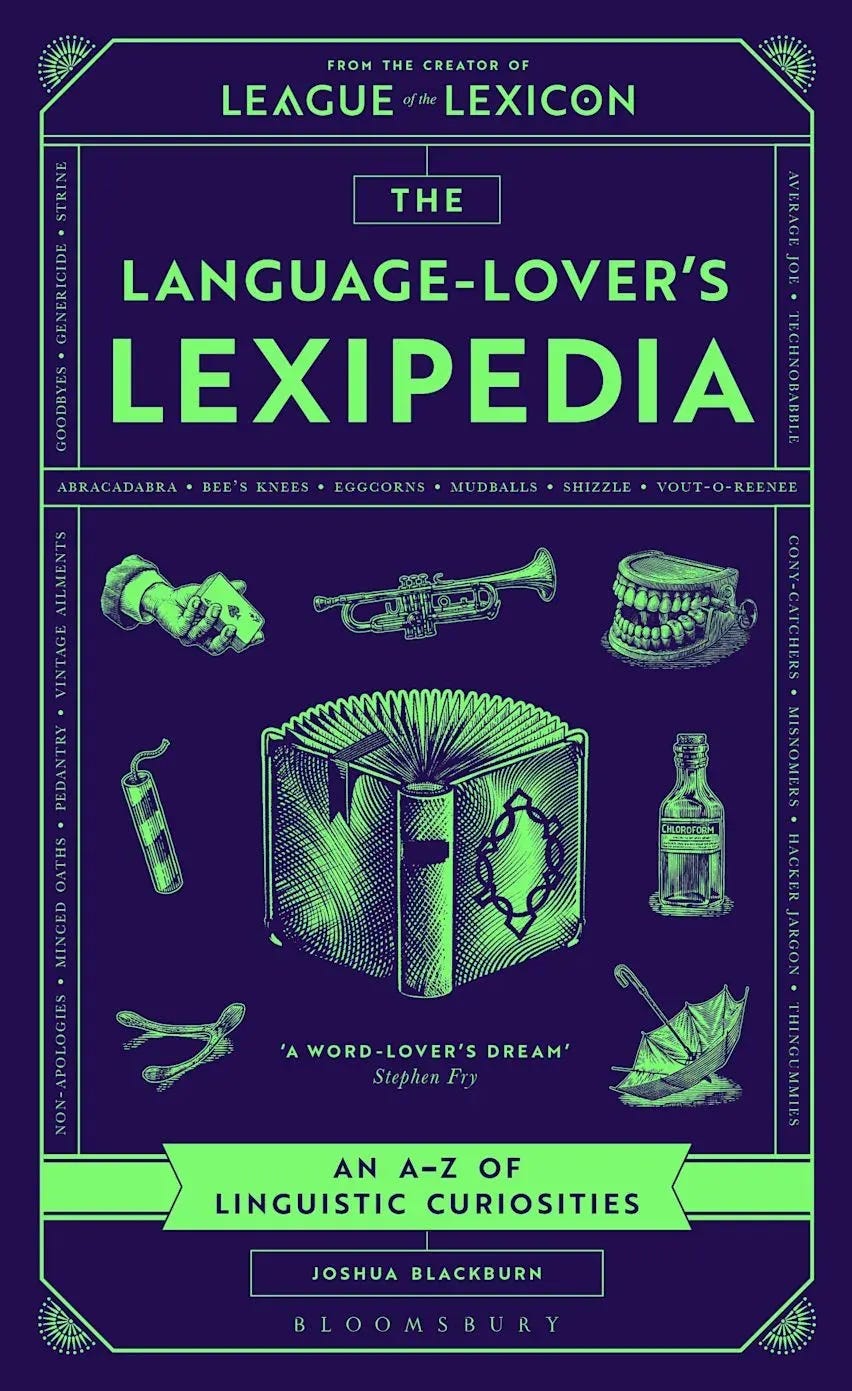
A delightful rollick through language unlike any you’ve ever experienced. As the inventor of the bestselling game about words, League of the Lexicon, Joshua Blackburn has created an A–Z that’s part-encyclopedia, part-treasure map, and an all-around joy for anyone interested in words and language. Meticulously researched, joyfully written, and beautifully designed, The Language-Lover’s Lexipedia dives into the quirky, the curious, and the unexpected to reveal a world of language you never knew existed.
Discover the biting humor of Scottish insults (you’re talking mince), the curious history of the Chinese typewriter, and the strange yet vivid color names of Elizabethan England—like “dead Spaniard” and “lusty gallant.” Whether it’s the dark history of the Index of Banned Books or the bewildering grammar of Yoda, each pithy entry is brimming with knowledge and wit. Illustrated with enchanting line art that evokes a 19th-century reference book, The Language-Lover’s Lexipedia is as visually delightful as it is intellectually captivating. It’s stuffed with quirky lists, surprising facts, and illuminating stories, making it the ultimate gift for any language lover. Want to uncover the secret of Ikea product names? Decode the euphemisms of Victorian England? Or understand why pedants are pedantic? This book has you covered—and then some.
Blackburn’s infectious enthusiasm turns linguistic oddities into pure entertainment and offers up endless rabbit holes to dive down, with each thoughtful entry promising to charm, educate, and tickle. From the linguistic history of marijuana to the origins of nonsense, The Language-Lover’s Lexipedia is a must-read for anyone who revels in the beauty, humor, and sheer weirdness of language.
The book was just released this week! Procure your own copy here:
🗃️ Resources
Maps, databases, lists, etc. on language and linguistics.
Living Dictionaries
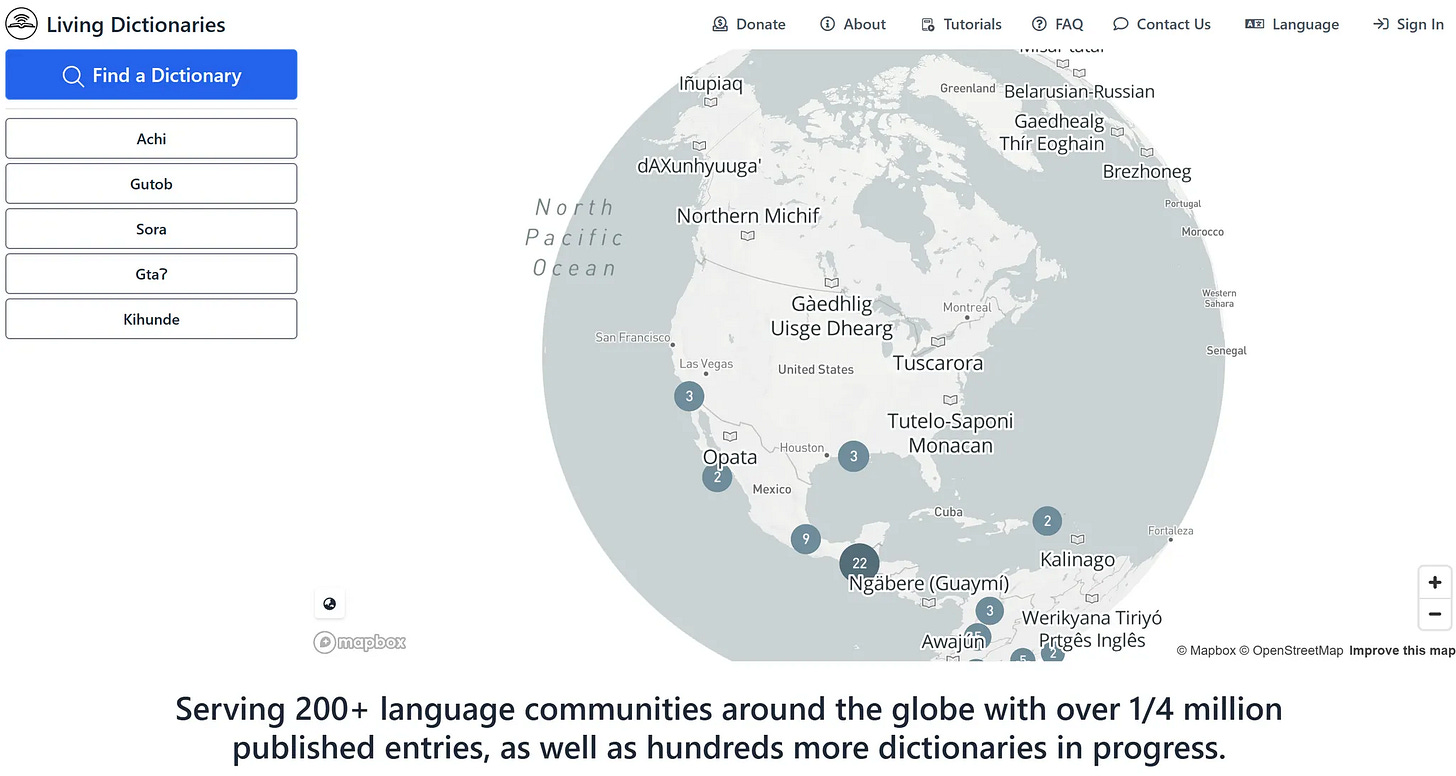
Living Dictionaries are mobile-friendly web tools that support endangered, under-represented and diasporic languages. Led by community activists around the globe, Living Dictionaries are collaborative multimedia projects that help languages survive for generations to come.


👋🏼 Til next week!
Chicago’s hidden etymologies
Here’s one for my fellow Chicagoans and Chicago-lovers, from Adam Aleksic (@EtymologyNerd):
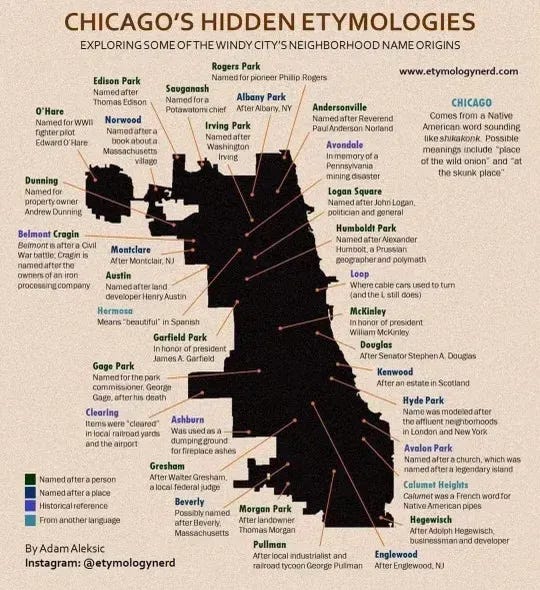
Adam doesn’t mention it in the infographic, but the word Chicago may be distantly related to the word skunk, both coming from an Algonquian root meaning ‘smell bad’. The original name for Chicago was either from the Fox language, sheka:ko:heki ‘place of the wild onion’ or from the Ojibwe language, shika:konk ‘at the skunk place’. Both ‘onion’ and ‘skunk’ would have been based on that root meaning ‘smell bad’.
If you’d like to support Linguistic Discovery, purchasing through these links is a great way to do so! I greatly appreciate your support!
Check out my entire Amazon storefront here.