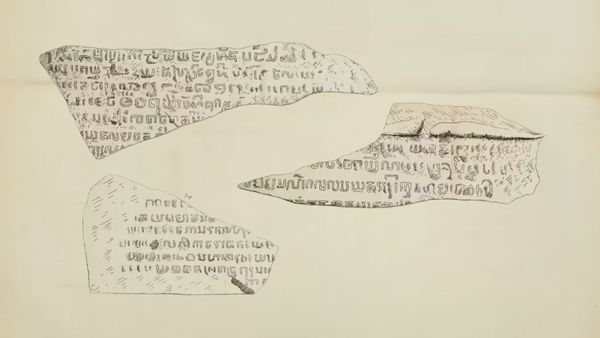
Have scholars finally deciphered the mysterious writing of Teotihuacan?
Also this week: How technological advances in language modeling have allowed researchers to develop speech recognition technology even for small, endangered languages

Welcome to this week’s edition of Discovery Dispatch, a weekly roundup of the latest language-related news, research in linguistics, interesting reads from the week, and newest books and other media dealing with language and linguistics!
📢 Updates & Announcements
Announcements and what’s new with me and Linguistic Discovery.
You may have noticed there was no digest last Thursday—my apologies for that! I was busy preparing for a talk at Miami University (Ohio, not Florida) about language endangerment and revitalization—which went great! I’ll post the recording for it if I get it.
An unfortunate feature of timely newsletters like this one is that I can never be several weeks ahead, so I have no buffer for weeks like the last one when I’m behind or have other deadlines. Frustratingly, this does mean I’ll likely miss the occasional week when my other work and scholarly commitments eat into my writing time. (Linguistic Discovery is still just a side project for me, while my main job is working for the Chitimacha Tribe of Louisiana.) Regardless, I’ll do my best to give you fun and interesting things to read about linguistics in your inbox each week!
On the topic of the newsletter schedule, I’m planning not to publish a digest on the following weeks:
- November 27 (Thanksgiving)
- December 25 (Christmas)
- January 1 (New Year)
Otherwise, you can continue to expect a digest from me each week on Thursday! Thank you for being a reader!
🆕 New from Linguistic Discovery
This week’s content from Linguistic Discovery.
How Guy Fawkes gave English a new pronoun
Guy Fawkes Day was this Thursday, November 5th, and in memory of that event I pulled an old video out of the archive: how the Gunpowder Plot of 1605 led to the creation of a new English pronoun:
The history of sex
Just for fun, here are two quick videos about the history of the word sex in English that I also pulled out of the archive and reposted recently:
Deciphering the writing of Teotihuacan
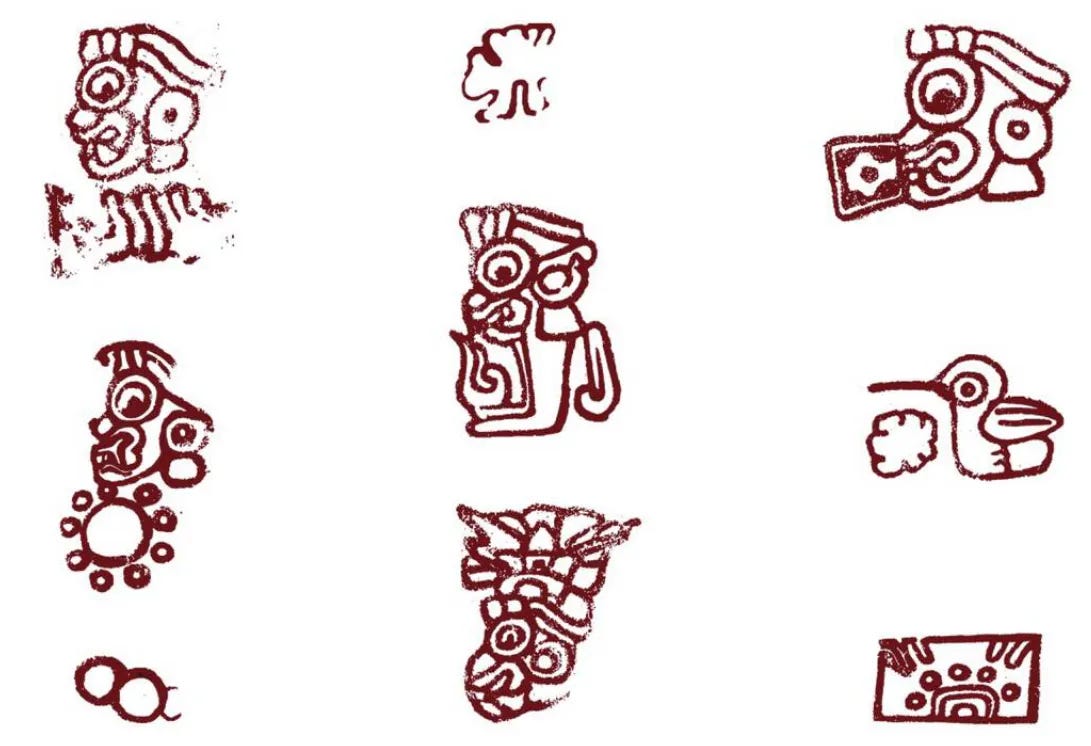
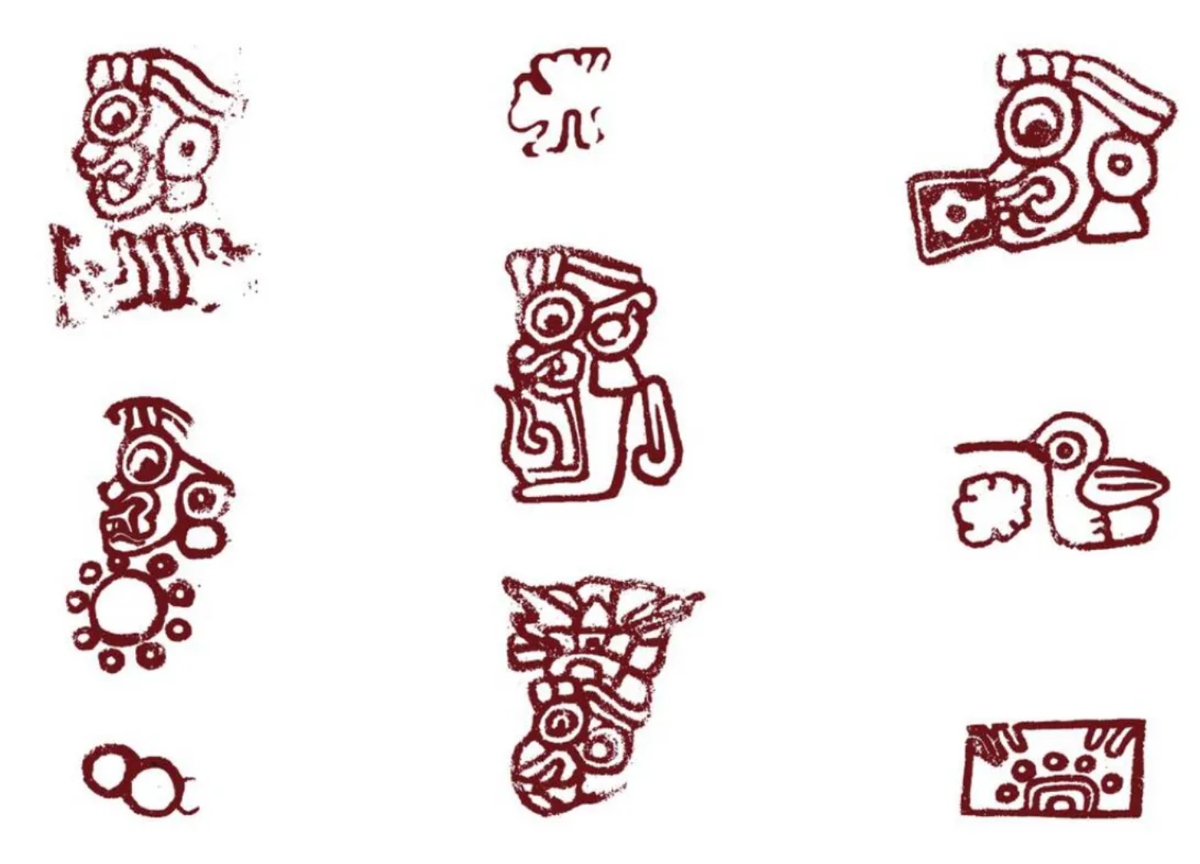
The city of Teotihuacan /te.o.ti.waˈkan/, which sits about 25 miles northeast of modern-day Mexico City, “is known today as the site of many of the most architecturally significant Mesoamerican pyramids built in the pre-Columbian Americas” (Wikipedia: Teotihuacan). Although many people think of these as Aztec (Mexica / Nahua) pyramids, they actually predate the Aztec Empire by almost a millennium. At its height, the city may have had a population as large as 125,000 people, making it the largest city in the Americas and sixth-largest city in the world at the time.
Within the ruins are various inscriptions and symbols that have led to debate among scholars as to whether they were actually writing or just decorative. If the inscriptions are a kind of writing, it also isn’t clear which language or languages the writing system represents, since Teotihuacan appears to have been a multi-ethnic city. Totonac, Mixe-Zoquean, or an earlier form of Nahuatl have been considered plausible candidates.
Now, a new paper proposes that the Teotihuacan glyphs represent a Uto-Aztecan language that would have been the ancestor of Nahuatl, Cora, and Huichol, which are other, later, more well-documented Uto-Aztecan languages. This family tree shows about where they posit the language of the Teotihuacan inscriptions to sit in the family tree:
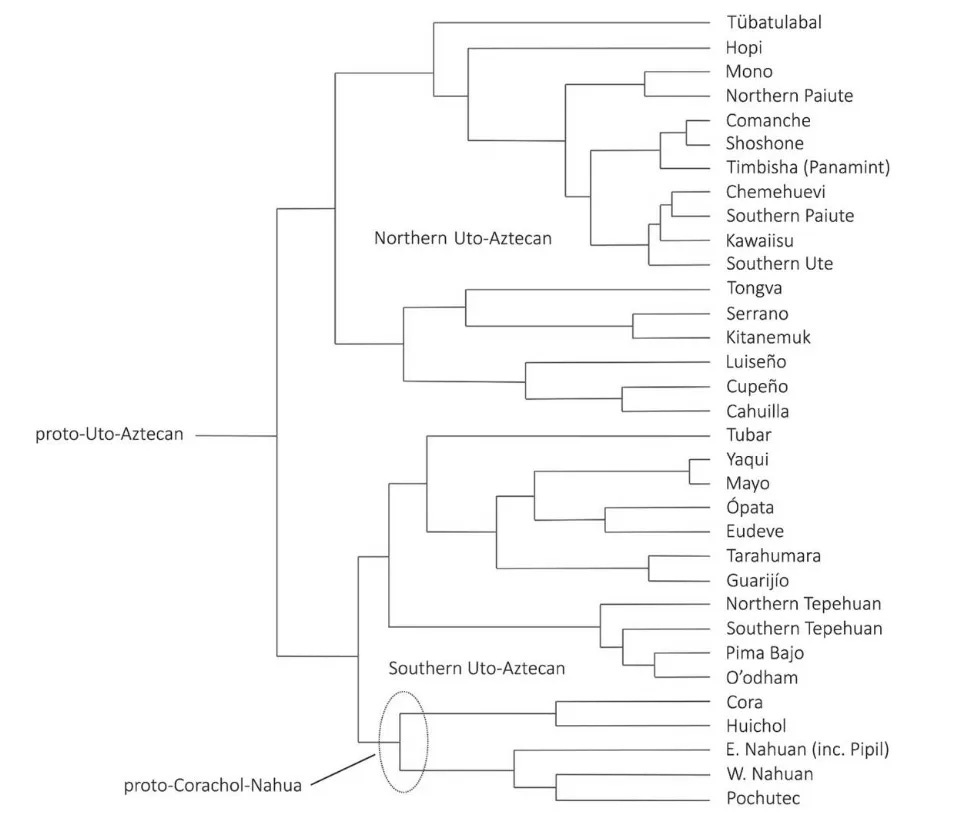
While not all scholars who work in this area are convinced of their claim, their paper does seem to have advanced scholarship in this area in several ways regardless whether their linguistic claim is true. They seem to be the first to attempt to decipher these glyphs using linguistic reconstructions at an appropriate time depth in the family tree. They also resituate the role of Teotihuacan in Mesoamerican history: the city has long been considered culturally distinct by scholars, but this paper suggests that the culture of Teotihuacan may have been more contiguous with other cultures in the region than previously appreciated. The response articles to the proposal make for some fascinating reading. Even those who disagree with the conclusion think that the authors have found a viable avenue for future decipherment using the techniques they applied in this research.
PS: The online abstract for the research article is written in English, Spanish, and Modern Nahuatl, which I thought was pretty cool.
Here's some various reporting on the paper:
 Simon Thinggaard Hjortkjær
 Tudor Tarita
- Ancient Teotihuacan murals reveal possible 2,000-year-old Uto-Aztecan language (Archaeology News)
- A new anthropological discovery is giving us more understanding into the Nahuatl language (mitú)
And here's the research paper itself:
- Pharao Hansen, Magnus & Christophe Helmke. 2025. The language of Teotihuacan writing. Current Anthropology 66(5). 705–739. https://doi.org/10.1086/737863.
📃 This Week’s Reads
Interesting articles I’ve come across this week.


- The earliest mention of ‘abracadabra’ comes from a text in the second century A.D., which used the term as a treatment for fevers.
 Colin Gorrie
- The surprisingly complex history of a lost letter of the English alphabet, yogh (Ȝ ȝ).
 Steve Nadis
- This is some additional reporting on a study I included in the digest earlier this year, showing that the most recent large language models are now capable of doing metalinguistic analysis of the type we ask undergraduates to do in their homework and problem sets.
 Kyushu University
- In this interview, linguist Natsuko Nakagawa discusses her work with the minority and endangered languages of Japan, including the Tohoku dialects in the north and the Ryukyuan languages in the southwest.
- Large language models for small languages (Endangered Languages & Cultures Blog)
- Speech recognition models typically require mountains of data, but advances in the technology for language models have allowed scholars working with endangered languages of the Pacific to create automatic speech recognition using just 38 hours of transcribed audio.
📚 Books & Media
New (and old) books and media touching on language and linguistics.
How to create a language: The conlang guide
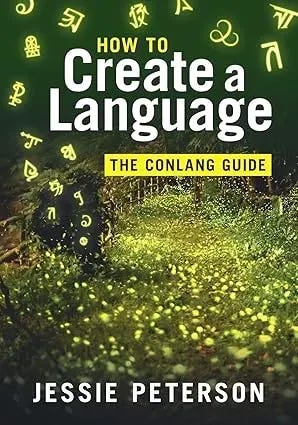
For those of you interested in conlanging (constructing languages), a new guide to language creation was just released. What’s interesting about this book is that it’s designed specifically for use as a class, and not just for the purpose of introducing linguistics, but as a course focused on conlanging in its own right.
Extraterrestrial languages
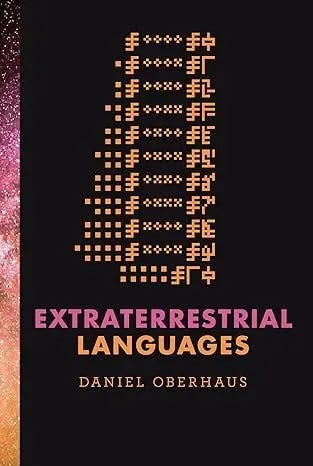
The endlessly fascinating question of whether we are alone in the universe has always been accompanied by another, more complicated one: if there is extraterrestrial life, how would we communicate with it? In this book, Daniel Oberhaus leads readers on a quest for extraterrestrial communication. Exploring Earthlings’ various attempts to reach out to non-Earthlings over the centuries, he poses some not entirely answerable questions: If we send a message into space, will extraterrestrial beings receive it? Will they understand? What languages will they (and we) speak? Is there not only a universal grammar (as Noam Chomsky has posited), but also a grammar of the universe?
Oberhaus describes, among other things, a late-nineteenth-century idea to communicate with Martians via Morse code and mirrors; the emergence in the twentieth century of SETI (the search for extraterrestrial intelligence), CETI (communication with extraterrestrial intelligence), and finally METI (messaging extraterrestrial intelligence); the one-way space voyage of Ella, an artificial intelligence agent that can play cards, tell fortunes, and recite poetry; and the launching of a theremin concert for aliens. He considers media used in attempts at extraterrestrial communication, from microwave systems to plaques on spacecrafts to formal logic, and discusses attempts to formulate a language for our message, including the Astraglossa and two generations of Lincos (lingua cosmica).
The chosen medium for interstellar communication reveals much about the technological sophistication of the civilization that sends it, Oberhaus observes, but even more interesting is the information embedded in the message itself. In Extraterrestrial Languages, he considers how philosophy, linguistics, mathematics, science, and art have informed the design or limited the effectiveness of our interstellar messaging.
For the record, if aliens do arrive during my lifetime, I’m immediately switching subfields and becoming a xenolinguist like Uhura, just sayin’.
🗃️ Resources
Maps, databases, lists, etc. on language and linguistics.
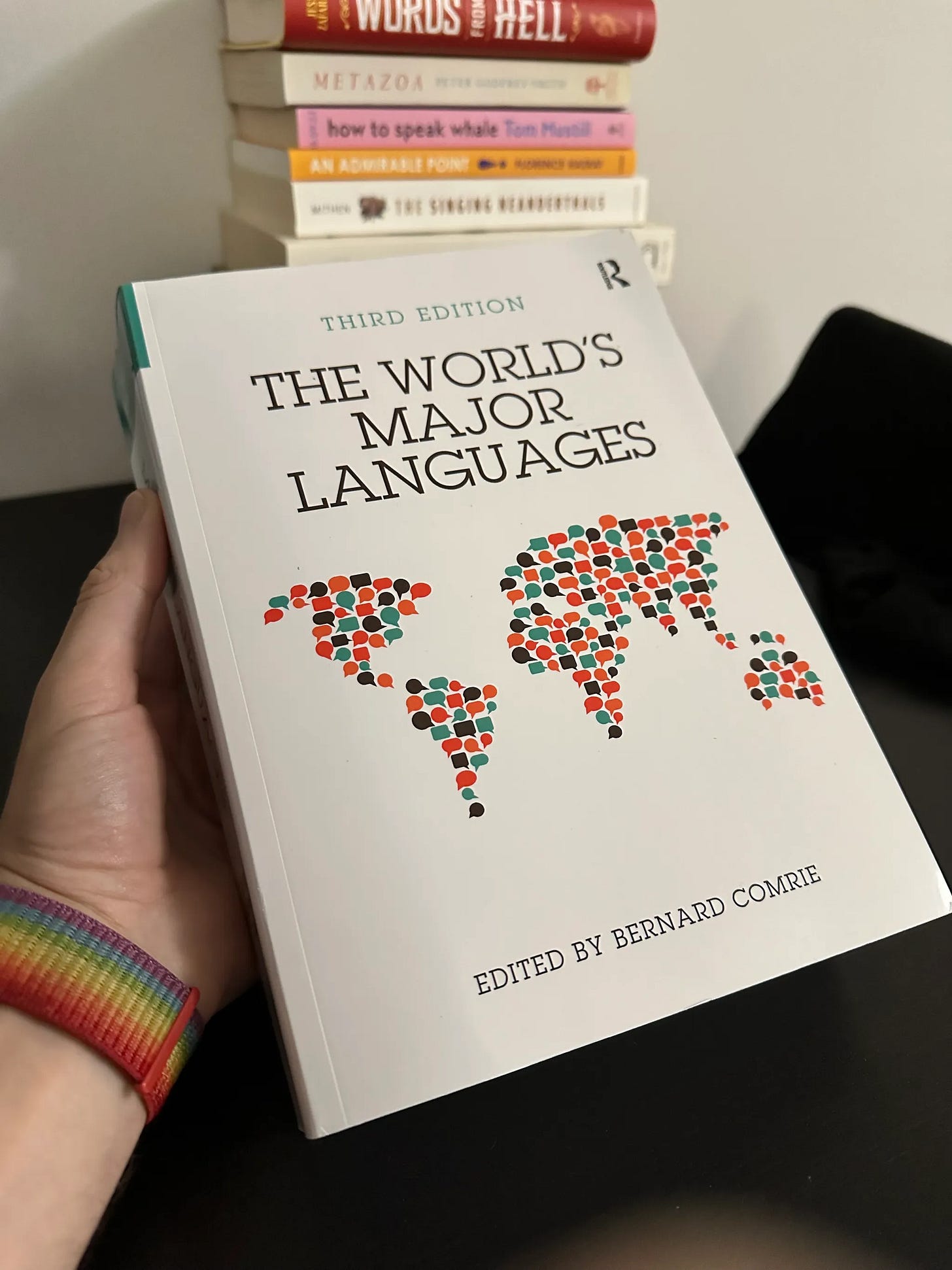
The world’s major languages
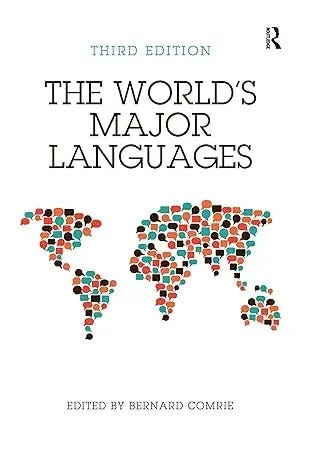
If you’re looking for a handy reference on the world’s major languages, this is the authoritative source. Now in its third edition, I reference this book whenever I need a basic overview of one of the large languages of the world:
👋🏼 Til next week!
I read How to not die alone recently (don’t judge me, it’s a fantastic book), and had to laugh (and cry) at these people who rejected fantastic dates who were a great fit for them just because of how they spoke:
“What is it about your current girlfriend that’s bothering you now?” I asked.
“I know this sounds snobby, but it’s the way she speaks. She misuses and mispronounces words. She says ‘pitcher’ instead of ‘picture.’ I think it’s a Boston thing.”
I once coached a guy named Grant who was incredibly negative. Almost every sentence started with “Yes, but…” He lived life with his arms crossed over his chest, ready to challenge even good news. Unsurprisingly, his post-date texts to me were like mini–Mean Girls burn books: “Too short, didn’t laugh, boring job, might want to move back to Canada, mispronounced the word ‘concomitant.’ ”
Don’t be like these jerks!
 Follow
If you’d like to support Linguistic Discovery, purchasing through these links is a great way to do so! I greatly appreciate your support!
Check out my entire Amazon storefront here.