Bilingualism affects your moral decision-making
Also this week: Did Kanzi the bonobo have imagination? + A better English alphabet


Welcome to this week’s edition of Discovery Digest, a weekly roundup of the latest language-related news, research in linguistics, interesting reads from the week, and newest books and other media dealing with language and linguistics!
🆕 New from Linguistic Discovery
This week’s content from Linguistic Discovery.
The science of libfixes
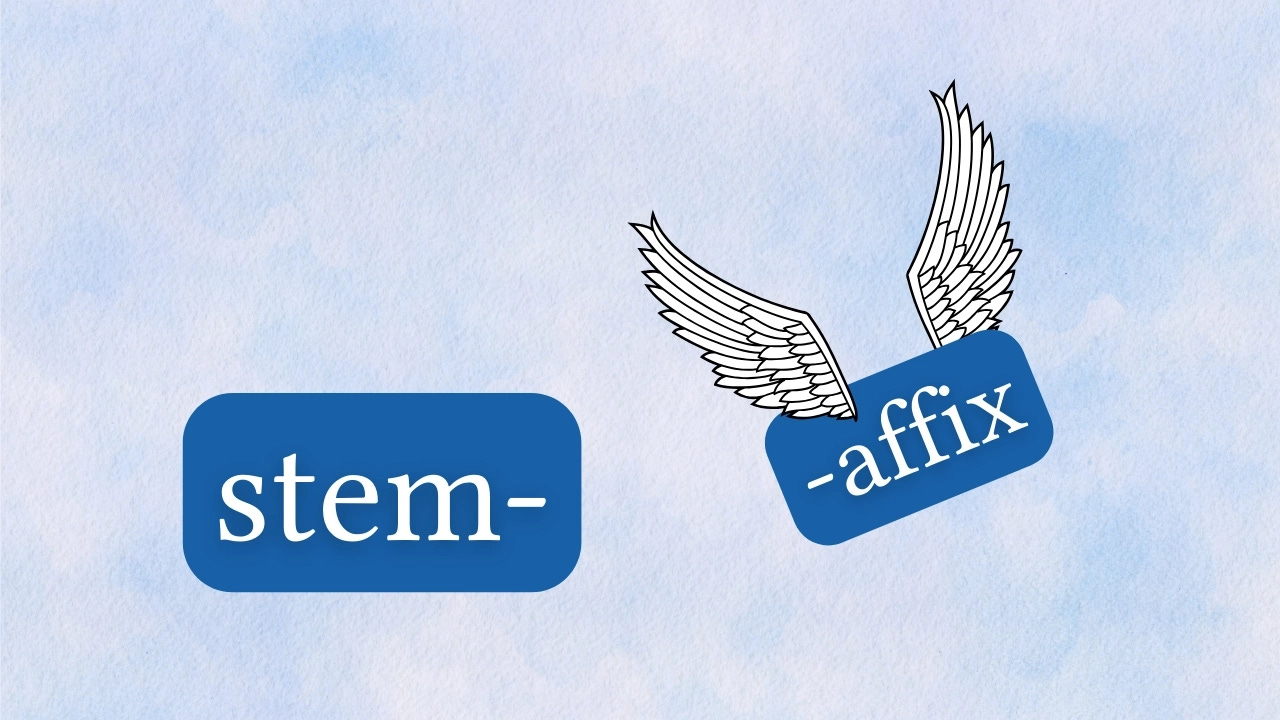
A libfix is a “liberated affix”—a part of a word that has escaped its parent word and become a new affix. Examples include:
- ‑core → cottagecore, Barbiecore, hopecore
- ‑cation → staycation, girlcation, kidcation
- crypto‑ → crypocurrency, cryptobro, cryptoverse
In a previous issue of the newsletter we explored the meandering history of the libfix ‑holic and saw tons of examples of libfixes from both English and other languages.
In this second part of this 2-part series on libfixes, we’ll dig into what makes libfixes tick—the subconscious sound rules you’re following when you use them, how they form in the first place, and how our brains process them—and what all this teaches us about how language works.
 Daniel W. Hieber, Ph.D.
ℹ️ Articles in this Series
- Part 1: Libfixes: When word parts go rogue
- Part 2: The science of libfixes: How libfixes work, where they come from, and what they teach us about language and the mind
🗞️ Current Linguistics
Recently published research in linguistics.
Do apes have imagination? A new study suggests Kanzi the bonobo did

Kanzi is a bonobo who became famous for learning to communicate with humans using a keyboard of symbols, and who sadly passed away in 2025. However, Dr. Amalia Bastos, after spending time with Kanzi in 2023 and coming away in awe of his capabilities, was curious to know: Could Kanzi understand the difference between pretend actions and real ones?
Before Kanzi passed away, Bastos conducted an experiment with him based around developmental psychology research with children where they had a pretend birthday or tea party (except in Kanzi’s case he opted for fruit juice instead of tea).
Bastos and her team showed Kanzi two empty, transparent cups and an empty jug. The researchers then pretended to put juice into the cups and then “poured out” one of them. They then asked Kanzi where the juice was. He pointed to the cup that hadn’t been poured out. The researchers performed several variations on this experiment, each time coming to the conclusion that Kanzi was indeed capable of imagination.
 Jackie Flynn Mogensen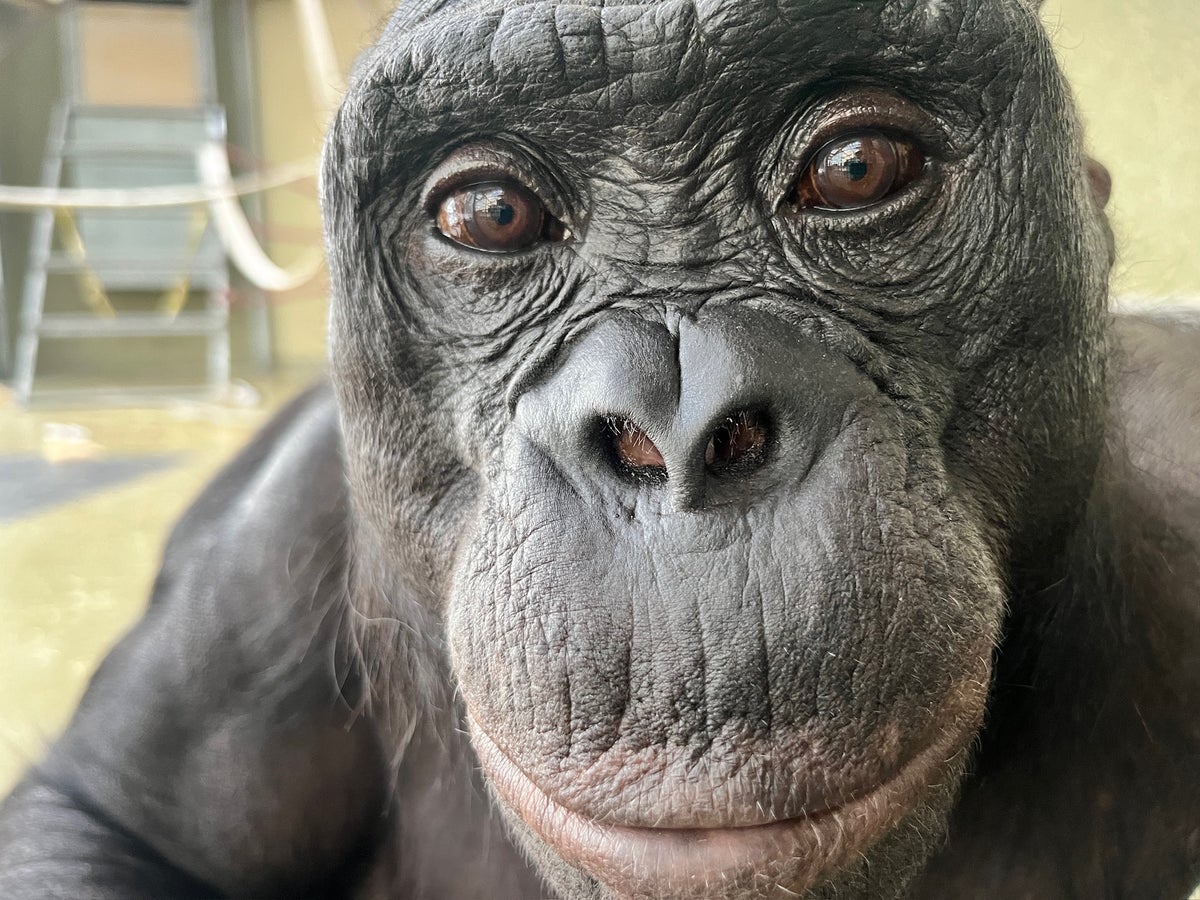
- Imagination isn’t just for humans, this famous ape shows (Science)
- This article includes a video of the experiment itself being conducted.
- Bastos & Krupenye. 2026. Evidence for representation of pretend objects by Kanzi, a language-trained bonobo. Science 391(6785). DOI: https://doi.org/10.1126/science.adz0743.
If you want to learn more about Kanzi’s linguistic abilities, check out this free issue of the Linguistic Discovery newsletter:
 Daniel W. Hieber, Ph.D.
How bilingualism affects moral decision-making

If you’re bilingual, moral choices can often feel more urgent and emotionally charged in one language yet distant and rational in another. This raises an intriguing question: does language merely shape how we express our thoughts, or can it also influence what we judge to be right or wrong?
Studies have shown that people tend to make less emotionally-driven decisions when reasoning in a second language rather than their mother tongue—a phenomenon called the moral foreign language effect. It is thought that this happens because people are socialized in their mother tongues as children, along with all the attendant emotions of that period of life, whereas second languages are often learned later, as adults.
A new study challenges this paradigm. It found “no consistent evidence that moral judgments differ systematically between a first and a second language.” Instead, it was differences in cognitive abilities and cognitive control that played the biggest role in explaining how people approach moral dilemmas.
 Andrea Révész
- Mavrou et al. 2026. Cognition and emotion in moral decision-making: The role of working memory, emotional intelligence, and language factors in bilinguals’ moral judgments and emotions. Studies in Second Language Acquisition. DOI: https://doi.org/10.1017/S0272263125101484.
📃 This Week’s Reads
Interesting articles I’ve come across this week.
- Here’s where the word “dude” came from—and trust us, you are never going to guess this one (Reader’s Digest)
 The New World
 Colin Gorrie
 Protomology
 Jennifer Gunner
📚 Books & Media
New (and old) books and media touching on language and linguistics.
Shavian: A better English alphabet?
The Shavian alphabet is a constructed alphabet that aims to provide a simpler, phonemic orthography for English, where each letter corresponds to one phoneme in the language. It includes 48 letters and is featural in a way similar to Korean Hangul, in that the shape of the letter tells you about features of the sound itself, such as whether it’s voiced or voiceless.
Rob Watts has a wonderful breakdown of how the alphabet works, including an interview with Evan Gallagher, who runs shavian.info. A fun video worth the watch!
HELLO Lab Presents
The Hearing Experience & Language Learning Outcomes (HELLO) Lab at the University of Connecticut has a great series of YouTube Videos about child language acquisition for parents.

👋🏼 Till next week!
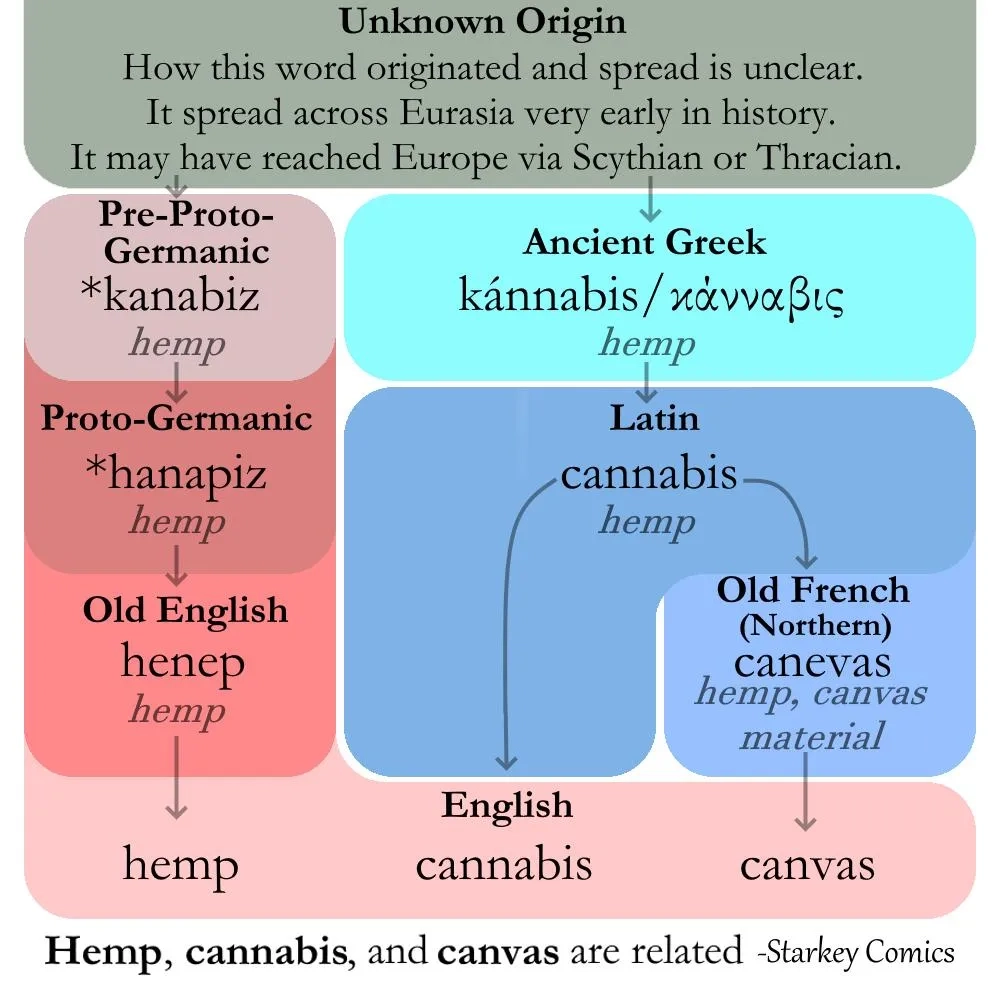
Did you know that the words hemp, cannabis, and canvas are all related? Starkey Comics has an interesting post over on Facebook with all the details:
If you’d like to support Linguistic Discovery, purchasing through these links is a great way to do so! I greatly appreciate your support!
Check out my Amazon storefront here.
Check out my Bookshop storefront here.