Has forensic linguistics solved the mystery of Bitcoin’s creator?
Also this week: How slang works, and how Black culture is shaping Gen Z’s slang


Welcome to this week’s edition of Discovery Digest, a weekly roundup of the latest language-related news, research in linguistics, interesting reads from the week, and newest books and other media dealing with language and linguistics!
📢 Updates & Announcements
Announcements and what’s new with me and Linguistic Discovery.
How slang works: Interview with Psychology Today
Gary Drevitch at Psychology Today recently interviewed me for a great piece, published this week, about how slang works, where it comes from, and the role it plays in society. Also interviewed for the piece were Adam Aleksic (@EtymologyNerd, author of Algospeak: How social media is transforming the future of language [Amazon | Bookshop]) and linguist Valerie Fridland (author of Why we talk funny: The real story behind our accents [Amazon | Bookshop] and Like, literally, dude: Arguing for the good in bad English [Amazon | Bookshop]).

🆕 New from Linguistic Discovery
This week’s content from Linguistic Discovery.
Were the Ancient Greeks colorblind?
Were the Ancient Greeks colorblind?
If not, why does Homer use colors so strangely in the Iliad and the Odyssey?
There’s something decidedly weird about the way Homer talks about colors in the Iliad and the Odyssey: wine-dark seas, violet sheep, hyacinth hair, and faces green with fear. It turns out it’s not just Homer who struggled with colors, but the authors of all the ancient texts—the Indian Vedic poems, the Old Testament, the Icelandic sagas, and even the Quran. Biblical Hebrew, for instance, lacks a word for ‘blue’, and the Bible is rife with odd color descriptions: a ‘red horse’ and a ‘red heifer without spot’; faces ‘turned green’ with panic; the feathers of a dove covered with ‘green gold’. As for the Vedic hymns, philologist Lazarus Geiger says:
These hymns, of more than ten thousand lines, are brimming with descriptions of the heavens. Scarcely any subject is evoked more frequently. The sun and reddening dawn’s play of color, day and night, cloud and lightning, the air and the ether, all these are unfolded before us over and over again, in splendor and vivid fullness. But there is only one thing that no one would ever learn from those ancient songs who did not already know it, and that is that the sky is blue.
What could possible be going on? The answer lies in linguistic universals about how color terms evolve across languages. In this bonus issue of the Linguistic Discovery newsletter, we’ll look at Homer’s odd use of colors and what it tells us about the evolution of color terms in the world’s languages:
Daniel W. Hieber, Ph.D.
📰 In the News
Language and linguistics in the news.
How Black culture shaped Gen Z slang
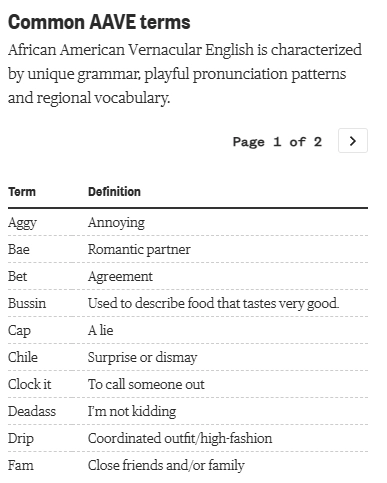
Linguistics experts say many words and phrases coined by Gen Zers have roots in African American Language that date back centuries. (Shoutout to Jamaal Muwwakkil, a fellow UC Santa Barbara graduate who I overlapped with during my Ph.D. there.)
Moriah Humiston
“English is the real bottleneck stifling other Indian languages”

A Hindi professor says that India’s systems pull one upward into English. Hindi is the corridor, but English is the gate outside which many aspirations land up.
This is the second part of a debate on whether Hindi or English are weakening other Indian languages and constricting linguistic diversity.
Krishna Kumar Pandey
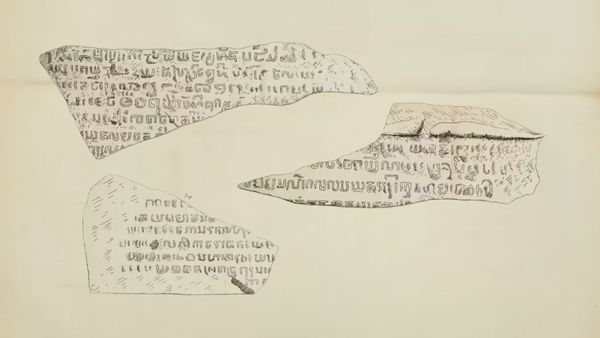
Has forensic linguistics solved the mystery of Bitcoin’s creator?

Bitcoin’s creator has hidden behind the pseudonym Satoshi Nakamoto for 17 years. But a trail of clues buried deep in crypto lore led to a 55-year-old computer scientist named Adam Back.
 Imogen Garfinkel
🗞️ Current Linguistics
Recently published research in linguistics.
Magpies learn “sentences” like human toddlers
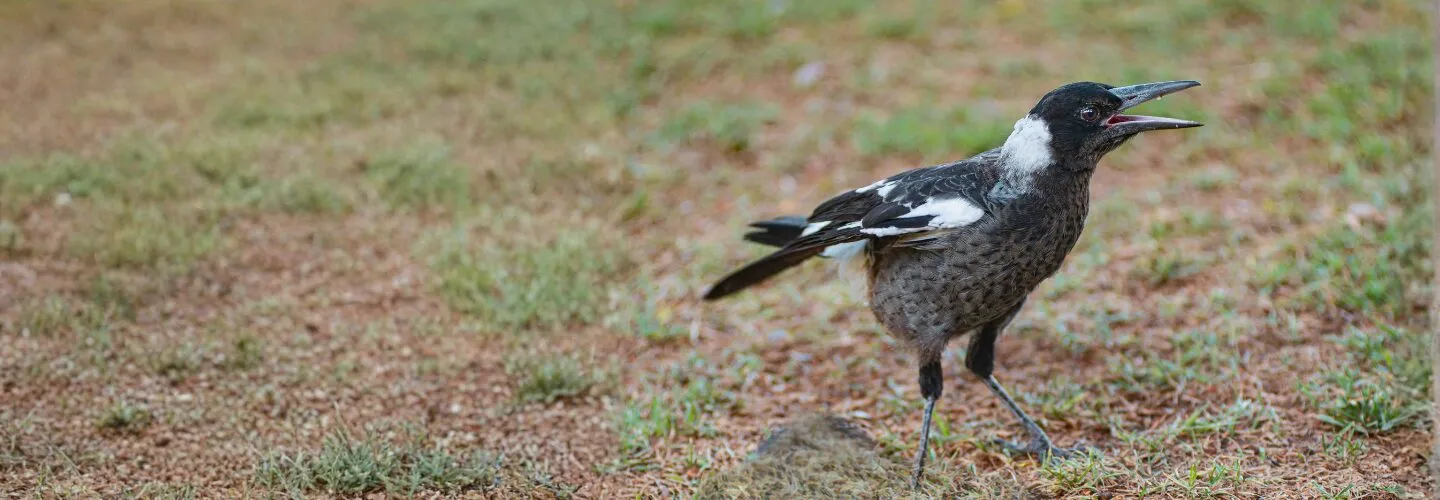
New research shows fledgling magpies combine sounds into structured call sequences through social learning—the first evidence of learned syntax outside humans.


Ancient DNA reshapes the story of early Pacific migrations—and languages

About 3200 years ago, Southeast Asian seafarers known as the Lapita pushed east into the tropical islands of the Pacific Ocean, hitting nearly every habitable isle in that corner of the globe from New Guinea to Fiji and Tonga. As they did so, they left behind artifacts of their culture, including pottery stamped with distinctive geometric patterns.
But on Palau, there’s not a single shard of Lapita pottery—and the island’s inhabitants speak a language that’s distinct from the tongues spoken on other Pacific islands. So who were the first Palauans, and where did they come from?
A new study published last week in Cell suggests an answer. Genetic evidence confirms Palau’s first settlers descended from Southeast Asians who had intermingled with the Papuans, Indigenous peoples who settled the island of New Guinea some 50,000 years ago.
- Ancient DNA reshapes the story of early Pacific migrations (Science)
- Liu et al. 2026. Papuan admixture predated the settlement of Palau. Cell. DOI: https://doi.org/10.1016/j.cell.2026.02.011.
📃 This Week’s Reads
Interesting articles I’ve come across this week.
Valerie M. Fridland
A brief introduction to Icelandic and the language history of Iceland:
Jacyb Porter Emily Shiffer
 RJ Mackenzie
📚 Books & Media
New (and old) books and media touching on language and linguistics.
Llanito: Gibraltar’s English-Spanish hybrid
A neat video from Rob Words about Llanito, a contact language spoken in Gibraltar that is a mix of Andalusian Spanish, English, Ligurian, and other languages.
Language rules! Secrets of a uniquely human ability
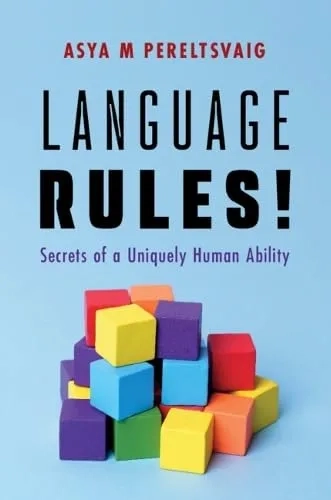
Asya M. Pereltsvaig, author of the popular textbook Languages of the world: An introduction, as a new popular audience book on linguistics coming out in May: Language rules! Secrets of a uniquely human ability (Amazon | Bookshop). Here’s the publisher’s blurb:
What are the key design elements of human language? How does it work? What makes it different from how animals communicate and convey information? How did it evolve, biologically speaking? In what respects do animals fail to do what we humans do so effortlessly? Language is a uniquely human trait, but without a degree in linguistics, it is difficult to comprehend how it works. This fascinating book addresses these and related questions in a lively and engaging way, and demonstrates the ‘nuts and bolts’ of how language actually works. Readers are introduced to key discoveries in the study of language, such as Chomsky’s ideas about ‘language faculty’, and parallels are drawn with well-known issues in science, such as ‘flat earth’, the nature-nurture debate, and the teaching of language to apes. Language – something so universal to all human experience – is a fascinating cognitive system, and this book explains how, and why.
👋🏼 Till next week!
Here’s a fantastic illustration of Grimm’s Law at work from Starkey Comics:
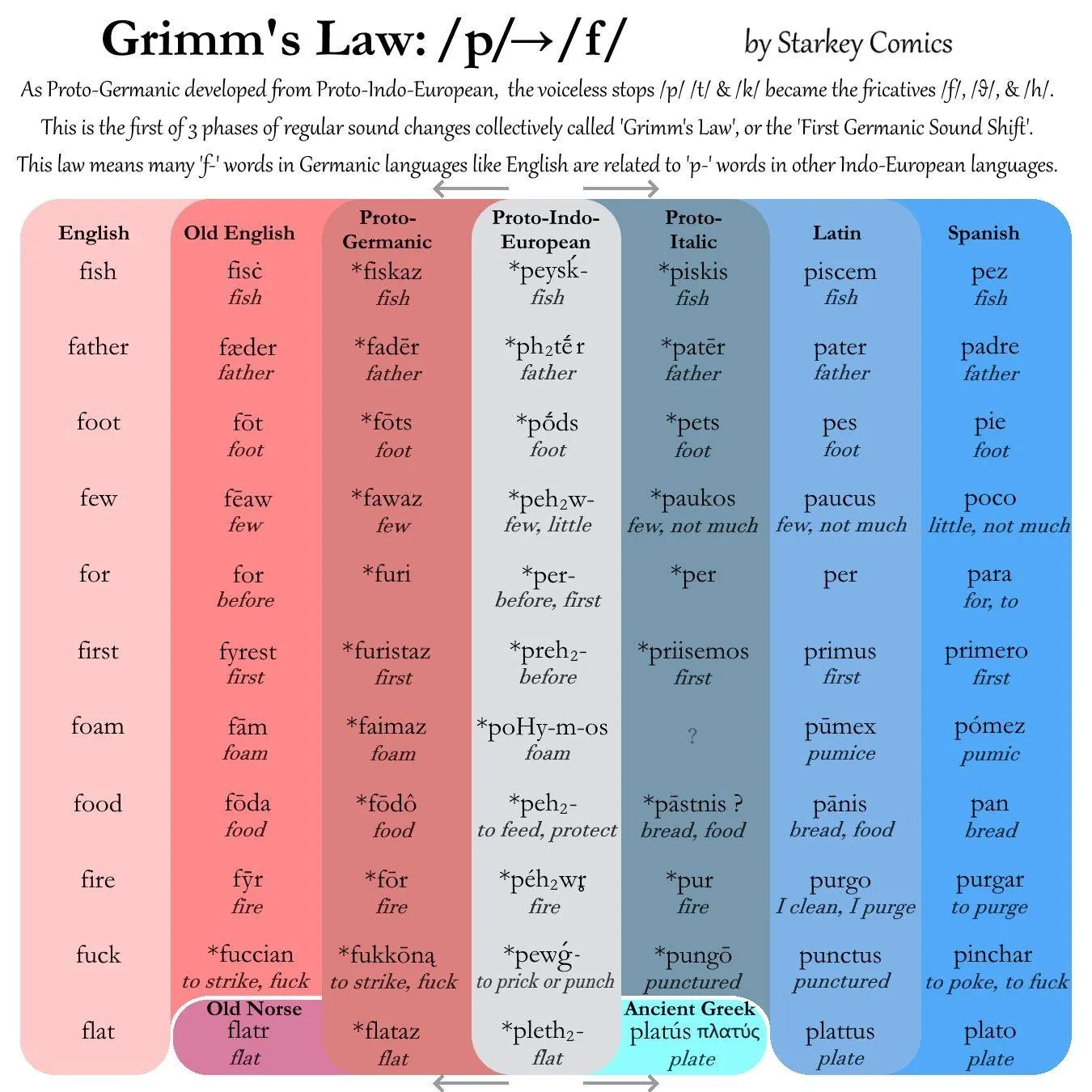
Here’s the explanation he provides along with it:
'Grimm's Law' is the collective name for a series of sound changes that happened as Proto-Germanic evolved from Proto-Indo-European, somewhere in Northern Europe around 2500 years ago.
They explain some of the differences between related words in the Germanic languages and other Indo-European languages.
These changes are very regular, and discovering them was key to understanding the way the Germanic languages relate to the other branches of the Indo-European tree.
Jacob Grimm (of "Brothers Grimm" fame) put forward the idea in 1822, which began the process that would lead to us reconstructing a Proto-Germanic language, and helped us better construct the Proto-Indo-European language that forms the base of so many of my images.
Here I've picked out 9 English words beginning with "f" that have "p"-initial cognates in the Spanish languages. I've tried to select words where the connection in meaning is still obvious.
I picked English vs Spanish, but you can see the same pattern between any Germanic language and any non-Germanic Indo-European language.
You can find more of Ryan Starkey’s excellent infographics at the Starkey Comics website:
Ryan Starkey
If you’d like to support Linguistic Discovery, purchasing through these links is a great way to do so! I greatly appreciate your support!
Check out my Amazon storefront here.
Check out my Bookshop storefront here.