Do these Stone Age symbols push back the origins of writing by tens of thousands of years?
Nope. The real finding is even cooler.

Did researchers just find evidence that writing is tens of thousands of years older than previously thought?
Nope, but you’d be forgiven for reaching that conclusion after reading these headlines reporting on research published in the Proceedings of the National Academy of Sciences last week:
Stone Age symbols may push back the earliest form of writing (New Scientist)
Ancient art could hold clues to the origins of written language (Scientific American)
Ancient artifacts hint at earliest protowriting (Science)
And here’s how the New Scientist article opens:
Stone Age people 40,000 years ago used a simple form of writing comparable in complexity to the earliest stages of the world’s first writing system, cuneiform, according to a study of mysterious signs engraved on figurines and other artefacts found in Germany. If confirmed, this pushes back the emergence of a proto-writing system by more than 30,000 years. (New Scientist)
Big if true. In today’s issue we’ll look at what the study found, why it doesn’t push back the date of the earliest writing by tens of thousands of years, and why the findings are actually way cooler, giving us insight into the very nature of what it is to be human.
Background: Behaviorally modern humans in Europe
The fact that sequences of geometric signs recur so frequently and systematically in the archaeological record of this period suggests that they had some sort of meaning.
The earliest groups of Homo sapiens to arrive in Europe appear ca. 45,000 years ago (ya), and with them an artistic explosion in the form of cave paintings, petroglyphs, carvings, and engravings on bone or ivory, and a marked increase in the overall diversity of the types of artifacts associated with human activity.
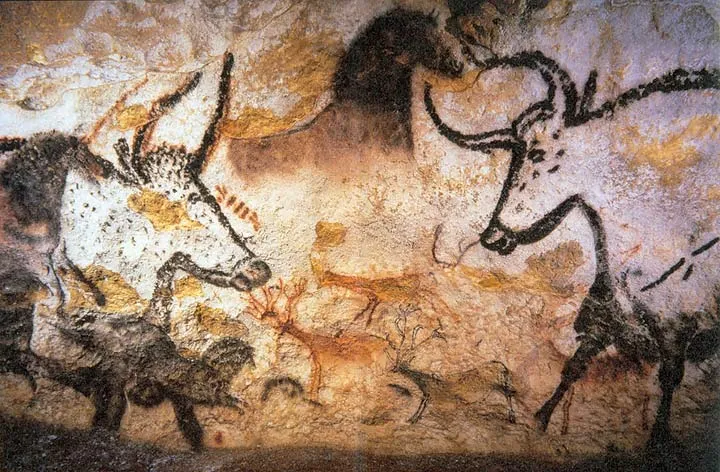
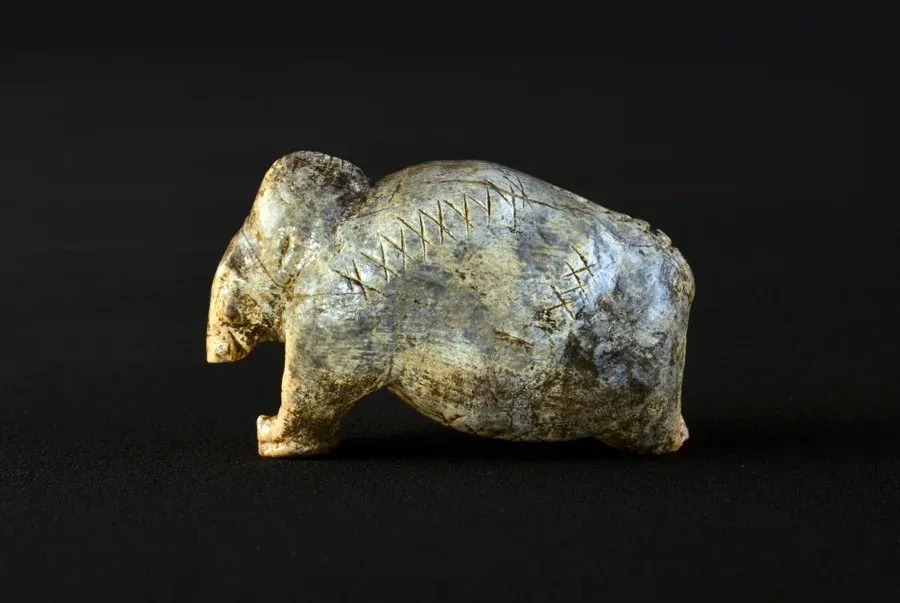
This archaeological period is known as the Upper Paleolithic (Late Stone Age), and is typically associated with the emergence of behavioral modernity—when humans begin to exhibit abstract and symbolic thought, advance planning, and social learning. During this era, we see a dramatic increase in figurines of people and animals as well as objects adorned with sequences of geometric signs like lines, crosses, and dots. This archaeological industry associated with the first modern humans in Europe is known as the Aurignacian complex.
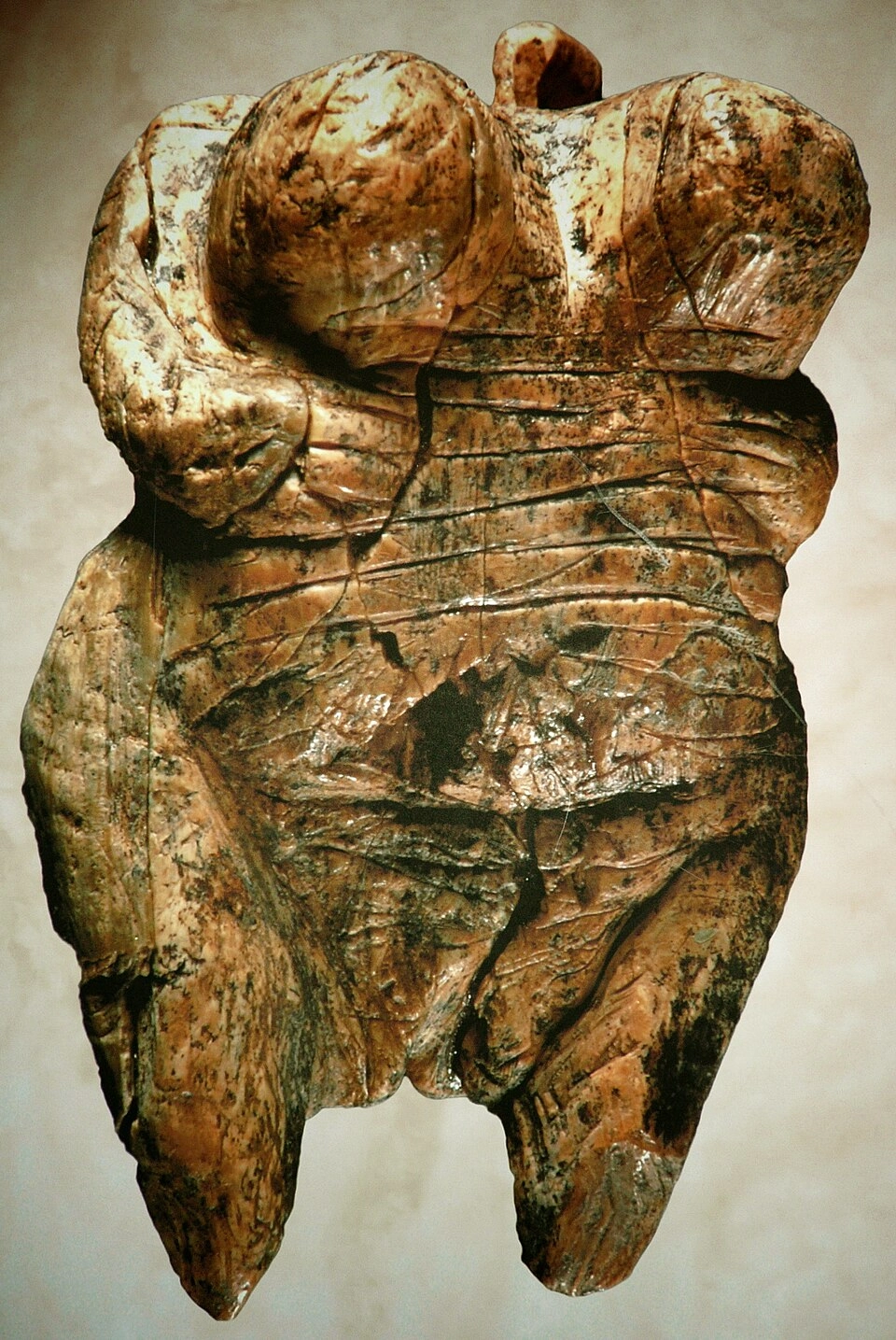
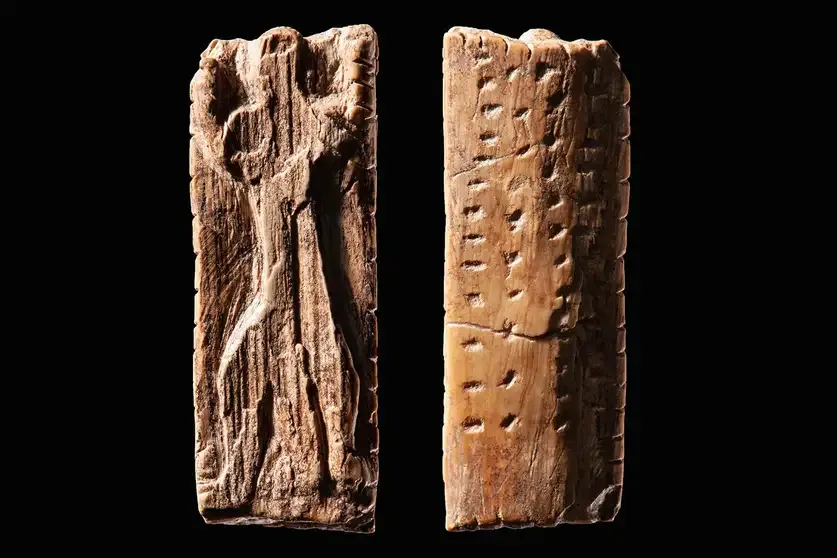
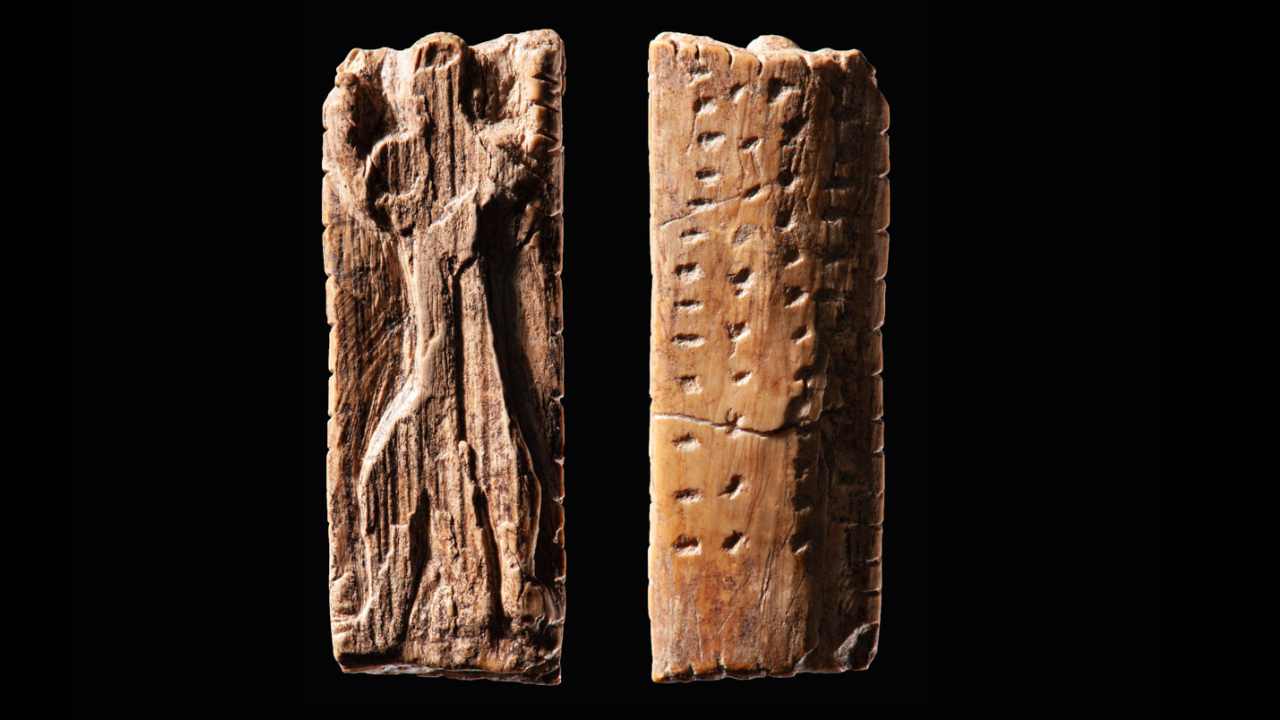
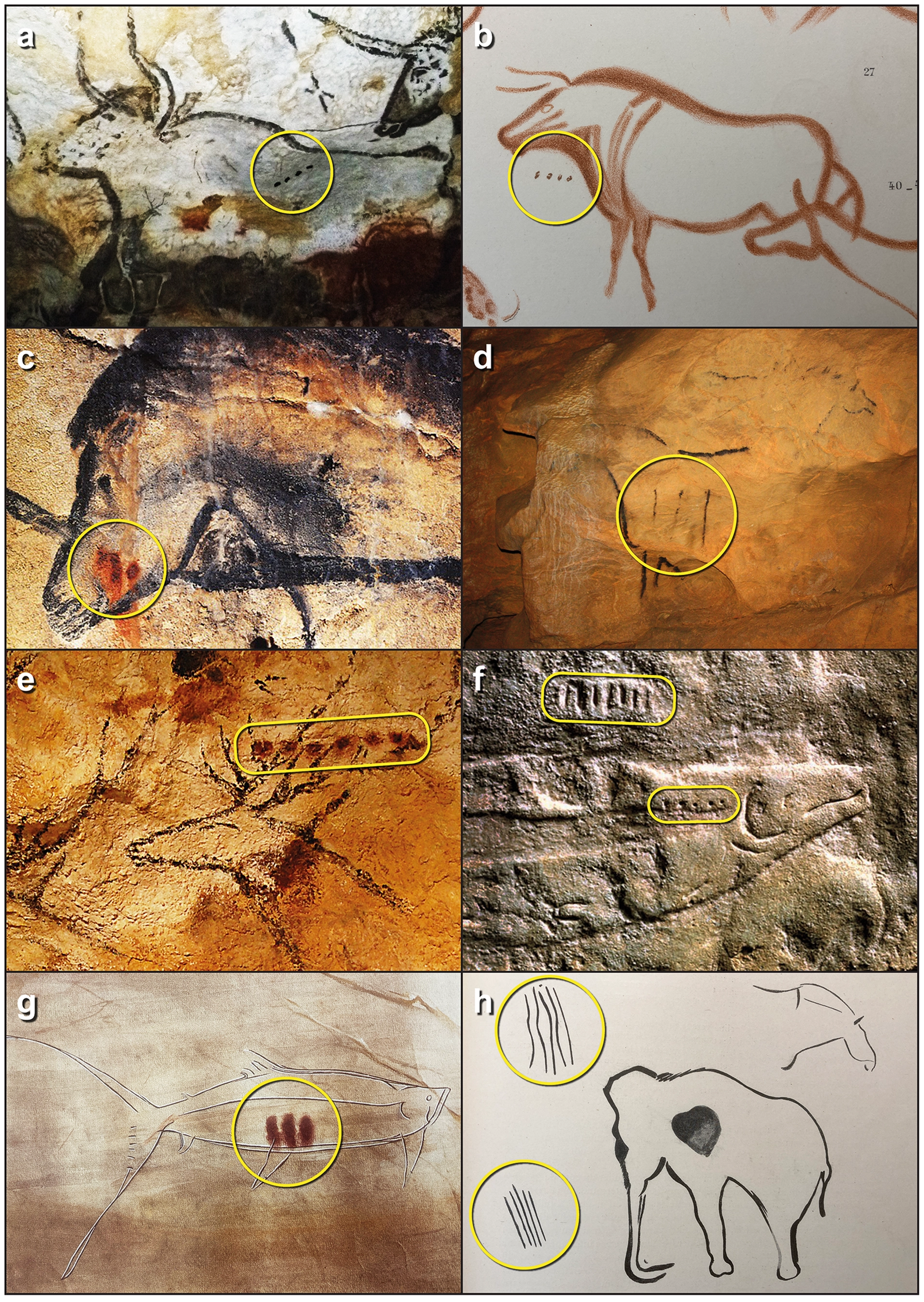
Linguist Christian Bentz and archaeologist Ewa Dutkiewicz were especially curious about the sequences of geometric marks: Were they just decorative, or did they have specific meanings? The fact that sequences of geometric signs recur so frequently and systematically in the archaeological record of this period suggests that they had some sort of meaning, maybe as tallies of kill counts, or marks on a lunar calendar, etc. For example, the Adorant figurine shown above, carved from mammoth ivory, depicts a lion-human, and is engraved with dots and notches in rows of 13 or 12. These engravings could well be calendric observations made to keep track of the passing of time. In fact, another study from 2023 argues that sequences of lines, dots, and Y shapes frequently found on European cave paintings of animals from the same time period were used to record information about the mating and birthing cycles of commonly-hunted animals (a phenological calendar).
So it’s entirely plausible that the sequences of marks in Aurignacian artifacts have some type of symbolic meaning, but how could we ever possibly know?
Reporting
- Could these cave markings be the earliest form of writing? New research proposes that symbols in 20,000-year-old cave drawings are a proto-writing system, but not all scientists are convinced (Smithsonian Magazine)
- 20,000-year-old cave painting ‘dots’ are the earliest written language, study claims. But not everyone agrees. (Live Science)
You're reading Linguistic Discovery, a weekly newsletter about the science and diversity of language—a field known as linguistics. I'm Danny Hieber, a Ph.D. in linguistics who works with indigenous communities to help them document and revitalize their languages.
Topics covered in this newsletter include:
⚙️ how language works (cognitive/historical linguistics)
🌍 grammatical diversity in the world’s languages (typology)
ℹ️ explainers of terms and concepts in linguistics
🗣️ language profiles
🗞️ the latest news and research in language and linguistics
⭐ linguistic reviews of books and other media
This article is for paying subscribers only. If you’d like to read it, become a Linguistic Discovery supporter!
✨ Perks ✨
➕ bonus articles/videos
👀 early access to articles
📘 early access to chapters of my book
💝 support my mission to educate the public about the science and diversity of language!
Price: $10/month (USD)
You can also subscribe on Substack if you prefer to use that platform instead. You’ll get all the same content and extras.