1,000 subscribers! 🎉 And did Proto-Indo-European have SOV word order?
The Linguistic Discovery newsletter just reached 1,000 subscribers! 🎉 And linguist Danny L. Bate suggests that Proto-Indo-European didn’t have Subject-Object-Verb word order after all.

Happy Thor’s Day! (Aren’t you proud of me for sending this on the correct day this week?) And welcome to this week’s edition of Discovery Dispatch, a weekly roundup of the latest language-related news, research in linguistics, interesting reads from the week, and newest books and other media dealing with language and linguistics.
Linguistic Discovery hit a big milestone this week: 1,000 newsletter subscribers!

Thank you to every single one of you for taking the time to subscribe to and read this newsletter! As an additional way of saying thanks, I’m working on a special post just for you newsletter subscribers. Stay tuned!
In the meantime, I’d be thrilled if you could share your favorite post from the newsletter so far on social media (and tag me so I can see!). (Here’s the full newsletter archive.) Word of mouth goes a long way in helping me grow the newsletter and teach more people about the science and diversity of language, so thank you for sharing!
Last week I joined a panel for Career Linguist, which runs a 5-week Career Camp focused on creating opportunities to bring linguistics to the world of work, usually outside academia. The organizer, Dr. Anna Marie Trester, has also published two books on careers in linguistics:
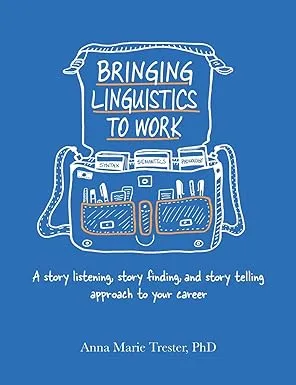
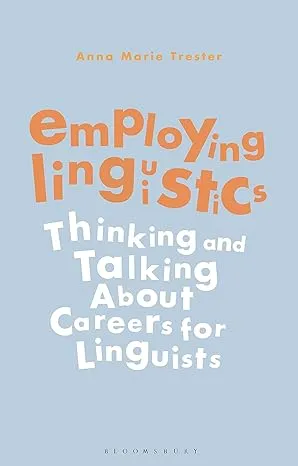
We had a great discussion where I did some introspecting about work-life balance, setting boundaries, and working in documentary linguistics and language revitalization. Be sure to check out Career Linguist if you’re interested in non-academic jobs in linguistics.
Reminder that you can now read Discovery Dispatch (and/or the World of Words newsletter) on your platform of choice:
Personally, I recommend the Linguistic Discovery website because it’s got the best formatting. But you’ll get the same articles, videos, and bonus content no matter which platform you use. So feel free to unsubscribe from this one and subscribe on your preferred platform.
📋 Contents
🆕 New from Linguistic Discovery
🗞️ Current Linguistics
📃 This Week’s Reads
📚 Books & Media
📑 References
🆕 New from Linguistic Discovery
This week's content from Linguistic Discovery.


🗞️ Current Linguistics
Recently published research in linguistics.
In a study published in the Journal of Sociolinguistics this month, sociolinguist Kathryn Campbell-Kibler finds that when interviewed, people say that speakers from certain regions have heavy accents. But when those same interviewees listened to recordings of speakers from those areas, they failed to detect an accent! Campbell-Kibler suggests that it’s cultural stereotypes in pop culture and the media that lead to these beliefs about accents.
 Jordan Joseph
- Original Research Study: Place-based accentedness ratings do not predict sensitivity to regional features (Journal of Sociolinguistics)
Here’s some additional reporting on the studies I described last week about context-dependence in birdsong and the discovery of a “language protein”.
 Andrei Ionescu
 Carly Cassella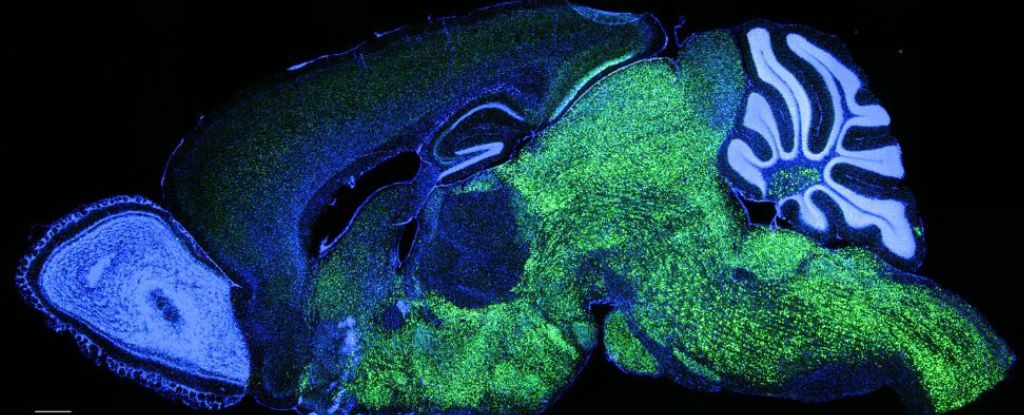
📃 This Week’s Reads
Interesting articles I've come across this week.
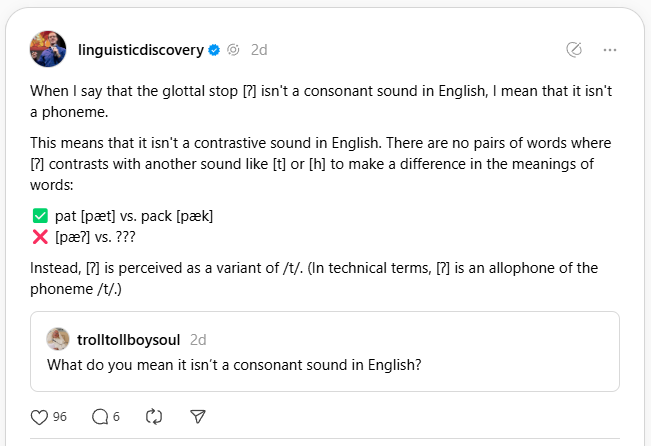
Linguist and fellow online educator Danny L. Bate (Website | Bluesky | X) has a cogent post on his blog this week questioning the received wisdom that Proto-Indo-European (PIE) had Subject-Object-Verb (SOV) word order, as has been thought for the last 50+ years:
 dannylbate
I think Danny is probably right—or at the very least, there’s not enough evidence to claim with certainty that PIE word order was fixed. And the burden of proof should be on people who claim that a language has a fixed word order, not the other way around. Languages do not have fixed word orders by default. Instead, speakers in many languages order the elements of a clause in ways that are sensitive to their hearers’ state of knowledge, where given (old) information tends to precede new information—the classic topic-comment organization. These languages are said to have pragmatic word order rather than fixed word order. In these pragmatic word order languages, it does not matter whether the topic is the subject, object, or verb; all that matters is its “newsworthiness”, contrastiveness, relative importance, etc. (Mithun 1987).
It is only when a certain word order becomes frequent enough and strongly conventionalized that a language acquires a fixed word order. When this happens, it becomes ungrammatical to order the elements of a clause in any other way. English is like this, for example. English is strictly SVO:
- ✅ The woman (S) saw (V) the dog (O).
- ❌ The woman (S) the dog (O) saw (V).
If English had pragmatic word order, the second sentence would be acceptable in at least some contexts, but it isn’t. This shows that word order has become grammaticalized in English; it’s a grammatical rule that elements of a clause have to go in a certain order.
I think it’s very likely that PIE hadn’t yet grammaticalized a fixed word order, since so many of its descendant languages still retained pragmatic word order. Danny’s post provides some additional arguments in favor of this position.
🌟 Perks 🌟
📝 early access to chapters of my book, Universal: The diversity of language and the unity of the human mind
➕ bonus articles/videos
👀 early access to articles/videos
💝 support my mission to educate the public about the science and diversity of language!
Price: $5/month (USD)
You can also subscribe on Patreon or Substack if you prefer to use those platforms instead. You'll get all the same content and extras.
The other week I told you about a new book on language at the beginning and end of life, Bye bye I love you (Amazon | Bookshop). Now John Kelly at the Strong Language blog looks at the role that swearing plays at the end of our lives, according to the book:
- “Eat shit” and “Oh fuck”: Sweary First and Last Words in Michael Erard’s Bye Bye I Love You (Strong Language)
This one’s an older piece of research from 2019 that popped back up on Science’s Instagram last week, but I think it’s really cool:
- Reporting: Ancient switch to soft food gave us an overbite—and the ability to pronounce /f/ and /v/ (Science)
- Original Research Study: Human sound systems are shaped by post-Neolithic changes in bite configuration (Science)
Prolific linguist Balthasar Bickel believes that this shift may have correlated with a set of sound changes known as Grimm’s Law, which involved a change from /p/ → /f/ and created the Germanic branch of the Indo-European family tree. (This is why the Latin word for ‘father’ is pater with a /p/ but the English word is father with an /f/. The two words are cognates, but the Germanic version underwent the sound changes of Grimm’s Law.) It’s probably a stretch to claim that Grimm’s Law was caused by the shift to agriculture and soft foods, but that change certainly was necessary to enable Grimm’s Law to take place.
Here’s an extremely important lesson from linguistics that I wish more people knew: speaking a different language to your child at home will not hinder their development in the language used at school. Linguists Valeria Maria Rigobon and Rauno Parrila explain in this piece for The Conversation:
 Rauno Parrila
This next article isn’t about language directly (although as someone interested in how language works, I think it’s necessary to also understand human evolution), but it has one interesting passage which shows one of the many parallels between language change and biological evolution.
 #author.fullName}
Here’s the passage:
Trevor Cousins and his colleagues at the University of Cambridge suggest our supposed parent species, Homo antecessor, split away from its parent, Homo heidelbergensis, more than a million years ago. About 600,000 years ago, H. antecessor gave rise to two branches: one led to the Neanderthals and Denisovans – another kind of hominin – the other to H. sapiens. Then comes the twist. Our evolutionary grandparents, H. heidelbergensis, stuck around to see the birth of the H. sapiens lineage – and about 300,000 years ago, the two interbred in a big way. In fact, the researchers’ model indicates that about 20 per cent of our ancestry comes from this interbreeding.
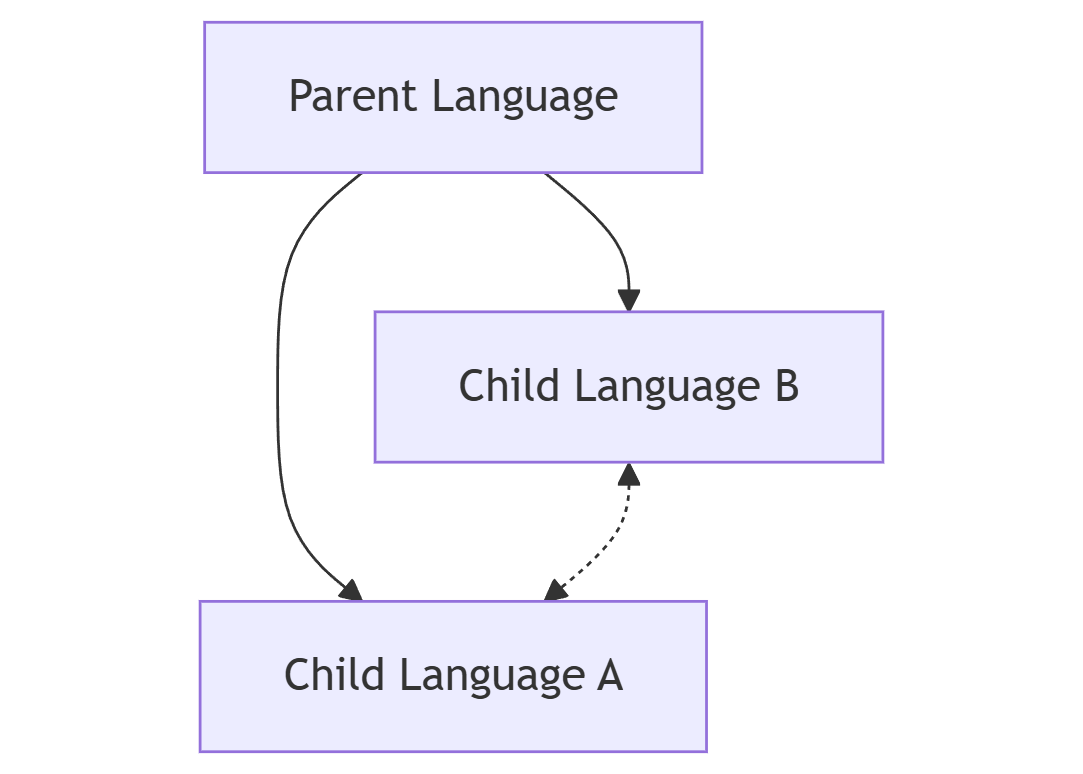
This reminds me of situations of language contact. A parent language can diversify into two child languages, and those child languages then later interact, making it difficult to determine which words and grammatical features are inherited vs. borrowed:
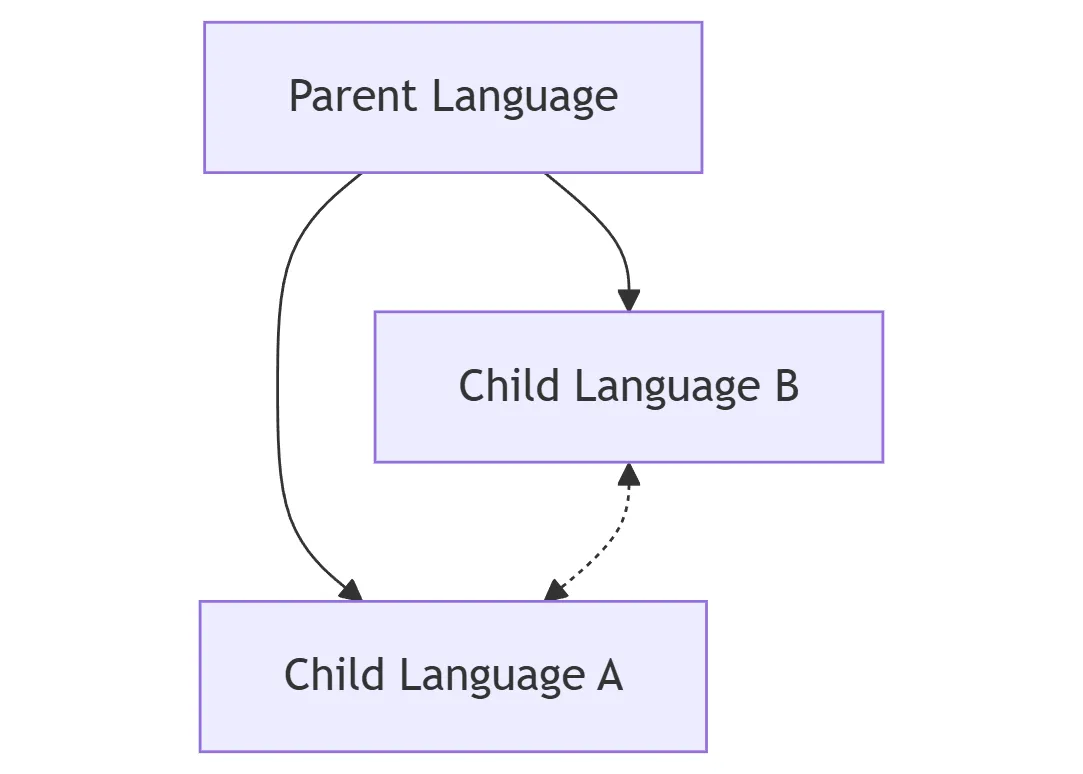
For example, Old English and Old Norse are both Germanic languages, so they descend from the same Proto-Germanic parent, but Old Norse continued to influence Old English after they had separated (and especially during the Viking invasions). In terms of vocabulary, Old English borrowed many words from Old Norse, some of which were already cognates! shirt and skirt are related words, for instance, the former coming down to us from Old English, and the latter being a borrowing from Old Norse. (When a two words within a single language share the same etymological root, they are called a doublet.) In terms of grammar, the influence of Old Norse simplified the Old English case system, introduced new sounds such as /g/, and even gave us the third person plural pronoun they/them/their.
There are many other parallels between language change and biological evolution, so much so that linguists use a biological metaphor whenever they talk about language relationships, which sometimes even gets called linguistic phylogenetics.
Other Reads
 Eric Andrew-Gee
 Emily Cooke
 Gerald Roche
📚 Books & Media
New (and old) books and media touching on language and linguistics.
A new book on mixed languages in South Asia has just been released:
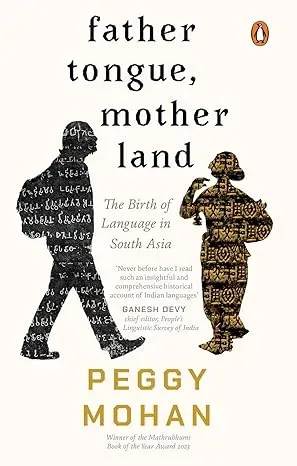
How do languages mix? Does it begin in chaos, new migrants and old inhabitants needing a pidgin to communicate? Or does it happen more smoothly, in stages? And what is a prakrit? Why do we hear only of prakrits, and never of pidgins, in South Asia?
In Father Tongue, Motherland, Peggy Mohan looks at exactly how the mixed languages in South Asia came to life. Like a flame moving from wick to wick in early encounters between male settlers and locals skilled at learning languages, the language would start to ‘go native’ as it spread. This produced ‘father tongues’, with words taken from the migrant men’s language, but grammars that preserved the earlier languages of the ‘motherland’.
Here’s an excerpt from the book, where Mohan discusses early Indus Valley writing:
 Peggy Mohan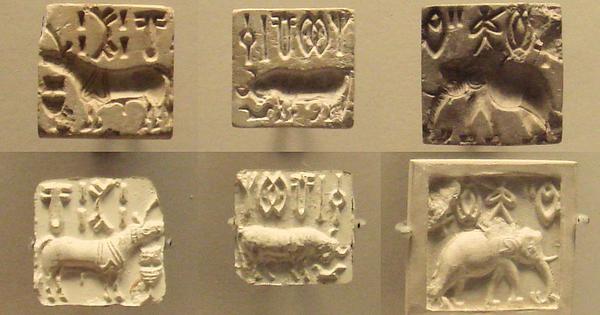
That’s all for this week! I’m off to go prepare some grammar worksheets for the Chitimacha language teachers. Thank you for taking the time to read, and for your support in getting to 1,000 subscribers! Let me know what you thought of this issue, and have a great week!
~ Danny
📑 References
- Mithun, Marianne. 1987. Is basic word order universal? In Russell S. Tomlin (ed.), Coherence and grounding in discourse (Typological Studies in Language 11), pp. 281–328. John Benjamins. DOI: 10.1075/tsl.11.14mit
If you'd like to support Linguistic Discovery, purchasing through these links is a great way to do so! I greatly appreciate your support!
Check out my entire Amazon storefront here.