Critics hate the new French dictionary, and linguists discover the universal language of pain
We’re also making progress on talking to aliens, and a new book on Proto-Indo-European is on its way. Here’s what happened this week in language and linguistics.

Hello and welcome to this week’s edition of Discovery Dispatch, a weekly roundup of the latest language-related news, research in linguistics, interesting reads from the week, and newest books and other media dealing with language and linguistics!
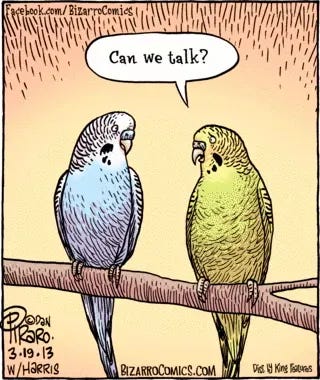
(If you’re curious for an answer to this question, this book has a chapter on parrots and whether they’re actually using language creatively or just copying humans.)
📢 Updates
Announcements and what’s new with me and Linguistic Discovery.
You’ll notice that this week’s digest is less verbose than usual! I’m going to shift my longform commentary to its own separate posts going forward, and simply link to those posts in these digests instead. This way, these digests become simple link roundups that are more easily…digest-ible.
This provides you, dear reader, the option of getting emailed each of my posts individually (by subscribing to both the newsletter and digest), or only getting one email per week in the form of the weekly roundup (by only subscribing to the digest). You can adjust your preference here.
I hope this helps make your reading/email experience better!
📰 In the News
Language and linguistics in the news.

Linguist John Haiman (/ˈheᶦmən/, not /ˈhaᶦmən/) has passed away at the age of 79. Haiman was a prolific linguist who documented the Hua language of New Guinea and made several groundbreaking contributions to the field of linguistic typology and functional approaches to language generally. He popularized the idea of iconicity, which notes that there are systematic parallels between meanings and the ways that languages express those meanings in form. The three principles of iconicity are:
- Quantity Principle: Conceptual complexity corresponds to formal complexity.
- Proximity Principle: Conceptual distance tends to match with linguistic distance.
- Sequential Order Principle: The sequential order of events described is mirrored in the speech chain.
The Linguistic Society of America has a wonderful obituary here.

Here are a few of his better-known scholarly works:
- Conditionals are topics. Language 54(3): 564–589. DOI: https://doi.org/10.1353/lan.1978.0009
- Hua: A Papuan language of the Eastern Highlands of New Guinea (Studies in Language Companion Series 5). John Benjamins.
- Iconic and economic motivation. Language 59(4): 781–819. DOI: https://doi.org/10.2307/413373
- (with Pamela Munro, eds.). 1983. Switch reference and universal grammar (Typological Studies in Language 2). John Benjamins.
- (ed.). 1985. Iconicity in syntax (Typological Studies in Language 6). John Benjamins.
- (with Sandra A. Thompson, eds.). 1988. Clause combining in grammar and discourse (Typological Studies in Language 18). John Benjamins.
- Talk is cheap: Sarcasm, alienation, and the evolution of language. Oxford University Press.
The latest version of the official French dictionary was just published a few months ago, and critics say it’s already obsolete.
 Adam Sage, Paris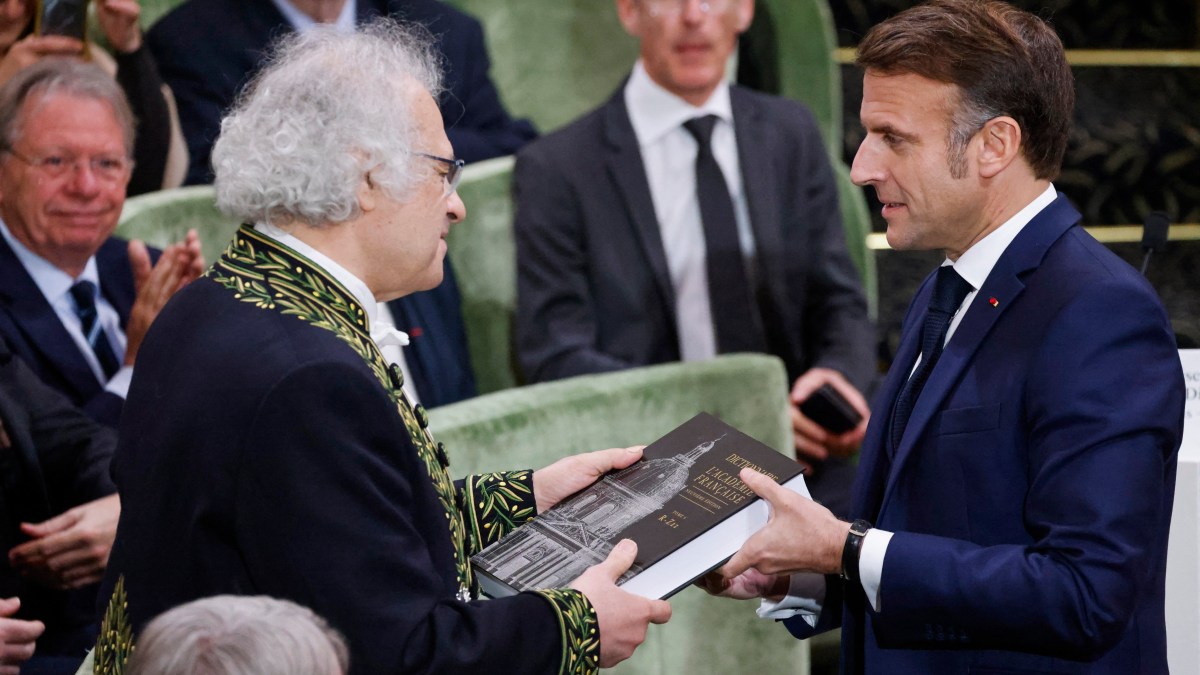
Count me in the camp of those who think the French Academy is an outdated fossil of an institution that still doesn’t understand that dictionaries should be descriptive rather than prescriptive.
It’s also worth pointing out that the French Academy opposed the constitutional recognition and protection for regional languages within France (Alsatian, Arpitan/Franco-Provençal, Basque, Breton, Catalan, Corsican, Flemish, Gascon, and Occitan) in 2008—a classic imperialist move. As the author of a page dedicated to giving greater visibility to linguistic diversity, I am decidedly not a fan!
🗞️ Current Linguistics
Recently published research in linguistics.
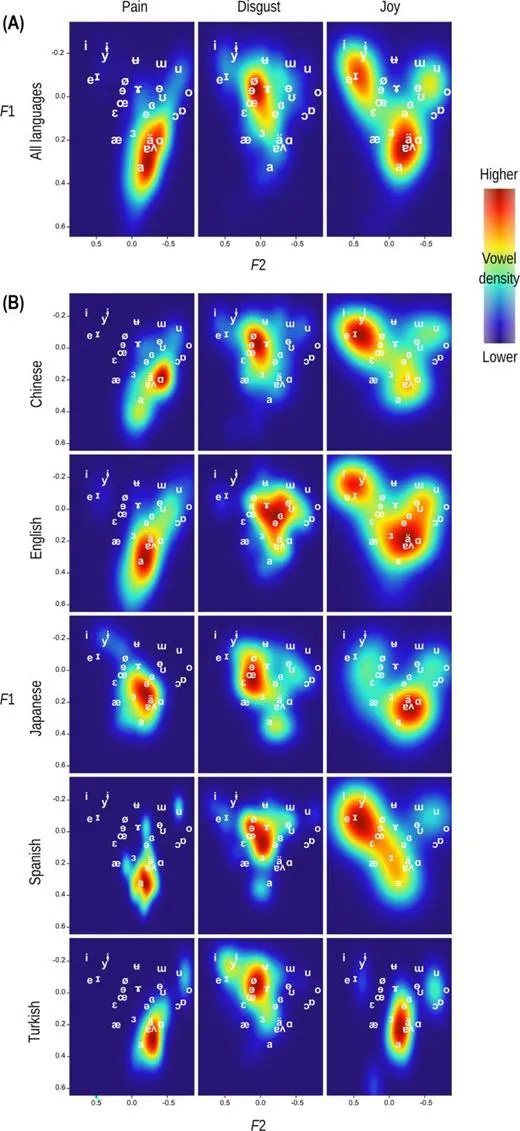
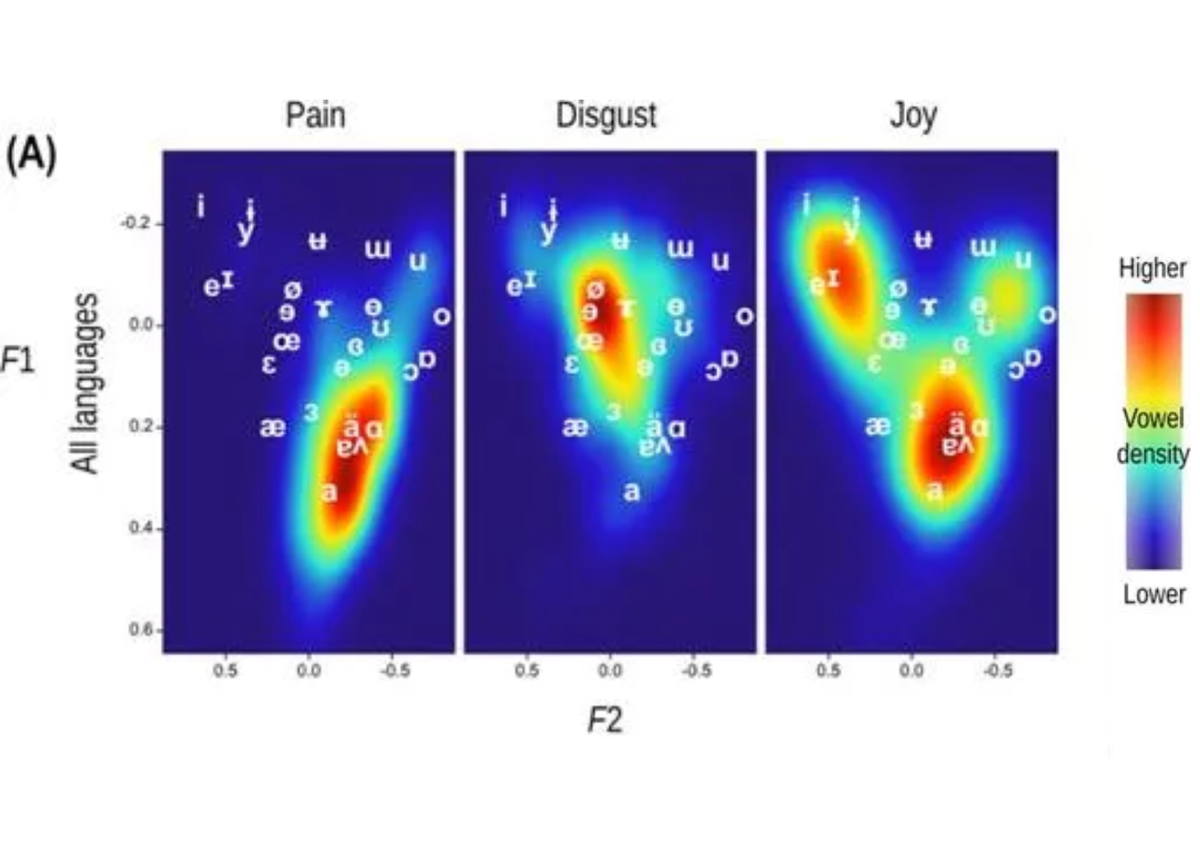
Expressions of pain using similar-sounding words across the world’s languages. This article suggests that these words have “a common origin”, which seems to imply they’re etymologically related words, but the original research article doesn’t claim that. It does look at a few explanations, though, such as evolutionary pressures, sound symbolism, and colexification.
 Allison Parshall
- Ponsonnet et al. 2024. Vowel signatures in emotional interjections and nonlinguistic vocalizations expressing pain, disgust, and joy across languages. Journal of the Acoustic Society of America 156(5): 3118–2139. DOI: https://doi.org/10.1121/10.0032454
Linguists have developed sophisticated tools using information theory to help decipher unknown languages, and new research applies this to understanding AI in a way that could also be used to understand alien communication in the future:
 Olaf Lipinski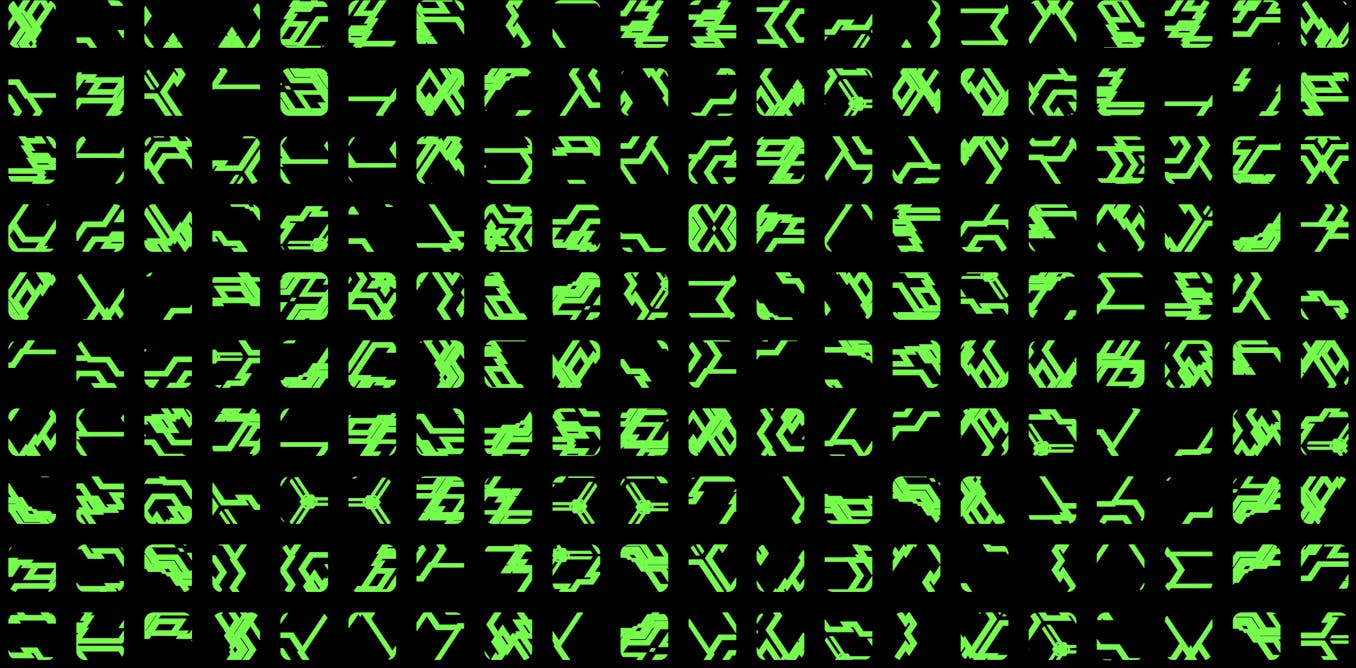
 Olaf Lipinski
 Olaf Lipinski
When does a child start putting words together into novel expressions on their own rather than just parroting expressions they’ve already heard? New research put together a generative computer model that mimics how children learn language, and concluded that children start producing novel sentences around 30 months.
 Tori Lee
- Alhama et al. 2024. Using computational modeling to validate the onset of productive determiner-noun combinations in English-learning children. Proceedings of the National Academy of Sciences 121(50): e2316527121. DOI: https://doi.org/10.1073/pnas.2316527121
📃 This Week’s Reads
Interesting articles I’ve come across this week.

Aboriginal message sticks are hand-carved wooden objects that were traditionally used to send messages across long distances. This article argues that they should be considered genuine writing rather than proto-writing as they are typically classified.
 Athena Lee
Why do cartoon villains in children’s shows use foreign accents? This article argues that this practice ingrains in children the idea that diversity is bad.
 Isabel Fattal
Here’s one of the coolest pop linguistics articles I’ve read this year, about how constraints on our working memory fundamentally shape how language works.
Here are some quotes:
When you are speaking, the dilemma is that your short-term memory isn’t capacious enough to hold the details of a full sentence. Its form would dissipate in your mind in the time between uttering the first syllable and the last. You are, in this sense, working against time when you speak. And so, you begin talking with only a vague sense of how the sentence will unfold, taking a leap of faith that you can work out the details of what comes next by the time the earlier part of the sentence has scrolled into the past.
Another way to save time when speaking is to leave unsaid what the hearer can reasonably reconstruct. We rarely truly mean what we say. We almost always mean somewhat more than what we say, leaving the hearer to infer the full meaning. Our sentences are not so much blueprints for meaning as they are decipherable clues to what we intend to convey.
All languages use the strategy of reducing information where it is easiest to infer – witness the ubiquity of pronouns, which tend to be very short and contain almost no information at all. The linguistic content of the pronoun ‘he’ tells us only that the referent is male. But because the use of this anaemic word is usually clear from the context, its lack of content poses little problem. Pronouns save the speaker from having to utter the person’s entire name repeatedly (‘Bernardo arrived. Bernardo brought a cake …’)


📚 Books & Media
New (and old) books and media touching on language and linguistics.
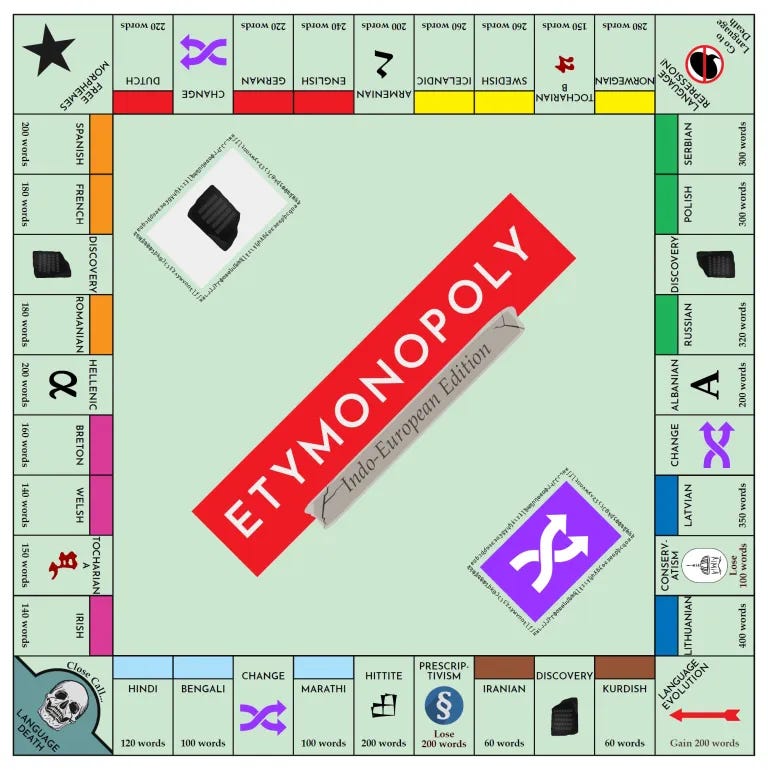
Earlier this year Ryan Starkey of Starkey Comics put together an etymology version of the board game Monopoly—Etymonopoly! You can get all the downloadable printouts here:
 Ryan Starkey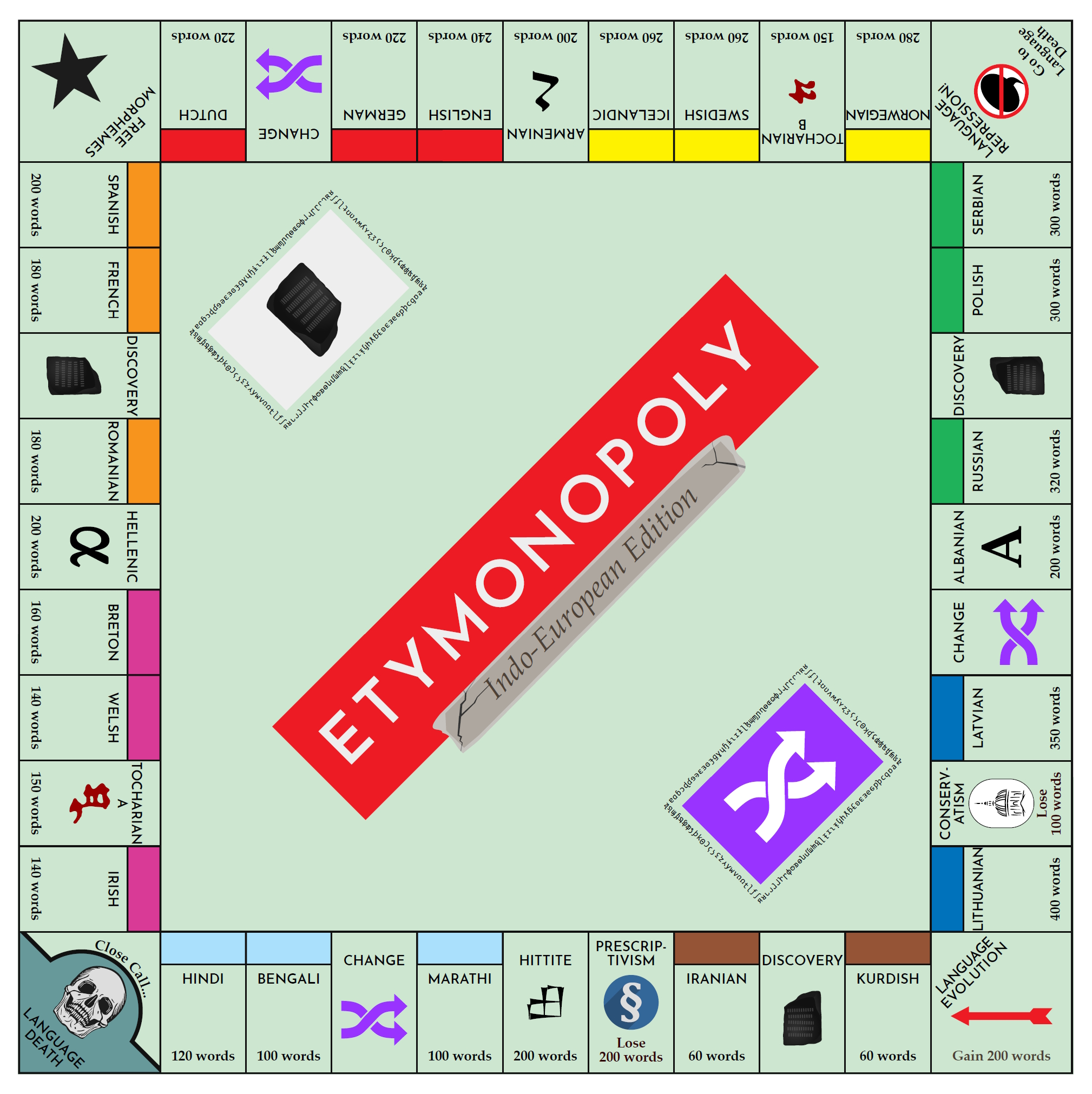
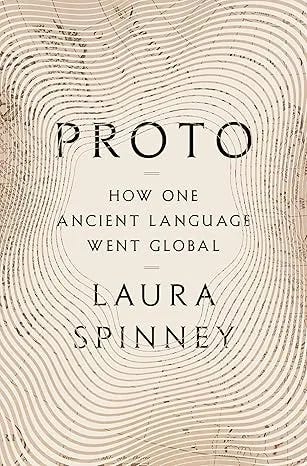
Reviews of the new book Proto: How one ancient language global, which I mentioned last week, are starting to appear, and so far they’re glowing! I just got copy in the mail from the publisher today, so I’m excited to read it soon.
 #author.fullName}
 Henry Oliver
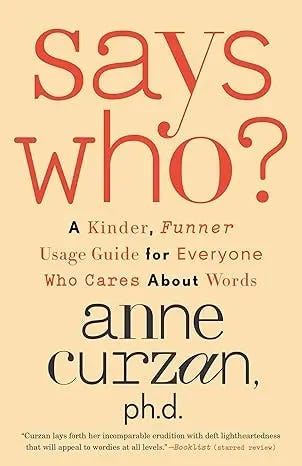
The paperback edition of Says who? A kinder, funner usage guide for everyone who cares about words is out, and Penguin Random House kindly sent me a copy. I’d actually already read it on Kindle when it came out, and I love Curzan’s approach in the book: don’t be a jerk about language, basically. I wish all the grammar pedants would read this one.
🗃️ Resources
Maps, databases, lists, etc. on language and linguistics.
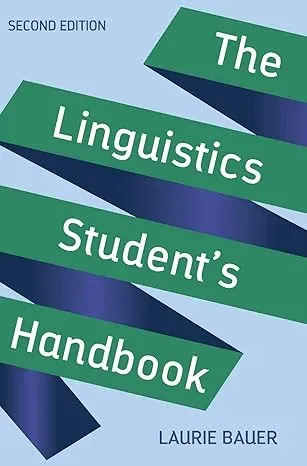
Are you a linguistics student? (Or do you want to study linguistics?) Here’s a small collection of books specifically for students in linguistics:

Reminder that the Linguistic Discovery website also has a list of over 60 linguistics podcasts!
- Linguistics Podcasts (Linguistic Discovery)
I hope you enjoyed this week’s issue! Let me know if you like this more concise format or not with an email. Have a great week!
~ Danny
If you'd like to support Linguistic Discovery, purchasing through these links is a great way to do so! I greatly appreciate your support!
Check out my entire Amazon storefront here.