
The Golden Age of Language might have boasted 75,000 languages approximately 2,000 years ago
Also this week: The Herculaneum scrolls are giving up their secrets + The Bantu Expansion: The mass migration that transformed sub-Saharan Africa

Also this week: The Herculaneum scrolls are giving up their secrets + The Bantu Expansion: The mass migration that transformed sub-Saharan Africa
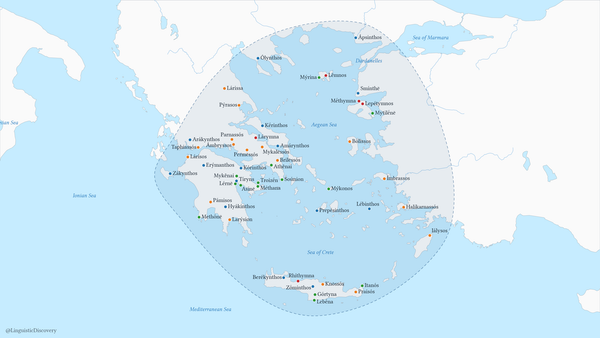
Around 1,000 Greek words can’t be traced to any Indo-European language. Where do they come from?
Also this week: Why you might not want to learn language like a child + How California “Valley Girl” talk changed the way America speaks + Statistical physics reveals how languages evolve
On the “word gap” and how much you should talk to your toddler
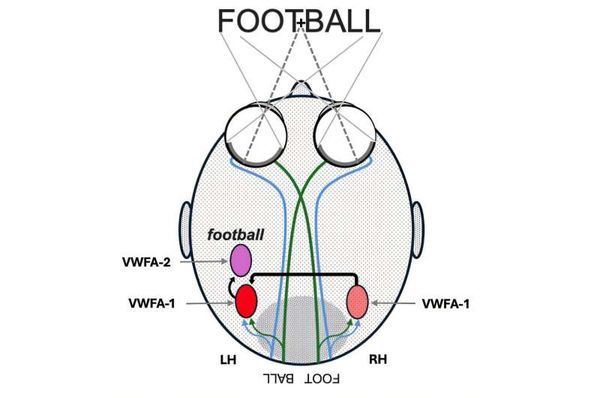
Also this week: Mom defends decision to teach her kids French despite not being a native speaker + Why English isn’t actually decaying + Baby talk is good for your child, actually
On Persia, Iran, Farsi, and Aryan: The many names for Iran, its peoples, and its languages

Also this week: Willkommen, bienvenue, welcome to a Eurovision Song Contest that embraces linguistic diversity + Linguists are mapping Rhode Island’s linguistic diversity

On Polari and the history of queer language
Also this week: More Ukrainians are switching from speaking Russian to Ukrainian + Scientists say AI is bringing us closer to talking to animals + A new book on the world’s vanishing languages

Inspiring words for linguistics majors
Also this week: New Mexico is losing a form of Spanish spoken nowhere else + Study finds that isolated human groups speak more diverse languages
What this African American English expression teaches us about the world’s languages

Current Linguistics
Also this week: Universals of swearing across languages + Does learning Latin improve your SAT scores? + What killed penmanship
Newsletter
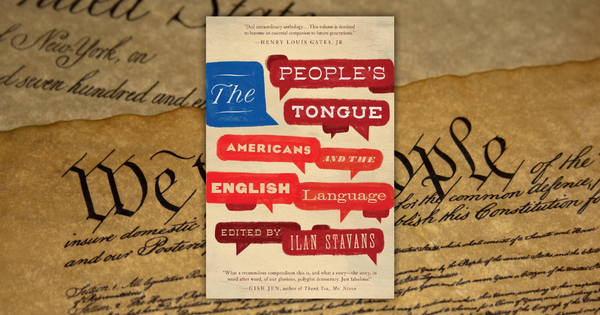
Language is shaped by everyday people, not the Big Names™ of history

Current Linguistics
Also this week: Sperm whale communication closesly mirrors human language + Why toddlers don’t understand the words “I” and “you”
Newsletter
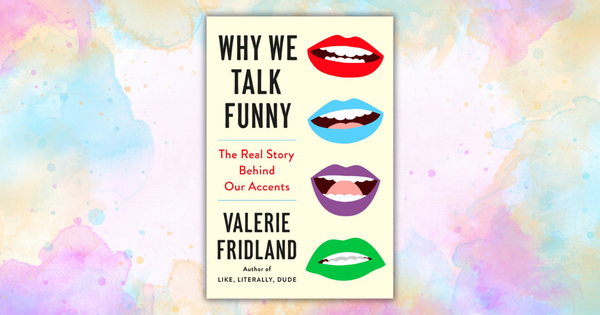
A sneak peek at Dr. Valerie Fridland’s new book, “Why we talk funny: The real story behind our accents”
Current Linguistics
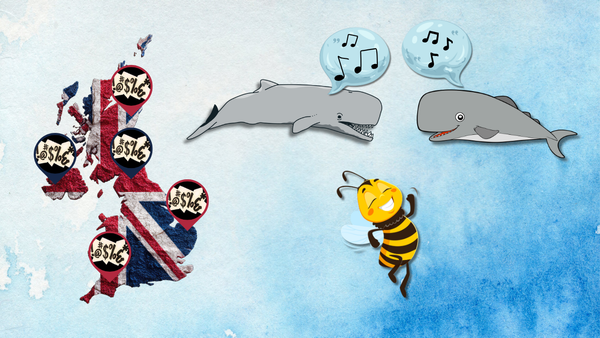
Also this week: Bumble bees show a surprising knack for rhythm + Sperm whale songs are surprisingly like human language
Newsletter
How parents talk to their children around the globe
Current Linguistics
Also this week: How slang works, and how Black culture is shaping Gen Z’s slang
Newsletter
Why Homer uses colors so strangely in the Iliad and the Odyssey
Current Linguistics
Also this week: The linguistics of Project Hail Mary + The beautiful linguistic chaos of Iran + Your dog might be eavesdropping on you (linguistically)
Newsletter
The linguistics of Project Hail Mary

Current Linguistics
Also this week: Did writing just get pushed back tens of thousands of years? + How slang works + We finally understand why horses whinny
Newsletter
Or is baby talk just something that white middle class Americans do?