New study links receptivity to corporate bullshit to weaker leadership skills
Also this week: New Mexico is losing a form of Spanish spoken nowhere else + Study finds that isolated human groups speak more diverse languages

Welcome to this week’s edition of Discovery Digest, a weekly roundup of the latest language-related news, research in linguistics, interesting reads from the week, and newest books and other media dealing with language and linguistics!
Not yet a subscriber? Sign up below! (It’s free!)
🆕 New from Linguistic Discovery
This week’s content from Linguistic Discovery.
The Ass Camouflage Construction

African American English (AAE) has a cool expression called the Ass Camouflage Construction:
- They done arrested her stupid ass.
- I’m gonna sue her ass.
- Get your triflin’ ass out of here.
- I saw his ass yesterday.
- His ass is gonna get fried.
This is a great example of metonymy, specifically a subtype of metonymy called synecdoche, where a part of an object is used to refer to the whole object.
And did you know that this process of metonymy is exactly how languages across the world get their reflexive pronouns?
Read all the details in this special issue for paid subscribers:
 Daniel W. Hieber, Ph.D.
If you’re not yet a paid subscriber and would like to read, sign up below! For $10/month or $100/year, you’ll get access to bonus articles like this one and early access to my in-progress book projects.
📰 In the News
Language and linguistics in the news.
This article is from 2023 but still germane and interesting today:
🗞️ Current Linguistics
Recently published research in linguistics.
Receptivity to corporate jargon associated with weaker leadership skills
Apparently people who are more easily impressed by buzzword-ladened corporate speak perform worse on measures of workplace leadership and decision-making:
 Mane Kara-Yakoubian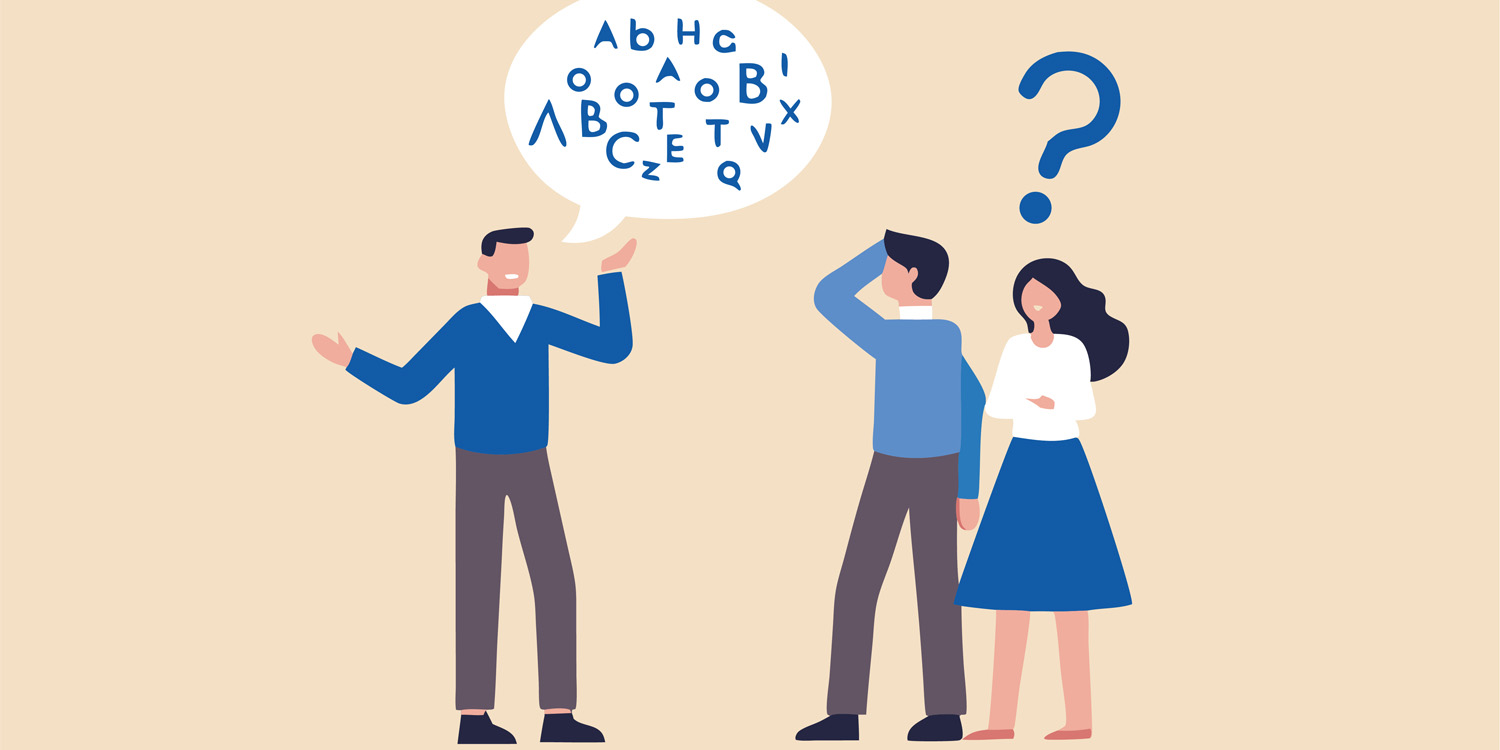
- Littrell. 2026. The Corporate Bullshit Receptivity Scale: Development, validation, and associations with workplace outcomes. Personality & Individual Differences 255. DOI: https://doi.org/10.1016/j.paid.2026.113699.
Isolated human groups speak more diverse languages
According to a new international study led by researchers at the University of Zurich, regions with high genetic diversity tend to have more similar languages, while isolated populations with low genetic diversity show the greater linguistic diversity.
“The key insight is that contact and isolation have opposite effects on genes and languages,” explains Chiara Barbieri, senior author and population geneticist at the University of Cagliari. “Contact increases genetic diversity, but it also promotes the spread of linguistic features, making languages more similar. Isolation, by contrast, limits genetic diversity while allowing languages to evolve independently.”
Stanford University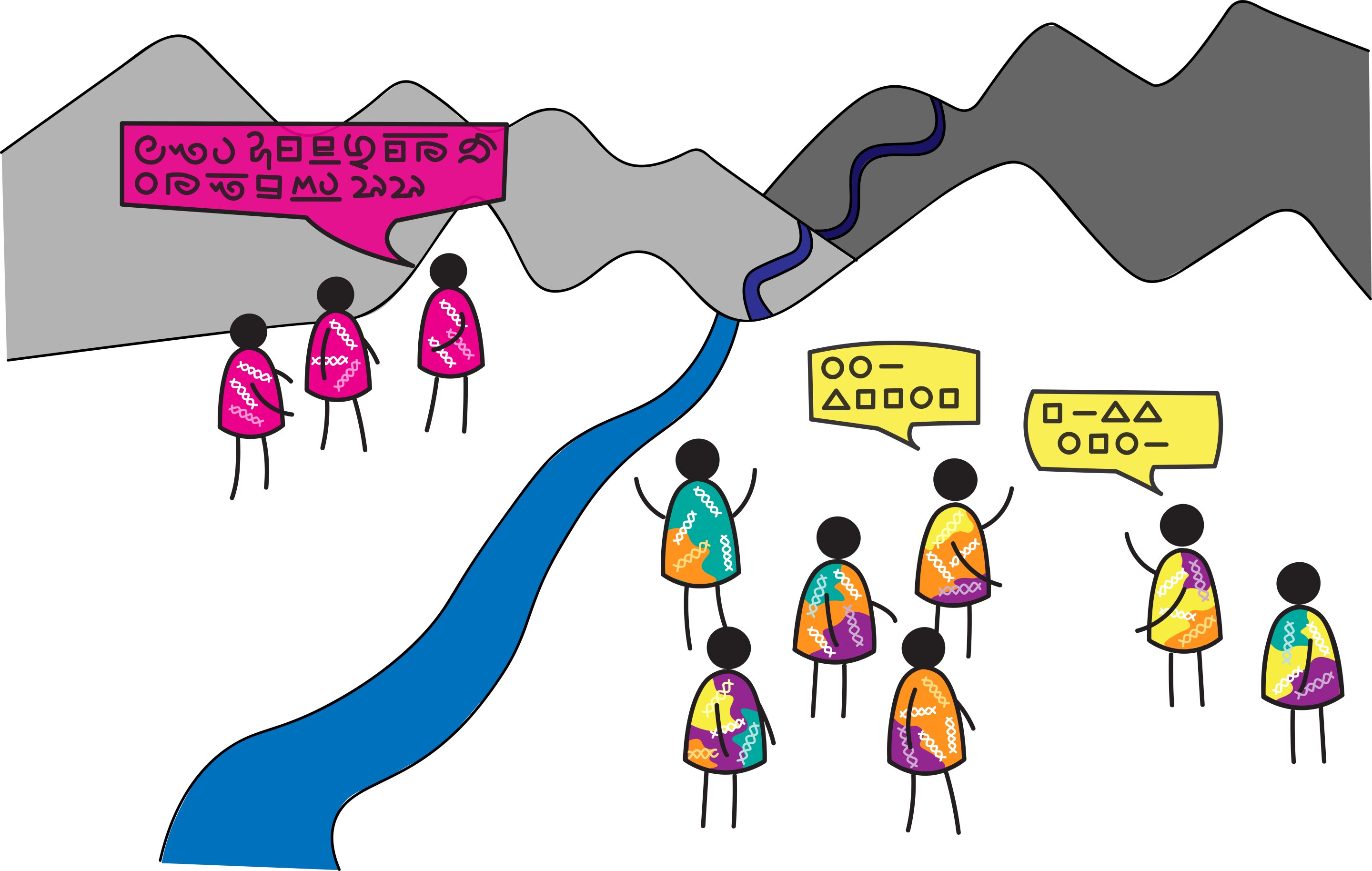
- Graff et al. 2026. An inverse correlation between structural linguistic and human genetic diversity. Proceedings of the National Academy of Sciences 123(18): e2526762123. DOI: https://doi.org/10.1073/pnas.2526762123.
📃 This Week’s Reads
Interesting articles I’ve come across this week.
English only has 2 tenses: past and nonpast. Skeptical? Check out this great explanation from Linguistics Girl:
 Heather
Other reads from this week:
 Andrew Cutler
 Shephali Bhatt
 Pauline Odhiambo
 Jennifer Gunner
📚 Books & Media
New (and old) books and media touching on language and linguistics.
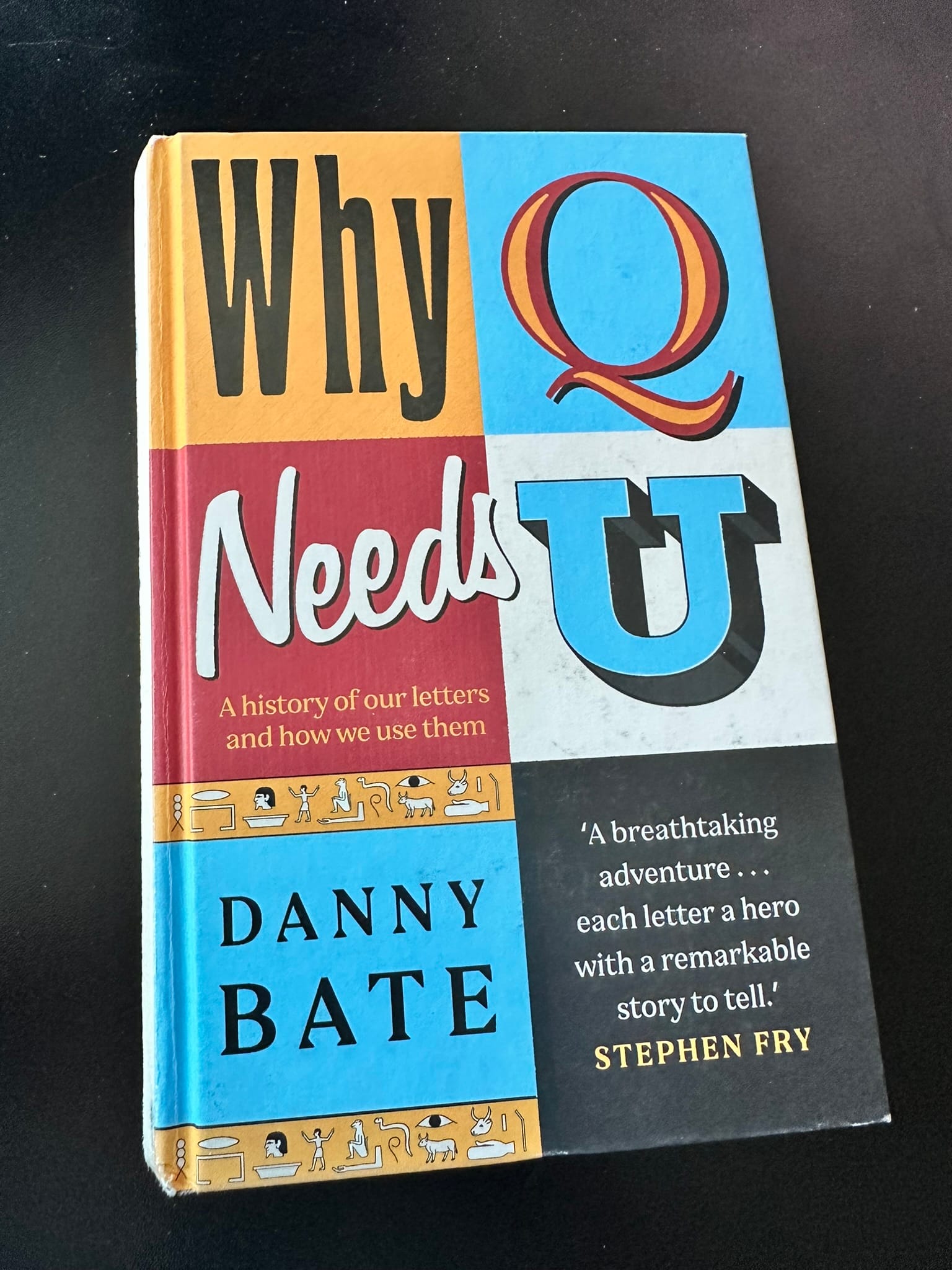
Why Q needs U (US Edition)
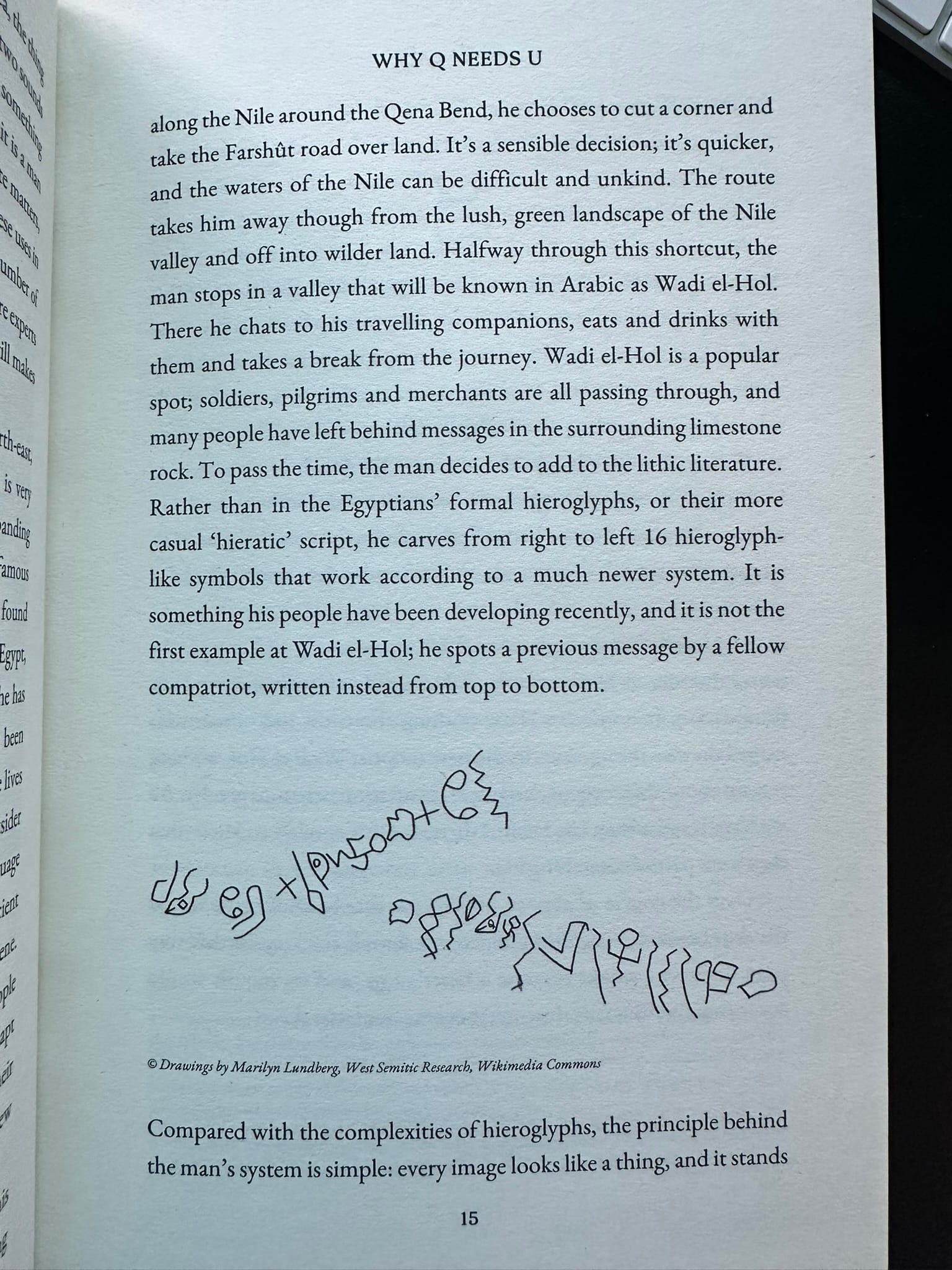
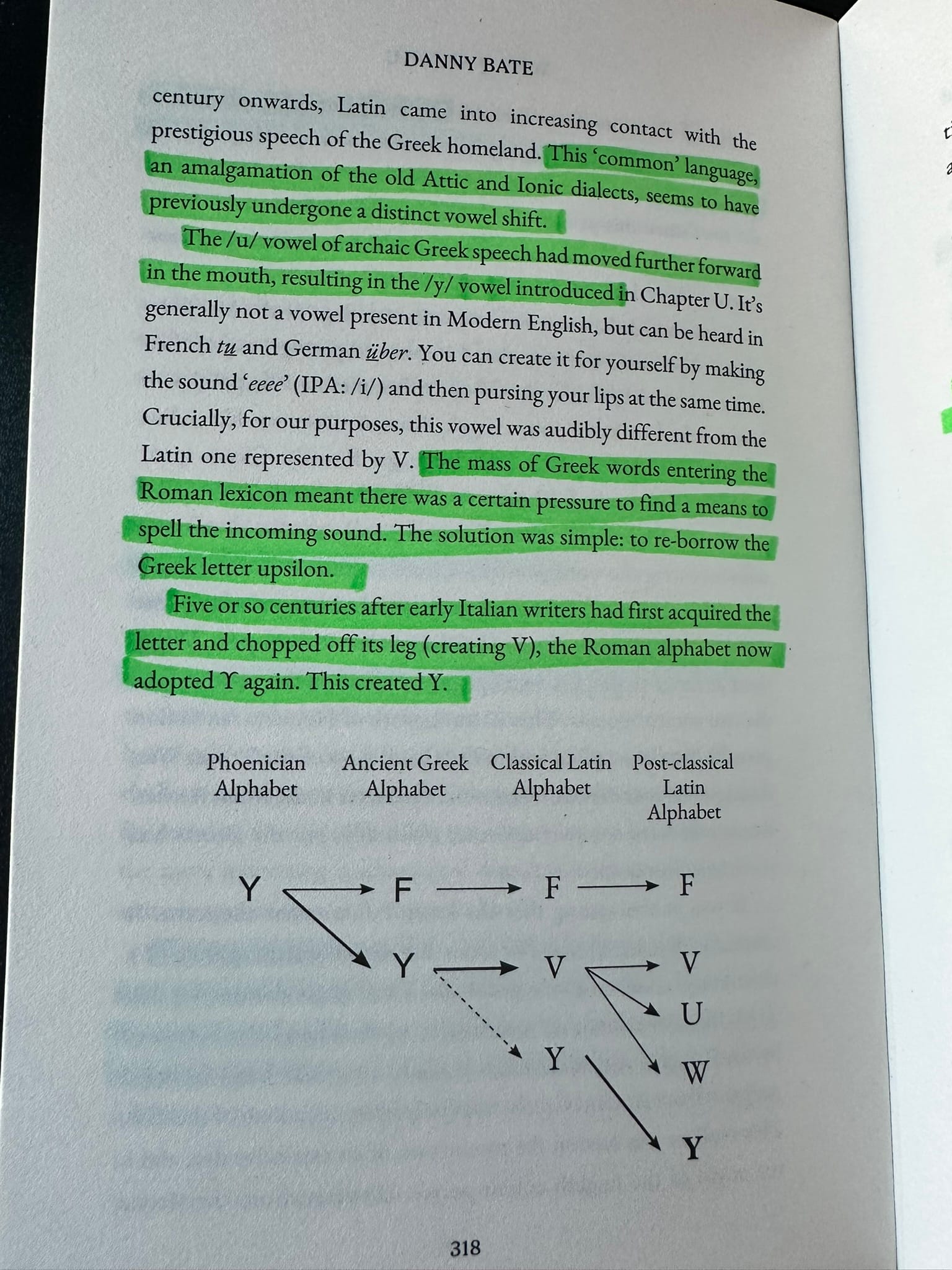
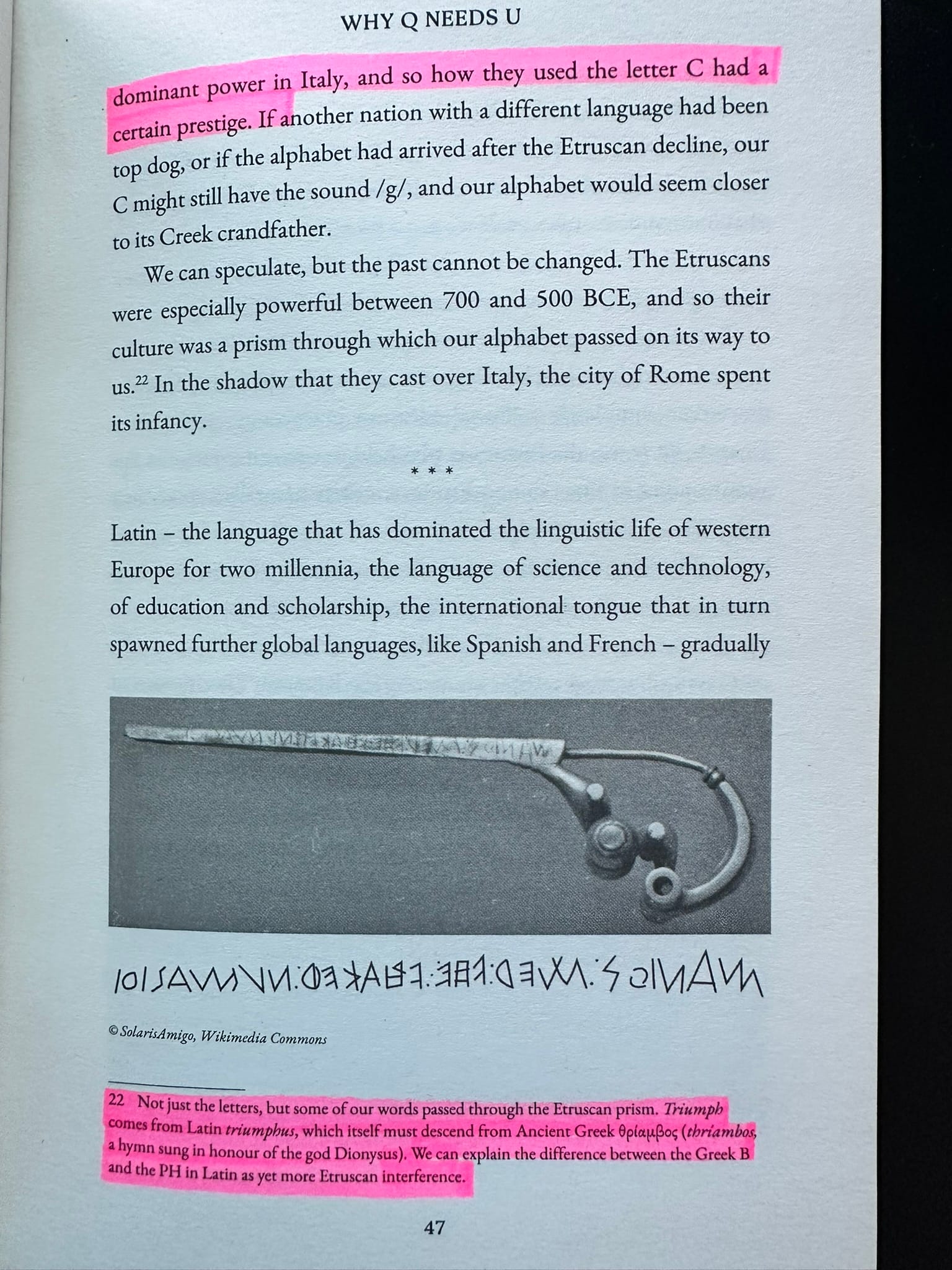
I finally set aside time to read Why Q needs U: A history of our letters and how we use them (Amazon | Bookshop) by Danny Bate and chat, lemme tell you, this book is phenomenal. Who knew that the letter ⟨K⟩ was actually the comeback kid of the English alphabet?
The US edition of the book releases on June 2! You can preorder your copy here:
Enough is enuf: Our failed attempts to make English easier to spell
Just learned about this book published last year from an episode of Rob Words’ YouTube channel:
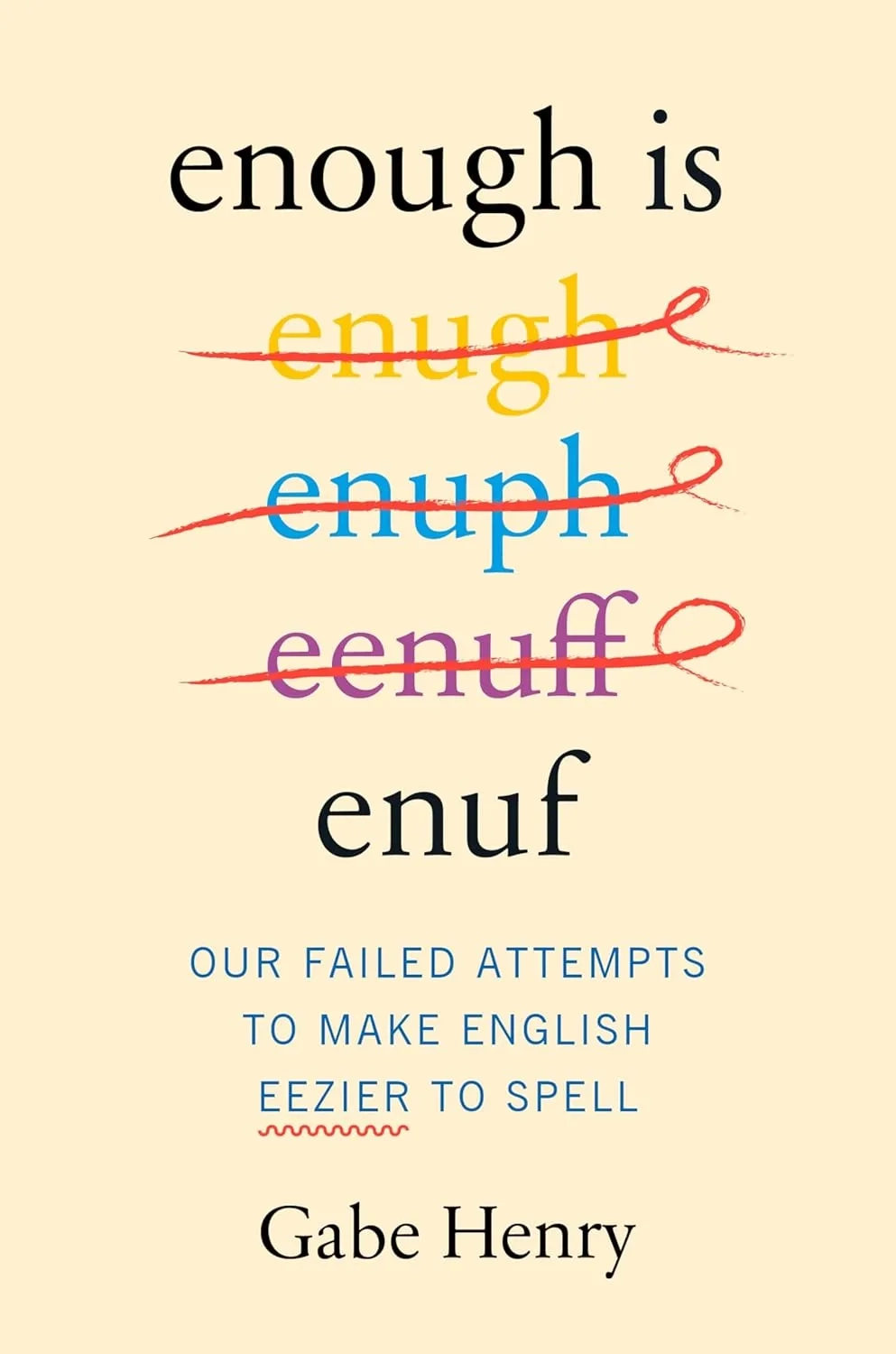
A brief and humorous 500-year language history of the Simplified Spelling Movement from advocates like Ben Franklin, C. S. Lewis, and Mark Twain to texts and Twitter.
Why does the G in George sound different from the G in gorge? Why does C begin both case and cease? And why is it funny when a philologist faints, but not polight to laf about it? Anyone who has ever had the misfortune to write in English has, at one time or another, struggled with its inconsistent English orthography.
So why do we continue to use it? If our system of writing words is so tragically inconsistent, why haven’t we standardized it with a new phonetic alphabet, brought it into line? How many brave linguists have ever had the courage to state, in a declaration of phonetic revolt: “Enough is enuf”?
The answer: many. In the comic annals of linguistic history, legions of rebel wordsmiths have died on the hill of spelling reform, risking their reputations to bring English into the realm of the rational. This essential guide to language and linguistics is about them: Mark Twain, Ben Franklin, Eliza Burnz, C. S. Lewis, George Bernard Shaw, Charles Darwin, and the innumerable others on both sides of the Atlantic who, for a time in their life, became fanatically occupied with writing thru instead of through, tho for though, laf for laugh, beleev for believe, and dawter for daughter (and tried futilely to get everyone around them to do it too).
Henry takes his humorous and informative chronicle right up to today as the language seems to naturally be simplifying to fit the needs of our changing world thanks to technology―from texting to Twitter and emojis, the Simplified Spelling Movement may finally be having its day.
This laugh-out-loud journey through our language’s chaotic past reveals the forgotten rebels, presidential decrees, and comic failures behind the spelling we use today.
👋🏼 Till next week!
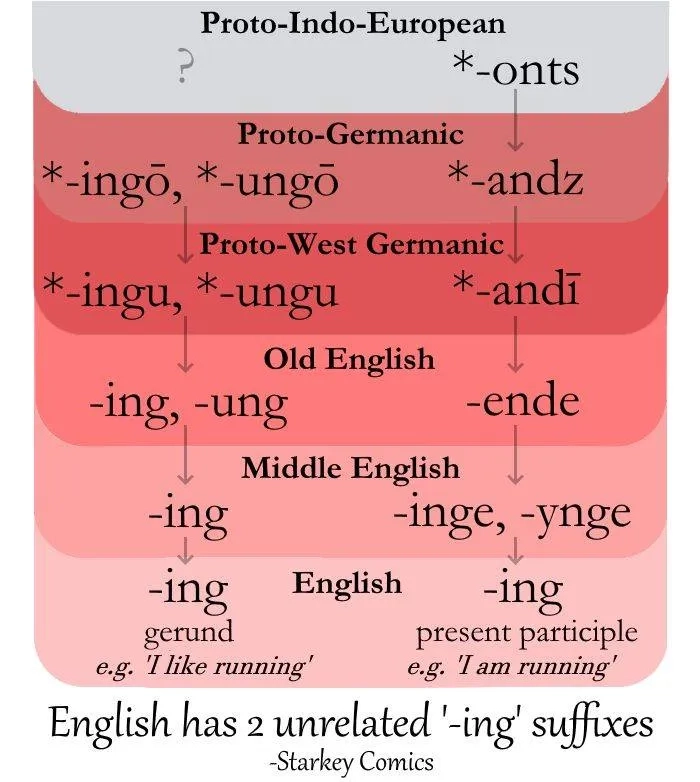
Did you know that English has two unrelated -ing suffixes? Details at Starkey Comics.
🚫 Errata
Corrections, clarifications, and omissions.
In the article, “Do Inuit languages really have more words for snow?”, I wrote:
It’s been claimed that because some languages lack dedicated morphological markers of future tense, speakers of those languages save less money and are generally worse at long-term, future-oriented decision-making than speakers of languages which do have a future tense (Chen 2013).
Chen was actually making the opposite claim: that speakers of languages which code future tense and present tense in the same way grammatically save more money and are better at future-oriented decision-making. I represent the claim correctly further in the article, but not in the above sentence. I’ve since corrected the article.
Thanks to reader Matthew Roth for bringing this to my attention.
Daniel W. Hieber, Ph.D.
If you’d like to support Linguistic Discovery, purchasing through these links is a great way to do so! I greatly appreciate your support!
Check out my Amazon storefront here.
Check out my Bookshop storefront here.