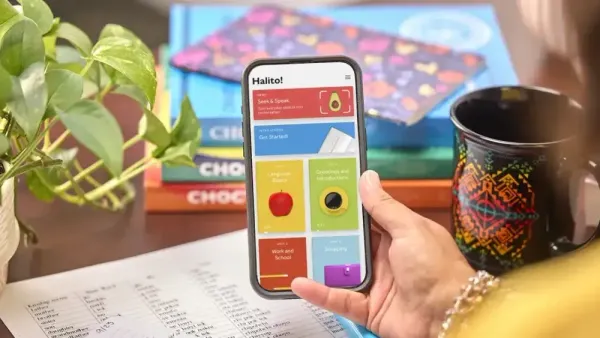
Homophones, plurals, and language “rulescucks” are roiling prediction markets
Also this week: More Ukrainians are switching from speaking Russian to Ukrainian + Scientists say AI is bringing us closer to talking to animals + A new book on the world’s vanishing languages

Welcome to this week’s edition of Discovery Digest, a weekly roundup of the latest language-related news, research in linguistics, interesting reads from the week, and newest books and other media dealing with language and linguistics!
This week’s issue is shorter than usual because I was traveling last week and haven’t had a chance to catch up on the latest news yet. So I’ve given you some extra reading material in the This Week’s Reads section instead. Enjoy!
📢 Updates & Announcements
Announcements and what’s new with me and Linguistic Discovery.
The curse of knowledge (and what to do about it)

Last week I traveled to Williamsburg, VA to give the commencement speech for the linguistics department at the College of William & Mary (my alma mater). Since my remarks are (hopefully) useful for a broader audience, I thought I’d write up the transcript and share it here as well.
I also include a list of resources on careers in linguistics at the end of the article. If you’re majoring in linguistics or have a linguistics student in your life, be sure to send this their way!
 Daniel W. Hieber, Ph.D.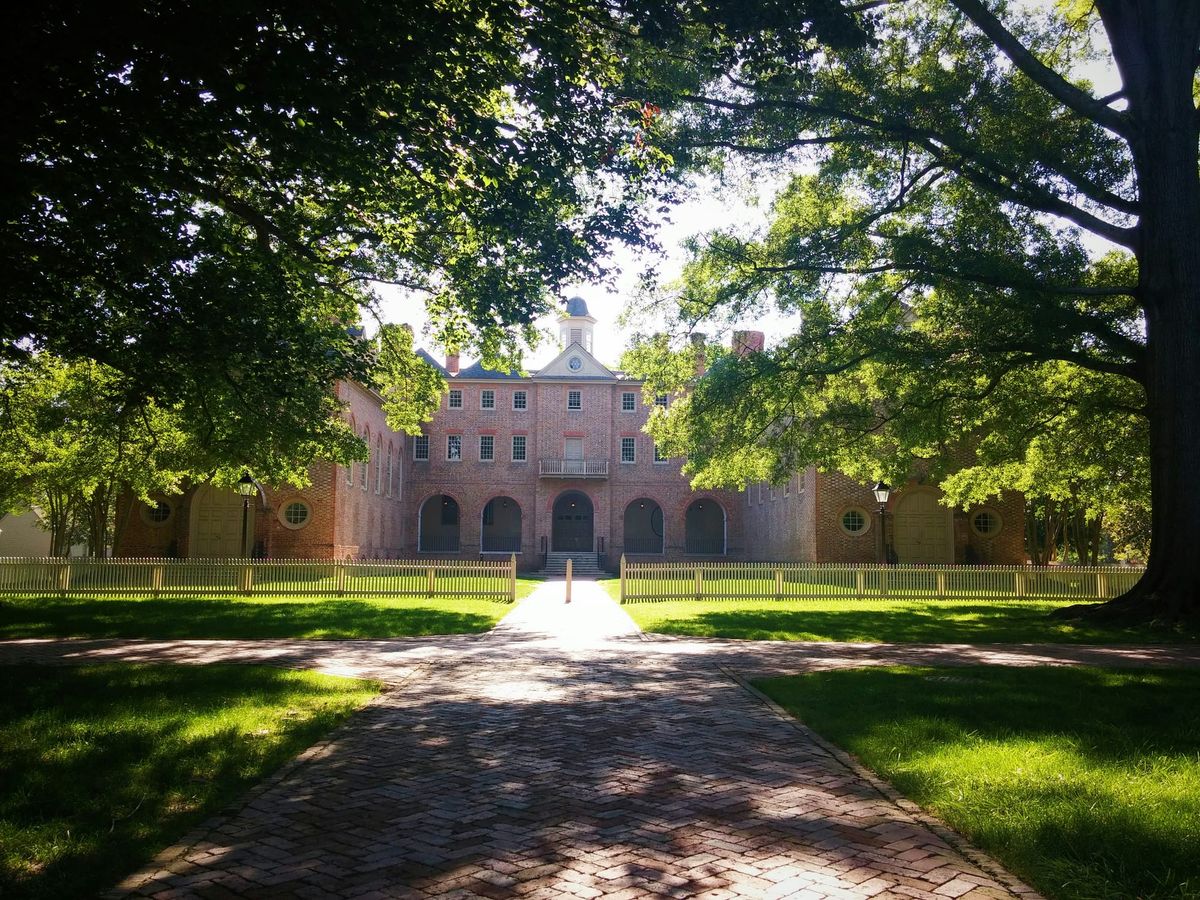
🆕 New from Linguistic Discovery
This week’s content from Linguistic Discovery.
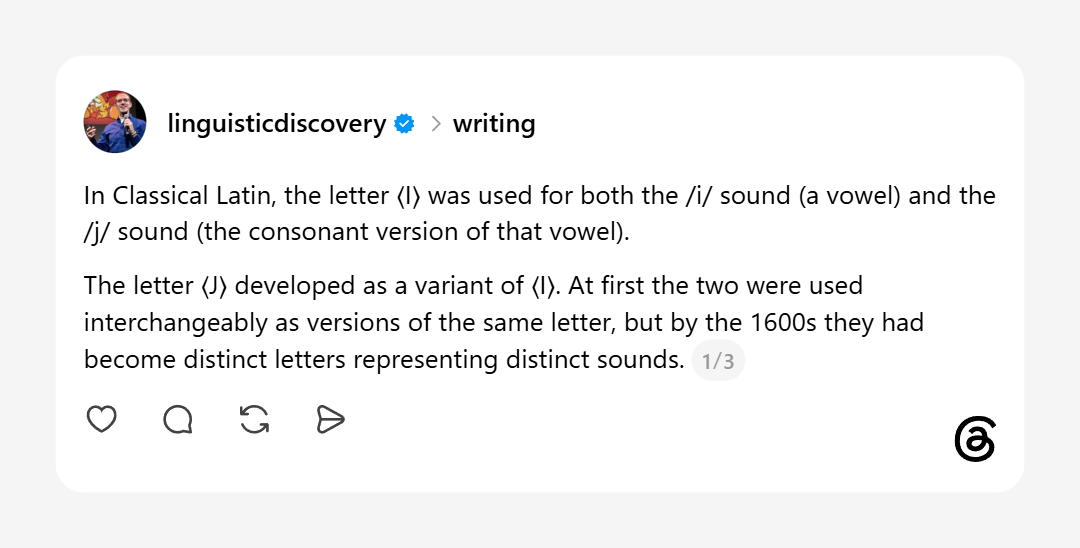
Here’s a little tidbit about the history of the letters ⟨I⟩ and ⟨J⟩:

📃 This Week’s Reads
Interesting articles I’ve come across this week.
Language is hard—who knew?
 Christopher Beam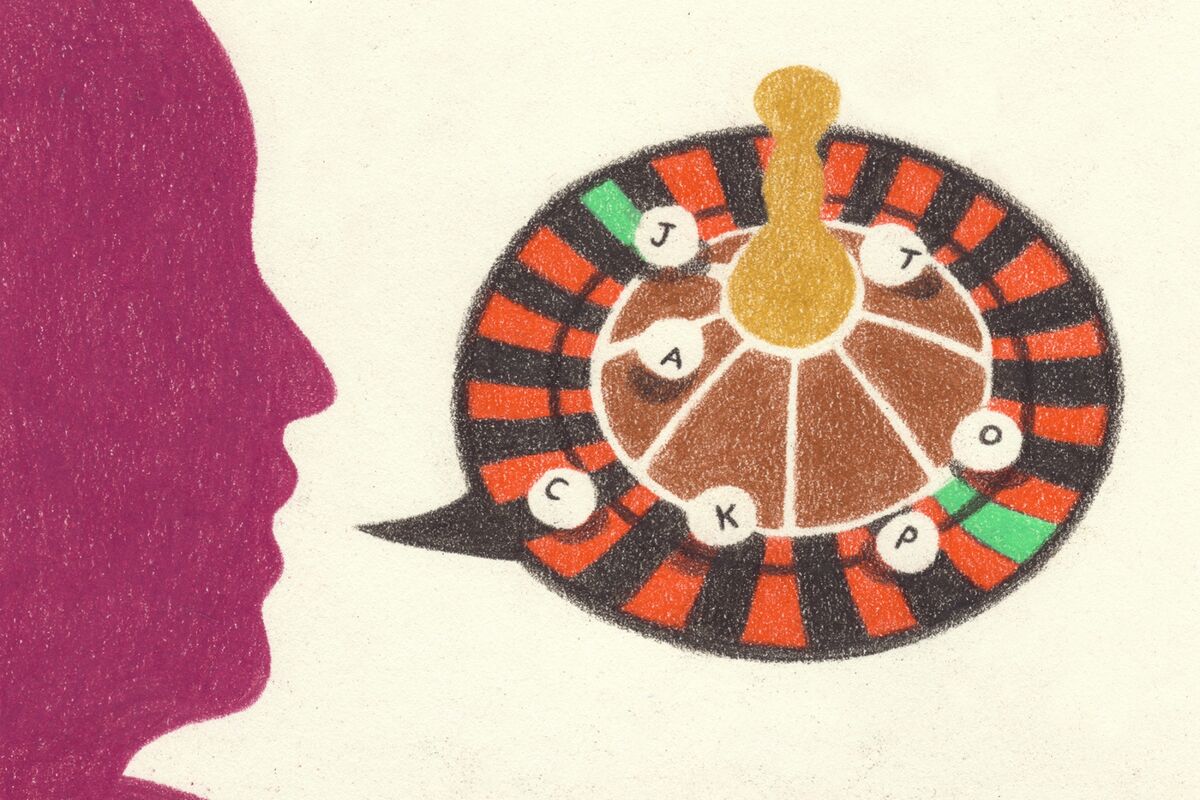
When people share a space, their collective experience can sprout its own vocabulary, known as a familect:
 Kathryn Hymes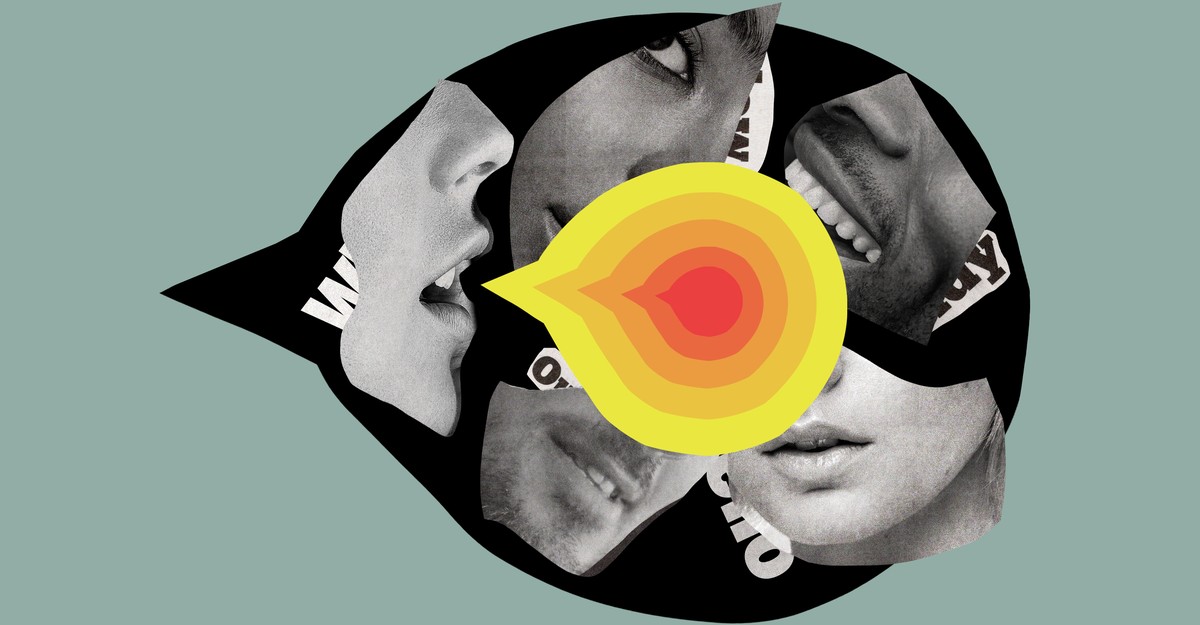
More and more Ukrainians are switching from speaking Russian to Ukrainian, but this trend long predates the Russian invasion of Ukraine:
 Olga Maxwell
How English got its newest consonant, /ʒ/:
 Danny Bate
Colin Gorrie’s party trick is guessing the etymology of any word:
 Colin Gorrie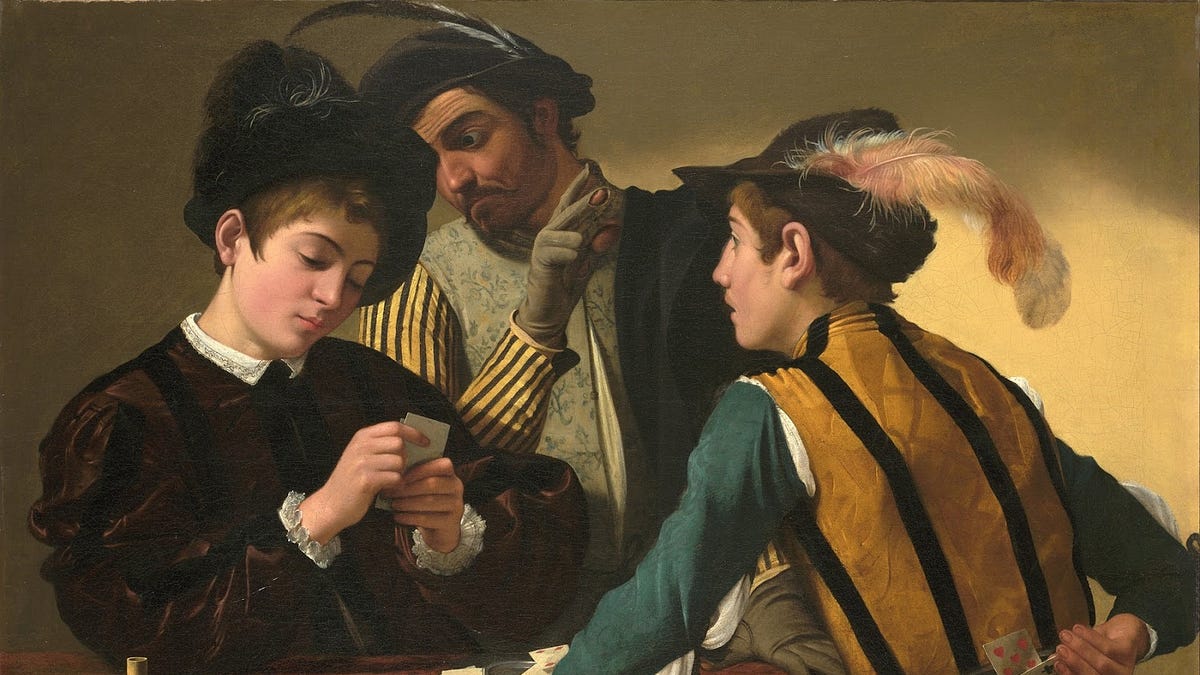
More reads for this week:
- Why judges use dictionaries and grammars (National Review)
- Do birds have language? (Big Think)
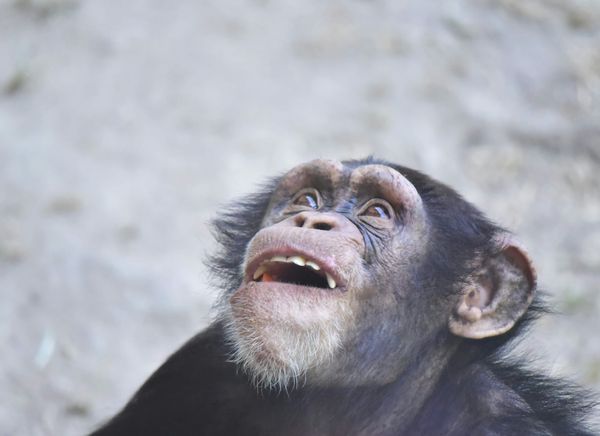
- Can AI help humans talk to animals? Scientists say we’re getting closer to decoding their communication (Miami Herald)
 Verity Marques
 Maria Temming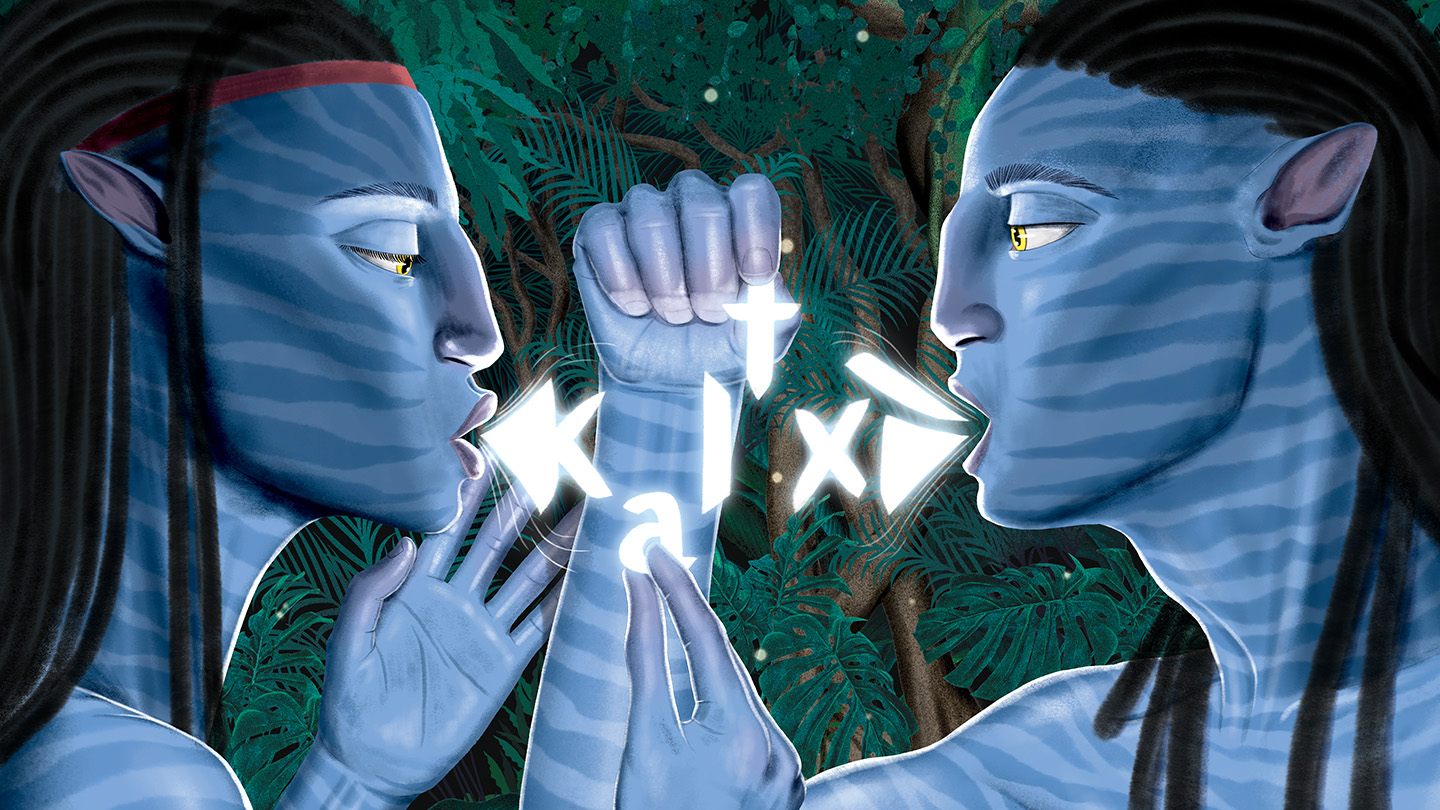
📚 Books & Media
New (and old) books and media touching on language and linguistics.
How to kill a language
Here’s a review of Sophia Smith Galer’s new book, How to kill a language: Power, resistance, and the race to save our words (Amazon | Bookshop):
 Tim Smith-Laing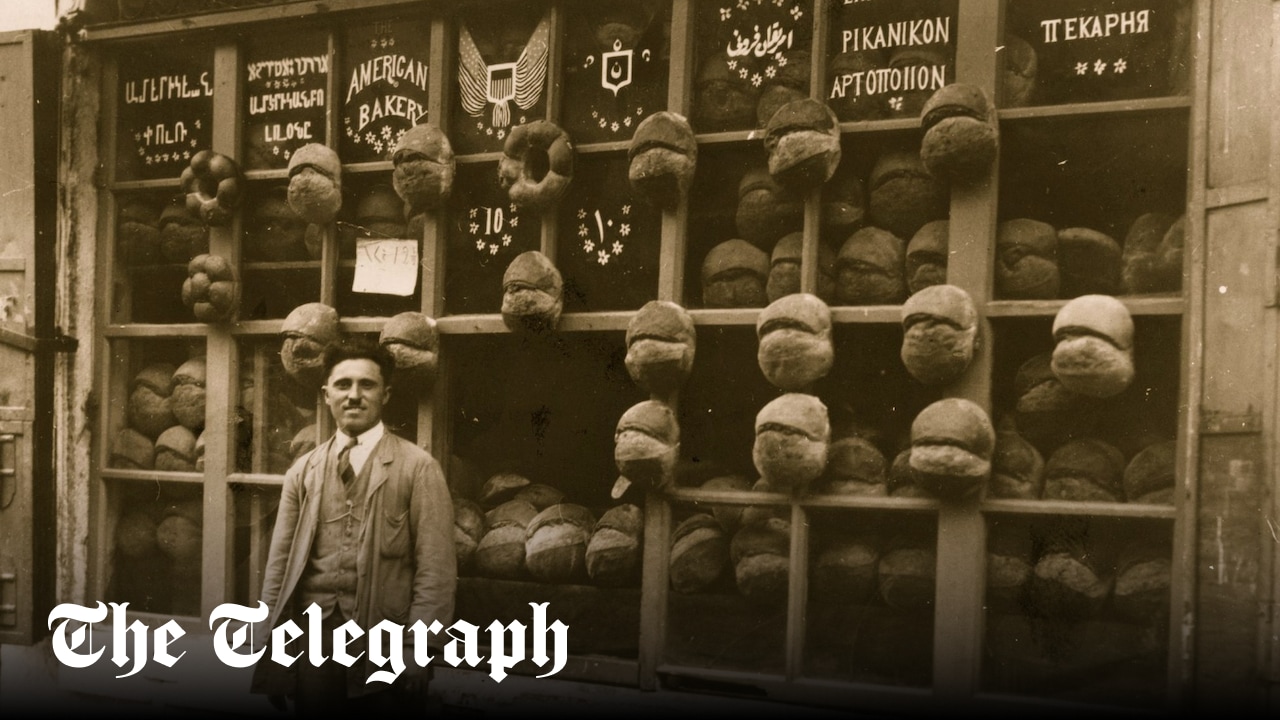
True color: The strange and spectacular quest to define color—from azure to zinc pink
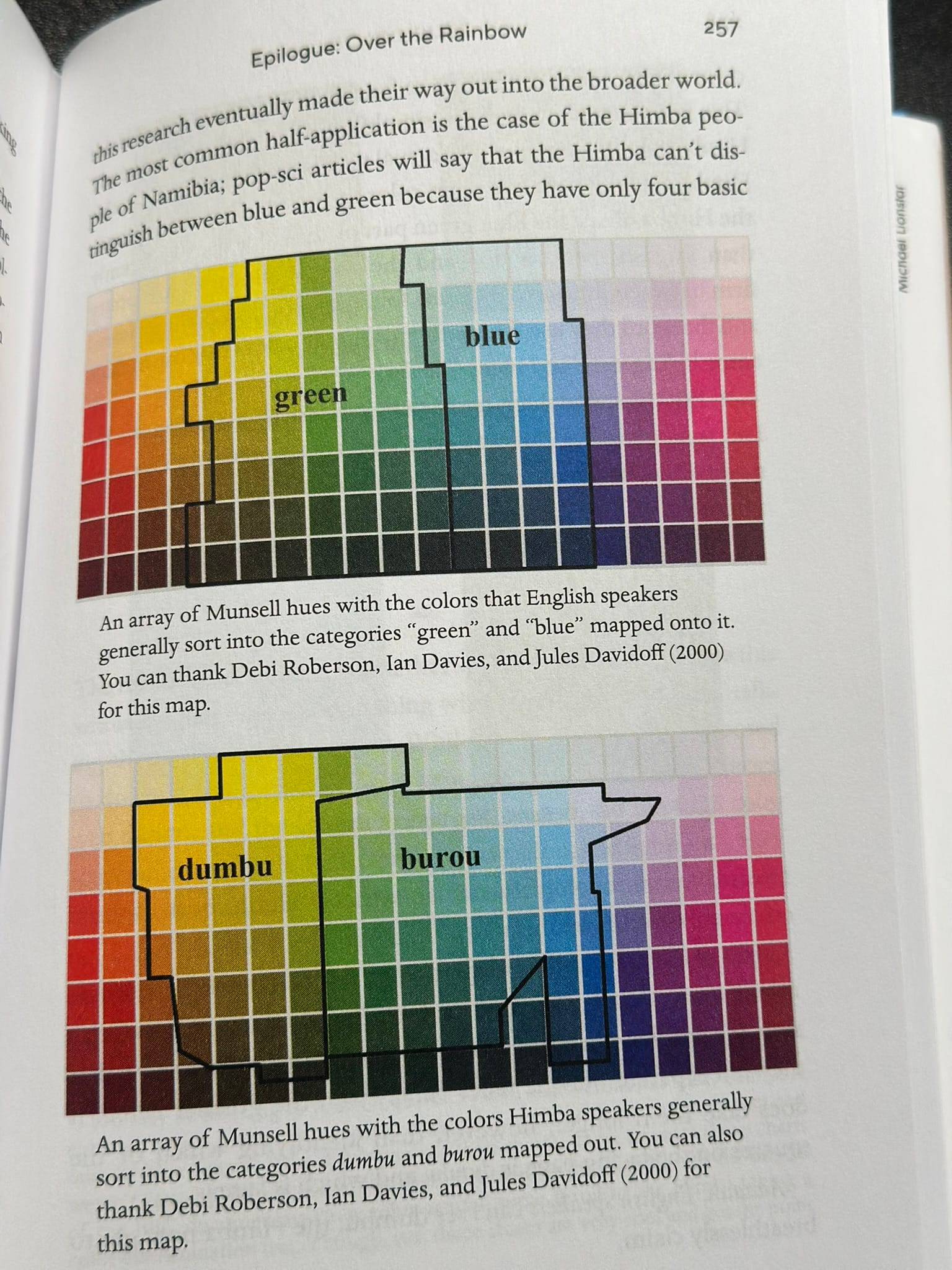
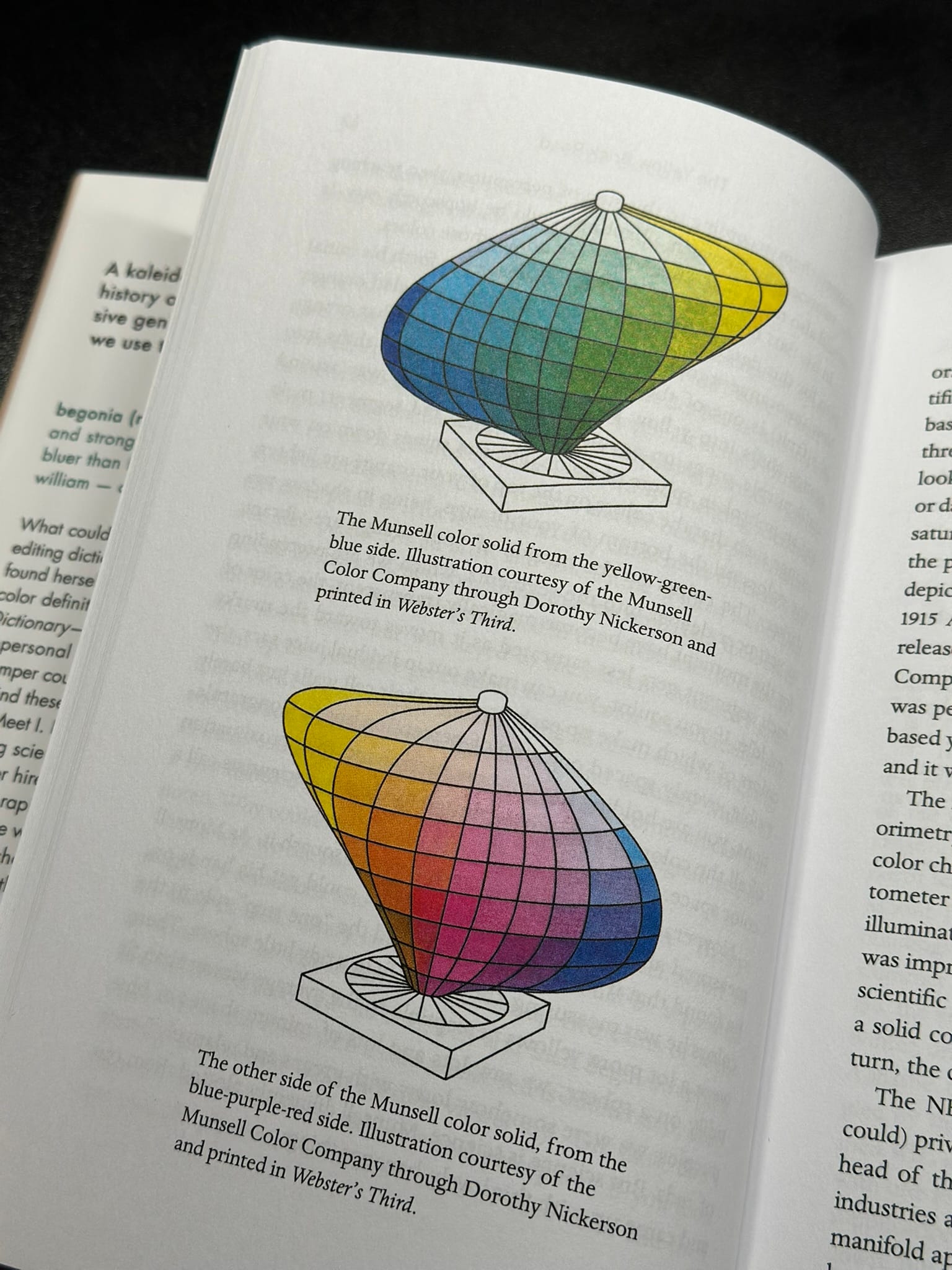
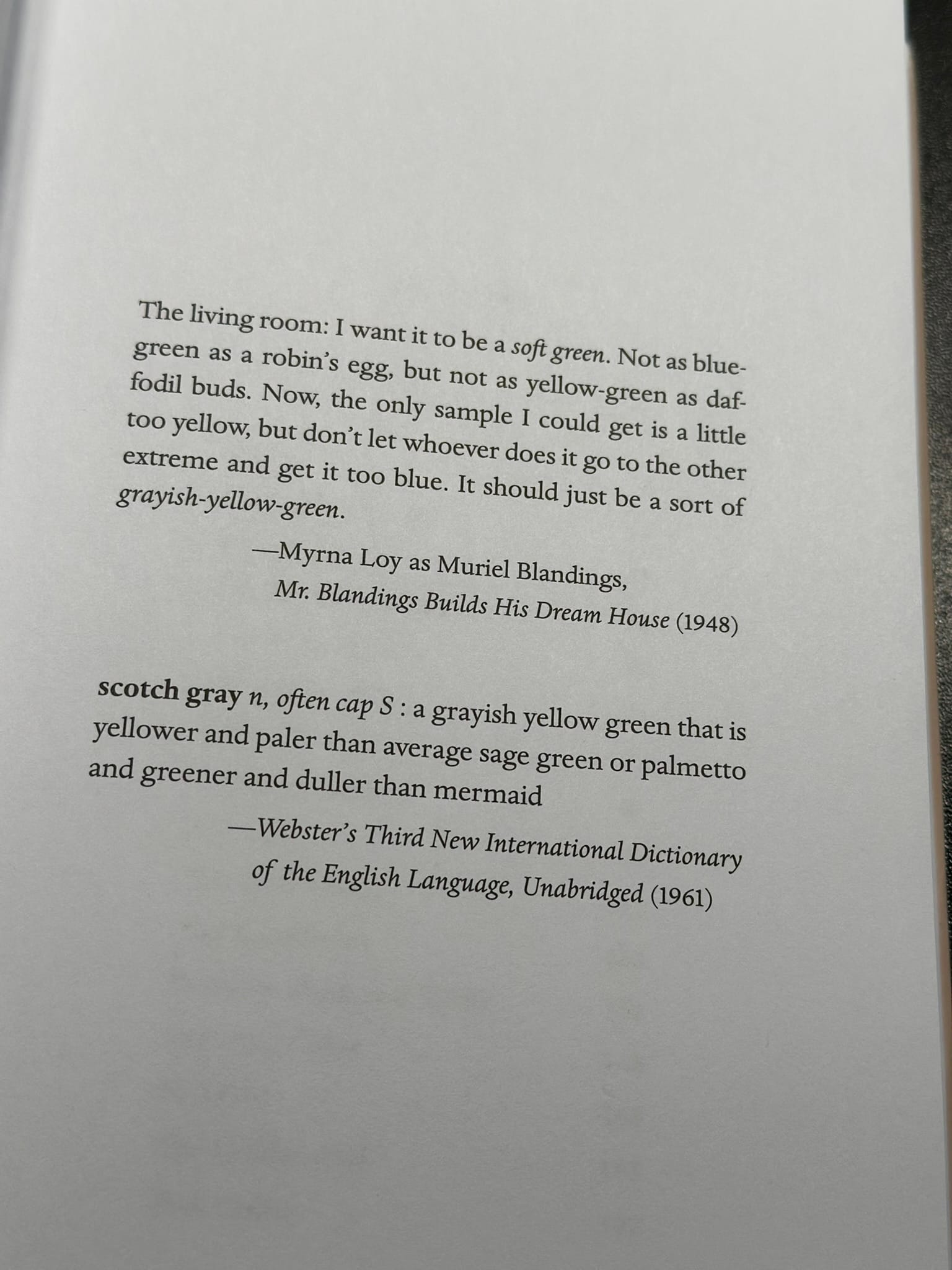
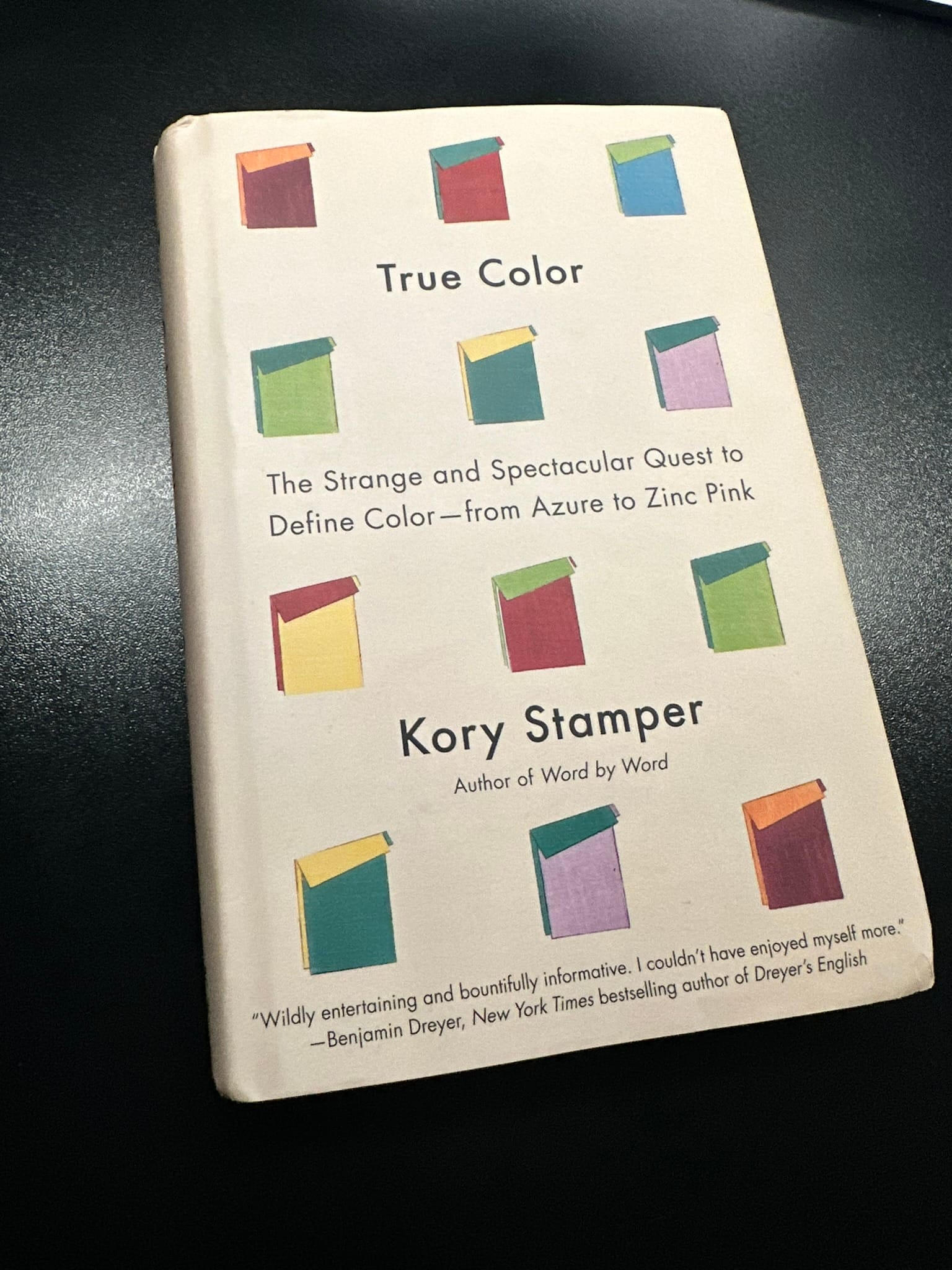
Kory Stamper, author of Word by word: The secret life of dictionaries (Amazon | Bookshop), has a new book out! True color: The strange and spectacular quest to define color—from azure to zinc pink (Amazon | Bookshop). Here’s the publisher’s blurb:
begonia (n.): 3 -s :
a deep pink that is bluer, lighter, and stronger than average coral (see coral 3b), bluer than fiesta, and bluer and stronger than sweet william — called also gaiety
What could “bluer than fiesta” possibly mean? While editing dictionaries for Merriam-Webster, Kory Stamper found herself drawn again and again to the whimsical color definitions in Webster’s Third New International Dictionary—especially when compared to the dry and impersonal entries that filled the rest of the volume. Stamper couldn’t help but wonder: Who was the voice behind these peculiar definitions?
Meet I. H. Godlove, an erratic but brilliant up-and-coming scientist who was one of the experts Merriam-Webster hired in 1930 to help revise the dictionary to reflect a rapidly modernizing world. His fascinating life mirrors the wild and winding journey that color science, color psychology, and color production took through the twentieth century. Stamper tracks these industries as they move into the atomic age and intertwine in strange and surprising ways, spanning two world wars and involving chemical explosions, an unexpected suicide, dramatic office politics, and an extraordinary love story.
Filled with captivating facts about color words and colors themselves—did you know that the word “puke” used to refer to a fashionable shade of reddish-brown before it was associated with vomit?—and fueled by Stamper’s inexhaustible curiosity, True Color will transform the way you see the world, from black-and-white to Technicolor.
Order your copy here:
👋🏼 Till next week!
Check out all the words that derive from Proto-Indo-European *(s)ker- ‘to cut’ in this infographic from Starkey Comics:
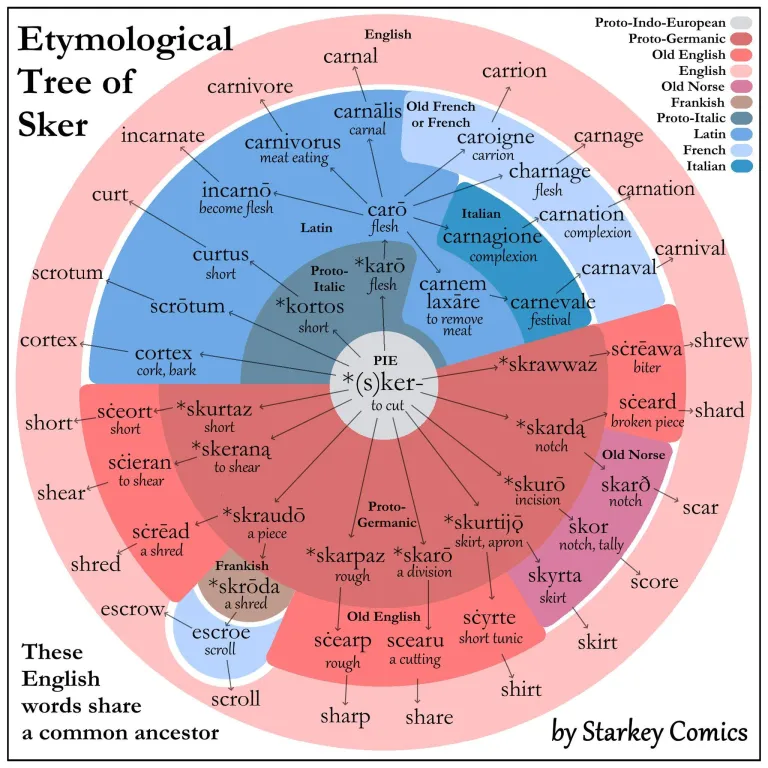
I always think it’s cool how skirt and shirt are related.
Also, I can’t resist noting one word that Ryan omitted from this infographic: shit!


More details at Starkey Comics:
 Ryan Starkey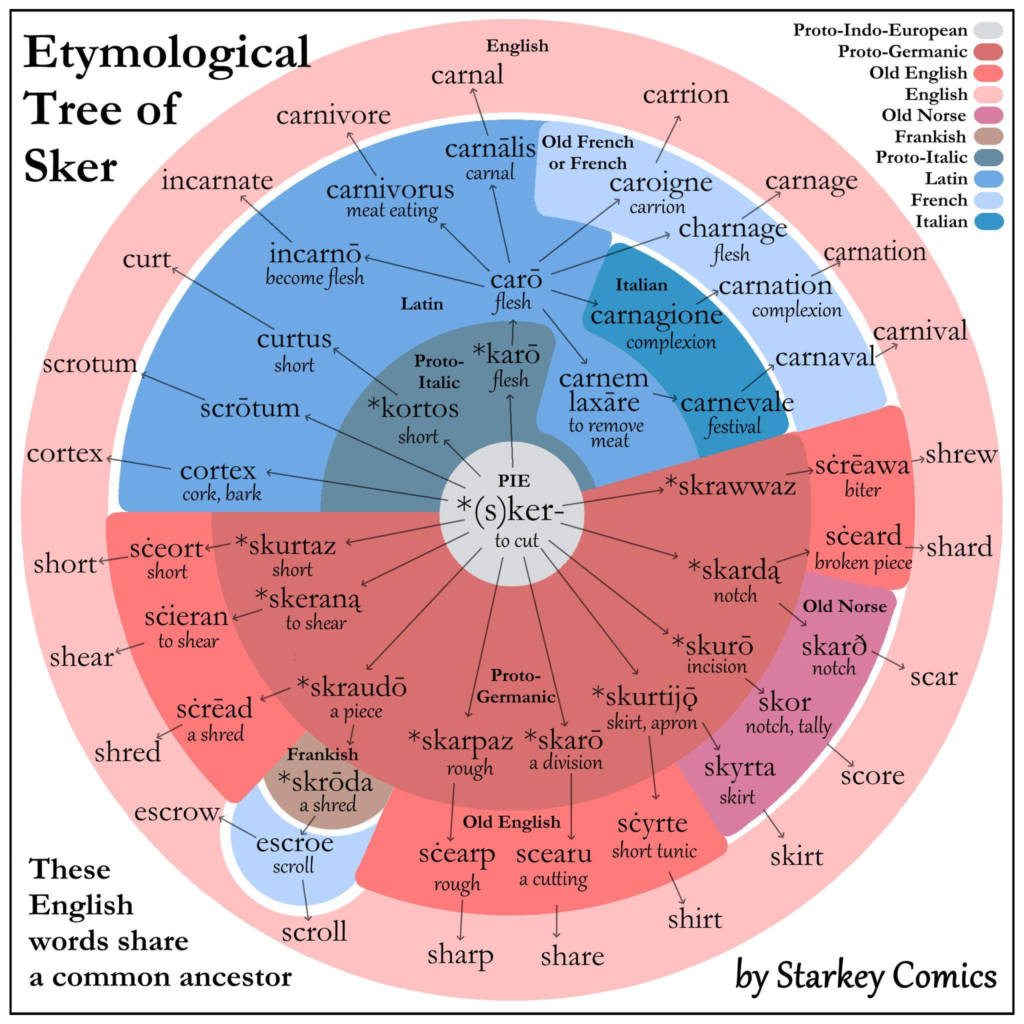
If you’d like to support Linguistic Discovery, purchasing through these links is a great way to do so! I greatly appreciate your support!
Check out my Amazon storefront here.
Check out my Bookshop storefront here.