When words look like their meaning, we process them faster
Also this week: Willkommen, bienvenue, welcome to a Eurovision Song Contest that embraces linguistic diversity + Linguists are mapping Rhode Island’s linguistic diversity


Welcome to this week’s edition of Discovery Digest, a weekly roundup of the latest language-related news, research in linguistics, interesting reads from the week, and newest books and other media dealing with language and linguistics!
📢 Updates & Announcements
Announcements and what’s new with me and Linguistic Discovery.
Joining Phi Beta Kappa, the United States’ oldest academic honor society


Last week I was incredibly honored to be inducted as an alumnus into Phi Beta Kappa (PBK), the nation’s oldest and most prestigious academic honor society. Founded in 1776 at the College of William & Mary (my alma mater), PBK celebrates excellence in the liberal arts and sciences and champions freedom of thought and the value of liberal arts and sciences education. PBK’s motto is:
Love of learning is the guide to life.
In line with this sentiment, I was nominated by George Greenia, Professor Emeritus of Medieval & Renaissance Studies, as well as several faculty in the Department of Linguistics, for my public scholarship in linguistics. I am truly humbled, to say the least, and excited to continue contributing to lifelong learning about linguistics for the general public.
You can learn more about Phi Beta Kappa at their website:

🎁 Now you can buy gift subscriptions!
The Linguistic Discovery website now allows you to buy gift subscriptions! It’s a great way to give the language lover in your life something fun and interesting that will change the way they think about language! Purchase a subscription here:
🆕 New from Linguistic Discovery
This week’s content from Linguistic Discovery.
🏳️🌈🏳️⚧️ Lavender Linguistics: Learning to live out loud
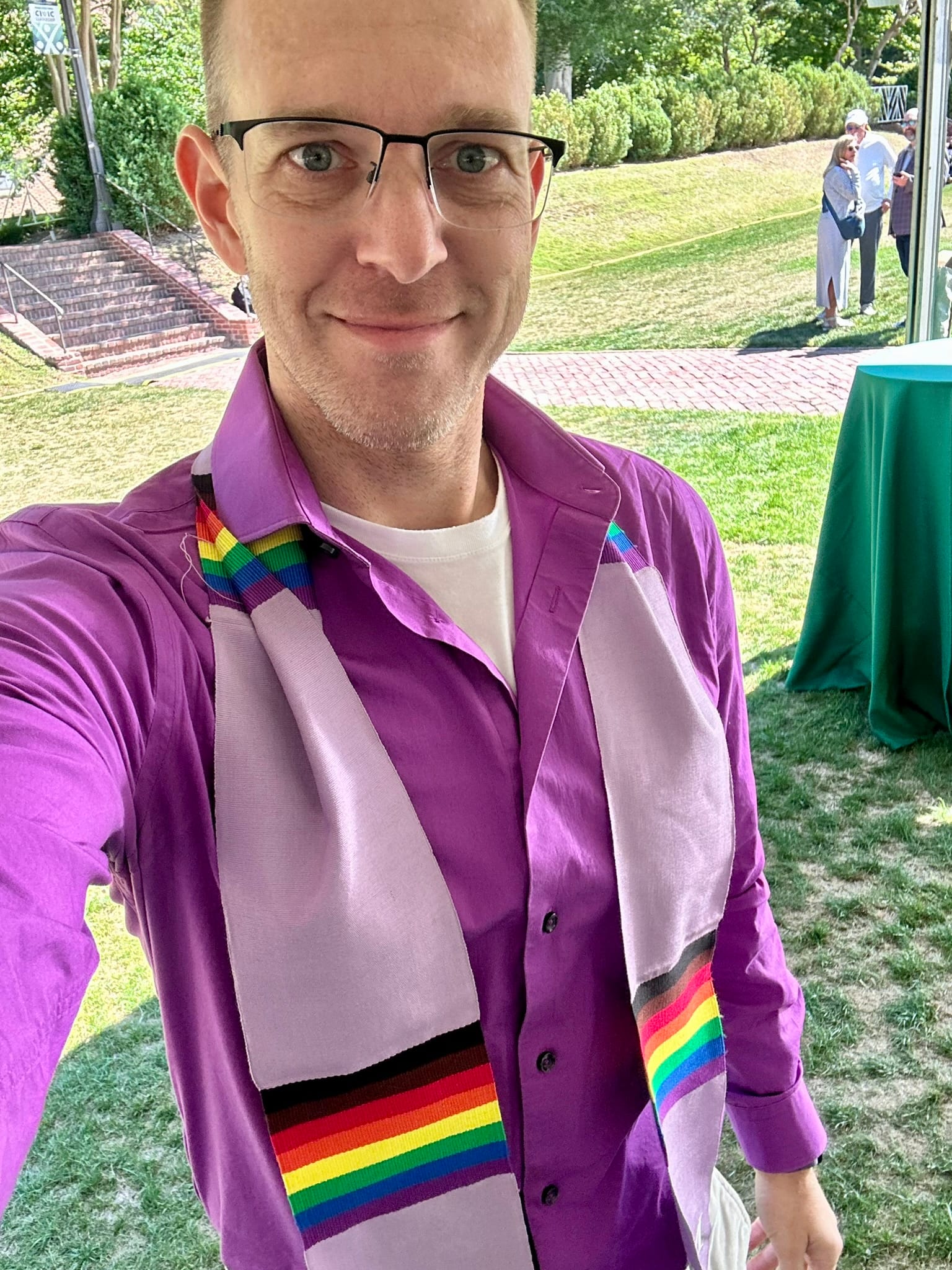
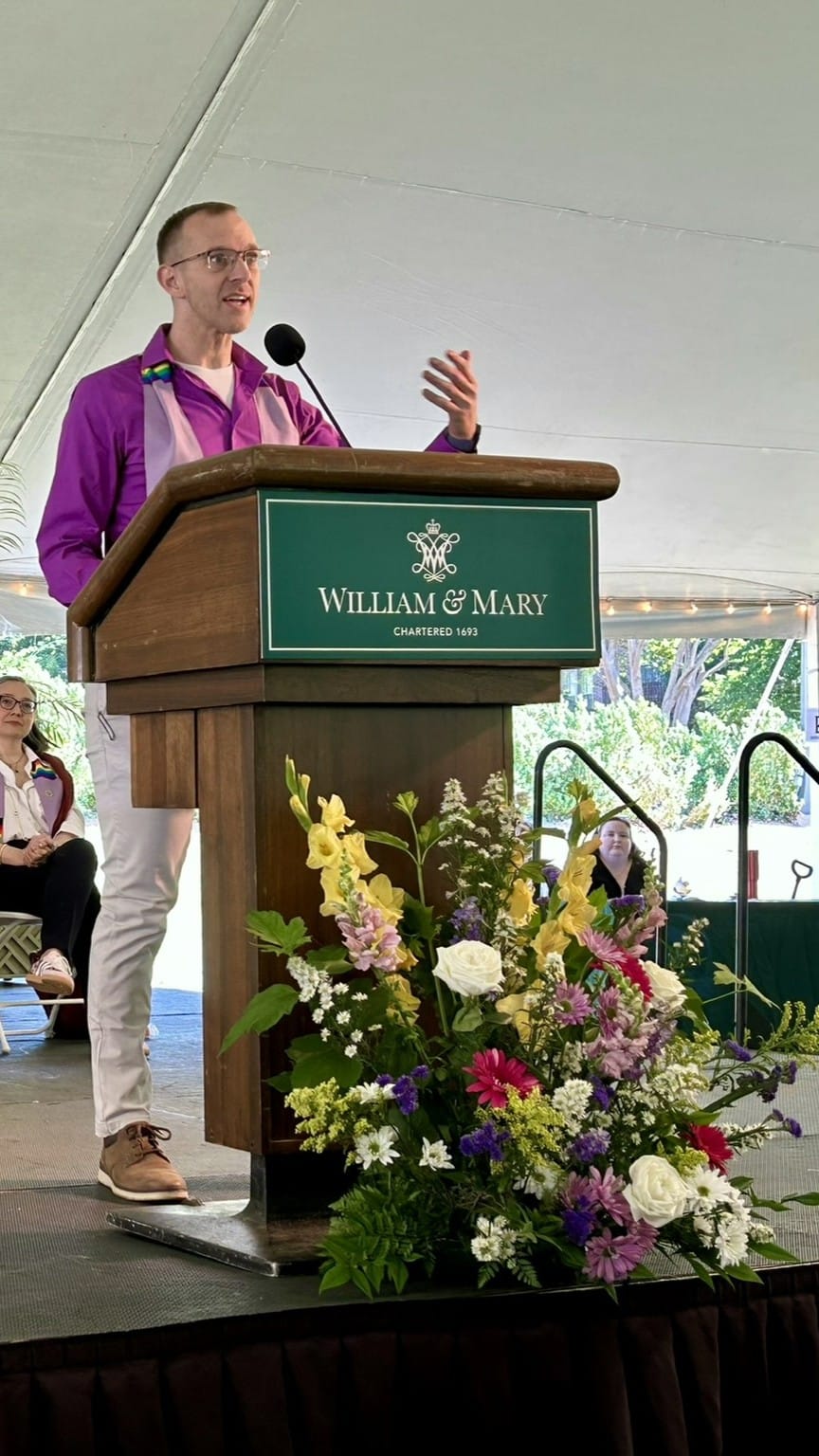
Me giving the commencement talk at the Lavender Celebration at the College of William & Mary
In addition to giving the commencement talk for the linguistics department at the College of William & Mary in Virginia (my alma mater) last week, I was also asked to give the keynote for this year’s Lavender Celebration, a graduation ceremony honoring and recognizing LGBTQ+ graduates of the university. This week’s issue of the newsletter is a transcript of that speech. In it, I teach the kiddos about Polari and the history of queer language.
 Daniel W. Hieber, Ph.D.
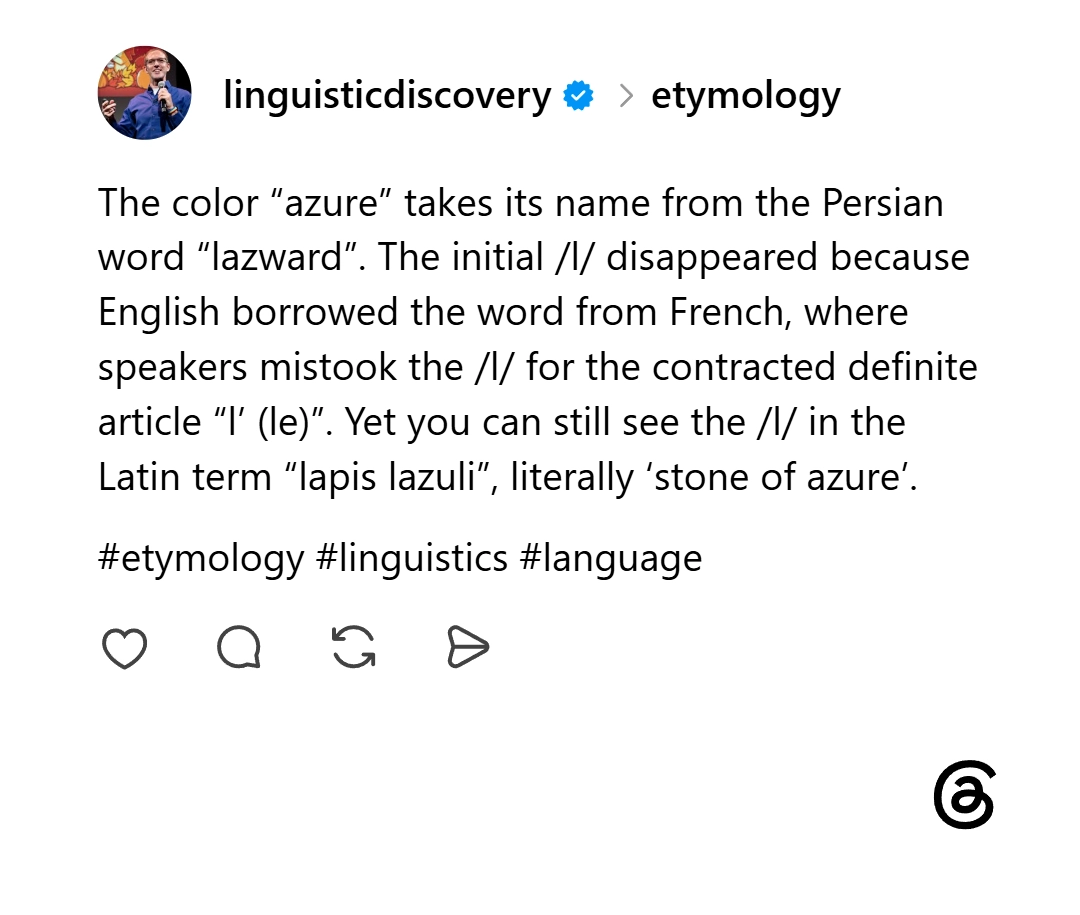
Etymology: azure

📰 In the News
Language and linguistics in the news.
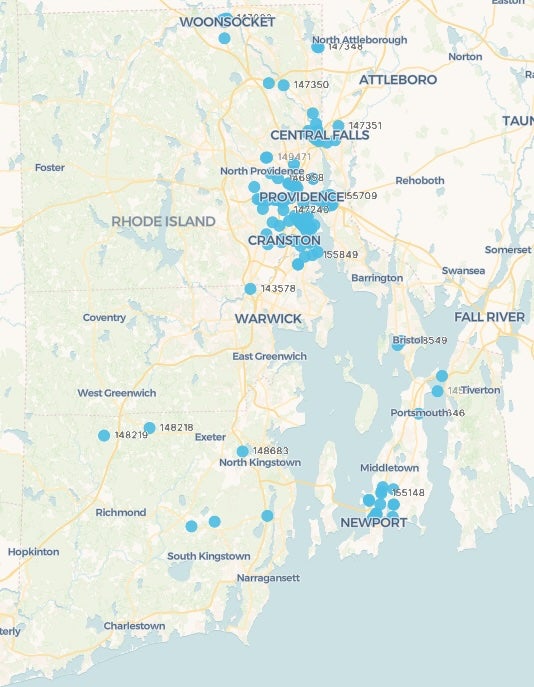
Mapping Rhode Island’s linguistic diversity
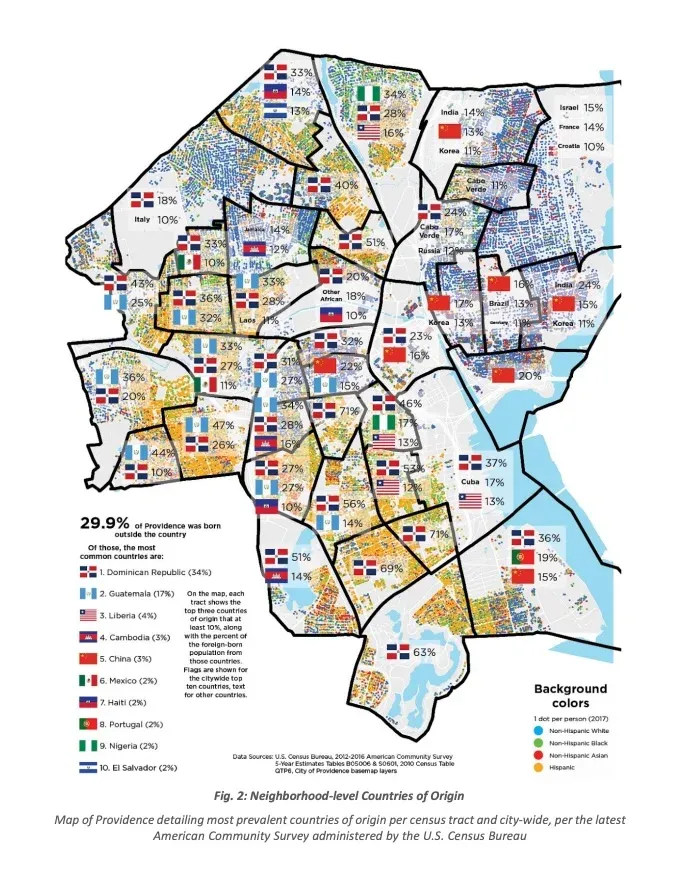
A new research project at the University of Rhode Island seeks to map Rhode Island’s linguistic diversity:

🗞️ Current Linguistics
Recently published research in linguistics.
When words look like their meaning, we process them faster
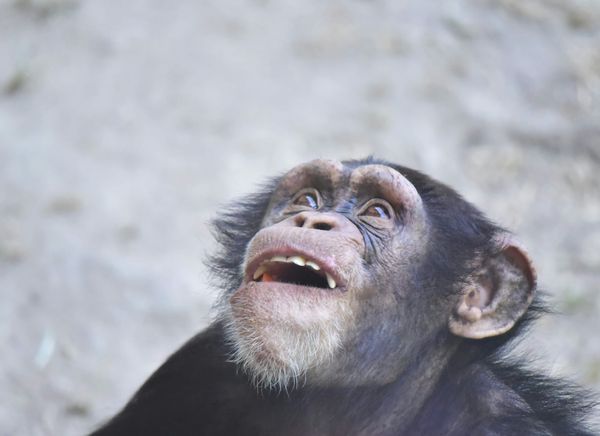
Sometimes written words look vaguely like the thing they represent: bed looks kind of like a bed; blizzard looks somewhat chaotic. This is called iconicity, and new research suggests that the more iconic a written word is, the faster we process it when reading.
David Sidhu
- Sidhu. 2026. The word “bed” looks like a bed: Orthographic iconicity in English. Cognition 274: 106550. DOI: https://doi.org/10.1016/j.cognition.2026.106550.
📃 This Week’s Reads
Interesting articles I’ve come across this week.
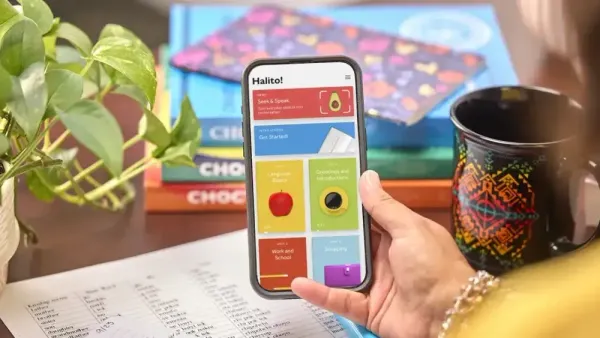
A member of Canada’s Mohawk community devised a new method to teach their highly endangered language, with glowing success.
The article describes the method as the “Rosetta Stone” for endangered languages, which is funny for me because I actually helped make the Rosetta Stone language learning software for Mohawk back in the late 00’s!
Other reads I came across this week:
 Jill Lawless
 Arthur Glenberg
 World Politics
 Alexa Bevan
📚 Books & Media
New (and old) books and media touching on language and linguistics.
Why Q needs U—U.S. edition!
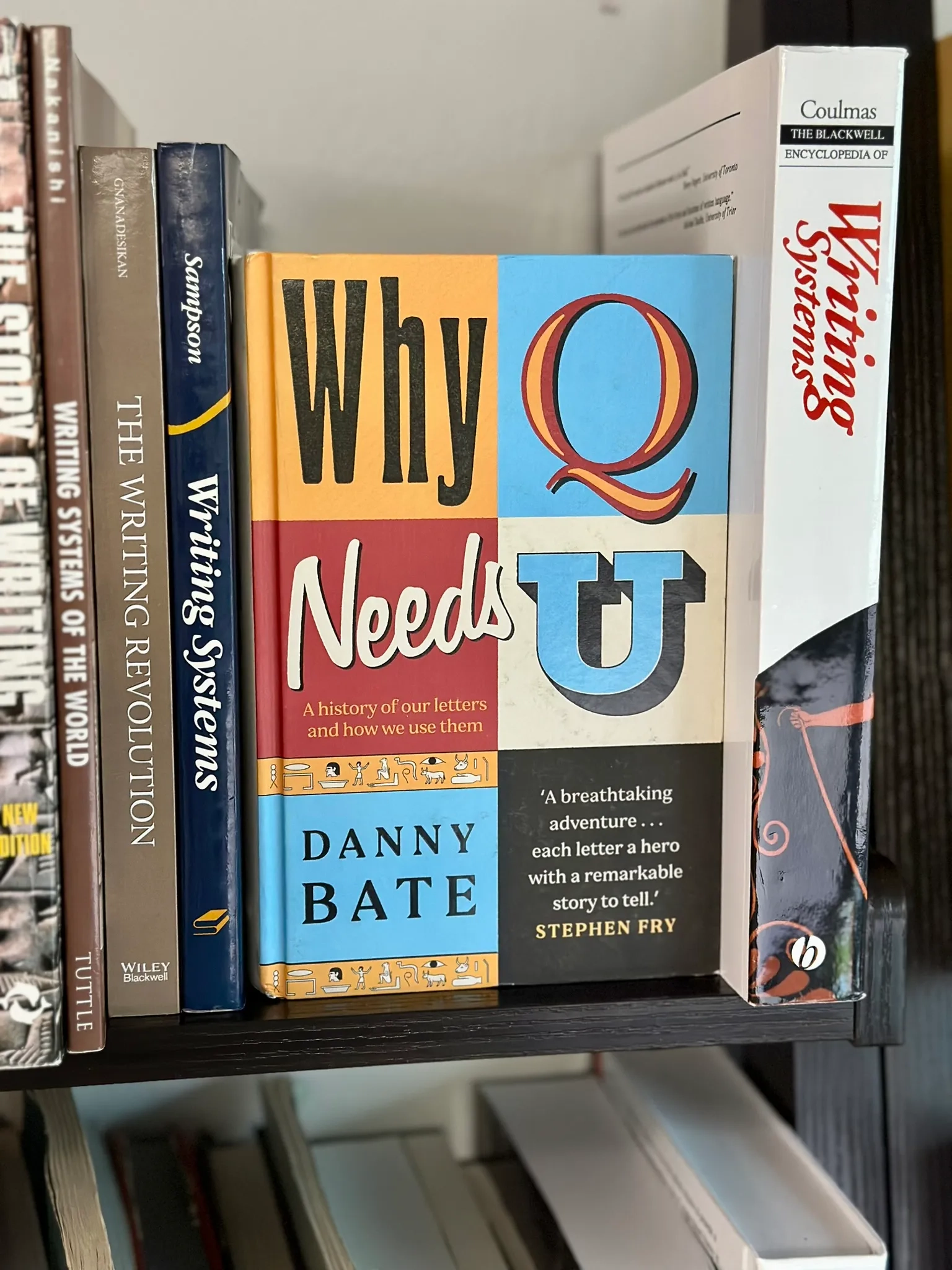
Danny Bate’s excellent book, Why Q needs U: A history of our letters and how we use them (Amazon | Bookshop), was such a sensation across the pond in the UK that the publisher decided to release a US edition as well! So now you can procure a copy of the book from US sellers:
Here’s the description from the publisher:
Why does W sound like “double U”?
What has the letter Q got to do with monkeys?
Why are the two C’s in circus pronounced differently?
What’s the point of the second N in the author’s first name, Danny?
And why does Q need to be followed by U?
Every letter you’re reading right now has a fascinating story to tell, having been on a long linguistic, historical, political and social journey.
In Why Q Needs U, linguist Danny Bate takes readers on a fascinating odyssey through the English alphabet, diving into history, archaeology, politics and linguistics to discover where we get our writing from. Sharing fun facts and revealing the alphabet’s hidden mechanisms, he explains where we get our letters from and why the English language uses them so strangely, including:why a silent final E turns hop into hopehow five English letters come from a single graphic grandparentwhy there is an L in salmon and a K in knowhow we may know the specific person who invented the letter Gwhy Z is the sixth letter for the Greeks, yet the last letter for us
Explaining - and defending - the peculiar way English today uses our ancient letters, Bate’s witty and entertaining book will help readers spot connections in languages across the world and inspire a newfound sense of wonder for the letters we use every day.
If you want to read a more extensive excerpt, author Danny Bate kindly contributed a guest post to the Linguistic Discovery newsletter which you can read here:
Danny Bate
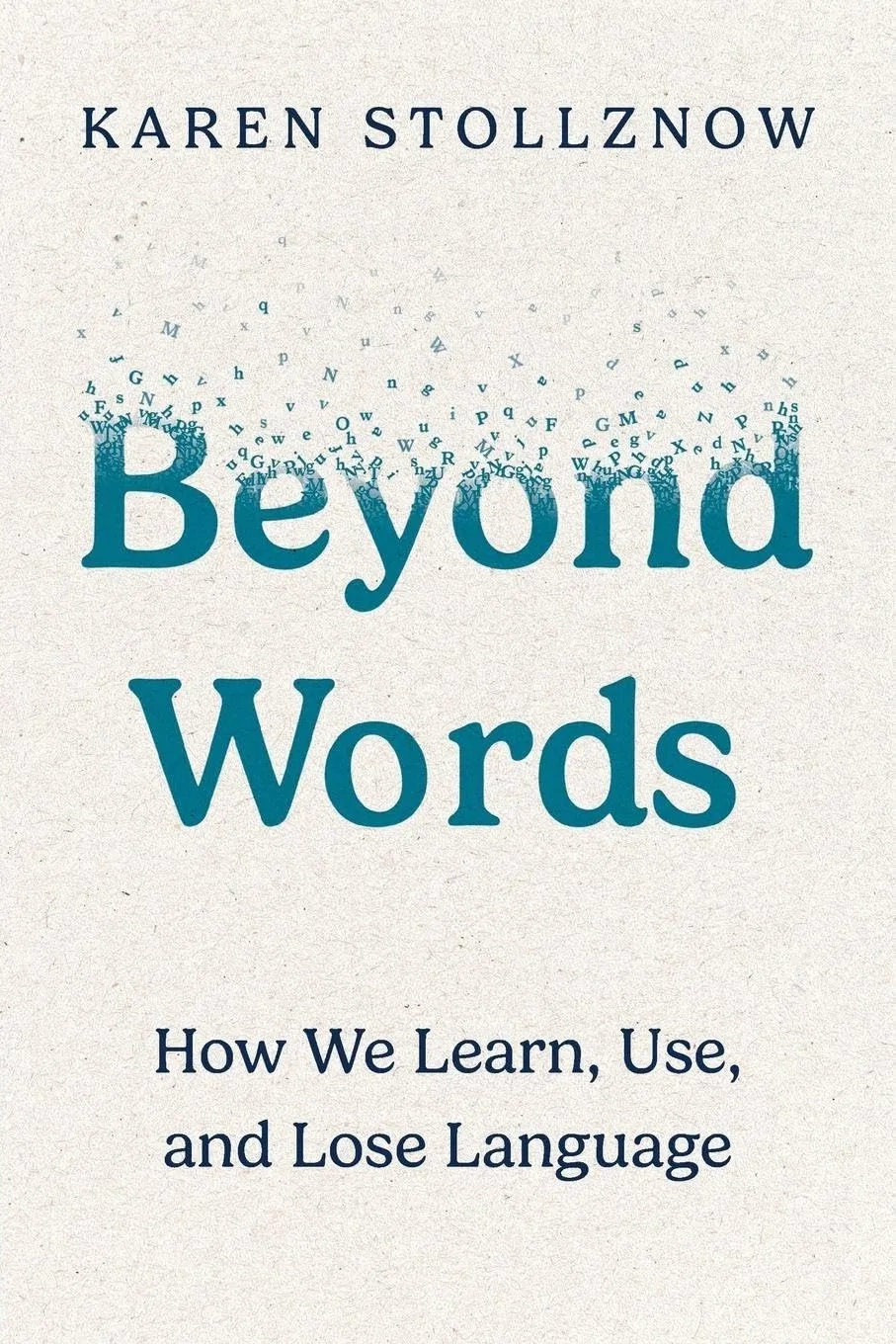
Beyond words: How we learn, use, and lose language
This new book on how children learn language comes out next week! (Amazon)
👋🏼 Till next week!
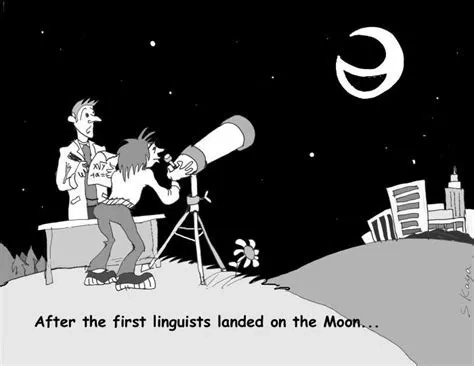
This is accurate I fear
If you’d like to support Linguistic Discovery, purchasing through these links is a great way to do so! I greatly appreciate your support!
Check out my Amazon storefront here.
Check out my Bookshop storefront here.