The Great Men™ of Language
Language is shaped by everyday people, not the Big Names™ of history

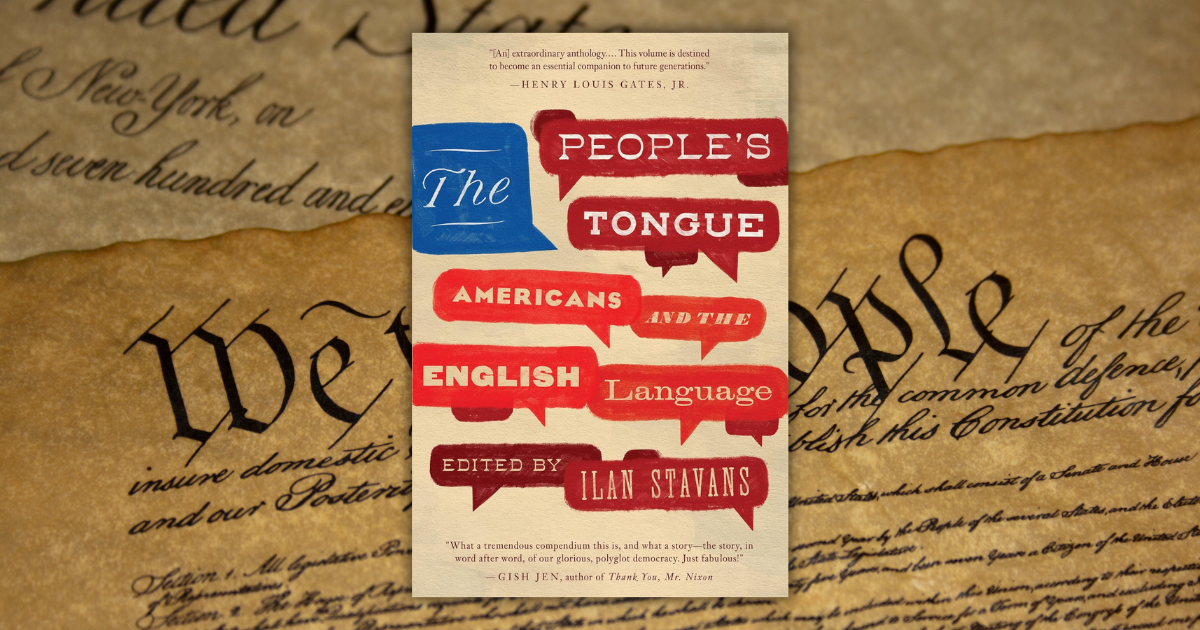
Many people still adopt a Great Men™ approach to language even if they reject it for history in general.
In the 1800s and early 1900s, historians often adopted a Great Men™ approach to history, in which history was thought to be largely driven by the actions of a few Great Men™. These titans of history were thought to have such intellect, such heroism, such indomitable will, that the annals of history bent to their whims.
Today most historians reject this approach to history. Much more in vogue is history from below or people’s history, which analyzes history from the perspective of everyday people, with special emphasis on marginalized groups. A few notable entries in this canon include:
- A people’s history of the United States (Amazon | Bookshop)
- A people’s history of the world (Amazon | Bookshop)
- An indigenous people’s history of the United States (Amazon | Bookshop)
- SPQR: A history of ancient Rome (Amazon | Bookshop)
Public school history textbooks have yet to catch up with this trend, focusing instead on the Big Names™ at the expense of broader, bottom-up social changes. This isn’t particularly surprising given that the Great Men™ approach to history tends to aggrandize politicians, who in turn exert outsized influence on what goes into those textbooks in the first place.
Yet many people still adopt a Great Men™ approach to language, even if they reject it for history in general. They believe that the shape of language is propelled by the literary greats, who then inspire the masses to adroit linguistic performance.
While an elite is in command of government, the fluidity of language has no keepers. ~ Ilan Stavans, The people’s tongue, p. 6
I was recently reminded of this attitude while reading Ilan Stavans’ 2023 book, The people’s tongue: Americans and the English language (Amazon | Bookshop). The book is an anthology intended to demonstrate the “transformation” of American English, as told through the lens of:
… poets, musicians, Supreme Court justices, historians, linguists, activists, actors, scholars, journalists, scientists, writers, presidents, playwrights, teachers, translators, comedians, politicians, grammarians, lexicographers, and all kinds of other folks. (p. 3)
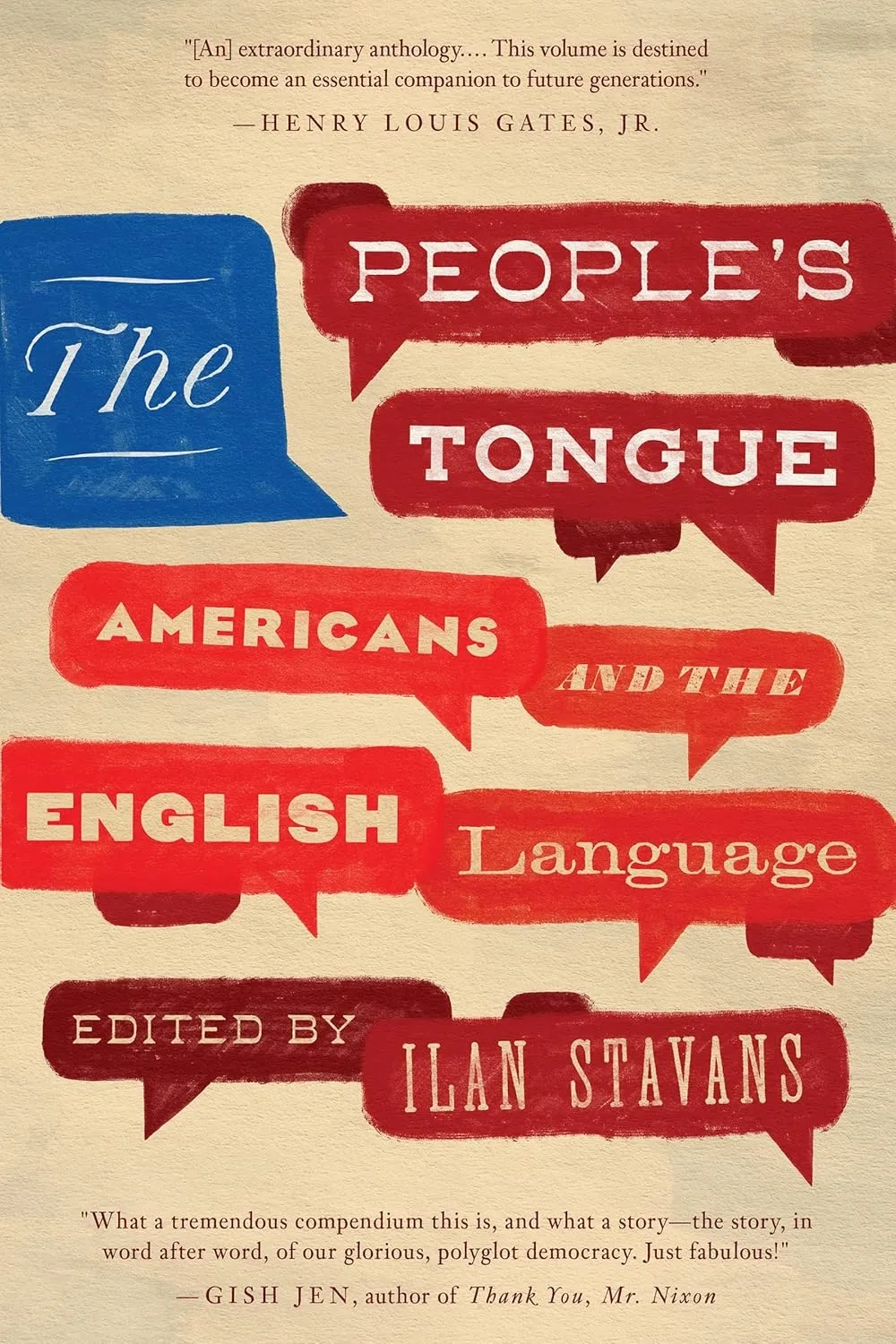
These contributors are all either members of the literati, or the academic and political elite, making this a decidedly Great Men™ perspective on American English. Ironically, Stavans nonetheless states that the anthology is “fully and unapologetically a people’s history” (p. 3).
I don’t actually want to criticize The people’s tongue too harshly here. Its aim—and that of its publisher, Restless Books, is “championing essential voices from around the world” and “to celebrate immigrant writing”, and the book does both admirably well enough. I was happy to see contributions from an array of immigrant and indigenous writers. And Stavans does also make a nod to the bottom-up nature of language later in the introduction: his answer to the question of why English doesn’t have an official regulatory body like so many other languages is, “Maybe because, while an elite is in command of government, the fluidity of the language has no keepers.” (p. 6)
This is a much more accurate take on the nature of language. Language has always been a bottom-up phenomenon—“the result of human actions, not of human design,” to quote economist Friedrich Hayek. Language is, in other words, a spontaneous order. While certain Great Writers™ have serious clout among the erudite and the academic elite, their writings are primarily a reflection of their linguistic environment, not progenitors of new linguistic conventions. A person’s linguistic habits are established long before they encounter the Great Writers™ in school.
When attempting to explain why language is the way it is, we should look to the masses rather than the Great Writers™. We should look to the Great Tweeters† and the Great Redditors and the Great Substackers. Heck, forget the Greats. It’s the everyday commentator who changes language, not the Nate Silvers or Derek Thompsons, for all their Substack clout. We should look to the millions of Gen Z TikTokkers appropriating Black English and making it popular. We should look to the millennials who were forced to express themselves via multi-tap and T9 text messages in as few characters as possible—those early LOL’ers and FML’ers.
Language, like history, is driven by millions of people making everyday language choices that gradually lead to change over time. These are the Everyday Heroes of Language™.
If you’d like to support Linguistic Discovery, purchasing through these links is a great way to do so! I greatly appreciate your support!
Check out my Amazon storefront here.
Check out my Bookshop storefront here.