What an ape’s laugh can teach us about human language
Also this week: Why grammar snobs don’t actually like language + Bluey released in an Australian indigenous language + Enrollment in advanced language classes dropping in the UK

Welcome to this week’s edition of the Linguistic Discovery digest, a weekly roundup of the latest language-related news, research in linguistics, interesting reads from the week, and newest books and media on language and linguistics!
🆕 New from Linguistic Discovery
This week’s content from Linguistic Discovery.
🎗️ Reminder: Pre-Greek: The lost language hidden within Ancient Greek
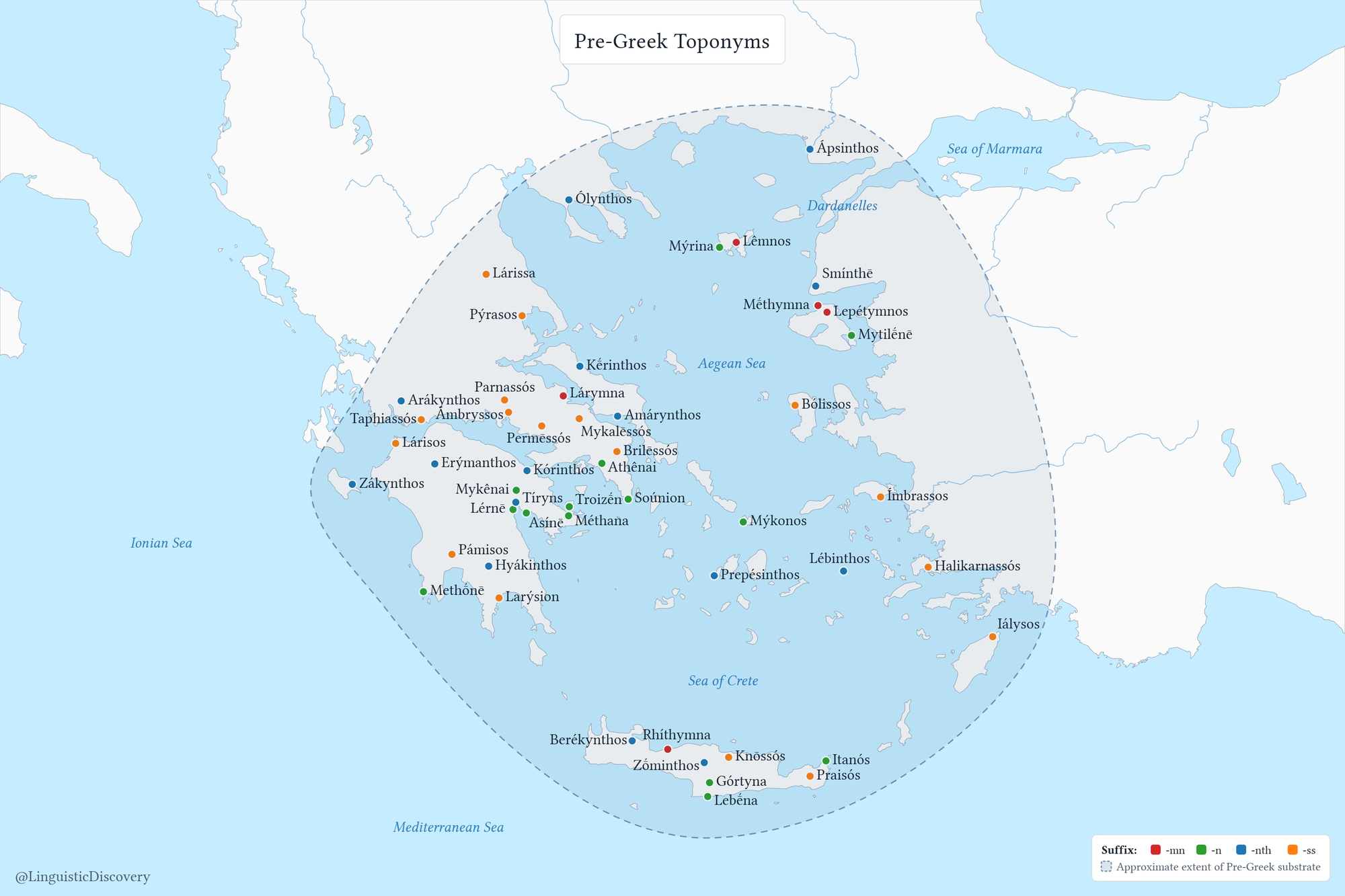
If you haven’t yet finished the article on the Pre-Greek substrate language that influenced Ancient Greek (because it was unusually long!), this is your reminder to go back and finish reading it! If you do, you’ll be rewarded with some cool resources, such as:
- A map (made by me!) of where we think the Pre-Greek language spoken, based on evidence from Pre-Greek toponyms (place names)
- A list of all the words in English that are ultimately derived from the Pre-Greek language
Happy reading!
 Daniel W. Hieber, Ph.D.
Grammar snobs don’t like language
Some thoughts on grammar snobs, in microblogging form:
Grammar snobs don’t like language.
The grammar elitists only like the mythical version of language they’ve “perfected” in their minds, one that’s never existed and never will.
The grammar pedants don’t appreciate the beautiful diversity of ways that language is actually used by real human beings in the world. They don’t see the elegance of language as a spontaneous order, shaped by billions of day-to-day interactions between speakers.
To the grammar police, language is something to be constrained and controlled, striped of its vivacity and organic nature, made stale and lifeless.
To the grammar stiffs, the creativity and diversity and individuality of language is the enemy.
Don’t be a grammar snob. Learn to appreciate the wonderful messy diversity of language.
📰 In the News
Language and linguistics in the news.
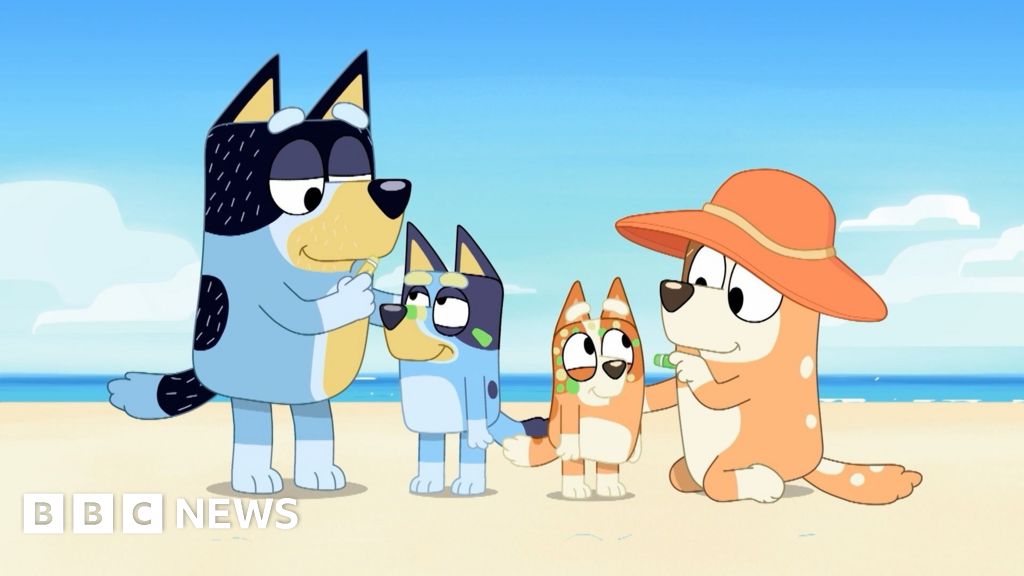
Bluey released in an Australian indigenous language for the first time
The award-winning children's cartoon series Bluey has been translated into Australian Indigenous language for the first time.
Five episodes were released in Yolngu Matha, a collection of dialects from north-east Arnhem Land in the Northern Territory.
The BBC's Simon Atkinson spoke to the producers of these special episodes, who hope the project will amplify First Nation voices, and help language preservation through storytelling.

Enrollment in advanced language classes dropping in the UK
Since 2022, the number of A-levels (Advanced Level qualifications, 2-year subject-based courses in the UK) taken in French, German, and Spanish has fallen from 19,820 to 17,616.
 Sascha Stollhans
🗞️ Current Linguistics
Recently published research in linguistics.
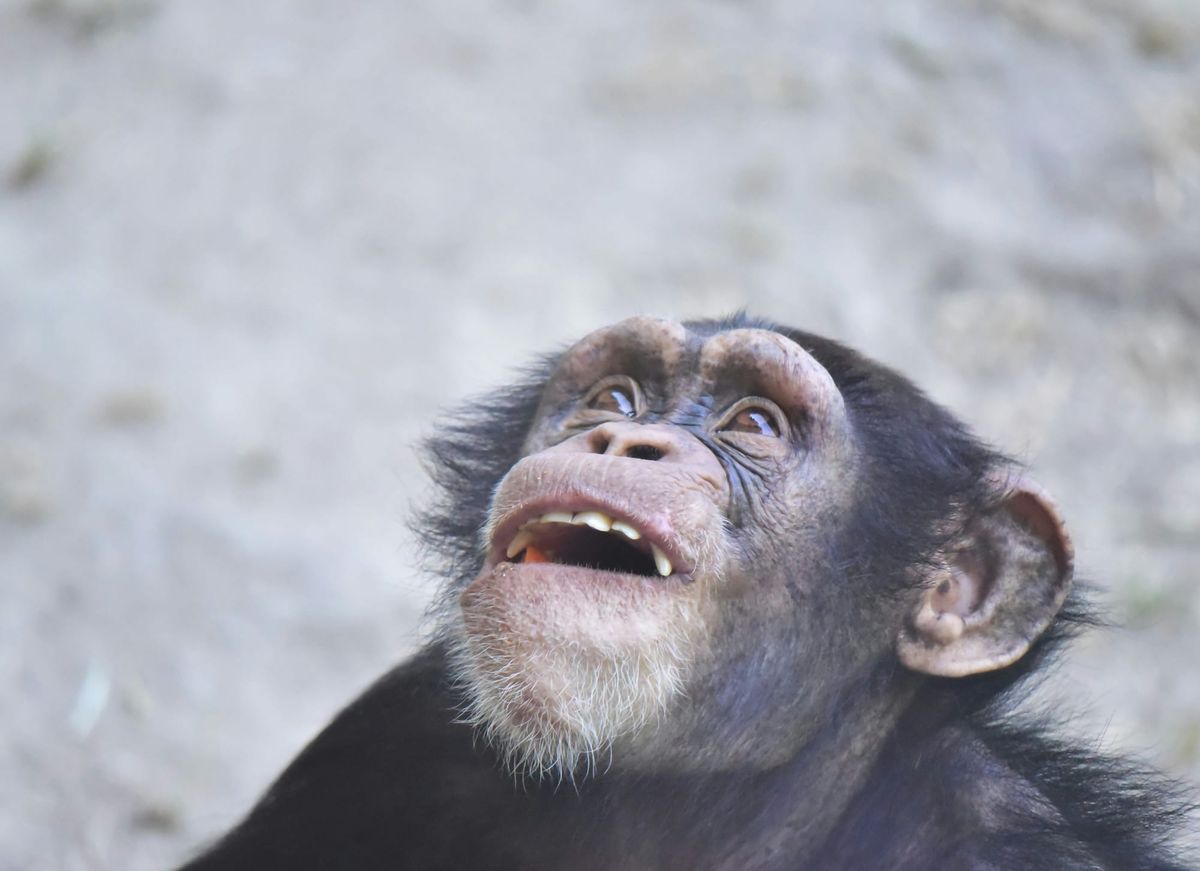
What an ape’s laugh can teach us about human language
A new study offers a glimpse into the evolutionary path toward human language—through laughter. The study found that ape species more closely related to humans, such as chimpanzees, were able to laugh faster than gorillas or orangutans.

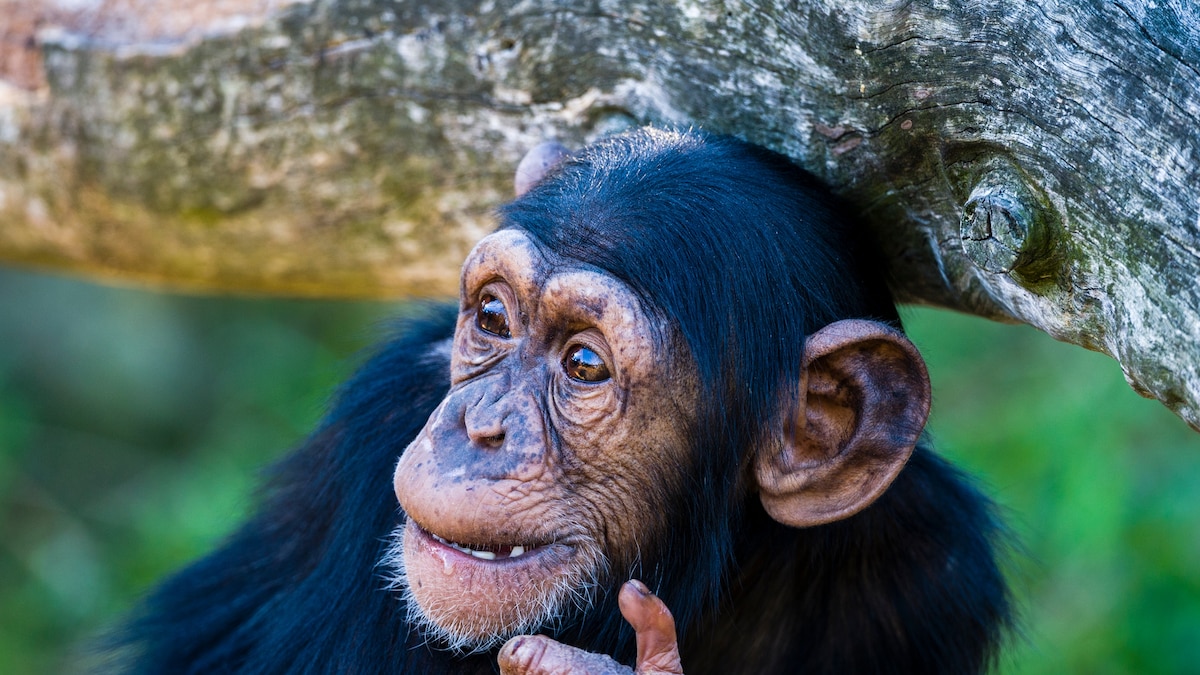
- De Gregorio, Davila-Ross, & Lameira. 2025. Rhythm and timing in laughter reveal that human vocal plasticity falls on a hominid continuum. Communications Biology 9 (824). DOI: https://doi.org/10.1038/s42003-026-10499-z.
Humanity spoke thousands of languages at the dawn of farming — now many of them are lost

Here’s some additional reporting from Nature and other publications on the study published in Science earlier this year showing that there were likely tens of thousands of languages in use between 3,000 and 1,000 years ago:
 Freda Kreier
- Three millennia ago, humans may have spoken thousands more languages than we have today, during a linguistic ‘Golden Age’: A new study suggests linguistic diversity reached its peak between 1000 BCE and 1000 CE before declining (Smithsonian Magazine)
- Tens of thousands of languages spoken in ancient times before collapse: A new Harvard study contradicts the previous assumption that languages peaked much earlier, after the last Ice Age (The London Times)
- Thousands of human languages may have been erased—even before colonialism (Science Alert)
- Original Research Article: Blasi et al. 2026. The rise and fall of language diversity through the Holocene. Science 393(6809): pp. 387–391. DOI: https://doi.org/10.1126/science.adx4343.
📃 This Week’s Reads
Interesting articles I’ve come across this week.
Comments on my Pre-Greek article led me to this excellent article by Matthew Scarborough about the percentage of Pre-Greek words in the Greek lexicon:
- How much “Pre-Greek” is there in the Greek lexicon proportionally? (Consulting Philologist)
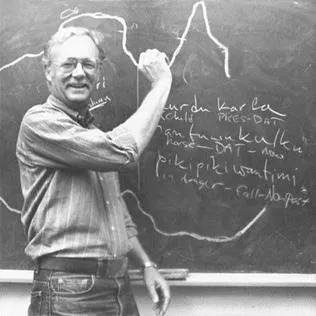
Ken Hale was a pretty remarkable dude, well-known within the field of linguistics for his incredible language-learning skills, his keen scholarly insight, and his kind and warm personality. If you’ve never heard of him, check out this recent tribute article:
- Kenneth Hale, the Brahma-bull-riding theoretical linguist who spoke 50 languages: Paying my respects to a linguistic virtuoso (The MIT Press Reader)
Here is his obituary from MIT, where he taught linguistics:


Other reads this week:
 Mark Antoniou
 Jill Lepore
 Jennifer Gunner
📚 Books & Media
New (and old) books and media touching on language and linguistics.
Things I loved about A deadly education as a linguist
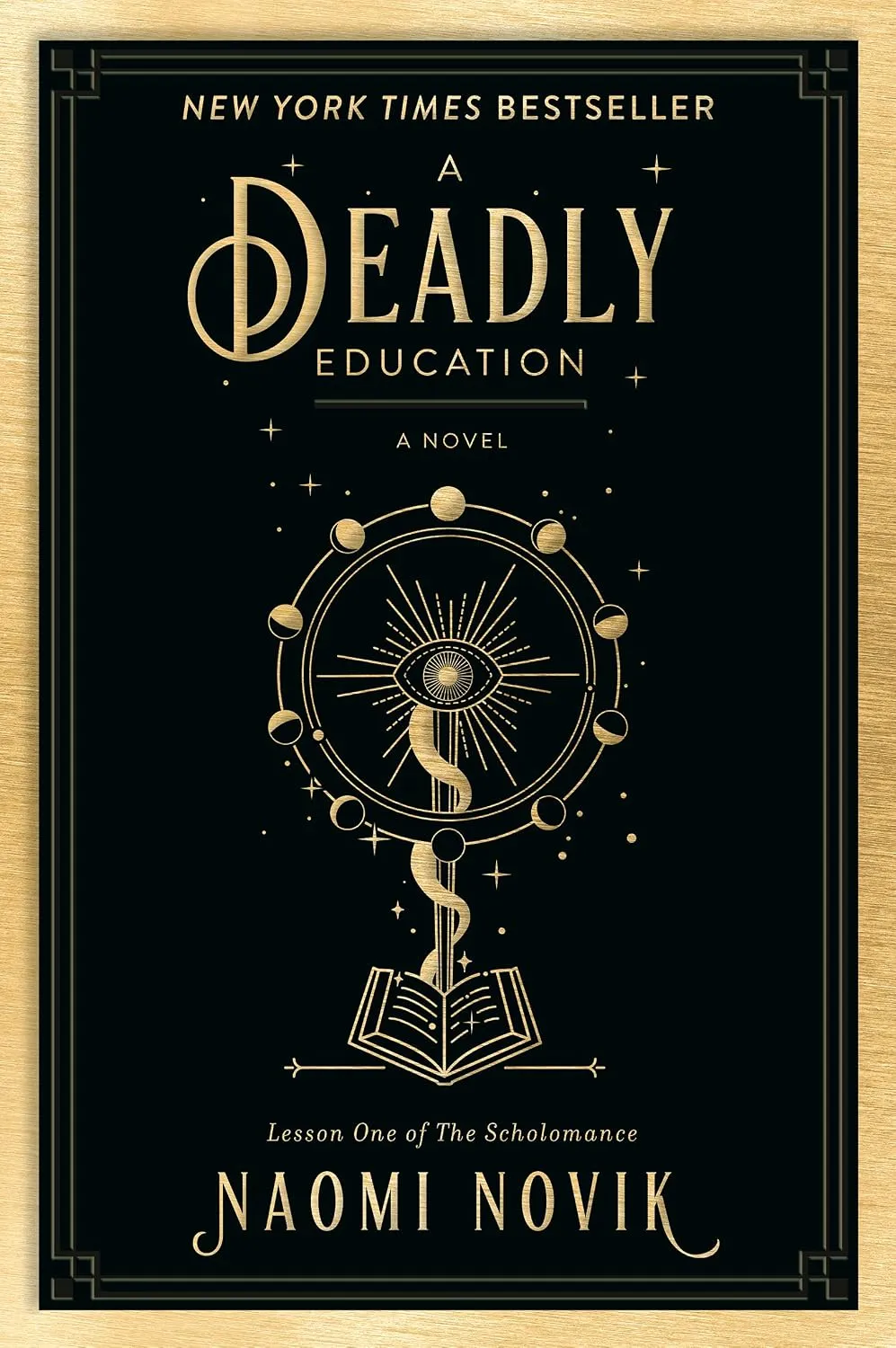
I recently finished reading A deadly education, the first book in the Scholomance fantasy trilogy, and had a great time with it. Here are a few things I enjoyed about it as a linguist:
- Spells in Old English and Proto-Indo-European!
- The more languages you know, the more spells you can learn, and the better a wizard you are!
- Fun shoutouts to Lord of the Rings in a few places. (The main character is named Galadriel and makes a quip about it at one point.)
The author clearly has some awareness of historical linguistics and language reconstruction, which was a lot of fun:
The bookcases in between are full of crumbling scrolls and carved-stone tablets in some parent language so ancient that nobody knows it anymore. […] I made up a special project for myself: analyzing the commonalities between spells of binding and coercion in Sanskrit, Hindi, Marathi, Old English, and Middle English. […] The topic also near-guaranteed that I’ll be assigned the Proto-Indo-European seminar next year. (pp. 102–103)
Get your own copy of the book here:
The Cambridge encyclopedia of language
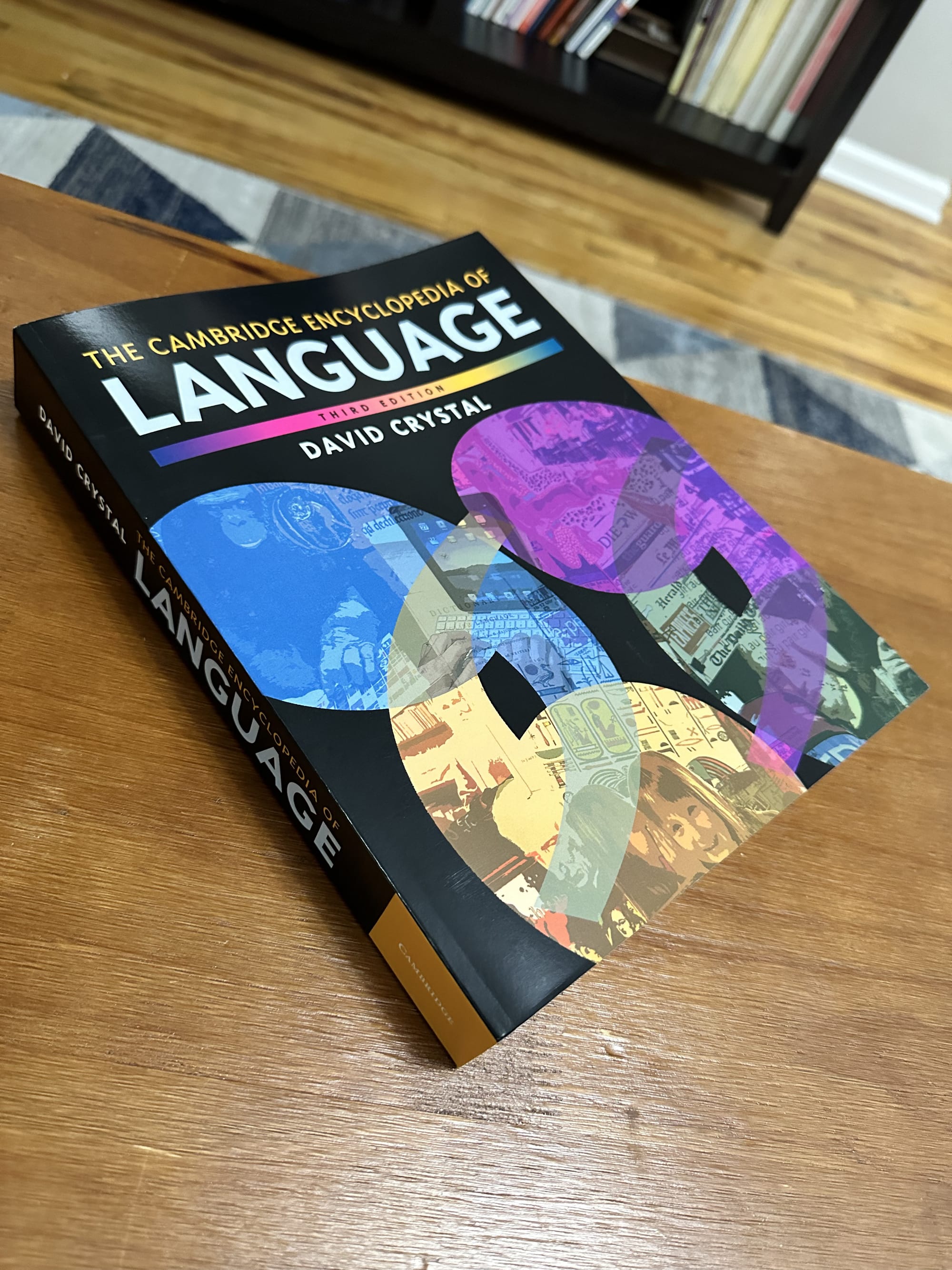
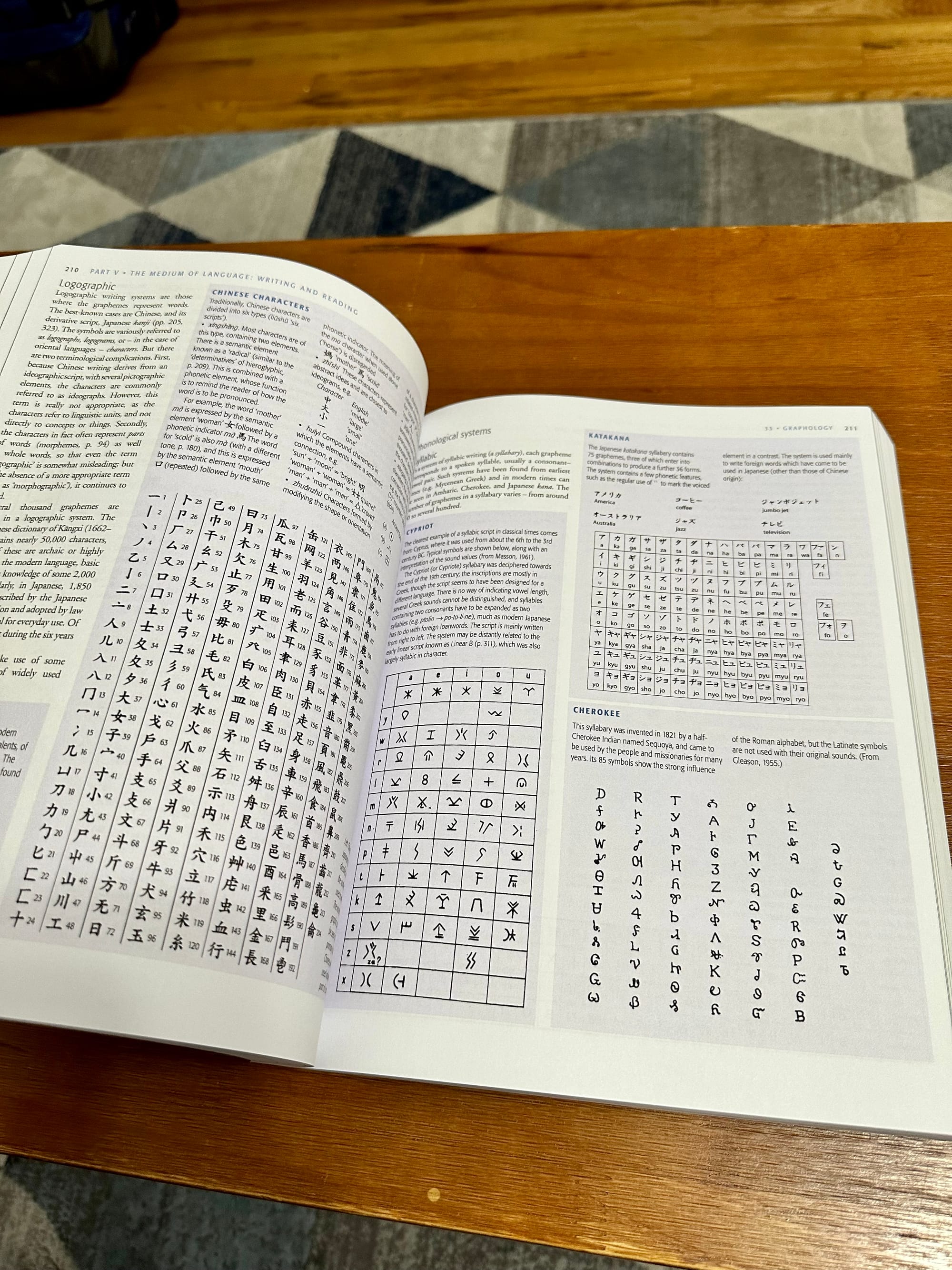
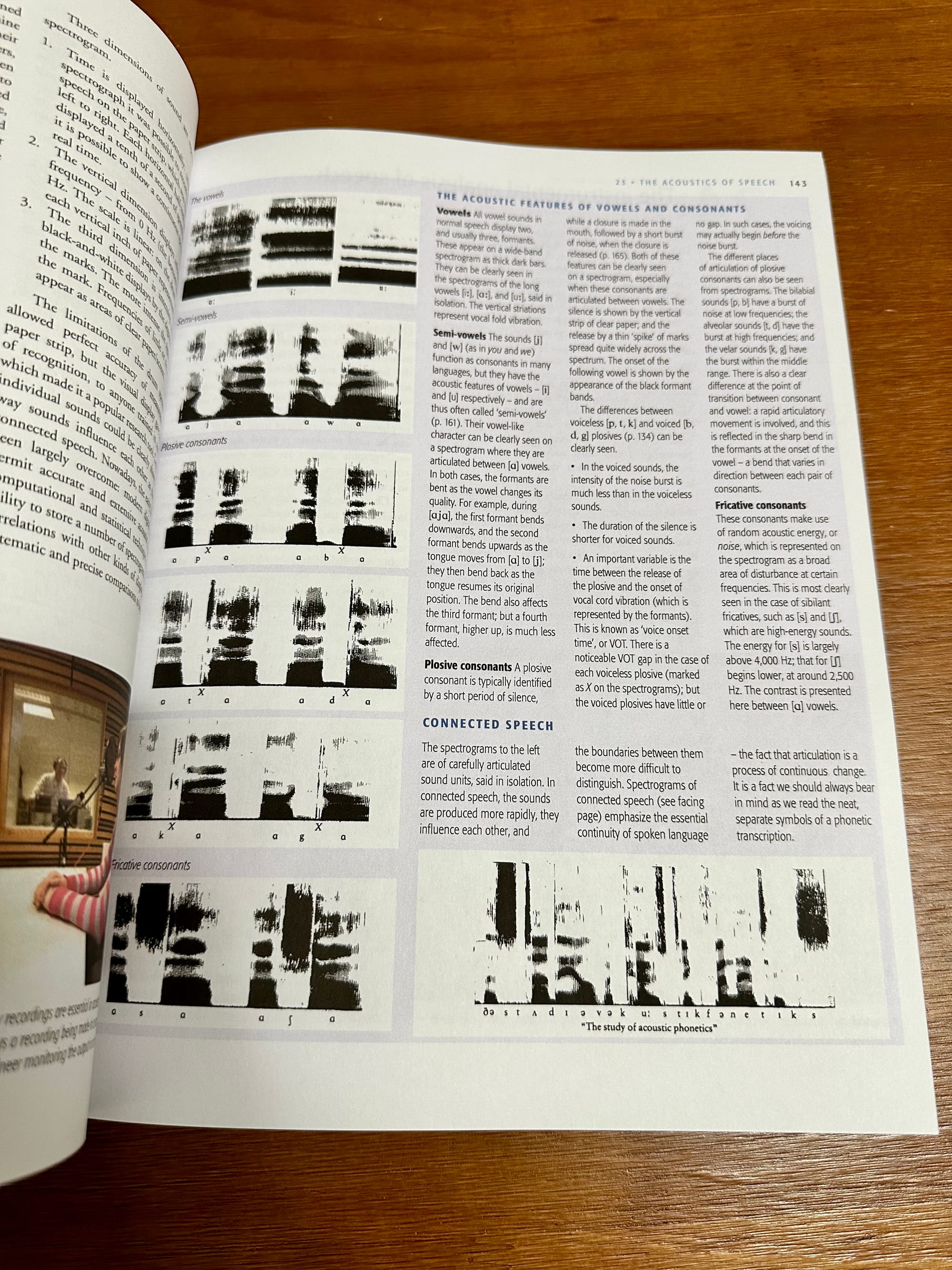
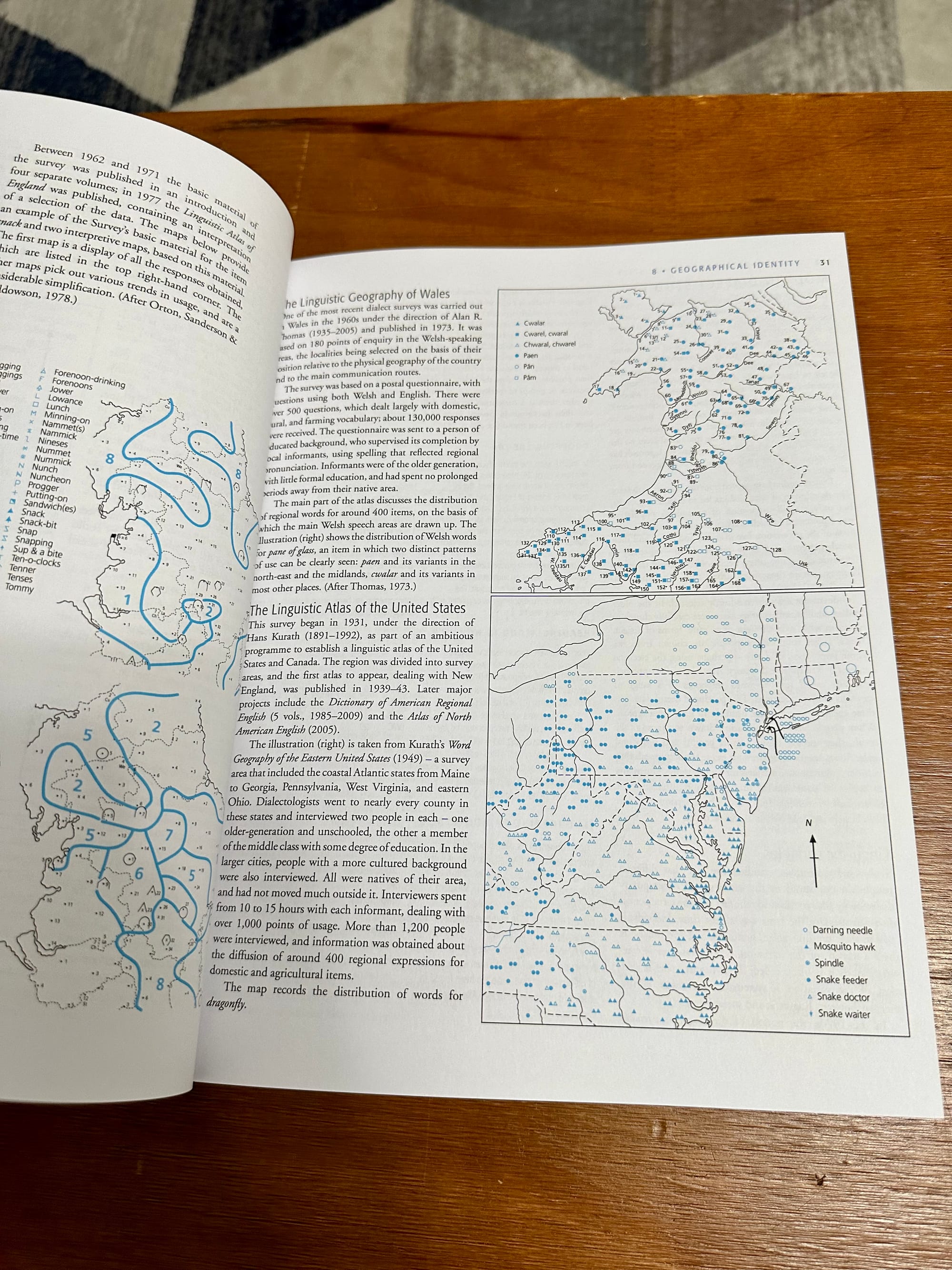
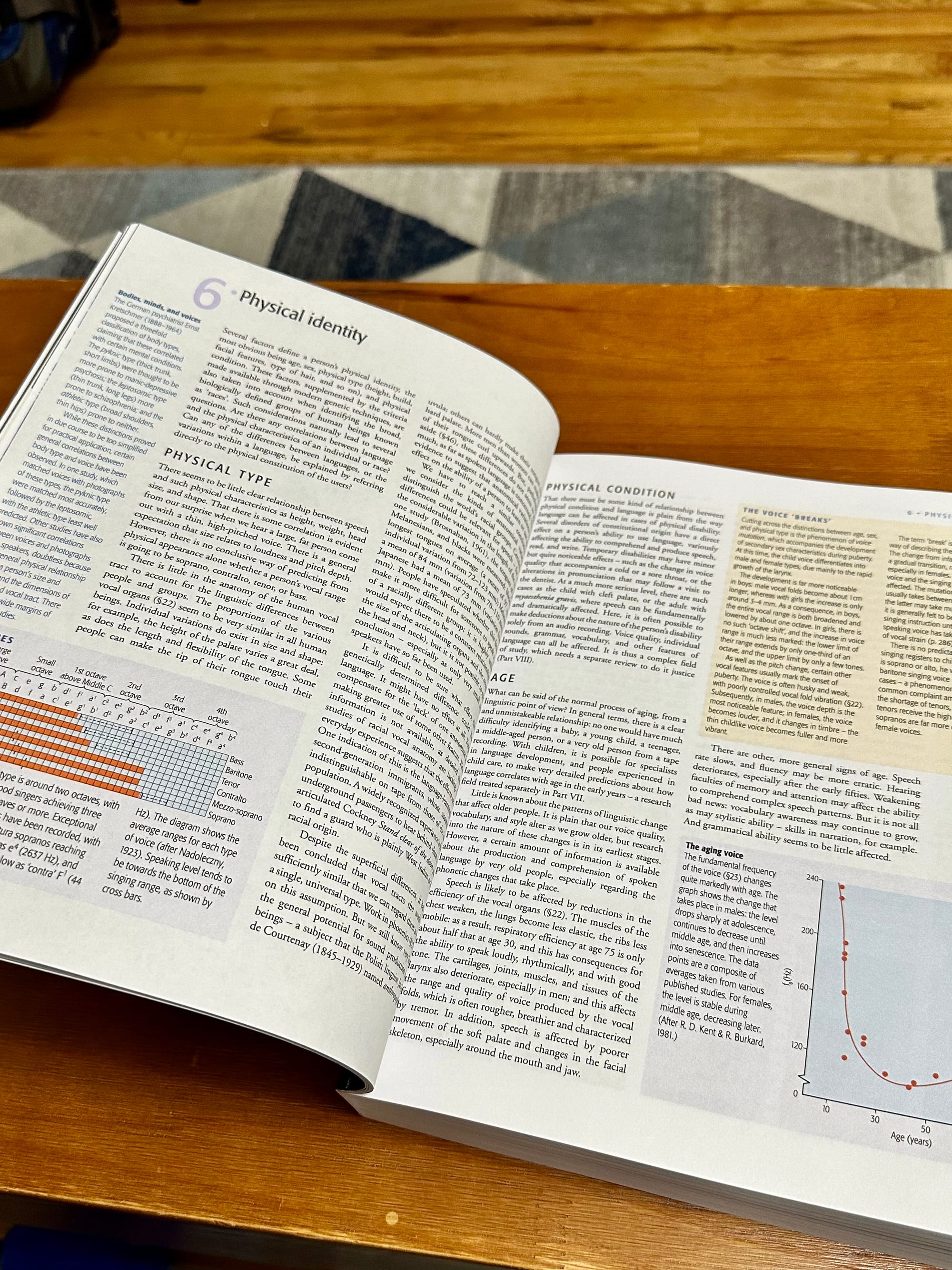
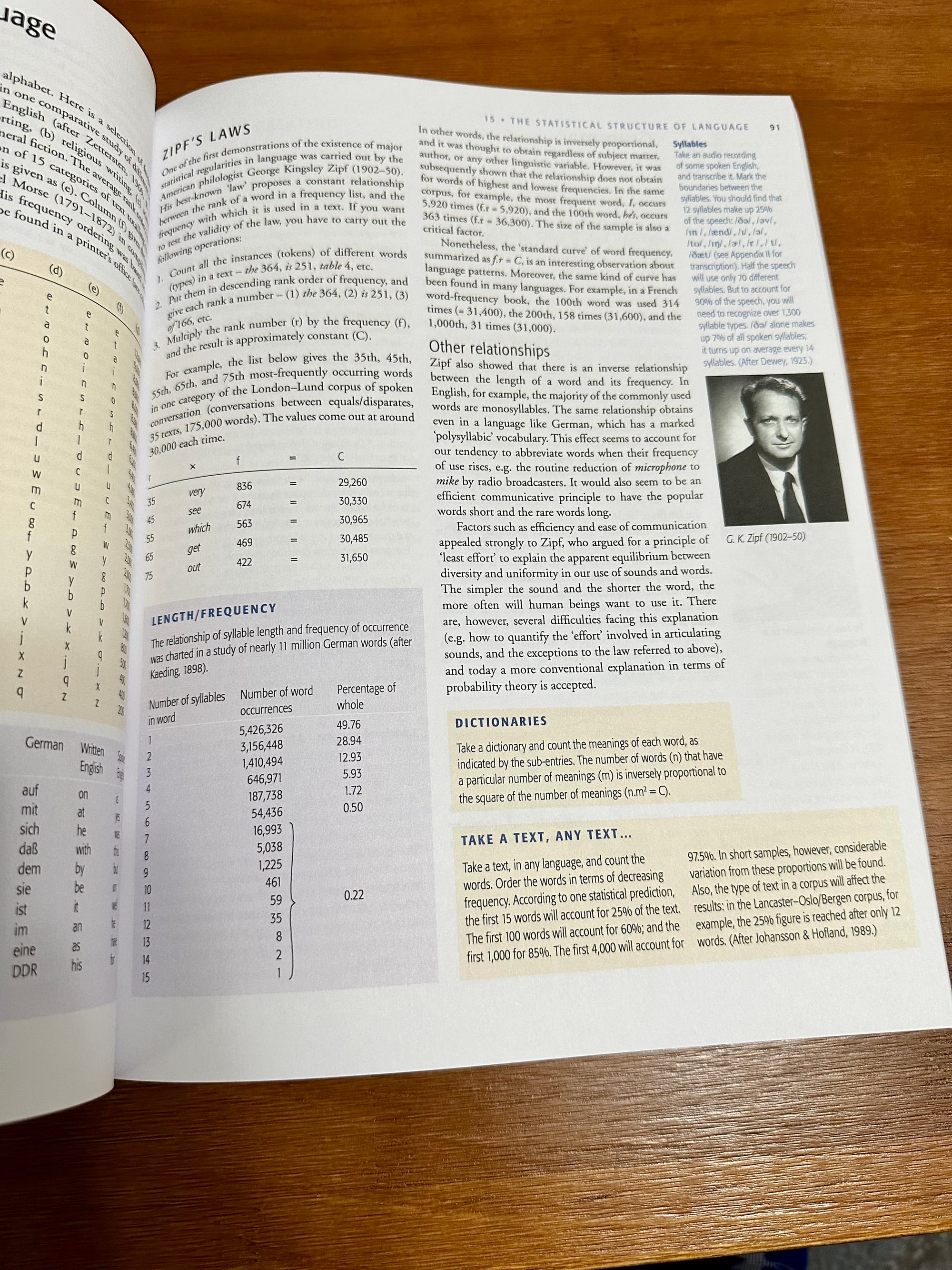
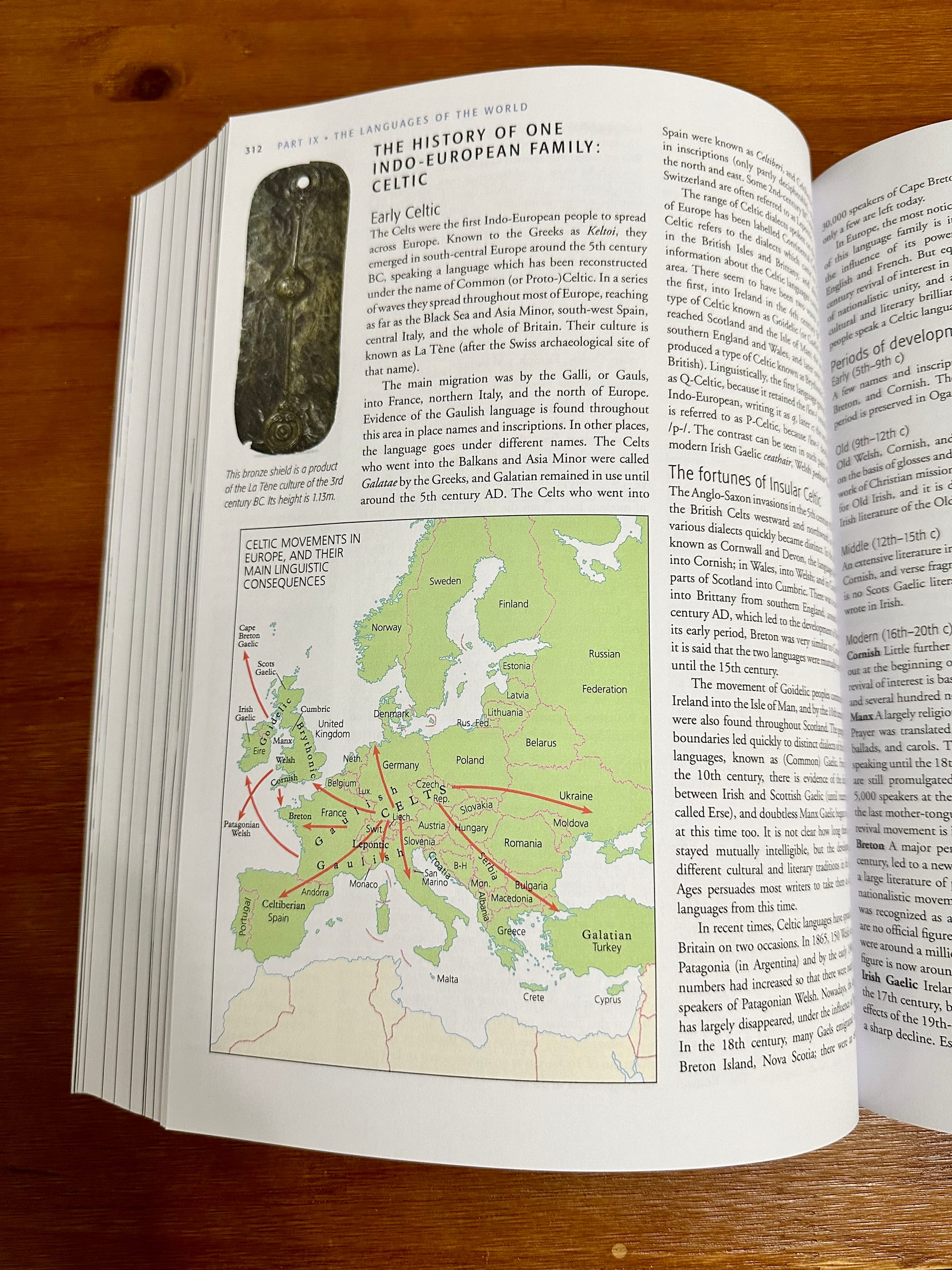
This is honestly one of my favorite coffee table books, by the prolific and always excellent David Crystal. People love to leaf through this when they come over.
👋🏼 Till next week!
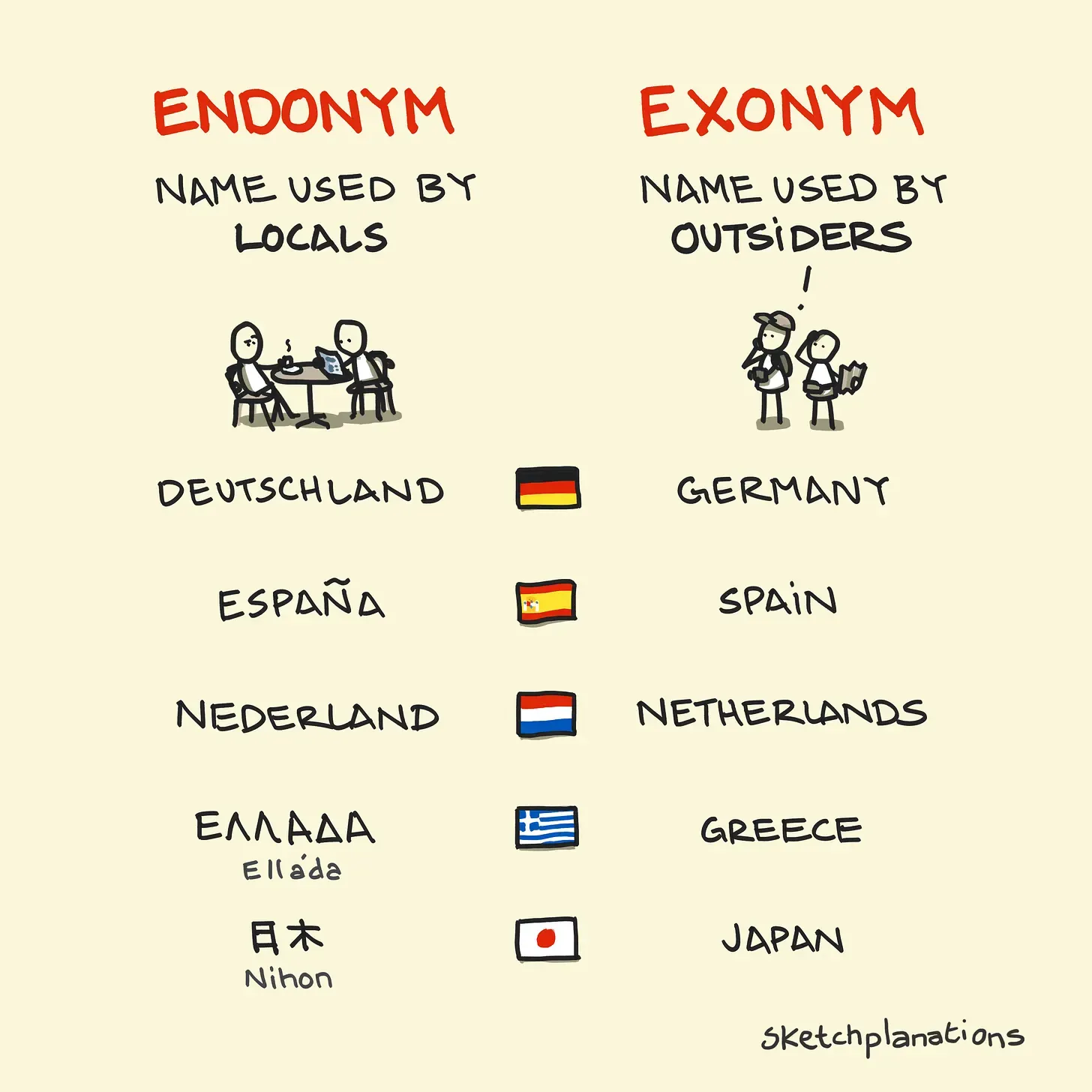
Sketch Plantations made an infographic for the World Cup this past summer explaining the difference between endonyms and exonyms. Read the accompanying article here:
 Jono Hey
If you’d like to support Linguistic Discovery, purchasing through these links is a great way to do so! I greatly appreciate your support!
Check out my Amazon storefront here.
Check out my Bookshop storefront here.