AI is helping scholars understand ancient tablets, documents, and inscriptions
Also this week: The definition of dyslexia is updated for the first time in 20 years + Dogs listen for consonants in speech, just like human infants + Bionic (bolded) reading doesn’t speed up skilled readers


Welcome to this week’s edition of the Linguistic Discovery digest, a weekly roundup of the latest language-related news, research in linguistics, interesting reads from the week, and newest books and media on language and linguistics!
📰 In the News
Language and linguistics in the news.
LLMs are helping scholars to understand ancient tablets, documents, and inscriptions

“Over thousands of years, these texts have been damaged. Bits are missing. You can’t read them anymore,” said Thea Sommerschield, an assistant professor in the Department of Classics and Ancient History at Durham University in the U.K. “Restoring the missing text, dating it, and placing it in the correct historical context is important if we want to understand everyday lives and the social interactions at that time.”
Today, models like Ithaca and Aeneas—developed jointly by Google DeepMind and academic institutions—routinely restore, date, and geographically place Greek and Latin inscriptions. Paired with human epigraphers, they’re driving discoveries that would have been beyond the reach of human or machine in the past.
- AI helps scholars see a clearer past (Communications of the ACM)
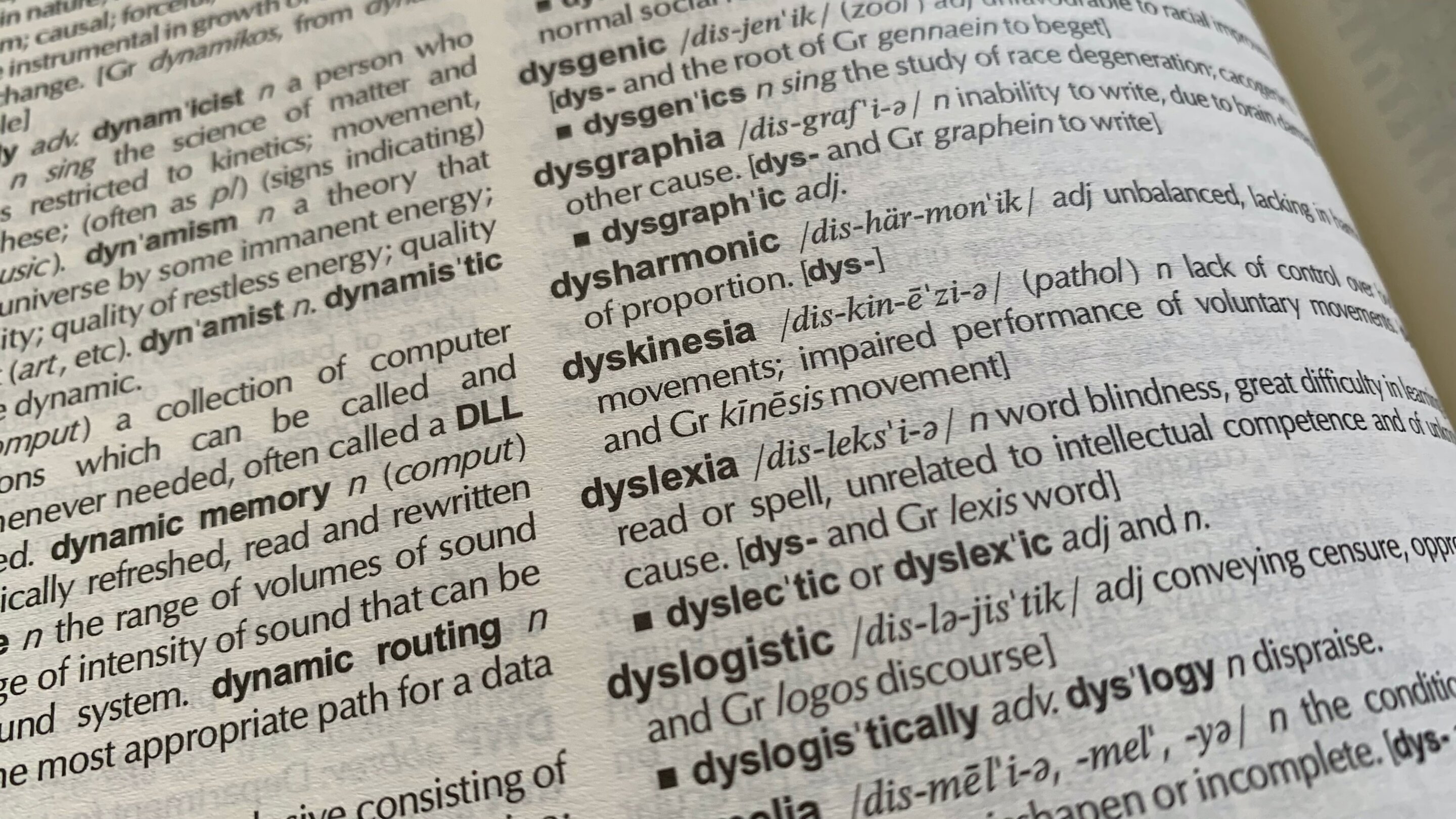
Definition of dyslexia updated for the first time in 20 years
“The previous definition was a good definition based on the research at that time, but I think some of the biggest weaknesses were its emphasis on brain function and it was mainly based on English or Western European alphabetic writing systems.”
The new definition makes 3 major changes:
- It removes the reliance on IQ tests.
- It includes languages other than English (Chinese, Japanese, Hebrew, and Arabic).
- It emphasizes earlier identification and support.
 Emma Lawson
🗞️ Current Linguistics
Recently published research in linguistics.
Dogs listen for consonants in speech, just like human infants
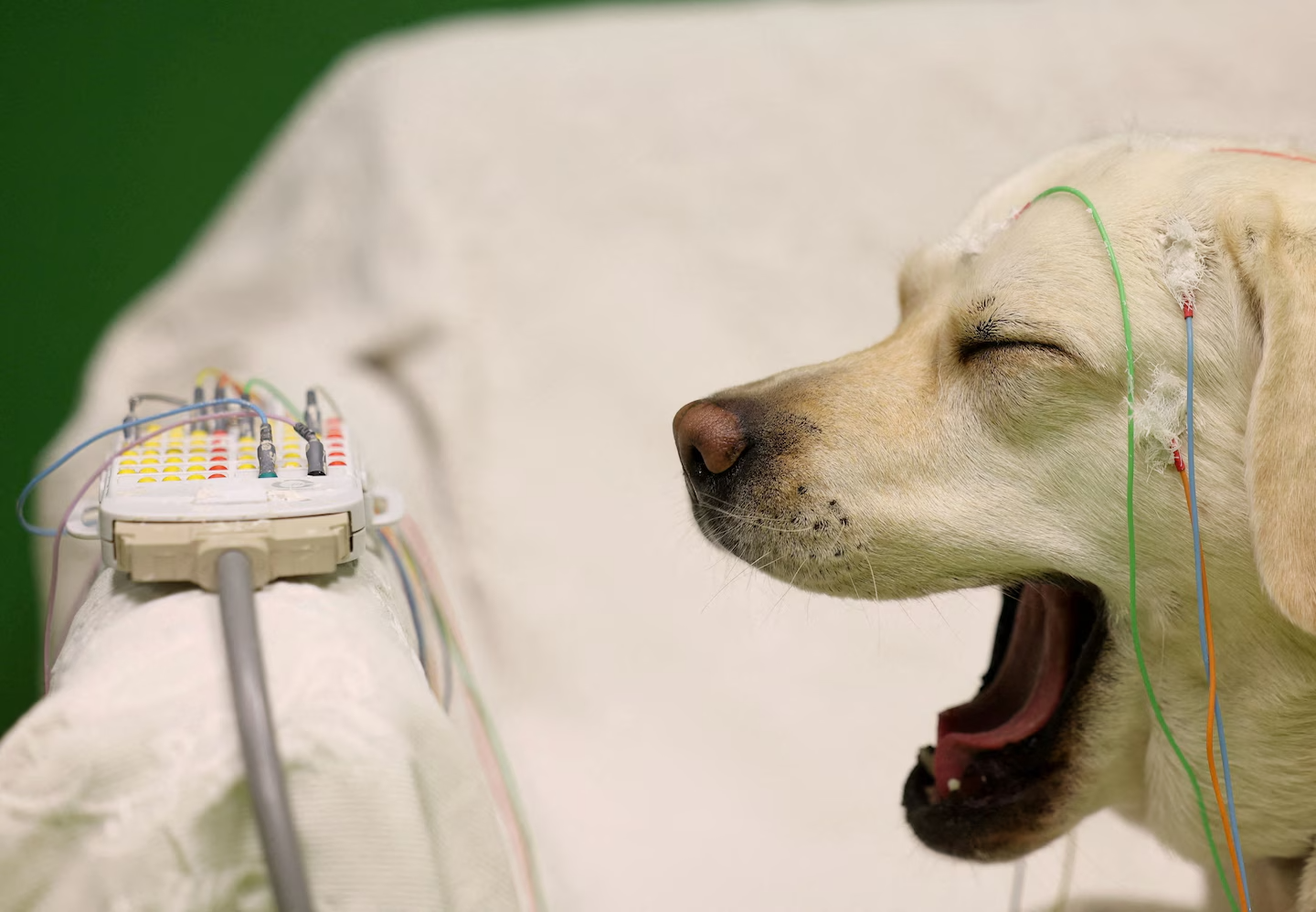
A new study suggests that dogs listen for consonants in human speech in order to figure out when one word ends and another beings—just like human infants.
- Dogs use a surprising method to understand human language, new study suggests (The Washington Post)
- Dogs pay more attention to consonants than vowels when we speak (New Scientist)
- Morvai et al. 2026. Neural evidence that dogs segment the speech they hear with a humanlike consonant bias. Science 393(6818): 1354–1358. DOI: https://doi.org/10.1126/science.adw7709.
Bionic reading doesn’t speed up skilled readers

A recent eye-tracking study of 90 skilled adult readers tested the efficacy of “Bionic Reading”—bolding the beginnings of words with the intent of making reading faster. The researchers found that Bionic Reading did shift readers’ gaze toward the start of longer words, but it didn’t increase their reading rate. Neither bold beginnings nor middles cut the time to read target words.
Andrew Zinin
- Parker et al. 2026. Does the selective bolding of characters within words improve reading performance in skilled adult readers? Evidence from eye movements. Royal Society of Open Science 13(9): rsos250177. DOI: https://doi.org/10.1098/rsos.250177.
📃 This Week’s Reads
Interesting articles I’ve come across this week.
I’m so happy to see a piece on this, because the entire concept of “g-dropping” is—as Colin Gorrie points out in the article—confused, incorrect, and contributes to discriminatory language attitudes. So many people think that not pronouncing a /g/ at the end of a word makes you “lazy”, what’s actually happening is that these people are projecting their own preexisting attitudes onto groups of people that speak that way. And more to the point: there’s no such thing as “g-dropping” anyway! It’s an orthographic lie! Have a read to see why.
 Colin Gorrie
And here are some other reads for your week:
 Jonathan Culpeper

- 🔊 Richard Pryor’s daughter studies the N-word—a word he used, then disavowed (NPR)
- A linguistic divide is playing out in the mid-Michigan town of Buena Vista—or is it “byoo-nah”? (Saginaw & Bay City News)
 Danny Bate

📚 Books & Media
New (and old) books and media touching on language and linguistics.
By definition: The surprising history of the English dictionary
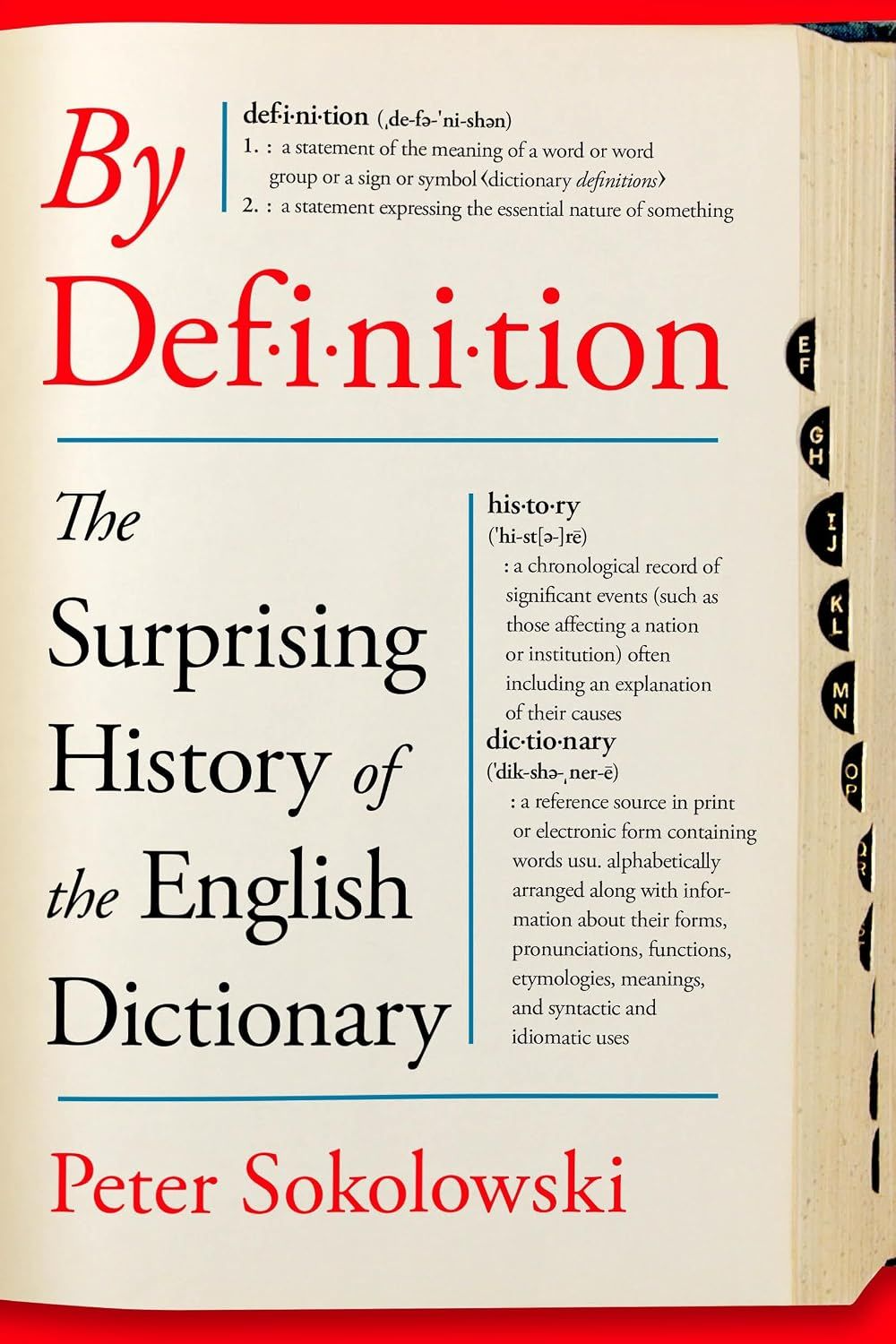
A new book on the history of the English dictionary comes out early in 2027!
Here’s the publisher’s blurb:
In this engaging narrative lexicographer Peter Sokolowski uncovers the history of our language in the dictionary definitions written from Shakespeare’s time to ours. English is always changing. And so our dictionaries present a paradox; they represent stability and standards but they also constantly add new usage and new words (and discard some old ones). The dictionary is, by definition, the story of the way we express culture, authority, and identity with our words.
We haven’t always had dictionaries. In Renaissance England, explaining the meanings of words meant translating the Latin of the Church and the French of the Norman bureaucracy. A linguistic class system separated these “hard words” of privilege, prestige, and power from the native English words of hearth and home. Thus, the most common words in English–from go and green to mother and father–were not given definitions in dictionaries until the mid-18th century.
Dictionaries developed as the language grew, and definitions by British Samuel Johnson and American Noah Webster are compared through Sokolowski’s close readings, which take us through the creation of the Oxford English Dictionary and into current online references. Many questions are answered along the way, including: Is irregardless a word? Does literally have only one meaning? And what exactly are users looking up today? Full of fun examples, and peeks into the mysterious world of dictionary creation, this book will delight word lovers of every kind.
Get your copy here:
The world atlas of language: Mapping the story of speech and writing
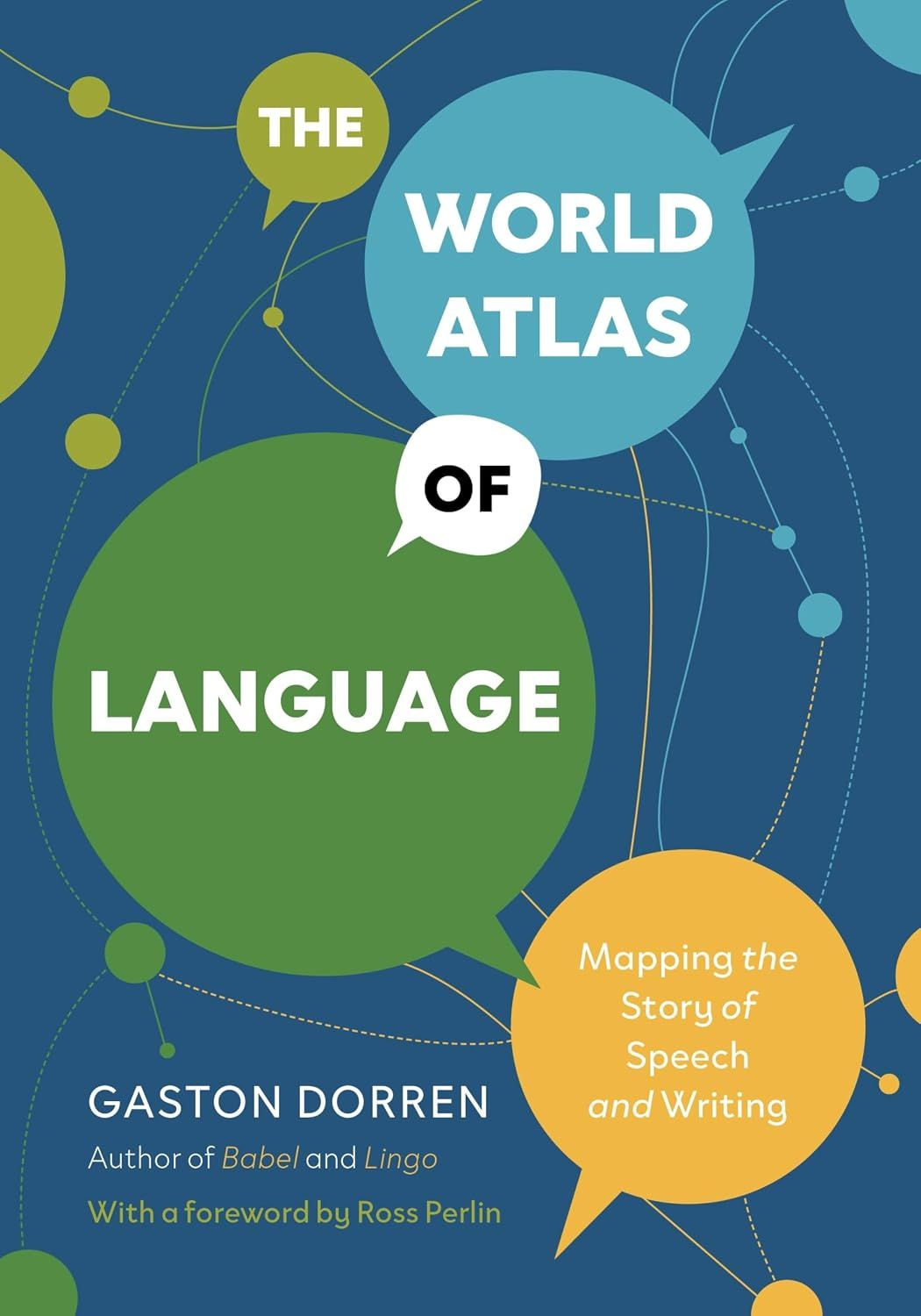
Gaston Dorren, author of the acclaimed pop linguistics books Babel: Around the world in twenty languages (Amazon | Bookshop) and Lingo: Around Europe in sixty languages (Amazon | Bookshop), has an incredible atlas of the story of language and writing releasing on February 23, 2027. Each of the maps and diagrams in the book (over 100 in all) were created by the fantastic data journalist and information designer Marco Giannini, whose work I’ve shared here in the digest in the past. Here’s the author’s blurb:
Did you know that more than 7,000 languages are spoken today, but that fifty percent of the world’s people use only fifteen of them? Or that there are hundreds of separate sign languages? Or that a dog’s bark is represented with wildly different sounds in English, Czech, and Thai? In The World Atlas of Language, Gaston Dorren, the international bestselling author of Lingo, Babel, and other books about languages, invites readers on a captivating journey that charts the geographical spread of languages and dialects around the world through the ages—and tells the incredible stories behind them in his unmistakable style. The result is an essential reference for anyone who loves how humans speak, write—and vary.
Organized by theme and richly illustrated throughout with full-color maps, timelines, and other graphics, this book traces the origins and evolutions of the world’s languages and of the communities that nurture and live in them. From Old, Middle, and Modern English and the great linguistic variety of the Americas to the lingua francas of Africa and the many unique tongues that are about to fall silent, the atlas reveals an astonishing linguistic diversity.
- Features 100 full-color maps, timelines, and other graphics.
- Tells engaging stories about the origins and evolutions of languages and how they have been carried around the world by nations, religions, and empires.
- Includes sections on:
- Where—Where languages are spoken and where they have moved over time
- What—Words, scripts, sounds, and grammar
- When—Language diversity and the way languages grow, decline, and change across history
- What Else—Language and nationalism, books and readers, names, and related topics
Get your own copy here:
🗃️ Resources
Maps, databases, lists, etc. on language and linguistics.
Funetics

The Funetics website helps you improve your pronunciation in a language you’re learning by deepening your knowledge of phonetics—while having fun!
 Quinn Daley
👋🏼 Till next week!
If you’d like to support Linguistic Discovery, purchasing through these links is a great way to do so! I greatly appreciate your support!
Check out my Amazon storefront here.
Check out my Bookshop storefront here.