The Natural Word
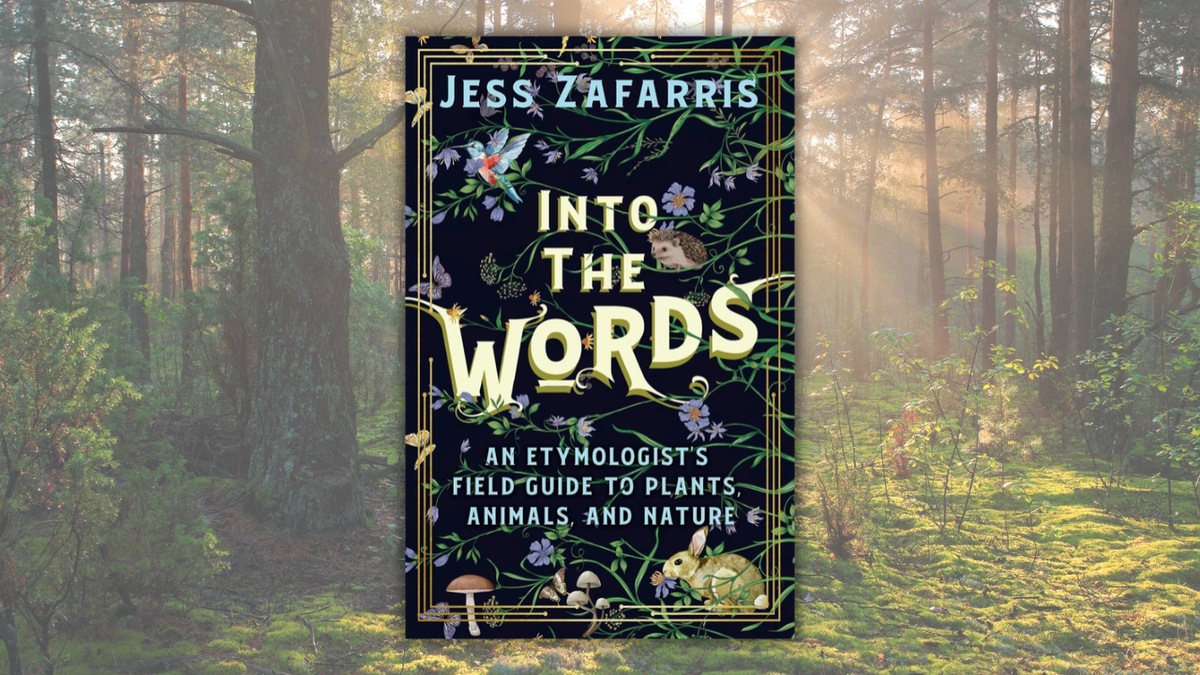
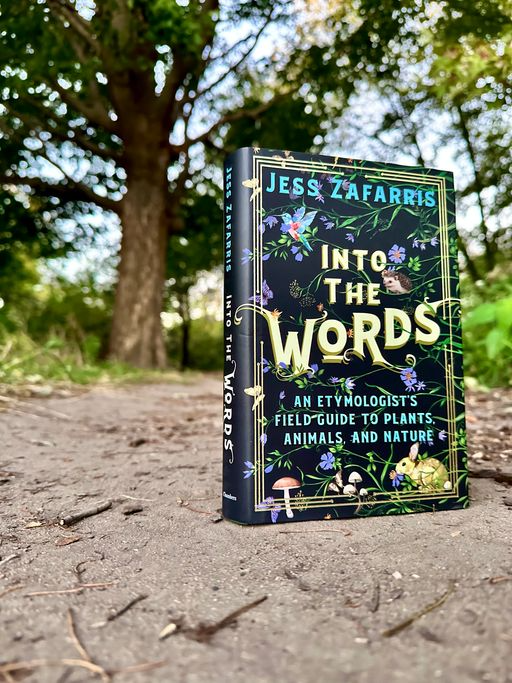
A sneak peek at Jess Zafarris’ new book, “Into the Words”

The wilderness went from something to be tamed to something to be cherished.
Nature is one of those big catchall words that carries the weight of the world (literally all of the world around us), but it didn’t start that way. In ancient Rome, natura meant “birth” or “character,” a person’s innate qualities (same root there), along with “native,” “nation,” and “nativity.” Fast-forward to thinkers like Cicero in the 1st century BCE and natura gets pumped up into a grand concept, often contrasted with culture—that is, what exists without human meddling vs. what humans create. Romans took the Greek idea of physis (the natural order) and ran with it, using natura to talk about the whole world and its ways. By the time Middle English borrowed nature from Old French, it already carried this meaning of “the whole world or creation” beyond human control. In The Parlement of Foules, Chaucer called nature “the vicaire of the almyghty Lord,” a vicarious extension or proxy of the divine. But the shift from theological or philosophical usage to the modern sense didn’t solidify until the Enlightenment. That’s when “nature” started getting filed, sorted, defined, and, paradoxically, separated from the humans doing the defining.
Over time, “nature” became shorthand for “everything not made by humans,” which, of course, gets slippery the moment we remember that we’re also animals and also organic (in the carbon-based sense), made of skin and bone and sinew, and our cities are elaborate nests with better insulation.
As cultural theorist Raymond Williams wrote in Keywords (1976), “Nature is perhaps the most complex word in the language.” Defining “nature” can still feel like nailing jelly to a tree; the term is notoriously hard to pin down.
Does it include humans or contrast with them? Depends on who you ask. Is a city park “nature” or does it have to be untouched wilderness? Even in ancient times, people debated what nature really meant. Anthropologist Philippe Descola noted that some languages have no word for nature as separate from human culture. English speakers treat “nature” as if it were universal—Mother Nature, laws of nature, acting according to one’s nature, and so on—but it isn’t so universal, after all.
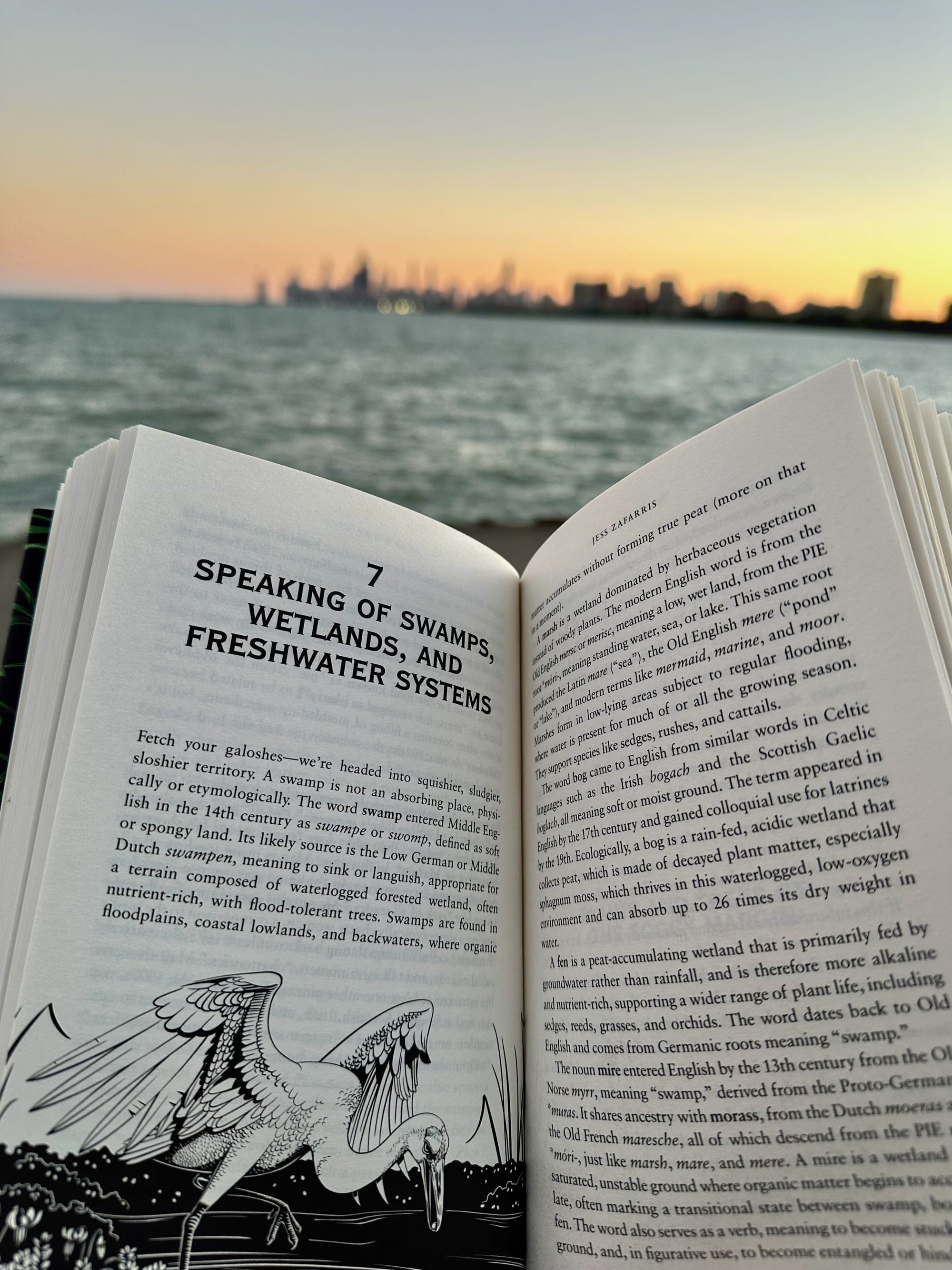
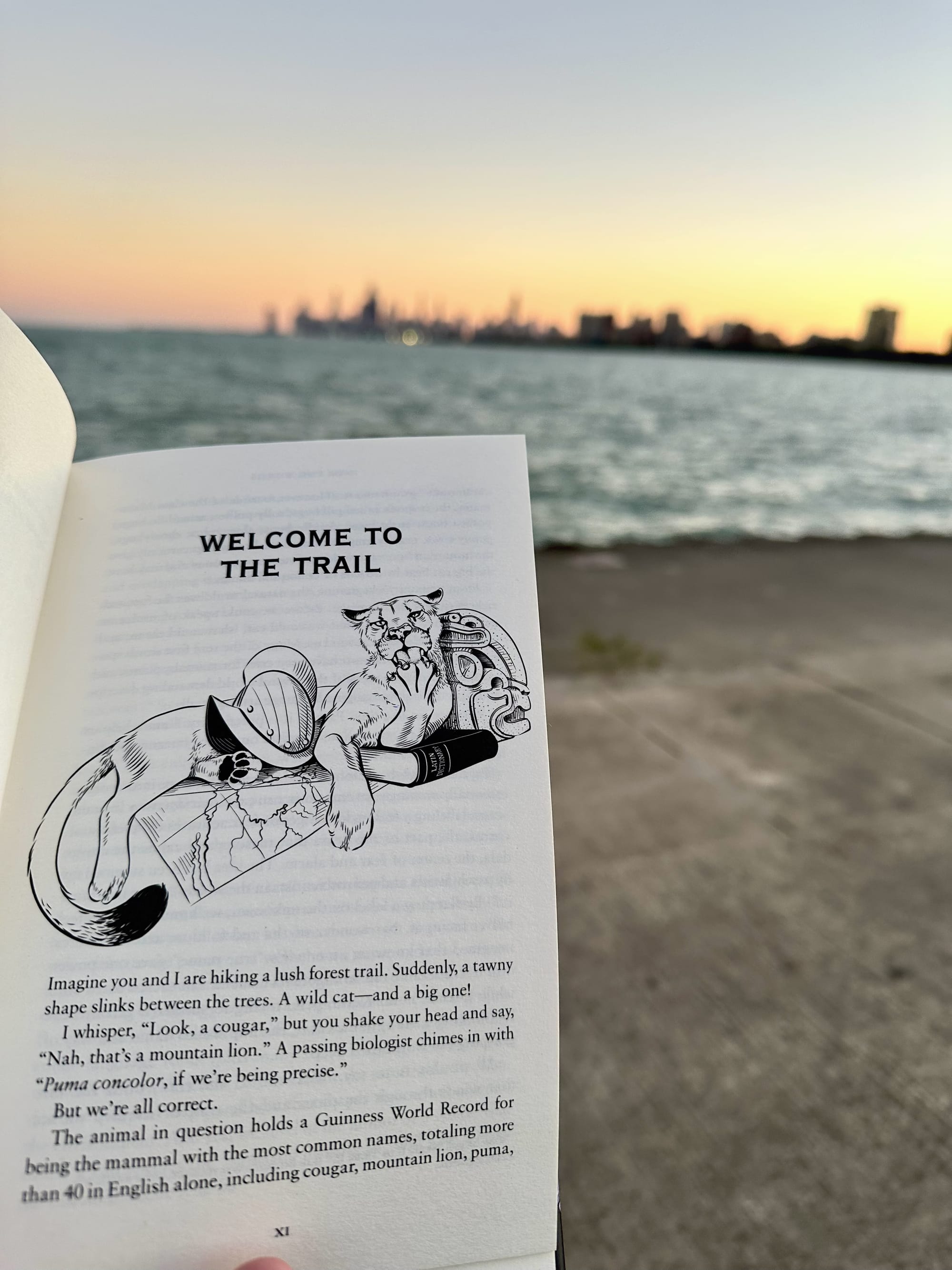
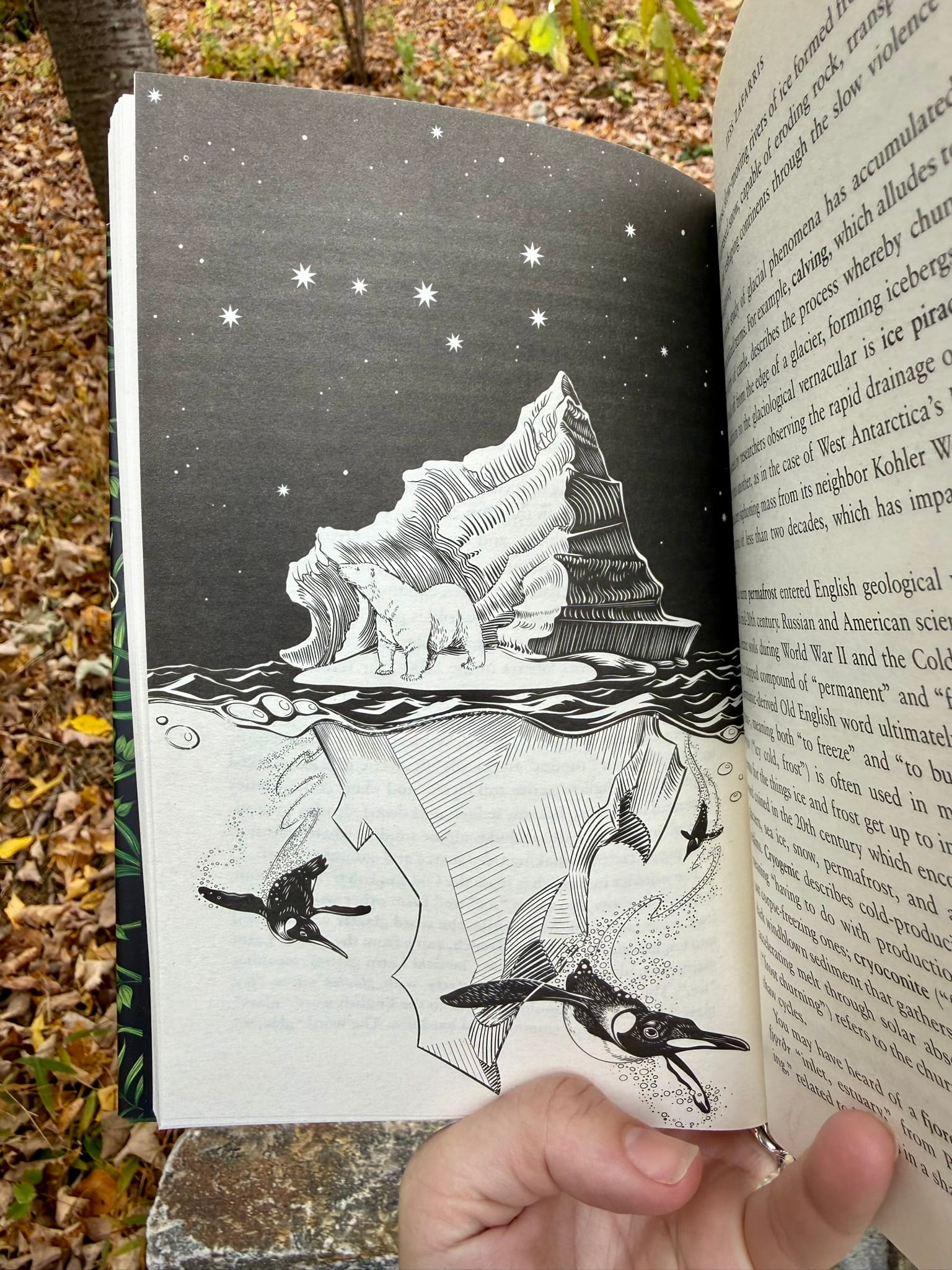
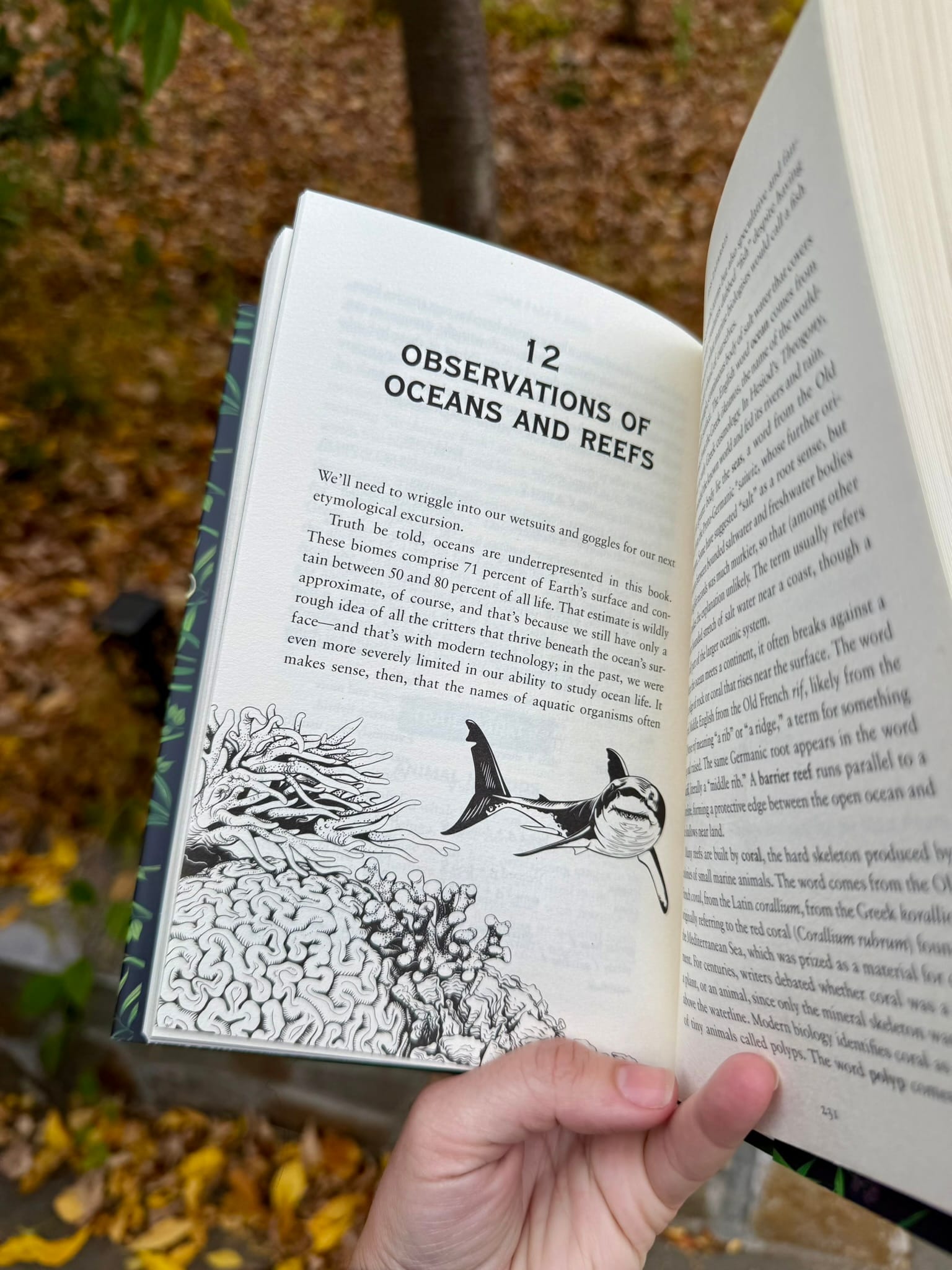
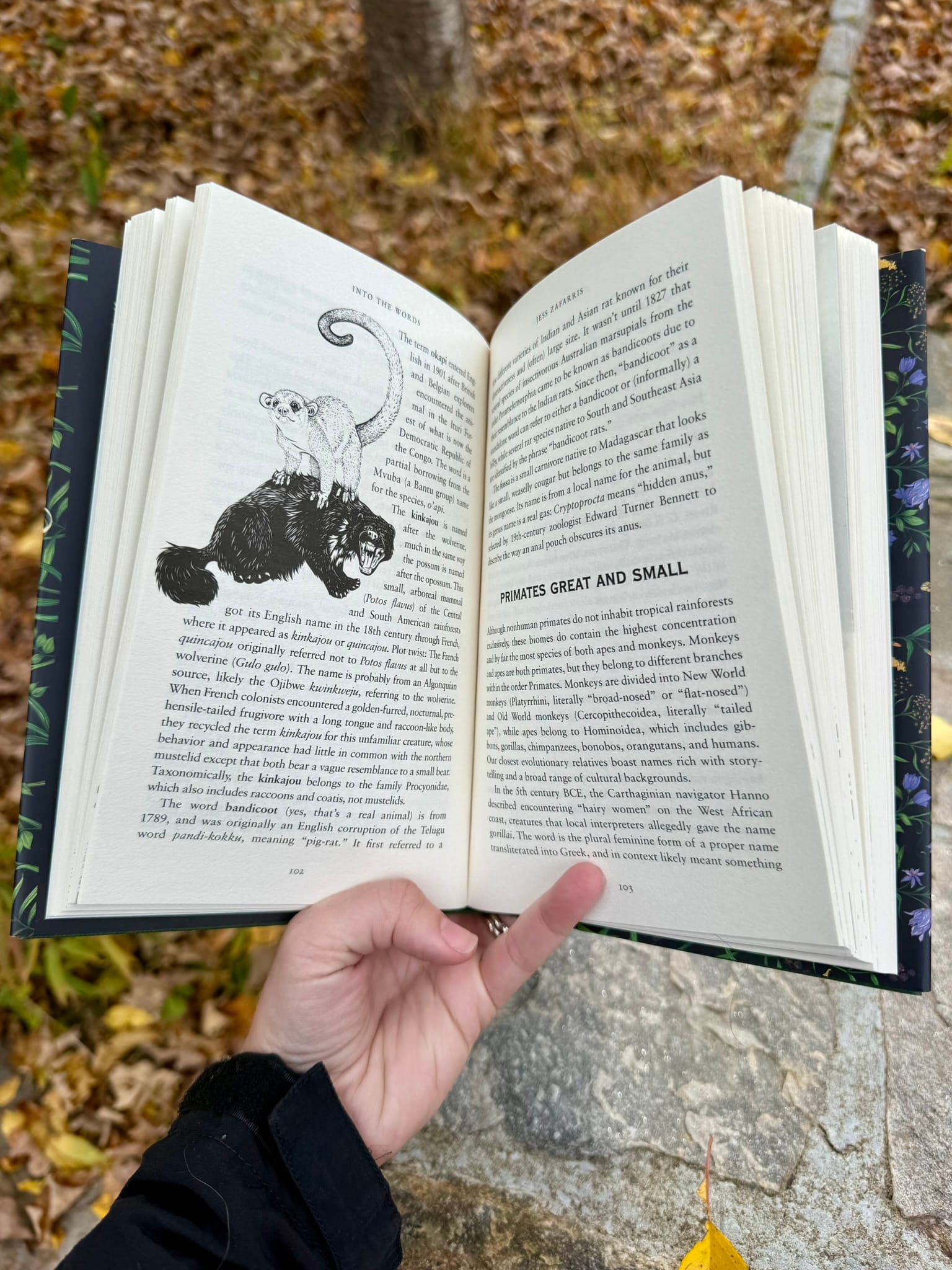
Into the Words is also beautifully illustrated by Jess’ sister Melissa Farris.
When we say “flora and fauna,” we’re basically using the Latin words for “plants and animals.” Flora was a Roman goddess decked out in blooms, and her name became a standard term for plant life. It represents everything from tiny violets to towering oak trees (fittingly, “floral” and “flourish” also stem from Flora’s name). Fauna, meanwhile, hails from the name of a rural Roman goddess (sometimes said to be married to Faunus, a woodland god). In a mythological mash-up, Fauna’s name probably comes from favēre (“to favor, bless”), suggesting she was a nurturing figure.
The Swedish naturalist Carl Linnaeus used Fauna in the title of his book Fauna Suecica (1745) to mean all animal life. And thus “fauna” entered English science lingo around 1770. So, flora and fauna together cover most living things on the planet, except funga and all of earth’s other organisms that don’t fit tidily into either.
Or perhaps you’d like to venture into the wilderness, linguistically and literally the land of the wild animals. If the forest was outside the village, the wilderness was even farther out, where not even the hunters or woodcutters regularly went. What you may not have spotted in the weeds of this word is that the -der- element in “wilderness” means “deer,” which means it could be read as wild-deer-ness, except that the Old English predecessor dēor meant any wild beast (deer, boar, wolf, etc.).
So, taken literally, a wilderness is a place characterized by the presence of wild creatures.
The first instances of “wilderness” in Modern English contrasted this realm of abundance, teeming with animal and plant life, with deserts, where life and resources are scarcer. However, not long after, in 12th-century English, “wilderness” was often treated as if it were synonymous with “desert.” The word “desert” came into English in the 13th century from Old French desert, from Latin desertum “a forsaken place,” the past participle of deserere “to abandon.” The most influential use of desertum appears in the Vulgate, the principal Latin translation of the Bible, completed around 405 CE by Saint Jerome, who translated it from Hebrew and Greek sources. In the Vulgate, desertum is used to render Hebrew midbar and Greek erēmos, both meaning uncultivated, uninhabited land. For medieval readers, this meant the lonely tracts into which prophets withdrew to fast and pray. So, for several centuries in English, a wilderness could be a treeless waste as much as a tangled forest. Later, the two terms diverged again, with desert narrowing to barrenness, while wilderness broadened into any land beyond cultivation, thick with beasts or brambles.
Through much of its history, though, the “wilderness” has been a challenging place. The word suggested uncharted territory, possibly scary but also a place you might hide if you were an outlaw or a hermit. Wilderness was considered the opposite of the village green or the city square; it was somewhere alien to human order.
It’s also historically been connected to the concept of “panic,” an emotional condition named after Pan, the goatlike god of the wild and nature, whose name means “all.” To go into a state of panic is, metaphorically and in name, to revert to raw animal fear and reactivity.
But, as centuries passed, especially in America and other colonized lands with vast frontiers, the tone shifted. By the late 1700s and the 1800s, Romanticism did its magic. Wilderness started to be seen as pure nature, a place of awe and inspiration. Influential thinkers like Ralph Waldo Emerson and Henry David Thoreau praised the wilderness as a source of truth and beauty. The wilderness went from something to be tamed to something to be cherished. By the late 19th century, people were arguing that wilderness areas should be preserved. Hello, national parks!
Wilderness today can evoke images of majestic mountains, serene deserts, or dense jungles, places where nature reigns and humans are merely visitors. It’s often a positive term in conservation contexts (“protect the wilderness”), a far cry from its old connotation of a desolate, cursed place. Yet, the core idea is “land beyond human cultivation.” Whether you see that as terrifying or thrilling depends on your perspective, and certainly how well equipped you are to find yourself in the elements.
Forest, on the other hand, marched into English from the Old French forest, which itself came from the Medieval Latin foresta, a word rooted in foris, meaning “outside.”
But at that point a forest didn’t mean any old wilderness thick with oaks and antlered beasts. It was a legal designation for a royal game or recreational preserve, an area your average person couldn’t access. The notion here is an “outside” area set aside for use by royals and nobles that was wilder than the manicured parks on their estates.
Starting with William the Conqueror (a.k.a. William the Bastard), the Normans began slapping the label forest onto massive tracts of English land. However, these early “forests” weren’t necessarily dense with trees; a royal forest might contain farmland, moor, and swamp, so long as it was subject to royal law and was used by fancy folks. These afforested zones became the playgrounds of Norman aristocracy. They legally walled off the pleasures and resources of the wild; lands once open to shepherds, swineherds, charcoal-burners, and berry-pickers were corralled for the use of the crown.
The Domesday Book, William’s tax-happy land survey, helped codify this system, tracking what lands were useful, profitable, or particularly stuffed with creatures worth chasing for sport.
The crown protected the venison and the vert (the beasts worth hunting and the greenery that kept them plump) for the good of the largely Norman French ruling class. You didn’t trespass in a royal forest unless you fancied legal consequences. The designation of land for these purposes factored heavily in the perception that the Norman invaders were stealing the lands of the locals.
In fact, in some versions of the Robin Hood tale, the titular character earns his outlaw status, about a century after the Norman invasion of England in 1066, by poaching deer from the royal forest, at which point he heads to the woodland or greenwood of Sherwood Forest to steal from wealthy travelers and redistribute that wealth to the poor.
If you’d like to support Linguistic Discovery, purchasing through these links is a great way to do so! I greatly appreciate your support!
Check out my Amazon storefront here.
Check out my Bookshop storefront here.