Dictionary.com chooses “maxxing” as the Word of the Year
Also this week: Is AI changing how people talk? + Wikimedia documents endangered indigenous languages

Welcome to this week’s edition of the Linguistic Discovery digest, a weekly roundup of the latest language-related news, research in linguistics, interesting reads from the week, and newest books and media on language and linguistics!
📢 Updates & Announcements
What’s new with me and Linguistic Discovery, and other announcements.
Language attitudes in the workplace
The way we speak, from formality and filler words to conversation styles and accents, shapes how customers, employees, and job candidates see us. I talk to Henry Lopez on The How of Business podcast about how small business owners can recognize those perceptions and communicate more effectively. (Note that this is an old interview, but Henry reposted it to his podcast recently so I thought I’d follow suit.)
 Name *

Greek loanwords in English
Here’s a shortform video I did as part of my collaboration with St. John’s College, about all the ways English borrowed words from Greek—either directly or indirectly.
https://youtube.com/shorts/QnzLlVmVxm8
📰 In the News
Language and linguistics in the news.
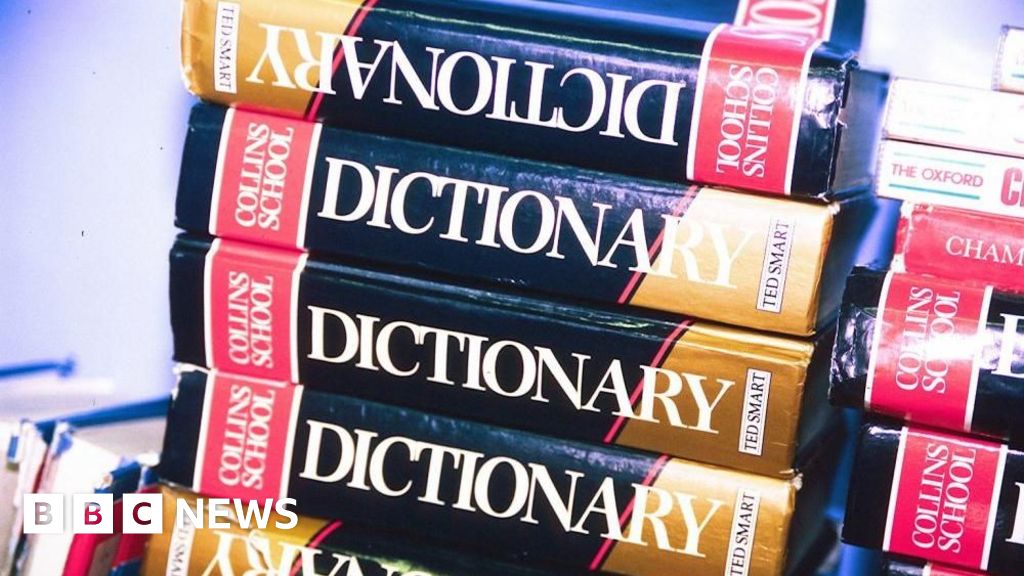
‑maxxing is Dictionary.com’s Word of the Year
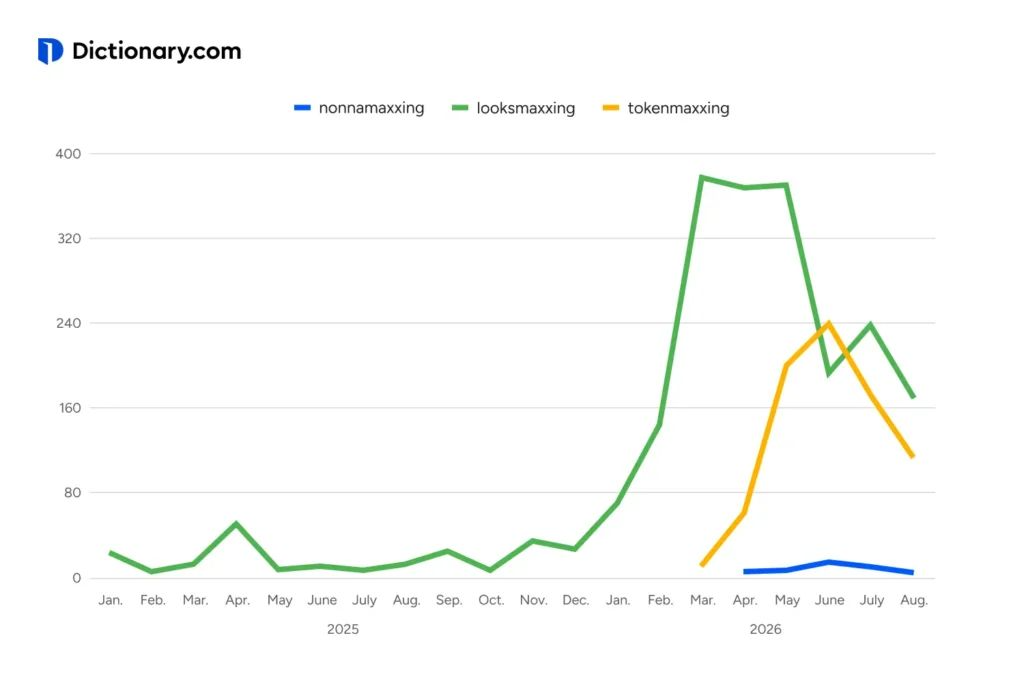
Dictionary.com has declared its Word of the Year for 2026: “‑maxxing”, referring to the practice of pursuing an activity to the fullest or optimizing a certain aspect of your life, such as:
- looksmaxxing: optimizing one’s physical appearance
- tokenmaxxing: using as many AI tokens at work as possible
- nonnamaxxing: bettering one’s life by adopting the habits of an Italian grandmother
But it can also be used as an independent word, as in “Everyone is maxxing something. What’s yours?”
The roots of maxxing ultimately go back to words like maximum and related verbs such as maximize and max. Along with these came words like maxing, as in “maxing out credit cards” or “maxing out at 120 mph.”
Now with two ⟨x⟩’s, maxxing itself and its associated concepts like looksmaxxing first arose on Reddit and other forums before spreading to social media.
Language influencer Adam Aleksic (@EtymologyNerd) traces the origin of ‑maxxing to the extreme incel (involuntarily celebrate) community (Aleksic 2025: Ch. 6), where one’s personal appearance is of enduring concern. The term was then popularized by influencer Clavicular as he chronicled his looksmaxxing journey. The broader internet community then appropriated it largely to mock the extremist obsession with one’s looks. This made it sufficiently humorous that it went viral and received broad uptake even among communities who were unaware of its origins. (Dictionary.com’s announcement of their decision notably avoids this early history, which I suspect was a deliberate choice on the part of the editors to distance the reasons for their decision from the word’s sordid origins. Their decision was entirely linguistic in nature, based on the term’s massive uptick in usage [shown above].)
As with any new word or usage, it’s impossible to know how long the construction will stick around, but I suspect this one might have staying power. Check in with me in 2030 to see how well my prediction holds up.
Ironically, this year’s word has the opposite vibe from last year’s, which was demure.

 Ana Faguy
WikiKathā documents 9 endangered indigenous languages in Indonesia
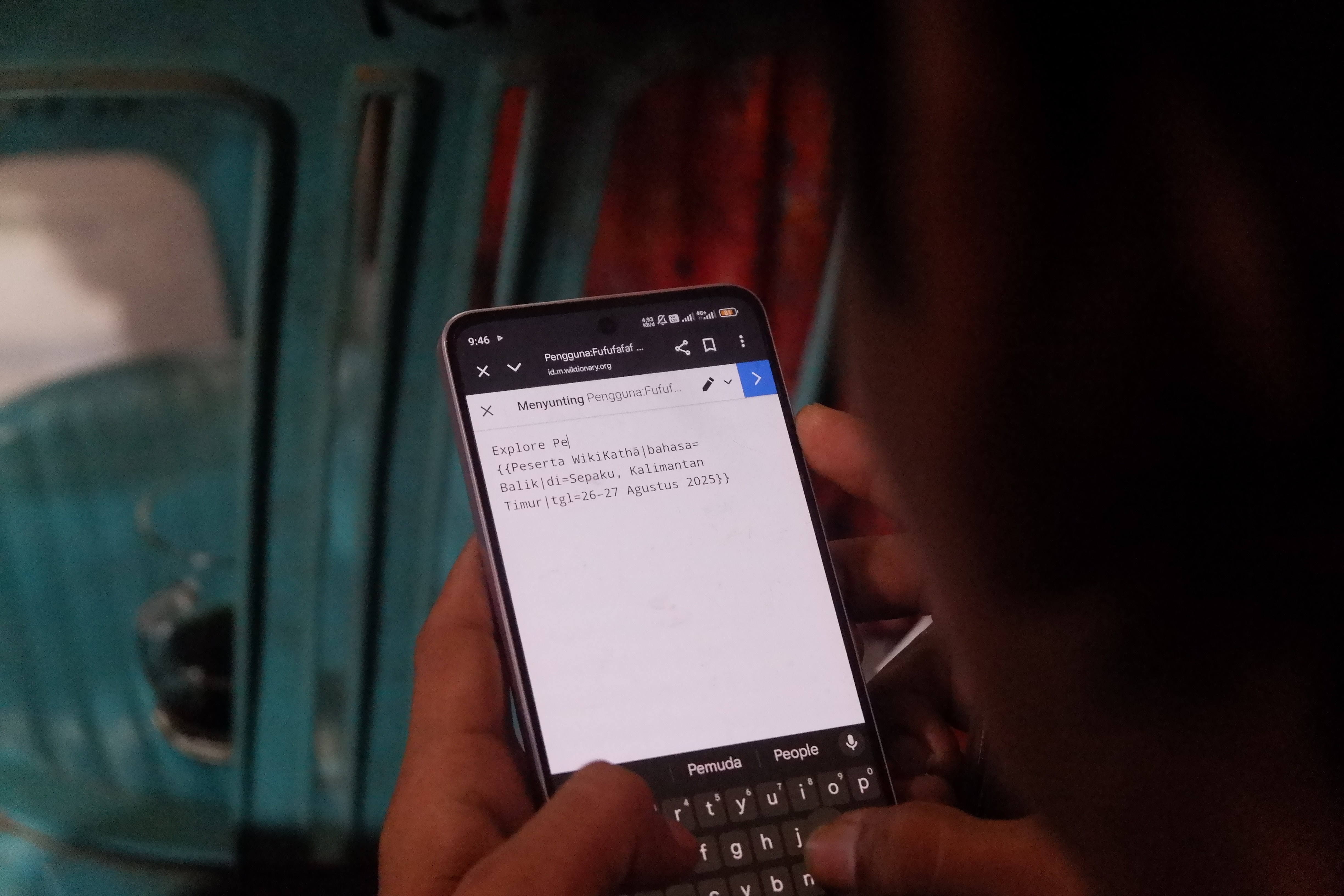
Indigenous youth spent August 2025 to May 2026 paired with native speakers across the archipelago, recording vocabulary word by word and entering it into Indonesian Wiktionary. WikiKathā, a Wikimedia Indonesia project with the Alliance of Indigenous Peoples of the Archipelago, recorded 13,444 lemmas (dictionary entries) across nine languages.
 Harditaher WMID
🗞️ Current Linguistics
Recently published research in linguistics.
Is AI changing how people talk?
A recent study examines how people and ChatGPT adjust their language to match each other—a pattern typical of conversations between humans, who naturally mirror their partners. This is called linguistic accommodation. The research found that while both people and ChatGPT mimic each other, AI does it a lot more, but humans also did it more than expected.
 Northeastern University

- Blevins. 2026. Accommodation goes both ways: Studying linguistic convergence between humans and language models. arXiv. DOI: https://dx.doi.org/10.48550/arxiv.2605.29278.
Toddlers start learning overheard words at age two
In a recent study, 79 English-learning children were tested on their vocabulary at 18, 24 and 30 months. Only the two-year-olds recognized words they mainly hear in adult conversation—words like pot, salad, and charger—while the 18-month-olds did not. The authors say the younger group’s miss surprised them, since lab work had already shown 18-month-olds can learn by overhearing. The researchers attribute this difference to interference from ambient noise in the environment.
 Society for Research in Child DevelopmentSep 23 2026Reviewed

If you want to learn more about the way that adults’ speech influences child language development, check out my series of articles on baby talk:
 Daniel W. Hieber, Ph.D.
📃 This Week’s Reads
Interesting articles I’ve come across this week.
Reduplication is a widespread linguistic process in which a part of an exact copy of a word is repeated, often for morphological or syntactic reasons (but not always):
 Chi Luu

Linguist Jessica Coon, who consulted with the filmmakers for every linguist’s favorite movie, Arrival, sits down for an interview about linguistics and what the movie got right and wrong:
 Kiona Smith

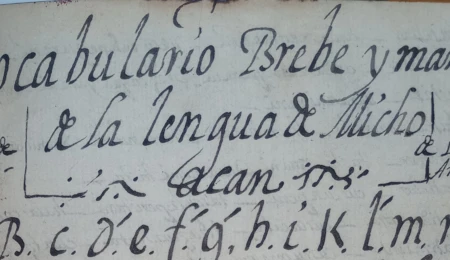
What links an Austrian archduke to a Hungarian bookbinder, and an American railway magnate? A 17th century dictionary from Mexico, of course:
 Kate Bellamy
Additional reads for your week:
 Roger J. Kreuz

 James Coverley

📚 Books & Media
New (and old) books and media touching on language and linguistics.
Into the Words: An etymologist’s field guide to plants, animals, and nature
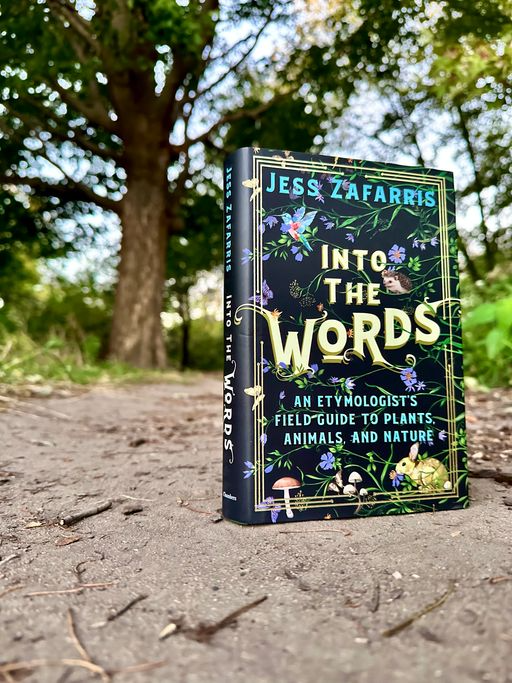
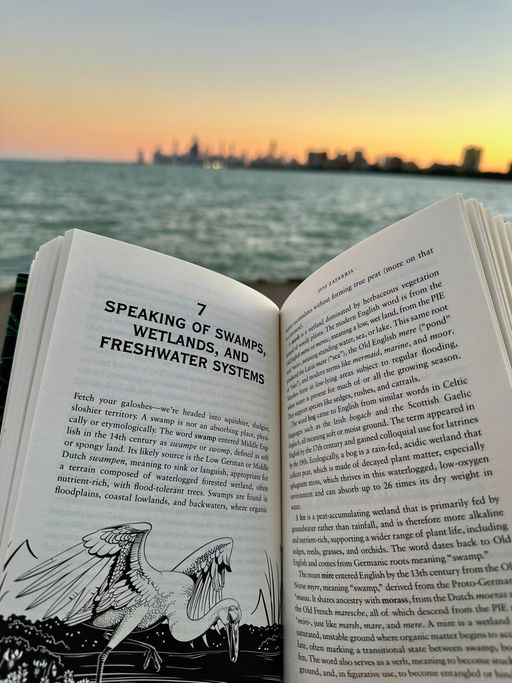
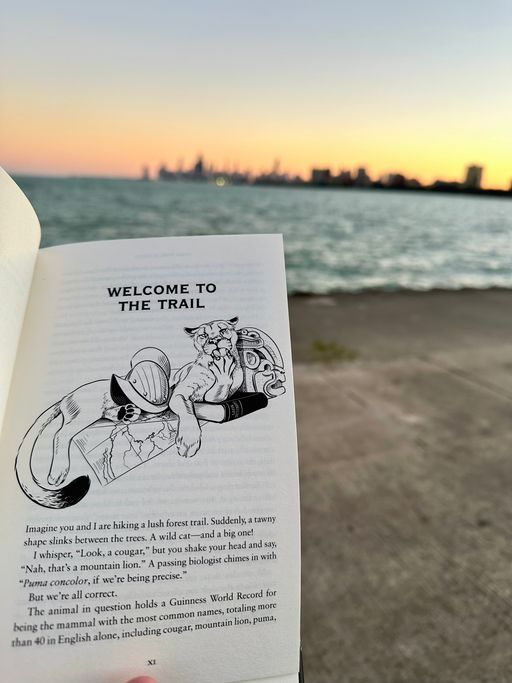
Jess Zafarris has a new book releasing in November: an etymological guide to plants, animals, and nature! Jess was kind enough to send me an early review copy. I love how the book organizes discussions into different topics, such as “How nature gets its names”, “Your backyard biome”, or “Stories of the savanna and grasslands”. The result is that the book is an exploration of various themes and ideas in the etymology of nature terms, in addition to a trove of fun standalone facts. It’s also beautifully illustrated (pictures below) by her sister, Melissa Farris. And of course Jess writes with all her usual wit, playfulness, and passion that makes her books a joy to read. Grab your own copy at the links below.
Proto in paperback
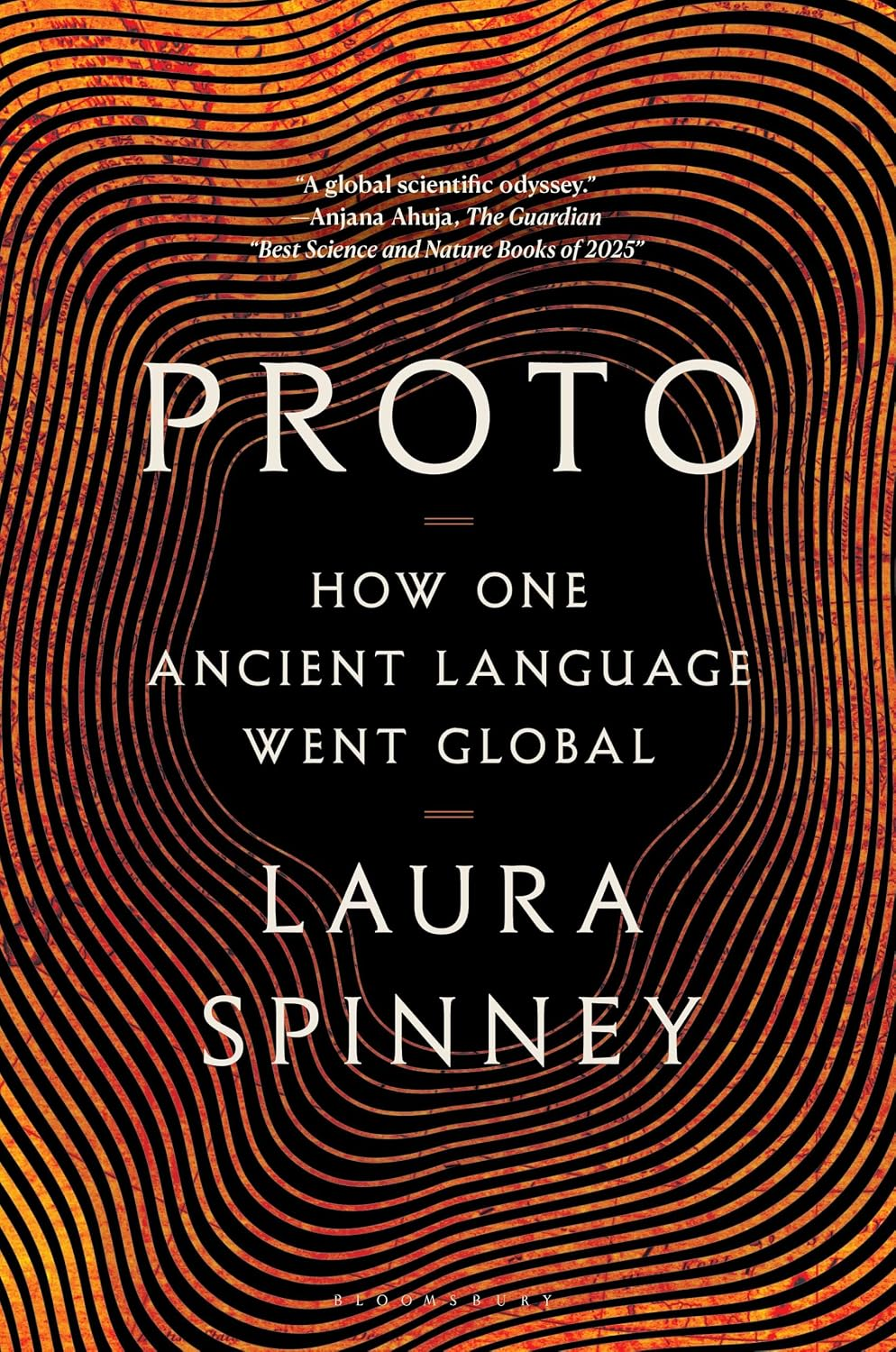
Laura Spinney’s excellent book, Proto: How one ancient language went global (Amazon | Bookshop) is now available in paperback:
The book traces how a single language—Proto-Indo-European—eventually spread throughout the world. Here’s the publisher’s blurb:
Daughter. Duhitár-. Dustr. Dukte. Listen to these English, Sanskrit, Armenian and Lithuanian words, all meaning the same thing, and you hear echoes of one of history's most unlikely journeys. All four languages-along with hundreds of others, from French and Gaelic, to Persian and Polish-trace their origins to an ancient tongue spoken as the last ice age receded. This language, which we call Proto-Indo-European, was born between Europe and Asia and exploded out of its cradle, fragmenting as it spread east and west. Its last speaker died thousands of years ago, yet Proto-Indo-European lives on in its myriad linguistic offspring and in some of our best loved works of literature, including Dante's Inferno and the Rig Veda, The Lord of the Rings and the love poetry of Rumi. How did this happen?
Acclaimed journalist Laura Spinney set out to answer that question, retracing the Indo-European odyssey across continents and millennia. With her we retrace the epic journeys of nomads and monks, warriors and kings – the ancient peoples who carried these languages far and wide. In the present, Spinney meets the scientists on a thrilling mission to retrieve the lost languages and their speakers: the linguists, archaeologists and geneticists who have reconstructed that ancient diaspora. What they have learned has profound implications for our modern world as people and their languages are on the move again.
🗃️ Resources
Maps, databases, lists, etc. on language and linguistics.
Etymon
Etymon is a daily etymology puzzle, where each day one English word is hidden behind six clues drawn from its etymological history. Each clue narrows the field, moving from era and origin through linguistic path, literal meaning, cognates, historical or geographic context, and worth length towards the answer. The goal is to solve the puzzle in as few clues as possible. Subscribe to get a daily puzzle here!
 Etymon

Glottography: A map of the world’s languages
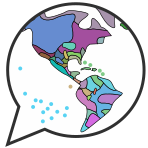
Glottography is a new database that documents more than 10,000 language areas, past and present.
Glottography is an open-access platform that compiles and digitises data on the geographic distribution of languages from academic sources, transforming published maps into accessible digital geographic information. It provides a systematic resource for exploring where languages were and are spoken around the world, making it possible to investigate linguistic diversity across both space and time. To build this resource, hundreds of language maps from the scientific literature, many previously available only in print, were digitised and their language areas were linked to Glottocodes. Glottography allows multiple representations of the same language area, reflecting the fact that language boundaries can be subjective and contested. Its flexible framework also allows new areas to be added as new data and interpretations become available. Users can explore the dataset through an interactive web map at https://www.glottography.org/.
Glottography’s significance goes beyond simply showing where languages are or were spoken. By documenting the geographic distribution of languages, both past and present, Glottography provides a comprehensive digital record of linguistic diversity across time and space. The resource is developed and maintained by researchers at the University of Zurich, in collaboration with colleagues at Utrecht University, Leiden University, the Max Planck Institute for Evolutionary Anthropology, and the University of Turku. The project and its findings are described in the research article “Glottography: an open-source geolinguistic data platform for mapping the world’s languages”, published in the Journal of Open Humanities Data.
👋🏼 Till next week!
If you’d like to support Linguistic Discovery, purchasing through these links is a great way to do so! I greatly appreciate your support!
Check out my Amazon storefront here.
Check out my Bookshop storefront here.