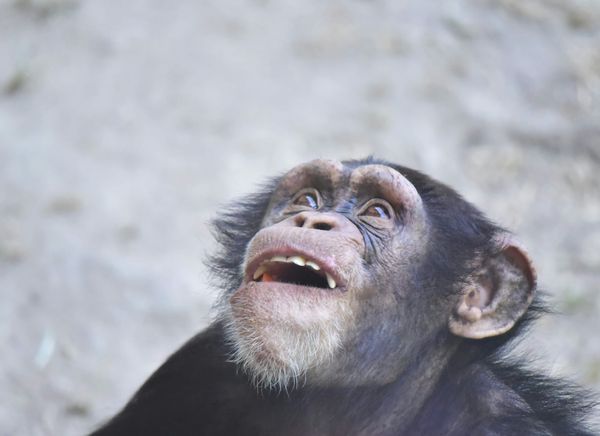
Large language models are shrinking linguistic diversity
Also this week: How habitat shapes the vocal repertoire of primates + The Canadian English dictionary gets a new update + Many loathed “Americanisms” are actually British coinages


Welcome to this week’s edition of the Linguistic Discovery digest, a weekly roundup of the latest language-related news, research in linguistics, interesting reads from the week, and newest books and media on language and linguistics!
📢 Updates & Announcements
Announcements and what’s new with me and Linguistic Discovery.
Open Tabs
Open Tabs is a series in Buffer’s newsletter, The Weekly Scroll, which looks at a creator has open in their browser, saved in their bookmarks, and stuck in their head right now. Buffer interviewed me for a profile, so here’s what’s been on my mind lately!
 Tami from Buffer
🆕 New from Linguistic Discovery
This week’s content from Linguistic Discovery.
How Greek (and Indo-European) got its grammatical gender
As part of my recent collaboration with St. John’s College, I produced this fun shortform video on how Indo-European got its grammatical gender, and how that’s realized in Greek specifically:
🔓 Unlocked: Were the Ancient Greeks colorblind?
This article is now available to all subscribers, free or paid. So if you weren’t able to read it when it came out, have a read now!
Were the Ancient Greeks colorblind? If not, why does Homer use colors so strangely in the Iliad and the Odyssey?
There’s something decidedly weird about the way Homer talks about colors in the Iliad and the Odyssey: wine-dark seas, violet sheep, hyacinth hair, and faces green with fear. It turns out it’s not just Homer who struggled with colors, but the authors of all the ancient texts—the Indian Vedic poems, the Old Testament, the Icelandic sagas, and even the Quran. Biblical Hebrew, for instance, lacks a word for ‘blue’, and the Bible is rife with odd color descriptions: a ‘red horse’ and a ‘red heifer without spot’; faces ‘turned green’ with panic; the feathers of a dove covered with ‘green gold’. As for the Vedic hymns, philologist Lazarus Geiger says:
These hymns, of more than ten thousand lines, are brimming with descriptions of the heavens. Scarcely any subject is evoked more frequently. The sun and reddening dawn’s play of color, day and night, cloud and lightning, the air and the ether, all these are unfolded before us over and over again, in splendor and vivid fullness. But there is only one thing that no one would ever learn from those ancient songs who did not already know it, and that is that the sky is blue.
What could possible be going on? The answer lies in linguistic universals about how color terms evolve across languages. In this bonus issue of the Linguistic Discovery newsletter, we’ll look at Homer’s odd use of colors and what it tells us about the evolution of color terms in the world’s languages:
 Daniel W. Hieber, Ph.D.
📰 In the News
Language and linguistics in the news.
Hunan Museum exhibit showcases major Chinese dialects and more than 100 ethnic minority languages
A new hall in the Hunan Museum in China showcases both major Chinese languages as well as more than 100 ethnic minority languages, including Mongolian, Tibetan, and Uygur. It includes a compilation of recordings from over 1,800 survey sites nationwide.
 Meredith Chen
The Canadian English dictionary gets a new update—First up: The letter Q
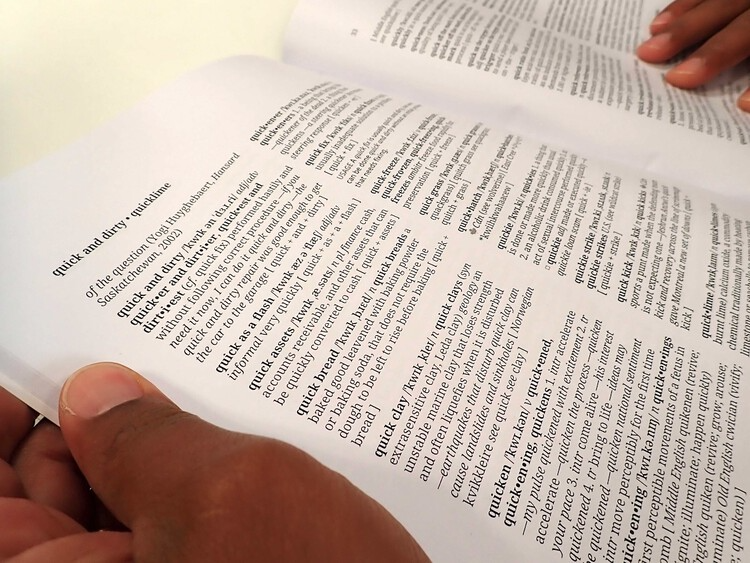
The Society for Canadian English, whose primary purpose is the development of a modern Canadian English dictionary, has finished the first letter of the new dictionary—Q. There hasn’t been a comprehensive Canadian English dictionary in over two decades, so this is a big deal!
Why Q? Because it’s a section that the authors could use as a trial run, but also because it’s a favorite among Scrabble players! This is helping attract new users to the dictionary.
🗞️ Current Linguistics
Recently published research in linguistics.
How body size and habitat shape the vocal repertoire of primates
The Social Intelligence Hypothesis claims that increasingly complex social lives prompted primates to evolve increasingly large brains, which in turn led to increasingly advanced communication skills. Now, a recent study analyzed one of the most comprehensive datasets of primate vocal repertoires compiled to date to determine whether the vocal diversity of primates could be better explained by their social lives or physical factors. The paper concludes that a combination of body size and habitat shaped the evolution of primate communication strategies.
 Ingrid Fadelli
- Lameira. 2026. Physical constraints, not sociality, shape primate vocal repertoire size. Biology Letters 22(7): 20260332. DOI: https://doi.org/10.1098/rsbl.2026.0332.
Linguistic diversity shrinks with large language models
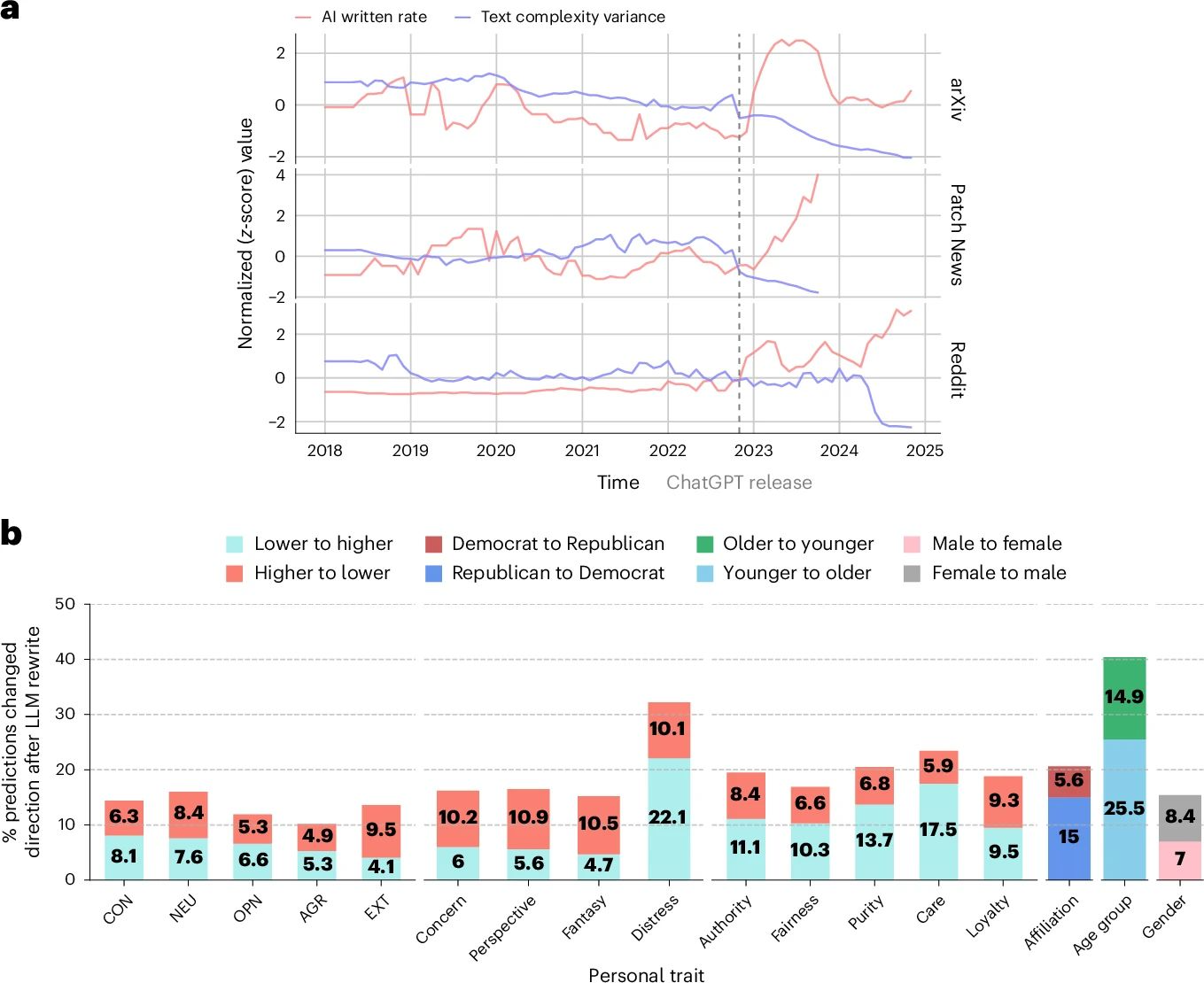
A recent paper titled “The shrinking landscape of linguistic diversity in the age of large language models” argues that, after ChatGPT’s release, writing complexity converged toward a common style, and that it was no longer possible to recover an author’s age, gender, personality, empathy, moral values, or political affiliation from cues in their writing.
One of the authors has a brief summary on LinkedIn:
 Morteza Dehghani
And here is a short research brief explaining the finding:
 Zhivar SouratiFarzan Karimi-MalekabadiMorteza Dehghani
It summarizes the research as follows:
Large language models (LLMs) used as writing assistants homogenize writing style. Studies across 880,000 texts show that, following the release of ChatGPT, writing became less varied as artificial intelligence (AI) use spread. The LLMs preserved meaning but compressed the variety of language and biased author traits inferred from the words.
Here is the abstract of the paper itself:
Language is far more than a communication tool; it encodes a wealth of information about a person’s identity, psychological state and social context, providing valuable insights for diverse fields including psychology, marketing and healthcare. Across three studies spanning seven datasets in different domains and over 880,000 texts, we show that the widespread adoption of large language models (LLMs) as writing assistants is linked to declines in linguistic diversity, interfering with the societal and psychological insights language provides. While core content is retained when LLMs polish and rewrite texts, LLMs also homogenize writing styles, reducing writing-complexity variance by a statistically significant 21–50% across datasets and models (P ≤ 0.05), and amplify patterns associated with dominant characteristics while suppressing others, emphasizing conformity over individuality. These trends hold across different LLMs, prompts and contexts, with potential implications for diagnostic processes, personalization efforts, hiring assessments and cultural preservation.
- Sourati et al. 2026. The shrinking landscape of linguistic diversity in the age of large language models. Nature Human Behavior. DOI: https://doi.org/10.1038/s41562-026-02550-0.
The Life of Letters: Why Q Needs U: A history of letters
Danny Bate, author of Why Q needs U: A history of our letters and how we use them (Amazon | Bookshop) went on the Life of Letters podcast recently to discuss the history of the alphabet. Here’s the episode description:
Ever wondered how the alphabet actually came to be? In this episode, Laura is joined by linguist and author Danny Bate for a fascinating conversation about the alphabet - where it came from, how it’s evolved and what the future might hold for written language. If you’ve ever been curious about the letters you love to write, this one’s for you.
Have a listen here:


Get your own copy of his book here:

📃 This Week’s Reads
Interesting articles I’ve come across this week.
 Anne Rohde
 Nuno Marques
Michael Ferber at the Speaking of Words column talks about global superlanguages:
 Michael Ferber
Note that this article was published in 2023, so the context has obviously changed drastically since then:
 Aviya Kushner
Other reads from this week:
- The linguistics of nonbinary speech (PrideSource)
- Loathed ‘Americanisms’ often have an origin closer to home: Many of the USA’s most grating linguistic exports turn out to be British coinages, the lexicographer Susie Dent has said (The London Times)
📚 Books & Media
New (and old) books and media touching on language and linguistics.
How to kill a language: Power, resistance, and the race to save our words
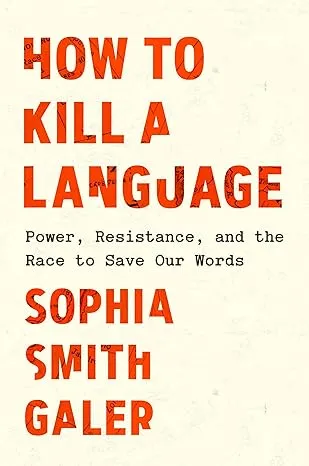
Sophia Smith Galer’s new book, How to kill a language: Power, resistance, and the race to save our words comes out this week. In it she explores why some languages cease to be spoken, and what we lose culturally when they disappear:
An urgent, globe-spanning exploration of languages at risk, from Kichwa to Ukrainian, that asks: What do we lose—culturally, politically, and personally—when a language is silenced?
Languages can be killed in many ways: war, the climate crisis, nationalism, and even quiet choices made at the dinner table. Around the world, an unprecedented shift is drawing speakers toward national and global lingua francas. For some, that means losing the language of parents or grandparents; for many, it is a permanent farewell to systems that carry knowledge, culture, and belonging. With half of our 7,000 languages due to disappear this century, linguicide is one of the most pressing cultural emergencies of our age.
In How to Kill a Language, journalist Sophia Smith Galer travels across continents and generations to chart this phenomenon. In Ecuador, she sees firsthand how shame deters parents from passing Kichwa onto their children. In Oman, she learns about languages with roots older than Arabic but never officially recognized. And in Italy, she searches for her Nonna’s dialect, which is vanishing from diaspora communities and Italy itself. But languages can also be reclaimed: We meet the Karuk tribe of California, pioneering a grassroots language immersion program, and the storytellers challenging the criminalization of Kurdish. And in her discussion of Hebrew, Smith Galer reckons with the unintended consequences of raising a language seemingly from the grave.
Part investigation, part travelogue from a disappearing world, How to Kill a Language exposes the true costs of this mass extinction event. Brought to life by vivid storytelling and Smith Galer’s own experience with language loss, it’s a fierce rallying cry for a multilingual future.
You can pick up a copy here:
👋🏼 Till next week!
A neat post about hydronyms (names for bodies of water) in Sweden:
Lakes reveal a lot about historical language boundaries in northern Sweden. If a lake ends in -träsk, -jaure, or -järvi, it reveals whether you are in an area where Swedish, Sami, or Finnish has historically been spoken. Fascinating how sharp the boundaries are between these areas. [AI translation]
I also mention hydronyms and what those and other place names tell us in my Pre-Greek article.
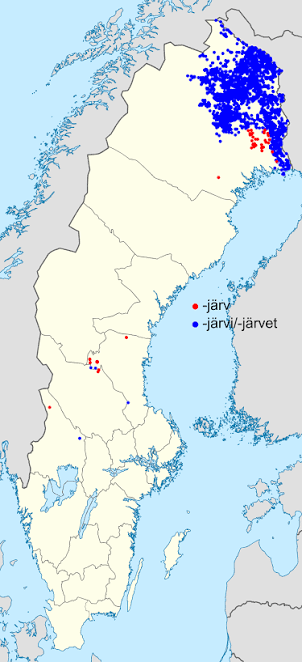
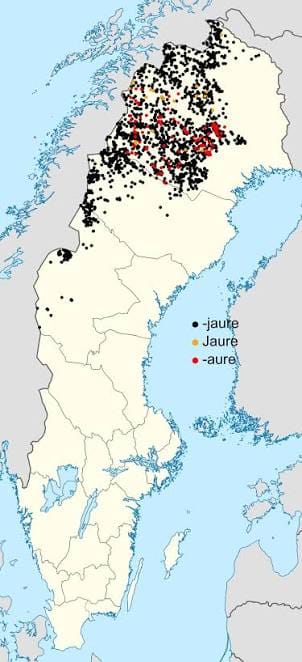
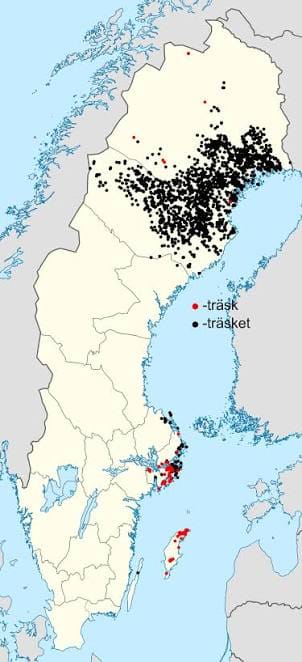
Sjöar berättar mycket om historiska språkgränser i norra Sverige. Om sjön slutar på -träsk, -jaure eller -järvi avslöjar om du är i ett område där man historiskt talat svenska, samiska eller finska. Fascinerande vilka skarpa gränser som går mellan dessa områden. pic.twitter.com/1Ts5zicjkH
— Adam Isaksson (@bdadaisa) September 7, 2026
If you’d like to support Linguistic Discovery, purchasing through these links is a great way to do so! I greatly appreciate your support!
Check out my Amazon storefront here.
Check out my Bookshop storefront here.